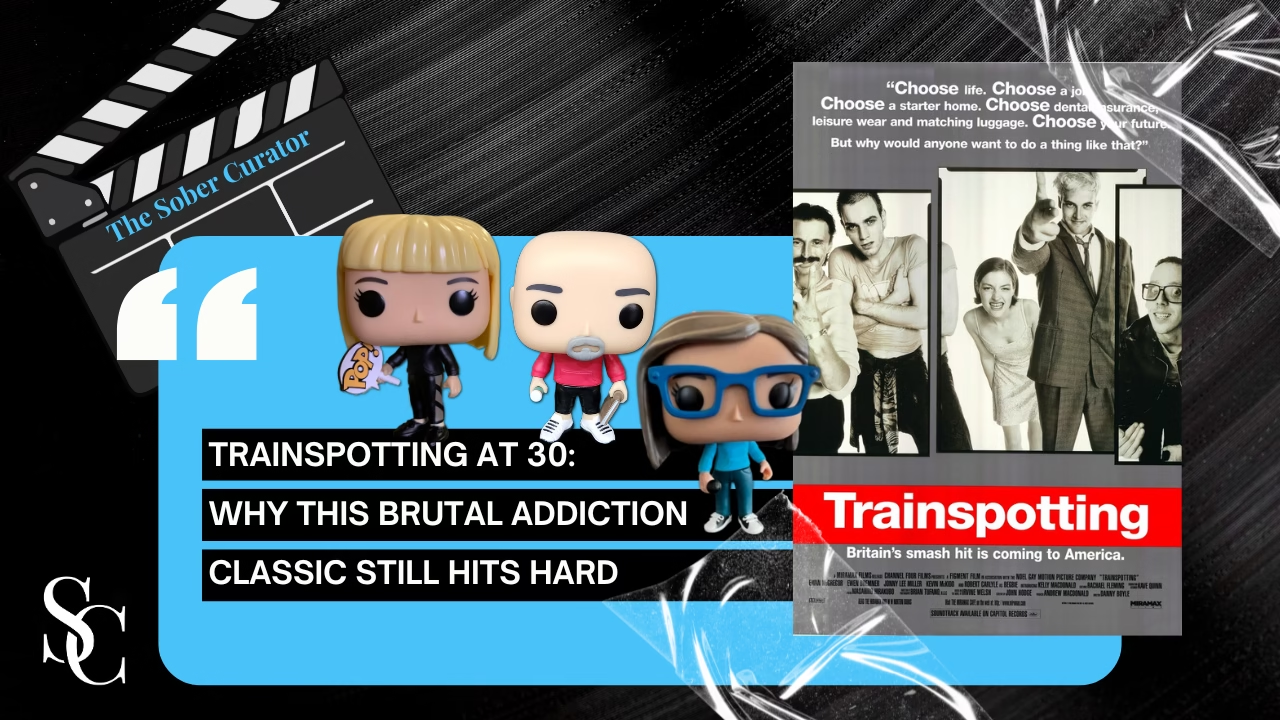
“People think it’s all about misery and desperation and death,” Renton says. “But what they forget is the pleasure of it.”
That line hits differently when you’re sober.
Thirty years after “Trainspotting” splashed onto screens with all its chaotic brilliance, the film still feels like a cinematic punch to the throat—one part humor, one part horror, and one part honesty so sharp it refuses to dull with time. Watching it again, especially through the lens of sobriety, is like revisiting an old wound you’ve learned how to live with, but never fully forget.
On The Sober Curator podcast, Alysse, Tamar, and Tony Harte gather for a roundtable deep dive into the movie’s grit, its genius, and everything in between. Their conversation is equal parts pop culture celebration and cultural autopsy—because “Trainspotting” doesn’t just entertain; it reveals.
And some reveals are uncomfortable.
The Film That Refused to Look Away
One of the reasons “Trainspotting” still holds its power is that it never glamorizes addiction. Not even for a second. Danny Boyle didn’t make a morality story, and he didn’t make trauma porn. He made a mirror—and every messy truth is reflected back with brutal clarity.
The infamous baby scene remains one of the rawest depictions of addiction’s collateral damage ever put on film. It’s not shock value. It’s heartbreak. It’s horror. It’s reality. And Tony points out that this is exactly why the movie stays relevant: it doesn’t let us hide from the consequences. It shows what it looks like when survival instincts override everything else.
That’s part of what makes the conversation so compelling. Tony notes the ritualistic nature of Renton’s detox attempt—the boards over the door, the lists, the rigid preparation. It’s funny and tragic, but it’s also familiar. Because addiction, no matter the substance, is ritual. It’s routine. It’s predictable in its chaos.
And watching Renton try to break the cycle is a reminder of how hard that rupture really is.

The Symbolism We Missed the First Time
Alysse invites Tony to share one of his unexpected takes: “Trainspotting” is surprisingly religious. Or at least spiritually coded.
Mother Superior acting as a warped higher power.
The toilet dive functioning as a baptism into clarity (however temporary).
The “Choose Life” monologue working like a sermon—an invitation to awaken, twisted by Renton’s addiction into defiance.
Viewed through this lens, the film becomes even more layered. Not a redemption arc—those come later in the book series—but a reminder that transformation is only possible after truth-telling. Trainspotting doesn’t offer recovery, but it does offer recognition. Sometimes that’s where healing begins.
The Characters Who Haunt Us
Among the chaotic ensemble, Tommy’s storyline cuts the deepest.
He’s the guy who swears he’ll never touch heroin.
He’s the guy whose life unravels from heartbreak, not curiosity.
He’s the guy who thinks he’s safe—until he’s not.
Every sober person has a Tommy in their life. Someone who believed they were immune. Someone who spiraled fast. Someone whose story reminds us that addiction doesn’t discriminate, and it doesn’t negotiate.
Tony highlights this arc not because it’s tragic, but because it’s true. And truth, no matter how old a film gets, doesn’t expire.
Why Sober People Still Feel This Film in Their Bones
When Alysse asks whether any modern film compares, the group can’t name one. Not Euphoria. Not Beautiful Boy. Not anything in recent memory. The difference? Tone.
“Trainspotting” isn’t interested in virtue signaling or aesthetic addiction. It’s messy, funny, ugly, and human. It’s the chaos before the clarity. It’s the spiral without the speech.
And maybe that’s why watching it sober is such an emotional experience.
You remember the pleasure.
You remember the pain.
You remember the chaos you don’t ever want back.
And you remember that laughter—dark, uncomfortable, involuntary—is sometimes part of survival too.
The Legacy That Still Matters
The film ends not with resolution, but intention. Renton chooses life—but he hasn’t lived it yet. The books fill in what happens next, but the movie leaves us in the in-between.
And that’s real. Sobriety is all about in-betweens. Choices made daily. Rituals broken and rebuilt. A future imagined but not yet lived.
Trainspotting doesn’t promise hope. But it does make space for it.
And sometimes, that’s enough.
The Sobees Movie Review Score: 4.5 out of 5

Listen to the Full Episode
If you’re ready for nostalgia, film nerdery, and a sober lens that brings clarity to the chaos, tune in to the full episode of The Sober Curator podcast. You’ll laugh, cringe, and maybe rethink your favorite 90s movie in the best possible way.

Hosted by Alysse Bryson & Tamar Routly, and produced by Podcast Impact Studio, The Sober Curator Podcast brings sober lifestyle, pop culture, & recovery to the mic. Alongside Alysse & Tamar, rotating global contributors join as co-hosts to explore zero-proof drinks, sober travel, quit lit, entertainment, & mental health. This is sober media with personality, perspective, & a glitter bomb of honesty. Sober-curious or living alcohol-free, we’ve got you! We’re not here to help you get sober. We’re here to help you live sober: and love it.
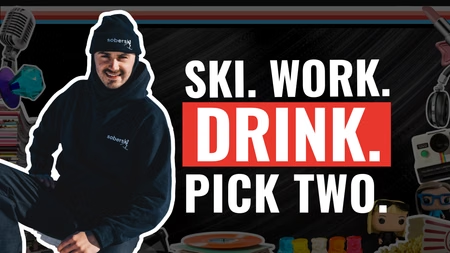
Some people look at a mountain and see a party. Ben Coombes used to be one of them: magnums of rosé at lunch, shots on the chairlift, and more near misses than he can count. Then he tried something nobody in a ski resort does. He did a sober season.
Now Ben runs Soberski, alcohol-free chalet weeks in Méribel in the French Alps, and he’s our newest Sober Curator contributor. Alysse and Tamar (a snowboarder, it turns out) talk with him about what happens when you keep the mountain and lose the après.
In this episode:
Ski, work, or drink: pick two. Ben’s seasons driving guests for a luxury chalet company
The sober season that became an Instagram page, then a business
The first booking came from New Jersey, and Ben thought it was a scam
Never skied? Ben’s guest who went from zero to flying around the mountain in about six hours of lessons
Private chefs, cold plunges, daily yoga, and evening workshops
The January 22 to 29, 2027 week in Méribel, and who it’s for (sober, sober curious, or just done with hangovers on holiday)
Ben’s pick for your queue: “The Gentlemen” on Netflix
Why Ben didn’t build a support group on a mountain. He built a room.
CHAPTERS
00:00 Cold open
01:29 You got sober. Now what?
04:06 Falling for the mountains at 21
05:13 Ski, work, or drink: pick two
06:36 The sober season experiment
08:43 Tamar’s 20-year-old snowboarder brain
09:36 Rosé at lunch, shots on the chairlift13:41 A word from our sponsor: Aura House
14:30 January 2027 in Méribel
15:34 North Americans welcome
18:06 Never skied? Start here
24:39 Watching strangers become friends
28:53 Pop culture pick: The Gentlemen
31:36 The Sober Swap, new in Backstage
35:13 Yoga, cold plunges, evening workshops
37:48 He didn’t build a support group. He built a room.
38:37 Where to find Soberski
Sober Shots:
“If I can not drink in a ski resort, then I can probably not drink anywhere.” (Ben Coombes)
“You are allowed to go somewhere ridiculous and beautiful to find him or her.” (Alysse Bryson)
Mentioned in this episode:
– Soberski | Instagram @s0berski
– Backstage with The Sober Curator: https://thesobercurator.com/backstage-with-the-sober-curator/
– The Sober Swap, our new October Backstage hang
– Krysty Krywko, “Skiing Sober: Rewriting Après-Ski Without Alcohol”
Getting sober matters. Staying sober matters more.
SEASON 2 MERCH: https://shopthesobercurator.com/
This episode is brought to you by Aura House. Save 10% with code TSC10: https://go.shopmy.us/p-64140200
SC RESOURCES: – Meet the Contributors – Alcohol + Substance Use Disorder Guide – Recovery Nonprofit Resource Guide – LGBTQ+ Recovery Resource Guide
CONNECT: www.thesobercurator.com | The Sober Sip newsletter: https://www.thesobercuratornewsletter.com/ | @thesobercurator on Instagram, X, TikTok, YouTube + Pinterest
Love the show? Rate, review + follow. It takes 60 seconds and helps more people find us. Feedback + guest ideas: thesobercurator@gmail.com
Hosted by Alysse Bryson with co-host + producer Tamar Routly. For informational and entertainment purposes only; not a substitute for professional advice.
Music: TSC S2 theme “Sober Shots” created by Alysse Bryson using Suno AI, under Suno’s commercial license.
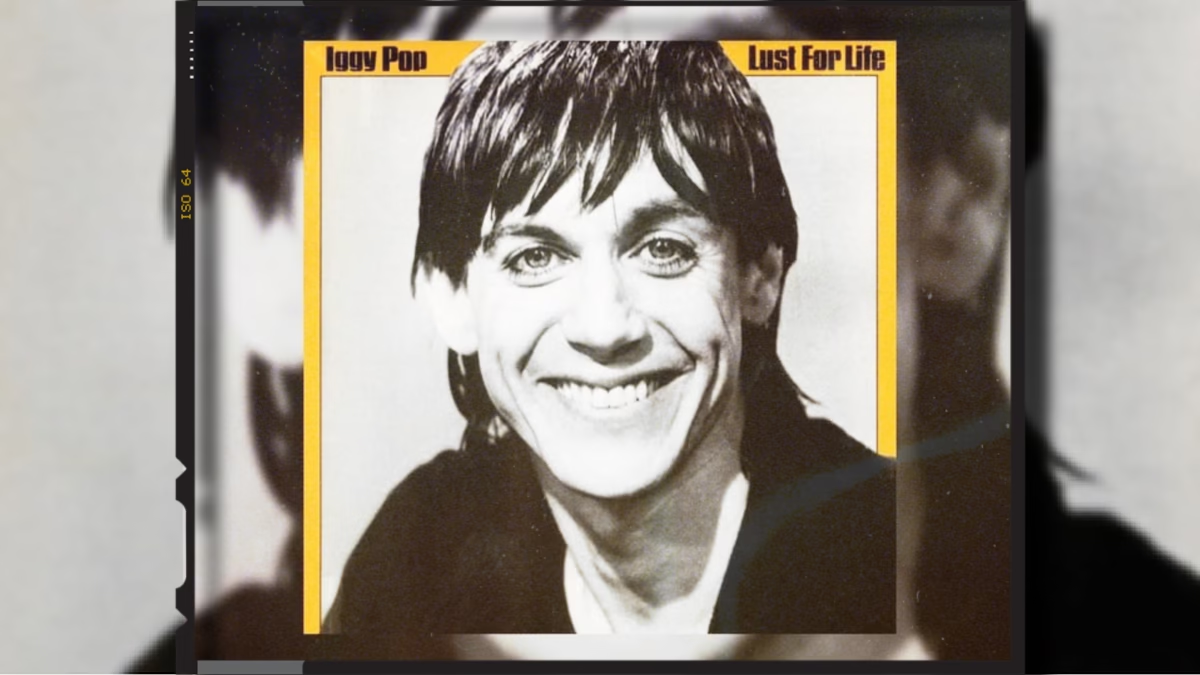
MUSIC – PLAY IT AGAIN! “Lust for Life” – The Ultimate Recovery Anthem on a Soundtrack to One of the Druggiest Films Ever Made?

MOVIE NIGHT WITH THE SOBER CURATOR: Movies Filmed before 2009 That Feature Addiction as Central Theme

MOVIE NIGHT WITH THE SOBER CURATOR: is your go-to guide for films and documentaries that intricately weave addiction, recovery, and mental health into powerful storytelling. Think of us as your bee-zy movie critics, curating a hive of must-watch titles that inspire, educate, and spark conversation.
Our review archives are neatly organized into Drama, Dramedy, and Documentary categories, making it easy to find your next captivating watch. Whether you’re in the mood for a heartfelt indie, a laugh-through-the-tears comedy, or a thought-provoking doc, we’ve got you covered.

SOBERSCRIBE NOW!
Resources Are Available
If you or someone you know is experiencing difficulties surrounding alcoholism, addiction, or mental illness, please reach out and ask for help. People everywhere can and want to help; you just have to know where to look. And continue to look until you find what works for you. Click here for a list of regional and national resources.