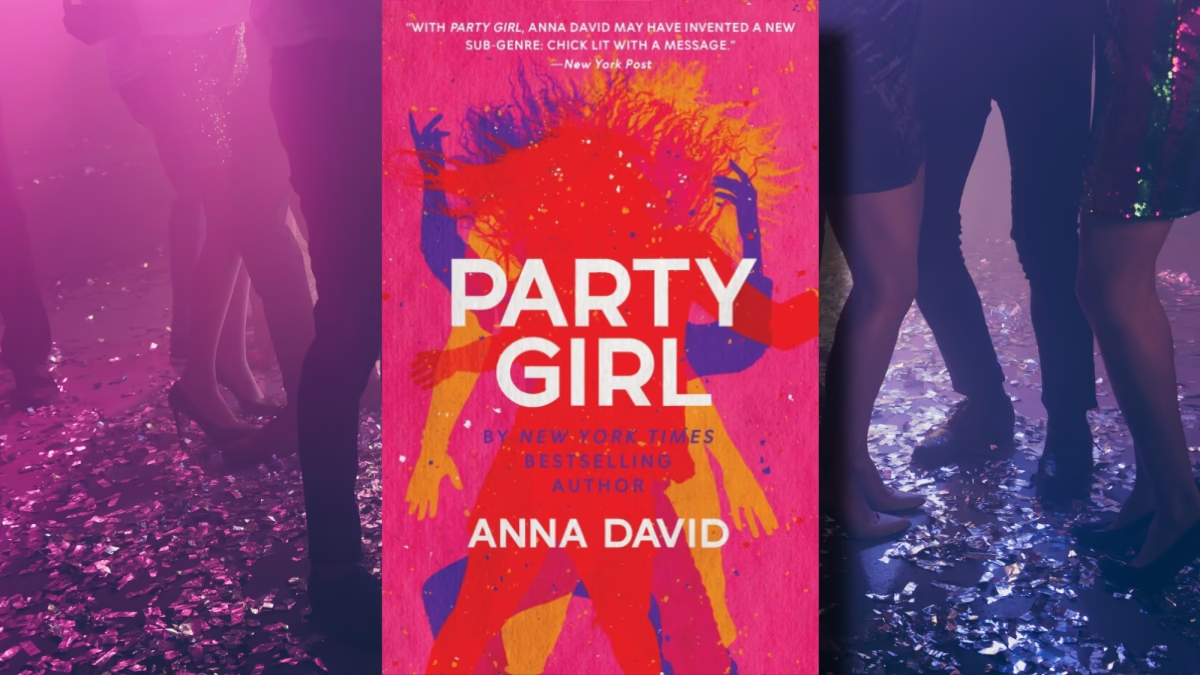
In 2005, when I was five years sober, I started writing a novel loosely based on my own experience getting sober.
When I say “loosely based,” by the way, I mean “almost entirely based.” But “loosely based” sounds way better when we’re talking about a book that opens with a threesome and involves the main character ingesting vats of cocaine.
At the time, I didn’t actually worry about that.
I didn’t worry about much.
In retrospect, I think I was walking around in fight or flight for much of my life—until, specifically, 17 years into my sobriety when I did EMDR and truly addressed the trauma that had been ruling my subconscious for 47 years.
All of this is to say that when I was offered the opportunity to write a first-person story for Playboy magazine a year into my sobriety, I didn’t hesitate. When the editor suggested that they run a photo spread to accompany the article, a few days later I found myself scantily clad, being shot by Victoria’s Secret’s top photographer.
When that Playboy story led to a slew of other sexy opportunities—including a second story (and spread) for Playboy where I reviewed every vibrator on the market and a four-year gig as the on-air sex expert on a TV show called Attack of the Show—I also didn’t hesitate. Was I comfortable answering questions about penis size on national television? I never thought to ask myself.
In the same way, I was never concerned with the raciness of Party Girl. I was the girl who would say anything, do anything, f the consequences. While this was of course related to the delusions of youth, I was also racing so fast through life that it never occurred to me to question my decisions. I may have bought too strongly into the idea of God’s will; I figured if I was being offered an opportunity and it sounded even vaguely glamorous, it must be God’s will. It never occurred to me that perhaps God was offering me opportunities to consider and then pass on for other, more appropriate ones.
A good decade after Party Girl came out, the marketplace began drowning in recovery memoirs—Quit Lit, as it came to be called. From Quit Like a Woman by Holly Whitaker to We Are the Luckiest by Laura McKowen to Sober Curious by Ruby Warrington, the books were seemingly everywhere, along with the rise of “sober influencers” and Alcohol Free bars. These books sold far more copies than Party Girl and were also far tamer.
Quit Lit wasn’t the only thing that had gotten tamer over time. After over two decades of sobriety, I had morphed from the will-do-anything-sober-party-girl to a mom who lived in the Valley with her partner and son.
The combination of becoming a later-in-life mom and my newfound ability to think before acting resulted in the realization that I am a far more conservative person than I ever realized. This meant that the fact that my son could one day stumble across a book as risqué as Party Girl seemed horrifying; the fact that this book would have been written by his mother far more so.
I’d also by then started my company, Legacy Launch Pad, and we’d begun writing and publishing authority-building books for top entrepreneurs. I was not only working with top entrepreneurs but also regularly attending events populated by potential clients who often asked me about my own books.
I’d want to tell them about Party Girl—it remains my favorite thing I’ve ever written—but then I’d imagine them reading the first scene and I’d shudder.
With a book out there that I was horrified for both clients and my son to see, I decided it was time to take action.
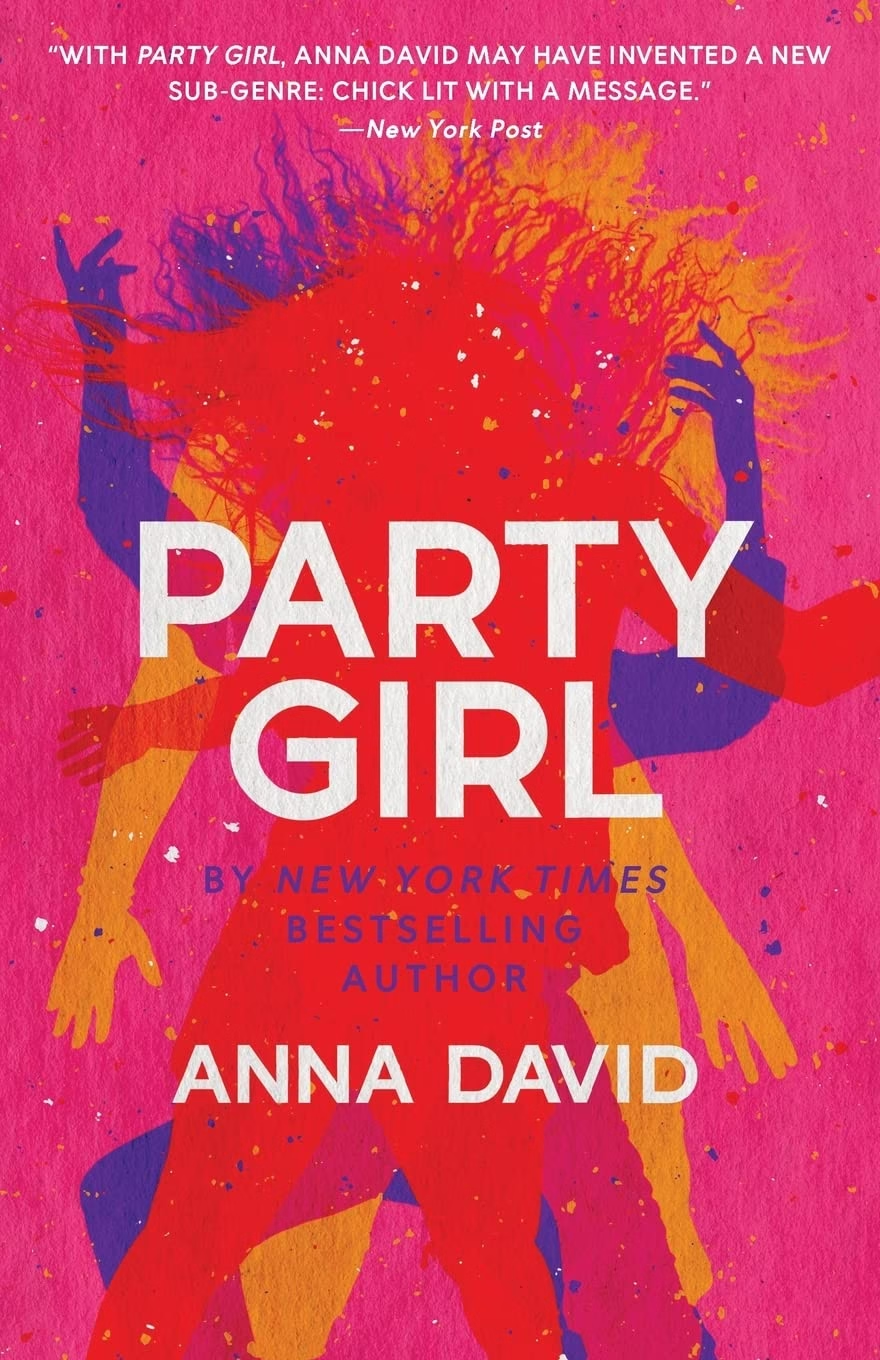
And so I went through Party Girl line by line, eliminating the most risqué bits, cutting more f-bombs than I could count and trying to make it PG. I figured music labels have been doing this for ages—creating a clean radio version and releasing the one with all the bad words to the people they knew could handle it.
My fantasy was that this new PG edition of the book would be the one that took off since the original got a lot of press back in the day and inspired a movie rights bidding war but was so ahead of its time that it never sold that many copies or made the impact I’d so wanted it to.
When the Wall Street Journal did a feature on my re-release and Access Hollywood booked me for a segment to talk about it, I felt all the more certain that the PG version would be ridiculously successful.
Alas, that was not to be. Because the original Party Girl was published traditionally, I can’t just go into Amazon and upload a new version. This means the new one is always going to be in competition with the old and since the old one had a 15-year head start, the algorithm when someone searches for it will always favor the first.
I learned this when the principal of my son’s school handed my boyfriend a copy of Party Girl that she’d gotten on Amazon and asked if he could give it to me to sign. The original version. My two worlds collided—Montessori mom and NC-17 party girl. I avoided signing and returning it to her for as long as I could but my boyfriend worried that she was going to think he never passed the message along so I eventually signed it and sheepishly handed it over to the principal one day after handing over my son.
Luckily, my son’s principal is sober. And look, sober alcoholics may be judgmental but the one thing we never judge is sluttiness.
All of this is to say that the NC-17 Party Girl is still out there in the world. Here’s hoping that by the time my son is old enough to wonder about it, the algorithm will have kicked it to the bottom of the search.
By Contributor: Anna David, Founder/CEO Legacy Launch Pad and Author of Party Girl

ADDICTION FICTION: Party Girl by Anna David – A Glittering Descent and a Gutsy Climb Back Up
TSC LIBRARY: Welcome to The Sober Curator Library! This isn’t your average stack of books—we’re talking full-on story immersion, Audible binges, and reviews with personality. Browse our four go-to genres: #QUITLIT, Addiction Fiction, Self-Help, and NA Recipe Books. And if you’re collecting recovery reads like rare trading cards, check out our Amazon #QUITLIT list—Early Sobriety Survival: Books for Your First 90 Days.
📘 Submit a Book for our #QuitLit Library: Welcome to the largest culturally-driven sober book collection on the internet. Memoir, fiction, criticism, quit lit, anything that fits a Gen X or Millennial sober reader past initiation. Submit your book →
Why did Anna David re-release Party Girl?
Anna David re-released Party Girl because her relationship to the original book changed over time. After more than two decades of sobriety, becoming a mother, doing deeper trauma work, and building a professional life around helping entrepreneurs publish authority-building books, she wanted a version of Party Girl that felt more aligned with who she had become.
What is Party Girl about?
Party Girl is a novel loosely based on Anna David’s own experience getting sober — though, as she jokes in the essay, “loosely based” may be doing some heavy lifting. The book reflects her earlier sober years, when she was more willing to say anything, do anything, and chase opportunities without fully questioning them.
Why did Anna David create a PG version of Party Girl?
Anna created a cleaner version because the original book felt too risqué for her current life as a mother, business owner, and publishing professional. She went through the book line by line, cutting explicit material and removing many f-bombs, similar to the way music labels release clean radio edits.
How did motherhood affect Anna David’s view of the book?
Motherhood gave Anna a new lens on the original version of Party Girl. The idea that her son might one day find such a revealing and risqué version of her past felt unsettling, which helped motivate her to create a version she felt more comfortable having in the world.
How does sobriety shape this essay?
Sobriety is central to the essay because Anna reflects on how much her identity changed across different stages of recovery. Early sobriety brought boldness and momentum, while long-term sobriety, trauma work, and motherhood brought more reflection, boundaries, and self-awareness.
What role did trauma recovery play in Anna David’s decision?
Anna writes that later trauma work, including EMDR, helped her understand how much fight-or-flight had shaped her earlier life. That perspective allowed her to look back at some of her younger choices with more clarity and compassion.
Why did the original Party Girl continue to show up online?
Because the original Party Girl was traditionally published, Anna could not simply replace it on Amazon with the cleaner version. The original had a 15-year head start, meaning search algorithms continued to favor it when readers looked for the book.
Is this essay about regret?
Not exactly. The essay is more nuanced than simple regret. Anna still calls Party Girl her favorite thing she has ever written, but she also recognizes that the original version no longer fully matches the person, mother, and professional she has become.
What makes this essay relevant to recovery readers?
Recovery often involves identity shifts, reinvention, and making peace with earlier versions of ourselves. Anna’s essay captures that strange, funny, and sometimes uncomfortable reality of growing up in public while your past remains available online.
Who is Anna David?
Anna David is an author, entrepreneur, and founder of Legacy Launch Pad. In this essay, she reflects on her experience writing and re-releasing Party Girl, her evolution through long-term sobriety, and the tension between her earlier public persona and her current life.