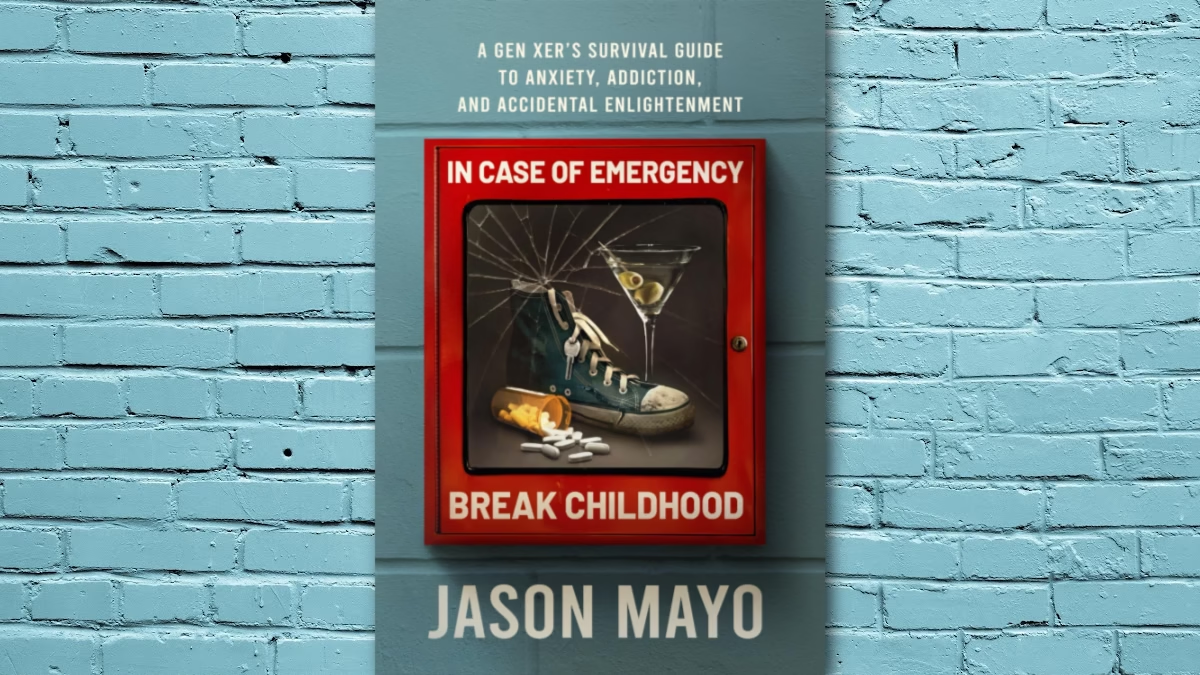
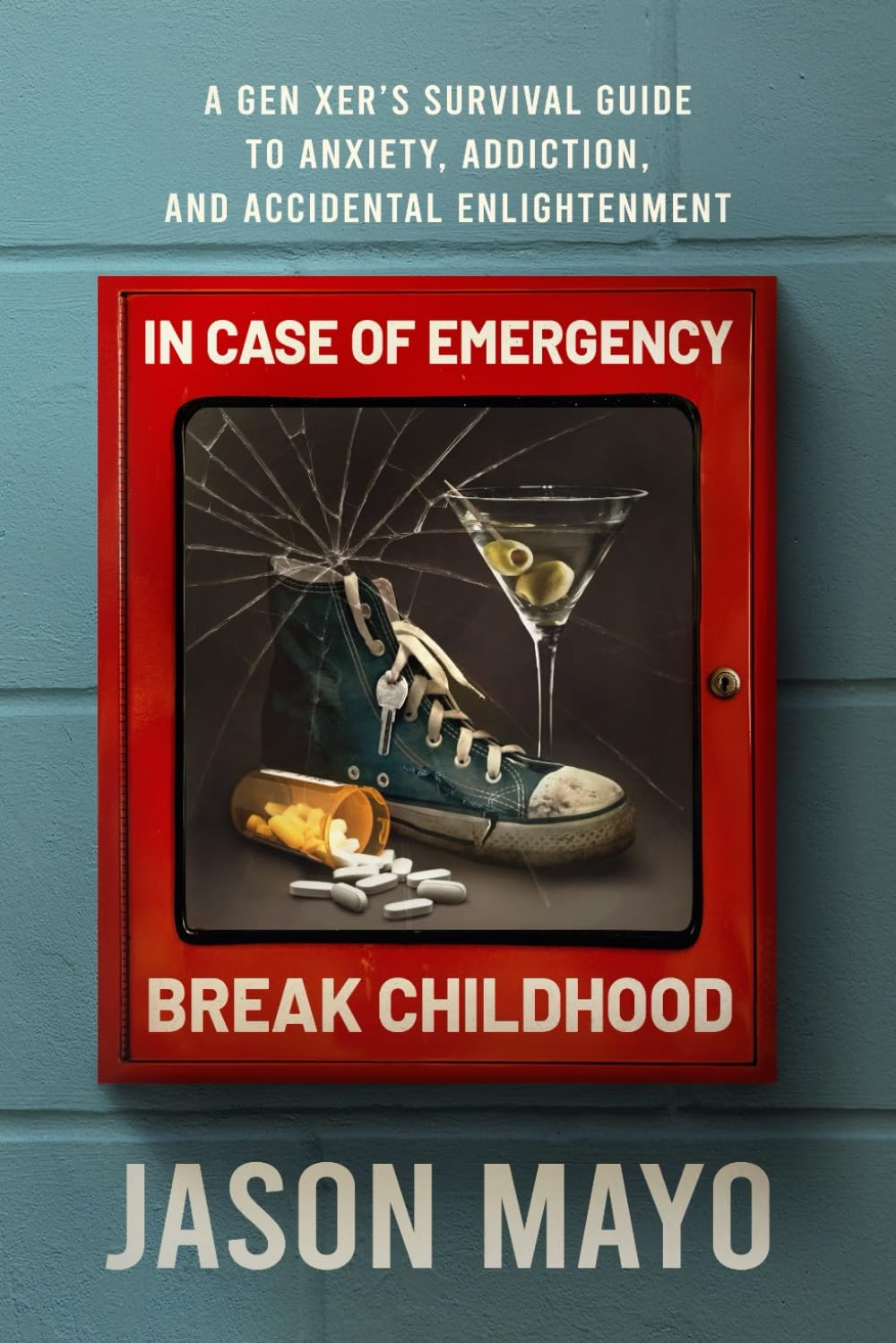
This is honestly the best real human memoir I have read in a long time. I say real human because this book is fully relatable vs the rock star/celebrity memoirs that are interesting but not always relatable.
Clearly there is a focus on his childhood and its impact on his own journey, but it goes further into exploring relationships with parents, children, spouses, friends and working associates. Jason doesn’t simply dwell on childhood trauma though. He dissects it, connects the dots to his behavior later in life and talks about the work to heal himself and the broken relationships he encountered.
First, Jason’s approach to writing feels more like a walk in his shoes than a narrative of events. If you are a Gen Xer, he wraps time and culture around you for the walk making it all that much more enjoyable. Dark humor, gut punch honesty, and how he put his reflections in context makes the time reading this book fly by.
Addict’s memoirs tend not to be unique when it comes to our descents from above, but HOW one tells the story can be unique and Jason has set himself apart in the delivery of downward spiral. I literally could not put it down, once falling asleep with it in my lap. I can count on one hand how many times I have fought sleep to keep reading.
Much of the focus is on the fall versus the Phoenix rising (hopefully Jason will bless us with a sequel). So, this memoir is not as much about the process of recovery itself and more a perspective of what it is like to lose control of one’s life, finally hit bottom and find out we are actually Superballs (one of Jason’s childhoods hoarding objects) who, if we do the work in recovery, can rocket back up to the sky!
I loved the book as an addict, but I think it has another audience where it is just as useful. A person that does not understand addiction. Most rational people cannot wrap their minds around “What the hell are they thinking?” as we cannonball into the tarpits. Jason shines a bright light on this in his retelling. Again, he is not describing events in this book, he is telling us what he was thinking and how he was feeling. Powerful
If you want me to go on and on about this book, leave a comment and I am happy to go on and on.
This is my favorite read in 2026, and I highly encourage picking it up.
#QUITLIT Sobees Score: 5 out of 5


Created by Sober Curator contributor Jason Mayo, SOBER NOT SUBTLE blends personal storytelling, advocacy, and community connection to challenge the stigma around addiction and mental health. Drawing on humor, creativity, and his own lived experience, Jason shares honest reflections that inspire hope, foster understanding, and spark meaningful conversations about recovery.
Beyond his work as a writer and advocate, Jason’s unique voice has earned him national recognition—most notably being named to Working Mother’s “25 Dads Who Rock” list alongside Barack Obama, Jay-Z, David Beckham, Will Smith, and Brad Pitt.

TSC LIBRARY: Welcome to The Sober Curator Library! This isn’t your average stack of books—we’re talking full-on story immersion, Audible binges, and reviews with personality. Browse our four go-to genres: #QUITLIT, Addiction Fiction, Self-Help, and NA Recipe Books. And if you’re collecting recovery reads like rare trading cards, check out our Amazon #QUITLIT list—Early Sobriety Survival: Books for Your First 90 Days.
📘 Submit a Book for our #QuitLit Library: Welcome to the largest culturally-driven sober book collection on the internet. Memoir, fiction, criticism, quit lit, anything that fits a Gen X or Millennial sober reader past initiation. Submit your book →
A STOIC SOBRIETY: Welcome to A Stoic Sobriety. I am Tony Harte, and I believe that Empowering Recovery with Stoic Wisdom is the game-changer you’ve been looking for.
With over 36 years of continuous sobriety (since 1989) and professional experience in addiction treatment, I know that recovery isn’t just about quitting—it’s about evolving.
Here, we combine the tried-and-true approaches of the AA 12-Step Program with the ancient, logical wisdom of Stoicism. Whether you are an agnostic, a believer, or simply seeking strength, let’s embark on this path of enlightenment together.

SOBERSCRIBE NOW!
Resources Are Available
If you or someone you know is experiencing difficulties surrounding alcoholism, addiction, or mental illness, please reach out and ask for help. People everywhere can and want to help; you just have to know where to look. And continue to look until you find what works for you. Click here for a list of regional and national resources.
Follow The Sober Curator on X, the artist formerly known as Twitter
What is In Case of Emergency, Break Childhood about?
In Case of Emergency, Break Childhood is Jason Mayo’s memoir about growing up with anxiety and unresolved childhood trauma, experiencing addiction and self-destruction, and eventually beginning the work of recovery and healing.
Who is Jason Mayo?
Jason Mayo is a writer, recovery advocate and founder of Sober Not Subtle. He is also a contributing writer for The Sober Curator. His work uses humor and personal storytelling to explore addiction, mental health, fatherhood and recovery.
Is In Case of Emergency, Break Childhood primarily about recovery?
The memoir focuses more heavily on Jason Mayo’s childhood, relationships and descent into addiction than on the day-to-day process of recovery. It explores how earlier experiences influenced his behavior and what eventually happened when his life became unmanageable.
Why might Gen X readers connect with this memoir?
Jason Mayo places his story within the culture, objects, music and experiences of a Gen X childhood. These details give readers a strong sense of time and place while making the memoir feel less like a timeline of events and more like walking beside him through his life.
Is this book helpful for people who do not understand addiction?
Yes. The memoir goes beyond describing what happened by exploring what Jason was thinking and feeling as his addiction progressed. That perspective may help family members, friends and other readers better understand why someone continues making destructive choices even when those choices appear irrational from the outside.