

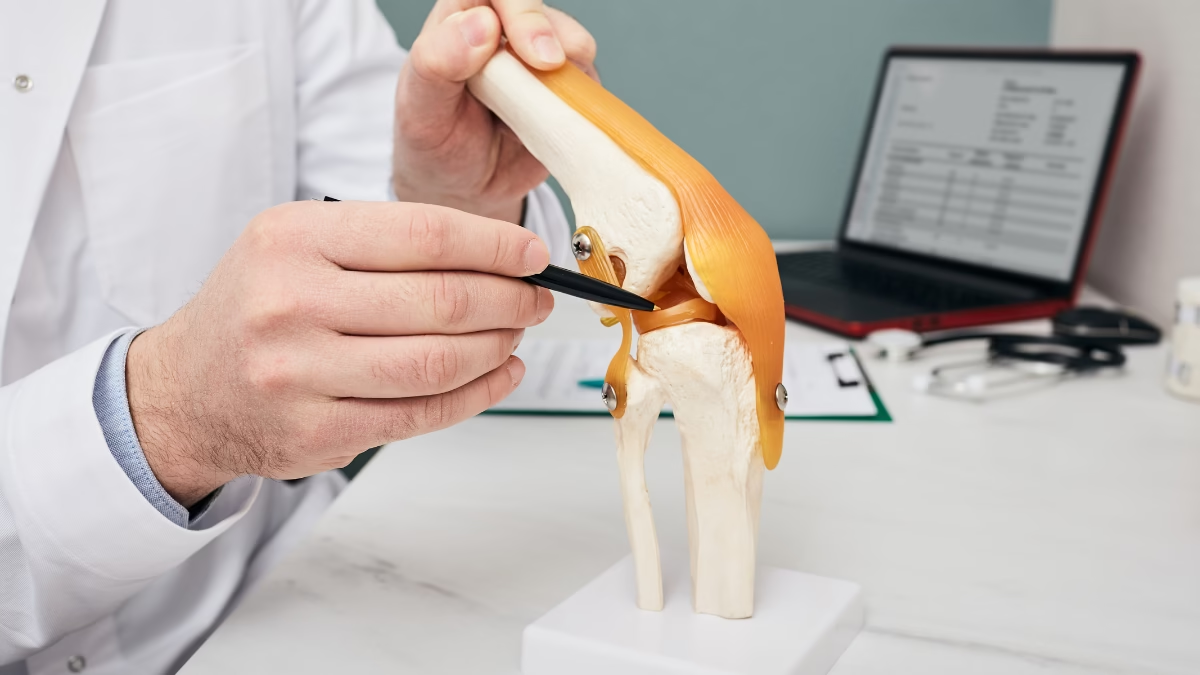
For a long time, the choices for a meniscus tear that didn’t heal on its own were fairly narrow: physical therapy, surgery, or learning to live with it. Over the past several years, a new treatment for torn meniscus cases — stem cell injections — has entered that conversation, and the natural next question is how it actually stacks up against the options that were already on the table.
None of these three paths is universally “better.” Each fits a different tear, a different patient, and a different tolerance for downtime and uncertainty. Understanding how they actually compare is more useful than treating any one of them as an automatic answer.
The Traditional Path: Surgery
For meniscus tears that cause mechanical symptoms — locking, catching, or a piece of torn cartilage that’s physically getting in the way of normal knee motion — surgery remains the most established option, and often the most appropriate one. A surgeon can either repair the tear, when the location and tear pattern allow it, or remove the damaged portion in a meniscectomy when repair isn’t feasible.
The tradeoff worth knowing about is that removing meniscus tissue, even a small amount, changes how load is distributed across the knee joint over time, which is associated with an increased risk of arthritis down the line. Meniscus surgery isn’t the wrong call for the right tear — it’s simply not without long-term considerations, and that’s part of why a less invasive new treatment for torn meniscus cases that doesn’t involve an operating room at all has drawn so much interest.
Where PRP Fits In
Platelet-rich plasma (PRP) involves drawing a patient’s own blood, concentrating the platelets, and injecting that concentrate into or near the injured area. Platelets release growth factors that are thought to support local tissue repair, and PRP has been used across a range of orthopedic applications for over a decade.
For meniscus tears, PRP tends to be discussed as a way to potentially support healing in tears located in better-vascularized areas, where the tissue already has some inherent capacity to repair. Evidence for PRP’s effectiveness specifically in meniscus tears is mixed and still developing, and results vary considerably depending on tear location and severity.
What Makes Stem Cell Treatment Different
Stem cell injections — typically using cells drawn from a patient’s own bone marrow or adipose tissue — are being discussed as a further step beyond PRP, largely because mesenchymal stem cells are thought to do more than simply deliver growth factors. They may also help modulate local inflammation and support tissue repair more broadly, which is part of why interest has grown particularly for tears in the meniscus’s poorly vascularized inner zone, where natural healing is limited and PRP’s local-repair mechanism has less existing tissue capacity to work with.
It’s worth being precise about where the evidence actually stands: this new treatment for torn meniscus injuries remains an active area of regenerative medicine research, not a settled alternative to surgery for every tear. Outcomes vary by tear size, location, chronicity, and the patient’s broader joint health, and no regenerative approach is guaranteed to work for a given case — cartilage repair at this level is still a developing science, not a finished one.
Comparing the Three Paths
A few points tend to matter most when weighing these options against each other:
- Invasiveness and downtime. Surgery involves an operating room and a structured recovery period, often with weeks of restricted weight-bearing depending on the procedure. PRP and stem cell injections are both outpatient procedures with minimal downtime, though neither guarantees the same outcome as surgical repair for tears that genuinely need it.
- Strength of evidence. Surgical repair and meniscectomy have decades of outcome data behind them. PRP has a moderate, mixed evidence base specific to meniscus tears. Stem cell treatment has the least mature evidence base of the three, though it’s an active and growing area of research.
- Best-suited tear type. Surgery tends to make the most sense for tears causing mechanical symptoms or located in areas unlikely to respond to any conservative approach. PRP and stem cell injections are more often considered for tears that haven’t fully resolved with physical therapy but don’t yet meet the threshold for urgent surgical intervention.
Who Tends to Be a Good Candidate for Each
People with a knee injury causing locking, catching, or significant instability are usually steered toward a surgical evaluation regardless of interest in regenerative options. People whose meniscus tear has persisted despite physical therapy, particularly tears in the harder-to-heal inner zone, are the group most often exploring PRP or a new treatment for torn meniscus symptoms as a next step before considering surgery. Older adults with degenerative tears from a longstanding knee injury, who may not be ideal surgical candidates for other health reasons, are another group frequently discussed in this context.
It’s also worth being direct that not every stem cell product offered to patients is backed by the same quality of sourcing or evidence, which makes a provider’s transparency about where cells come from an important part of evaluating any clinic offering this treatment.

What an Evaluation Should Actually Involve
Regardless of which path looks most appealing, a proper evaluation should start with imaging — an MRI to confirm tear size, location, and vascularity — followed by a conversation about prior treatment history, activity goals, and realistic expectations for each option. A provider who’s willing to say “surgery is genuinely the better call here” when that’s true, rather than defaulting to whichever regenerative option is available, is a good sign of a program built around the patient rather than the product.
Making Sense of the Options
There isn’t a single correct answer to how a torn meniscus should be treated — there’s a correct answer for a specific tear, in a specific knee, for a specific person’s goals. Surgery, PRP, and a new treatment for torn meniscus cases involving stem cells each occupy a different place on that spectrum, and understanding what separates them is a more useful starting point than assuming the newest option is automatically the best one, or that it’s automatically the wrong one either.
What matters most is matching the treatment to the tear rather than the tear to whatever treatment happens to be trending. A tear that’s causing mechanical locking almost always needs a surgical opinion first, no matter how promising the newer regenerative options sound. A tear that’s persisted despite honest effort at physical therapy, without those mechanical red flags, is exactly the situation where it’s worth having a real conversation about where PRP or stem cell treatment might fit — not as a guaranteed answer, but as a reasonable next step worth understanding before deciding what to do.
Sponsored Content Editor’s Note: This article was created in partnership with a sponsor and contains a paid link. The Sober Curator maintains editorial independence and does not endorse any specific medical treatment or provider. Stem cell and other regenerative medicine therapies marketed for orthopedic conditions, including knee injuries, are not FDA-approved specifically for treating meniscus tears. Evidence continues to evolve, and patients should discuss potential benefits, risks and alternatives with a qualified medical professional.

SOBER SPORTS: This section celebrates the connection between sobriety, wellness, and an active lifestyle. This section features articles, interviews, and personal stories from athletes and fitness enthusiasts who are thriving without alcohol. By showcasing the benefits of sober living—and the powerful role sports and fitness play in maintaining recovery—we’re reframing what wellness looks like and promoting a positive, empowering approach to life after booze.

The Sober Curator’s MENTAL HEALTH + WELLNESS section is your go-to guide for nurturing emotional well-being—especially for those in recovery. Explore resources, expert insights, and personal stories that connect the dots between mental health, sobriety, and self-care. From managing anxiety and depression to building mindfulness and emotional resilience, we provide practical tools and inspiration to help you thrive alcohol-free. By fostering open, stigma-free conversations, we empower our community to make emotional wellness a cornerstone of long-term recovery.
Dedicated columns on this TSC channel:
- Codependency – Insights & Recovery with Sober Curator Contributor Dr. Sarah Michaud
- Financial Sobriety – with Sober Curator Contributor Greg Downs, author of the forthcoming book 12 Steps to Financial Sobriety, and leader of The Sober Money Club financial support group.
- Mastering Mental Fitness with Sober Curator Contributor James Gwinnett
- Mental Health – Emotional Wellness in Recovery
- Relationships – Love, Connection & Boundaries in Sobriety
- Sober Poetry – Recovery in Verse
- Speak Out! Speak Loud! – Stories & Creative Expression in Recovery
- Spiritual Substance – Mindfulness, Science & Soul with Senior Sober Curator Contributor Lane Kennedy
- Wellness As A Way of Life – Sustainable Health for Powerful Women with Senior Sober Curator Contributor Megan Swan
You’ve got mail from The Sober Curator

Resources Are Available
If you or someone you know is experiencing difficulties surrounding alcoholism, addiction, or mental illness, please reach out and ask for help. People everywhere can and want to help; you just have to know where to look. And continue to look until you find what works for you. Click here for a list of regional and national resources.

Subscribe to The Sober Curator on YouTube
What are the main treatment options for a torn meniscus?
Treatment can include physical therapy, activity modification, surgical repair or meniscectomy and, in some settings, regenerative approaches such as PRP or stem cell injections. The appropriate option depends on the type and location of the tear, symptoms and overall knee health.
Is surgery always necessary for a meniscus tear?
No. Some meniscus tears can improve with conservative treatment such as physical therapy. Surgery may be considered when symptoms persist or when a tear causes mechanical problems such as locking or catching.
What is PRP treatment for a meniscus tear?
Platelet-rich plasma, or PRP, uses a concentrated portion of a patient’s own blood containing platelets and growth factors. It is injected into or near an injured area with the goal of supporting the body’s healing response. Evidence for PRP specifically for meniscus tears is still developing.
Are stem cell injections approved for meniscus tears?
Stem cell and other regenerative medicine products marketed for orthopedic conditions generally have not been FDA-approved specifically to treat meniscus tears. Patients considering these treatments should ask providers about the regulatory status, evidence, sourcing and potential risks of the product being offered.
How do I know which meniscus treatment is right for me?
A medical evaluation typically considers the location and severity of the tear, symptoms, imaging findings, previous treatment and activity goals. A qualified orthopedic clinician can help determine whether conservative care, surgery or another approach is appropriate.