Sobriety taught me more about money than Wall Street ever did.
I spent 14 years managing investments for some of the wealthiest families in the country. During the day, I sat at a mahogany desk in Palm Beach less than a block from the ocean. At night, I was entertaining clients at happy hours, dinners, sporting events and charity functions. Everyone was drunk on money.
I’d be lying if I said it wasn’t fun.
What surprised me the most was not all those zeroes or my clients’ ability to buy nearly anything in the world; it was the emotions they shared once we sat down face to face in the boardroom. Nearly all of them had some form of fear, denial, shame or guilt when it came to money. Yes, even with millions in the bank.
Most financial advice is focused on the numbers: make a budget and track your spending. But that’s the simple part. The math is always the math. To save, you must spend less than you make. Easy, right?!
What complicates things (and makes us human) is the emotions driving our financial decisions. And the finance world misses the mark.
We don’t have tools for when we are scrolling on Amazon late at night after a rough day and smash that “buy” button because it makes us feel better. Or when we go out to eat more times than we can afford because we “deserve it”.
Those also sound an awful lot like reasons I drank too.
Recovery rooms taught me how to deal with heavy emotions. I learned tools for how to stay away from the first drink.
I quickly realized those same tools designed to help people address the emotions tied to their drinking can help people manage their emotions around money. That’s where this column comes in.
So, what is “Financial Sobriety”?
Financial sobriety means having an honest and present relationship with money. Fear, shame or avoidance are no longer running things. It’s peace, not perfection.
Our complicated relationships with money make us think it’s a scorecard. It’s not. You are not your debt amount or your credit score. When we release that shame, we can build a new relationship with money.
That new foundation starts with getting honest about what’s working and what’s not. If you feel exhausted from starting a new budget every month/quarter/year, you might be at a good starting point. Or if you’ve never logged in to your bank app because numbers make your brain hurt, it might be time for something different. Neither of these make you a bad person. You’ve just been doing the best you can in a system that hasn’t given you any resources to actually manage your financial emotions.

Meet the Columnist
I’m Greg, a guy who drank too much and realized that the same emotions driving my drinking were also keeping my clients awake at night. So, I took the recovery framework that saved my life and apply it to people’s relationship with money. I write regularly on Substack, host Sober Money Club (a weekly peer support meeting) and my book 12 Steps to Financial Sobriety comes out on February 2, 2027.
I’m also a husband and cat dad. My wife and I love watching movies and wish we had more time to cook. I always aspired to be like Anthony Bourdain and perhaps became a little too similar by falling into a deep depression that I narrowly escaped.
The Finance Column You Never Knew You Needed
There are more podcasts, YouTube channels and TikToks explaining budgeting tactics than ever before. Yet, as a collective, our finances have never been worse. If more information was the answer, we’d be the most financially healthy generation in history. But we’re not.
If you’re looking for a stock tip, there are plenty of others willing to opine. But if you want to know why you bought a set of shirts from Quince when you already have a closet full of shirts, let’s talk.
Once a month, I’ll answer questions from you.
I want the questions you’ve always been afraid to ask. The emotional questions. The ones that keep you up at night.
Until next time,
Greg

Recovery isn’t the end of the story.
Recovery has been framed as survival. Staying sober as maintenance.
We’re interested in something else.
Not just getting through life — but actually engaging with it.
Identity.
Culture.
Celebration.
Taste.
Expansion.
This is the room where the conversation finally aligns with who you’ve become — and where you’re going next. LEARN MORE AND JOIN TODAY →
We know you’re a skimmer. We wrote a newsletter for skimmers.
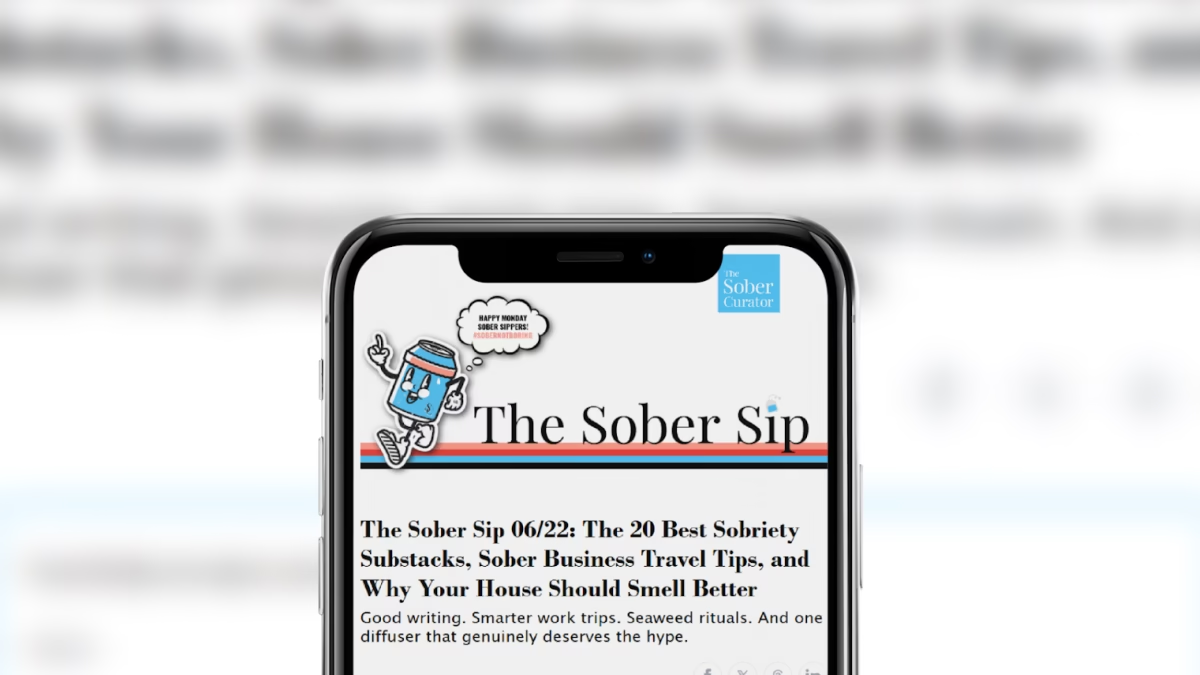
Short intros. Quick hits. Headlines that tell you exactly what you’re getting. Read it in the school pickup line, on the treadmill, or while pretending to listen on a conference call.
The Sober Sip: three times a week, zero fluff.
Resources Are Available
If you or someone you know is experiencing difficulties surrounding alcoholism, addiction, or mental illness, please reach out and ask for help. People everywhere can and want to help; you just have to know where to look. And continue to look until you find what works for you. Click here for a list of regional and national resources.
Follow The Sober Curator on TikTok
What is financial sobriety?
Financial sobriety means having an honest and present relationship with money. It involves recognizing the fear, shame, guilt or avoidance influencing financial decisions and developing healthier ways to respond.
How is financial sobriety connected to addiction recovery?
Many of the emotions that contribute to unhealthy spending habits can resemble those connected to drinking or other addictive behaviors. Financial sobriety applies recovery principles such as honesty, awareness and taking things one day at a time to money management.
Is financial sobriety the same as following a budget?
No. Budgeting may be part of financial sobriety, but the concept goes beyond numbers. It examines the emotions and behaviors behind spending, saving, debt and financial avoidance.
Can wealthy people struggle with financial anxiety?
Yes. Greg explains that even clients with millions of dollars experienced fear, denial, shame and guilt around money. Financial well-being is not determined solely by income, assets, debt or credit scores.
Who is Greg Downs?
Greg Downs spent 14 years managing investments for wealthy families before applying the recovery framework that helped save his life to people’s relationships with money. He writes about financial sobriety, hosts the weekly Sober Money Club peer support meeting and is the author of the forthcoming book 12 Steps to Financial Sobriety.