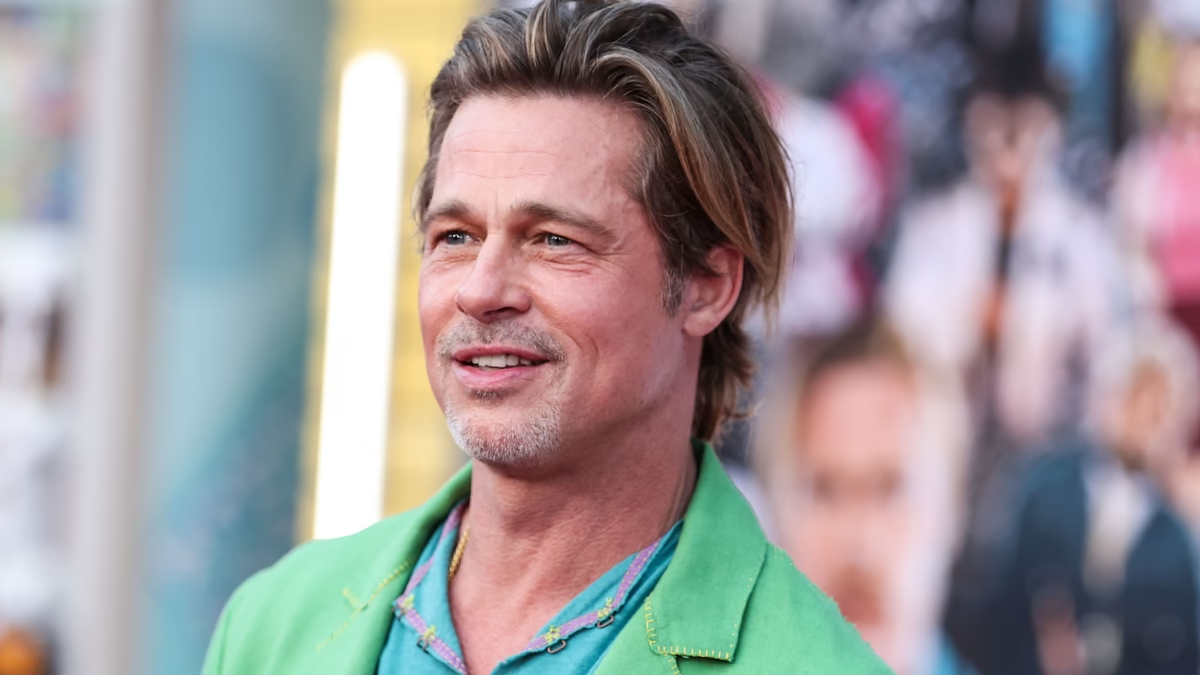
When Brad Pitt told Esquire magazine this week that he was “no longer sober” after seven years without alcohol, the internet responded exactly as I expected.
Within hours, people were dissecting his choices, debating whether he had “relapsed,” and arguing over whether someone who drinks occasionally can still claim any part of a sobriety journey. Complete strangers were deciding whether another person’s recovery measured up to their own definition of success.
As I read the headlines and the comments, I found myself thinking something very different.
We’ve completely missed the point.
Brad Pitt and I actually have something in common. We both stepped away from alcohol seven years ago. Our stories are different. And clearly our lives are quite different. But today, our choices are also different. Brad has shared that he now drinks in moderation. I don’t. Living alcohol-free remains one of the greatest gifts I’ve ever given myself, and I have no desire to change that. Because that’s what is right for me.
But here’s what I find fascinating: somehow his interview has become less about his relationship with alcohol and more about everyone else’s opinion of it.
For decades, we’ve treated sobriety as though it’s a finish line with gatekeepers standing at the entrance. If you choose the “right” path, use the “right” language, or follow the “right” program, you’re welcomed in. If your experience doesn’t fit someone else’s definition, you’re often told it doesn’t count.
I wonder, rather…I worry how many people that mindset has kept silent.
Because when I first started questioning my own relationship with alcohol, I wasn’t curious—I was scared. Scared that if I admitted alcohol wasn’t serving me, it meant I had to accept a label I wasn’t ready for. I spent years trying to prove I wasn’t an alcoholic instead of asking a far simpler question:
Was alcohol making my life better or worse?
The moment I stopped trying to diagnose myself and started paying attention to how alcohol affected my life, everything changed.
The irony is that we encourage people to examine their relationship with alcohol, but the moment they do, we hand them someone else’s definition of what success is supposed to look like. We tell them to drink forever. Or never drink again. Count your days. Don’t count your days. Go to meetings. Don’t go to meetings. Moderate. Never moderate.
Instead of making room for honest exploration, we often replace one set of expectations with another.
What struck me most about Brad Pitt’s interview wasn’t that he drinks wine now. It was something much simpler. He talked about getting overconfident. He talked about recognizing his limits. He talked about how much he values mornings…. enough that he doesn’t want to lose them to the aftereffects of too much alcohol the night before. He talked about paying attention to what works for him and what doesn’t.
Whether you agree with his conclusions isn’t really the point. The point is that he’s still asking honest questions.
To me, that’s where real change begins—not with a label, but with awareness.
I don’t believe everyone should drink. I also don’t believe everyone has to stop. What I do believe is that every person deserves the freedom to look honestly at their own relationship with alcohol without immediately being handed shame, judgment, or someone else’s rules.
That’s the conversation I wish we were having.
Because we’ve spent generations celebrating alcohol while whispering about sobriety. We’ve made it easier to joke about drinking too much than to admit we’re wondering if it’s costing us something. We’ve created a culture where people often feel they must hit rock bottom before they’re allowed to ask whether they want something different.
What if we changed that?
What if we stopped asking, “Is Brad Pitt still sober?” and started asking a more useful question: What can we learn from someone willing to honestly examine their relationship with alcohol?
Maybe the goal was never to define sobriety for someone else.
Maybe the goal is to create a culture where more people feel safe enough to define it for themselves.
Because in the end, this isn’t about Brad Pitt.
It’s about all of us.
And perhaps the healthiest thing we can do isn’t to police someone else’s path…. but to have the courage to examine our own.
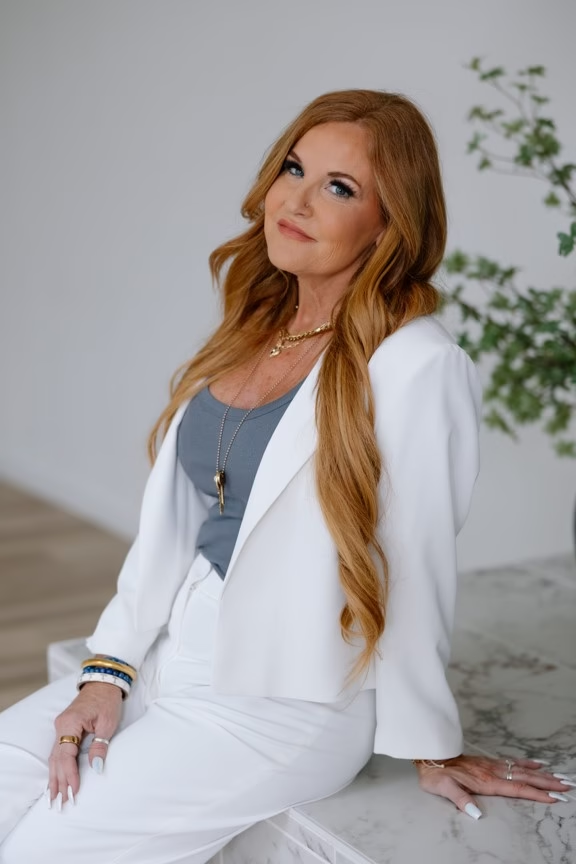
By Contributor: Danielle Elliott Smith
Danielle Elliott Smith is an award-winning journalist, former television host, author, speaker, pioneering mom blogger, recovery advocate, podcast host, founder of ReDefining Sober™ and seven years sober. Throughout her career, she has interviewed hundreds of newsmakers, celebrities, and changemakers while building a trusted voice in storytelling and digital media. Today, through Hope Comes to Visit podcast and ReDefining Sober™ (including her new app, powered by Studio), she is helping transform the conversation around alcohol and recovery by reminding people that healing is deeply personal, hope is always possible, living alcohol-free can be joyful, meaningful, and full of possibility, and there is always a way forward.
“A version of this opinion piece originally appeared in the St. Louis Post-Dispatch.”
SPEAK OUT! SPEAK LOUD! at The Sober Curator is a celebration of authentic voices in recovery—echoing Madonna’s call to “Express yourself!” Here, readers and contributors take the spotlight, sharing transformative sobriety journeys, creative talents, and new avenues of self-expression discovered along the way. Through videos, poems, art, essays, opinion pieces, and music, we break the silence that often surrounds addiction, replacing it with connection, hope, and inspiration.
Your story matters—and we want to hear it. ✏️ Submit Your Story to Speak Out! Speak Loud! Reader-written essays and opinion pieces. We publish sharp, specific, witty writing about modern sobriety. Submit your story →
Disclaimer: All opinions expressed in the Speak Out! Speak Loud! Section are solely the opinions of the contributing author of each individual published article and do not reflect the views of The Sober Curator, their respective affiliates, or the companies with which The Sober Curator is affiliated.
The Speak Out! Speak Loud! posts are based upon information the contributing author considers reliable. Still, neither The Sober Curator nor its affiliates, nor the companies with which such participants are affiliated, warrant its completeness or accuracy, and it should not be relied upon as such.

The Sober Curator’s MENTAL HEALTH + WELLNESS section is your go-to guide for nurturing emotional well-being—especially for those in recovery. Explore resources, expert insights, and personal stories that connect the dots between mental health, sobriety, and self-care. From managing anxiety and depression to building mindfulness and emotional resilience, we provide practical tools and inspiration to help you thrive alcohol-free. By fostering open, stigma-free conversations, we empower our community to make emotional wellness a cornerstone of long-term recovery.
Dedicated columns on this TSC channel:
- Codependency – Insights & Recovery with Sober Curator Contributor Dr. Sarah Michaud
- Financial Sobriety – with Sober Curator Contributor Greg Downs, author of the forthcoming book 12 Steps to Financial Sobriety, and leader of The Sober Money Club financial support group.
- Mastering Mental Fitness with Sober Curator Contributor James Gwinnett
- Mental Health – Emotional Wellness in Recovery
- Relationships – Love, Connection & Boundaries in Sobriety
- Sober Poetry – Recovery in Verse
- Speak Out! Speak Loud! – Stories & Creative Expression in Recovery
- Spiritual Substance – Mindfulness, Science & Soul with Senior Sober Curator Contributor Lane Kennedy
- Wellness As A Way of Life – Sustainable Health for Powerful Women with Senior Sober Curator Contributor Megan Swan

Sober Say What?
GLOSSARY OF ADDICTION + RECOVERY TERMS: Welcome to The Sober Curator’s ultimate guide to the language of sobriety, recovery, and alcohol-free living—where words hold power, knowledge, and the keys to a vibrant, substance-free life. This comprehensive glossary shines a light on essential terms that offer wisdom, clarity, and connection for anyone navigating recovery.
From the first spark of curiosity to the joyful celebration of milestones, our glossary helps demystify the terminology of sobriety and recovery. Each definition is designed to empower, educate, and support you on your journey toward wellness, self-discovery, and lasting freedom.
If you or someone you know is experiencing difficulties surrounding alcoholism, addiction, or mental illness, please reach out and ask for help. People everywhere can and want to help; you just have to know where to look. And continue to look until you find what works for you. Click here for a list of regional and national resources. If you or someone you love is in immediate danger, call 911. If you are in crisis and need immediate help, call 988.