


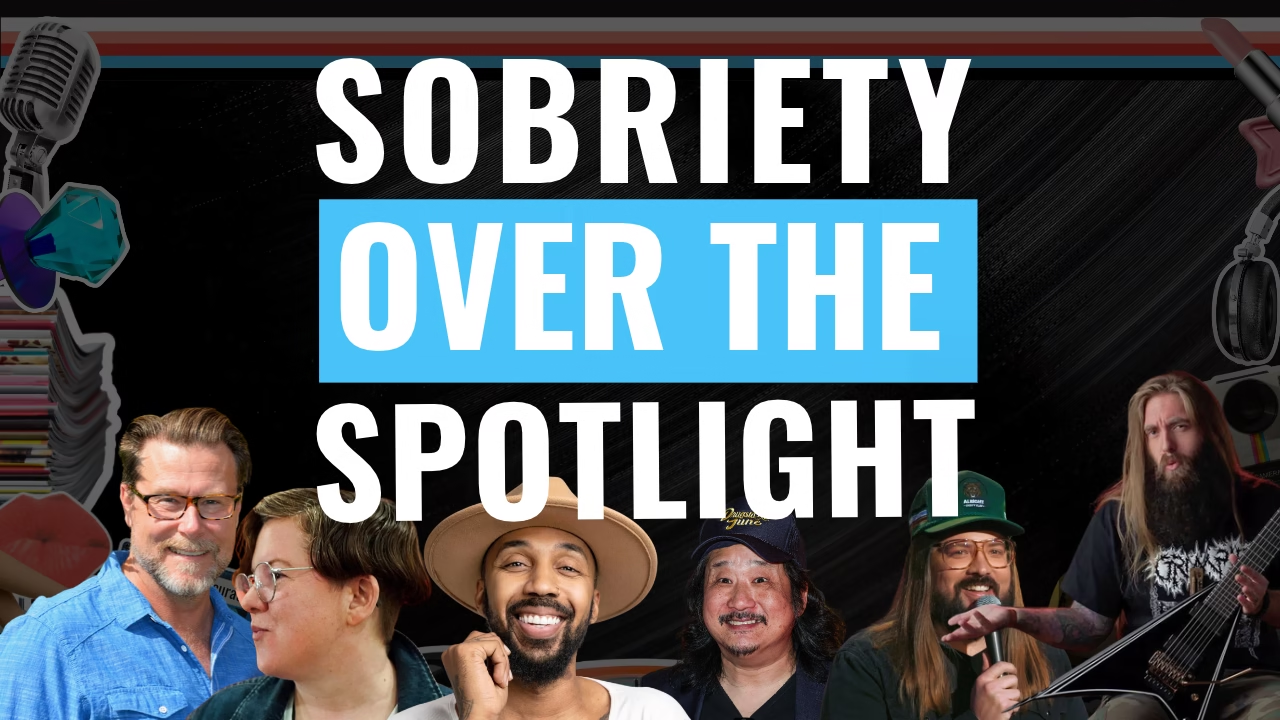

A metal guitarist made news this week by not going on tour.
Two stand-up comics talked about getting sober, and one of them found a room where nobody expects him to get a laugh. It’s called a bookstore.
And a queer punk musician wrote one sentence I would underline hard enough to ruin the page behind it.
Here’s your week in sober pop culture.
Sober Pop Culture Moments of the Week – Watch Now
The Tour That Went On Without Him
Mark Heylmun plays guitar in Suicide Silence. On Nov. 7, he told fans he would sit out the band’s Reminders of Hell tour. In his words: “Right now I need to put my sobriety and my mental health first.”
He isn’t leaving the band. He’ll still be involved behind the scenes. He just won’t be on the stage this time.
What I appreciate is that he gave fans enough information to understand the decision without handing them a vote on it. He didn’t owe anyone a list of what went wrong, and I’m not going to invent one to make this a juicier story.
A working musician looked at the calendar and decided his sobriety mattered more than the stage.
That is the entire story.
Most of us will never have to break that kind of news to a room full of metal fans. But a work trip, a family weekend, a holiday party where leaving early somehow requires a congressional hearing? That part I recognize.
Sometimes the interesting question isn’t “Can I get through this?” It’s “Why am I so determined to prove that I can?”
Bobby Lee in Your Headphones, Dusty Slay on Your Nightstand
You may know Bobby Lee from Mad TV or the Bad Friends podcast. In an interview with Dr. Drew released Nov. 9, he talked about having four years sober, about first getting sober at 17, and about returning to recovery after setbacks, including one after his father died in 2019.
Four years is where he is. It wasn’t an anniversary announcement, and I like it better that way.
Here’s the detail that surprised me. After more than 30 years in comedy, Bobby is finally getting his first hour-long stand-up special. It’s called Bobby Lee: Finally, and it lands on Hulu Nov. 27.
As far as titles go, he earned the adverb.
That’s two different recommendations. If you want to hear Bobby talk seriously about putting recovery ahead of the work, the Dr. Drew conversation is out now. If what you want after Thanksgiving is to get under a blanket in your stretchy pants and watch the man do his actual job, that’s Nov. 27 on Hulu.
I like that we get to do both.
Dusty Slay went the other direction. The Nashville comic behind the signature “we’re having a good time” took that line to the bookstore. His book, We’re Having a Good Time (And Other Stories…), came out Nov. 10.

Dusty quit drinking in 2012, so the news here is the book, not that Dusty suddenly got sober on a Tuesday.
What interests me about a comic writing about drinking is what happens to a story when there’s no microphone. On stage, if a room goes quiet, that’s instant feedback. On the page, a reader can sit with something uncomfortable for a minute or two.
Nobody has to rescue the moment with a punchline.


A Memoir Bigger Than a Sobriety Headline
So that’s my sober comedy double bill: Bobby in your headphones, Dusty on your nightstand. Neither requires a two-drink minimum.
Also out Nov. 10: And If I Die Before I Wake, the first adult memoir from George M. Johnson, author of All Boys Aren’t Blue.
Johnson writes about alcoholism alongside grief, an HIV diagnosis and life in a queer Black family.
If you know Johnson’s name mostly from the fights over who gets to read All Boys Aren’t Blue, here’s your chance to get reacquainted with the person doing the writing. That’s a far better book club conversation than another round of people arguing about a book they haven’t opened.
One distinction worth making on a site like ours: writing about alcoholism is not the same as announcing a sobriety date. Johnson gets to decide how they describe their life. What I can tell you is what’s on the page and why I’d make room for it on a sober bookshelf.
Alcohol doesn’t get the whole person to itself.
Neither should the headline.
What the Celebrity Ex Headline Missed
Dean McDermott credited his ex-wife, Tori Spelling, with helping him get into treatment, and said the two still share meals as co-parents. Nice job, Tori. He also told People he’s three years and four months sober.
“Celebrity exes still eat dinner together” is perfectly respectable group chat material. I’m here for it.
But Dean said something else, and I wish it had gotten the bigger headline. He now works as a drug and alcohol counselor and facilitates recovery groups, and he was clear that helping other people doesn’t replace taking care of his own sobriety.
As someone who runs a sober media company, that’s the line that got my attention.
I’ve been sober since 2006, and I still catch myself doing this. You can spend an entire workday talking about recovery, send the last email, close the laptop and realize you never once asked yourself how you’re doing.
A full calendar of sober work and a little time set aside for your own sobriety are not interchangeable.
I appreciate him saying it out loud.
The Line of the Week
I promised you a sentence worth underlining. Here it comes.
It’s from musician Tami Hart, who wrote a first-person essay in Out on Nov. 11. Hart looks back at the queer punk scene, 12-step rooms, about seven years sober and, later, drinking again. She writes about returning to “Water Under That Bridge,” a song she wrote at 24, as she releases her first full-length solo album in 24 years.
Here’s the line:
“I no longer had to perform being fearless. I could simply be honest.”
Perform being fearless.
That’s the part that got me, especially coming from someone who knows what it means to walk on a stage. Looking fearless is a skill. Telling the truth about being scared is a different one. You can be very, very good at the first and brand new at the second.
Hart isn’t offering us a neat before and after, and I’m not going to tack one onto her essay. What she gives us is more interesting: a songwriter coming back to something she wrote two decades ago and hearing it differently, because she’s the one who changed.
If you click just one link after this, make it her essay.
Tell Me Whose Story Found You First
Whose recovery story did you first find through their work, before you ever heard them talk about it in an interview? A song, a book, a stand-up bit. I’m here for any of it.
Drop it in the comments. That’s how my reading list gets slightly out of hand, and I consider that a public service.
Want more of these conversations every week? Come hang out with us in BACKSTAGE with The Sober Curator.
Sources:
Mark Heylmun
Bobby Lee
- Laughing Place (Bobby Lee: Finally, first hour-long special, Hulu Nov. 27)
- What’s On Disney Plus (Nov. 27 date)
Dusty Slay
George M. Johnson
- Bookclubs.com (debut adult memoir; HIV, alcoholism, loss, book bans)
- Publisher listing, Farrar, Straus and Giroux (Nov. 10 on-sale date)
- Porchlight Books (they/them pronouns)
Dean McDermott
- TMZ (three years sober, June 2026)
- Yardbarker (June 26 sobriety date)
- Hello! Magazine (alcohol and drug counselor)
- Yahoo/People (credits Tori Spelling for support)
Tami Hart
- Out (Nov. 11 essay, quote, about seven years sober then drinking again, “Water Under That Bridge,” first solo album in 24 years)

#QUITLIT: Sober Celebrity Memoirs Worth Reading – Books Written by People Who’ve Actually Been There
Recovery isn’t the end of the story.
Recovery has been framed as survival. Staying sober as maintenance.
We’re interested in something else.
Not just getting through life — but actually engaging with it.
Identity.
Culture.
Celebration.
Taste.
Expansion.
This is the room where the conversation finally aligns with who you’ve become — and where you’re going next. LEARN MORE AND JOIN TODAY →
Membership includes options for digital only or print + digital, which means a cassette tape case full of tiny zines gets mailed to your house every month.
You’ve got mail from The Sober Curator
Resources Are Available
If you or someone you know is experiencing difficulties surrounding alcoholism, addiction, or mental illness, please reach out and ask for help. People everywhere can and want to help; you just have to know where to look. And continue to look until you find what works for you. Click here for a list of regional and national resources.

