

Here’s the thing they don’t tell you when you first get sober: recovery is about so much more than putting down the drink.
The minute the fog clears, a whole parade of “outside issues” marches in—trauma with a tambourine, anxiety with a baton, and old family dynamics doing the full halftime-show formation. Suddenly you realize emotional sobriety is the beginning of healing, not the end of hurts. This is where real sobriety tools and mental health support start doing their best work.
And that’s exactly where therapy comes in.
Getting professional help is one of the smartest sober living choices I ever made. Therapy and sobriety together become a powerhouse combo—think of it as the ultimate Gen X buddy-cop movie. Sobriety gives you clarity; therapy gives you regulation skills. Sobriety gives you accountability; therapy gives you language for your lived experience. Sobriety cracks you open; therapy helps you sort through what spills out.
But here’s the twist: some lessons don’t show up in the therapist’s office. Some recovery wisdom only arrives through lived sobriety—the kind you earn by staying present, honest, and willing long enough for growth to take root.
These are those lessons—born from experience, not textbooks.
1. Rock Bottom Is a Trap Door, Not a Basement
Therapy can help you name rock bottom, but sobriety teaches you there are layers—sometimes several. That firsthand clarity becomes one of your strongest relapse-prevention tools, building humility and hope no worksheet can fully capture.
2. Cravings Are Pop-Ups on the Brain’s Browser
Therapy explains urges; sobriety teaches the lived skill of not clicking mental spam. Every craving you ride out strengthens your recovery muscle and proves you can surf the moment without drowning in it.
3. “One Day at a Time” Is a Practical Hack
Mindfulness can be theory in therapy; in sobriety it becomes survival-level coping. Shrinking life into a manageable 24-hour window rewires your stress response and keeps you from future-tripping yourself into a relapse.
4. HALT Is the Emotional Spice Girls
Therapy can teach you triggers; sobriety teaches awareness in real time. Hungry, Angry, Lonely, Tired: four moods, one message—check yourself before you wreck yourself.
5. Feelings Aren’t Facts… But They Are Data
Therapy teaches emotional naming; sobriety builds emotional intelligence. You learn to read your internal dashboard like a sober version of radar—clear, responsive, and surprisingly wise.
6. Your Nervous System Is a Tamagotchi
Nervous system regulation sounds cute in theory until sobriety forces you to practice it. When you start paying attention to your body’s battery level—sleep, food, stress, rest—your entire recovery experience changes.
7. Boundaries Are Seatbelts
Therapy can teach boundaries; sobriety teaches emotional safety. You buckle up because you’ve lived the crash and finally understand what unprotected living costs.
8. You Can’t Think Your Way Into Worthiness
Sobriety turns worth from an idea into something embodied. Repeatedly showing up sober builds self-esteem with receipts—stronger than any affirmation you’ve ever pinned to a mirror.
9. Opposite Action Is Choose Your Own Adventure
Therapy offers the skill; sobriety gives you the rep-after-rep practice. It becomes one of the most effective recovery tools when your emotions swear they’re telling the truth… and they’re absolutely not.
10. Resentment Is a VHS Tape That Won’t Stop Rewinding
Therapy can analyze resentment, but sobriety shows you why it’s called “the number-one offender.” Letting go becomes less of a concept and more of a survival skill.
11. Your Inner Critic Loves the 3 a.m. Time Slot
When you can’t numb, nighttime hits different. Sobriety teaches you rituals that actually work—water, grounding, prayer, writing it down, calling someone—so you don’t spiral alone in the dark.
12. Joy Feels Suspicious—Until It Doesn’t
Therapy talks about joy; sobriety teaches you how to receive it. For many of us, letting happiness land is a skill we relearn slowly, steadily, and with a little side-eye.
13. “Play the Tape Forward” Works for Everything
This becomes one of the simplest and strongest decision-making tools in recovery. Sometimes you play the tape forward to avoid the obvious cliff (like walking into your old bar). Sometimes you don’t assume the ending—like when you’re making amends or trying something new with open-mindedness. Wisdom is knowing which tape you’re holding.
14. Community Heals in Ways Therapy Can’t
Therapy is powerful. So is being in a room where people understand you without a ten-minute backstory. Meetings offer connection-based recovery that can’t be replicated—and belonging becomes its own kind of medicine.
15. You Learn to Apologize Like a Grown-Up
Real amends are a masterclass in sober communication: short, honest, not performative, and free of drama. Cleaning up your mess becomes second nature—and your relationships stop living on hard mode.
16. Numbing Never Worked—It Just Paused the Commercial
Therapy can explain avoidance; sobriety shows you the payoff of not running. Emotional presence becomes part of your long-term foundation, not a punishment you endure.
17. Triggers Are Teachers in Bad Outfits
Sobriety reframes triggers as invitations to grow. One of the most surprising lessons is discovering that discomfort doesn’t equal danger—it just means you’re awake.
18. Your Brain Loves Patterns—Even Toxic Ones
Sobriety reveals your default settings with shocking clarity. That awareness becomes one of your best tools for rewriting old scripts you didn’t even realize you were still reading from.
19. Self-Compassion Isn’t Optional
White-knuckling collapses eventually. Sobriety teaches kinder self-talk as an actual recovery skill—not a soft suggestion or a Pinterest hobby.
20. “No” Is a Complete Sentence
You stop over-explaining and start preserving your peace. In sobriety, “no” becomes a boundary, a protection plan, and—on some days—a love language.
21. Emotional Sobriety Is the Real Endgame
You start realizing the miracle isn’t just abstinence. It’s peace. It’s regulation. It’s responding instead of reacting. It’s being okay in your own skin.
22. You Can’t Heal in Isolation
Therapy offers insight; sober community offers shared experience healing. Connection isn’t optional—it’s oxygen. You don’t recover alone, because addiction didn’t happen alone either.
23. Gratitude Hits Different When You Almost Lost Everything
Sobriety sharpens your contrast ratio. Gratitude stops being a cliché and becomes a steady, life-saving mindset—especially on the days your feelings try to rewrite history.
24. Spirituality Is Soul Wi-Fi
Spiritual connection becomes a quiet stabilizer—sometimes strong, sometimes spotty, but still there. And even on days you can’t define it, you can feel when you’re connected.
25. The Promises Are Receipts
When the Promises start showing up in real life, they reinforce long-term motivation. You begin trusting the process because the results aren’t theoretical—they’re happening.
26. Becoming Someone You Trust Is the Miracle
Therapy builds self-awareness; sobriety builds self-trust. Showing up consistently reshapes your identity from the inside out—and that’s the kind of transformation no one can fake.
Recovery taught me this: some days you need a meeting, some days you need a therapist, and some days—let’s be real—you need both before dinner.
Sobriety doesn’t replace therapy, and therapy doesn’t replace sobriety. Together, they create a powerful partnership that supports deep, sustainable healing.
Our outside issues don’t magically vanish when we stop drinking. Instead, sobriety gives us the clarity and stability to deal with them using the right tools: professional support, community, and healthier coping strategies. Emotional sobriety makes the work possible; therapy makes the work effective.
Sobriety taught me what my therapist couldn’t, and therapy taught me what sobriety alone never would. Together, they’ve become my Side A and Side B of recovery.
And like all the best Gen X mixtapes, it loops full circle:
You don’t have to do this alone.
Get the help you need.
Use every sober tool available.
Let sobriety steady you—and let therapy strengthen you.
Because when therapy and sobriety work together?
You don’t just stay sober—
you evolve into someone you trust.
And that’s pure spiritual gold.
26 Lists for Your Best Sober Self in 2026 – Hey list lovers! The SOBER UNBUZZED FEED at The Sober Curator is a powerhouse collection of 26 lists, each packed with 26 inspiring ideas, actions, and motivations to help you be your best sober self in 2026. Curated by Sober Curator Senior Contributor Amy Liz Harrison—accomplished author, engaging podcast host, devoted wife, and supermom of eight thriving in long-term recovery—this series blends wisdom, humor, and practical tips you can use right now.
From mindset shifts to daily habits, these lists are designed to motivate, empower, and guide you through sobriety and beyond. Follow Amy on Instagram @amylizharrison or visit amylizharrison.com to connect and learn more.

BACKSTAGE WITH THE SOBER CURATOR: The Story Session with Amy Liz Harrison | Virtual Writers Group
A free bi-weekly writing class, exclusively for BACKSTAGE members and Amy’s email list
You’ve said it at least once: “I should write a book about this.” Then you closed the tab and folded laundry instead.
Amy Liz Harrison gets it. She’s a bestselling memoirist, founder of A-Team Press, sober mom of eight, and someone with an ADHD brain who still managed to finish multiple books. She wrote about getting arrested, getting sober, and rebuilding her entire life. If she can get her story on paper, you can get yours out of your head.
Every other Tuesday, Amy hosts a live virtual writing class where you’ll actually write. Not talk about writing. Not buy another craft book. Write.
JOIN BACKSTAGE HERE ($19/mo) or SIGN UP FOR AMY’S EMAIL LIST HERE (FREE)
FAMILY RESOURCE GUIDE: Families play a pivotal role in both the path to and through recovery. Research shows that individuals with strong family support have significantly better outcomes, including higher rates of sustained sobriety and improved mental well-being.
According to SAMHSA, people in recovery who receive active support from family members are twice as likely to remain sober and successfully engage with treatment plans. In fact:
- Recovery programs with family involvement see over 60% higher adherence to treatment protocols.
- Nearly 90% of people in recovery credit family or caretaker emotional support as a significant factor in their continued sobriety.
- Active family engagement reduces relapse risk, helps establish healthy routines, and strengthens motivation and accountability.
Why Family Support Matters:
- Reduces stigma & isolation – Acceptance and understanding foster belonging.
- Boosts mental well-being – Emotional support can help prevent or manage co-occurring mental health issues.
- Promotes healthy lifestyles – Families encourage adherence to recovery plans and positive daily habits.
- Builds accountability – Ongoing connection provides motivation and stability.
When families commit to learning about addiction, joining support groups, and actively participating in recovery, their involvement becomes transformative—not just supportive. Recovery is a collective journey, and compassionate, informed family engagement can be the foundation for lasting change.
Additional Resources:
- Alcohol & Substance Use Disorder Guide
- Nonprofit Recovery Resource Guide
- Family Resource Guide
- LGBTQ+ Recovery Resource Guide
- Glossary of Addiction & Recovery Terms
- Recovery Stories
- Break Free Foundation – Scholarships for those unable to afford inpatient treatment
If you or someone you love is in immediate danger, call 911. If you are in crisis and need immediate help, call 988.
We know you’re a skimmer. We wrote a newsletter for skimmers.
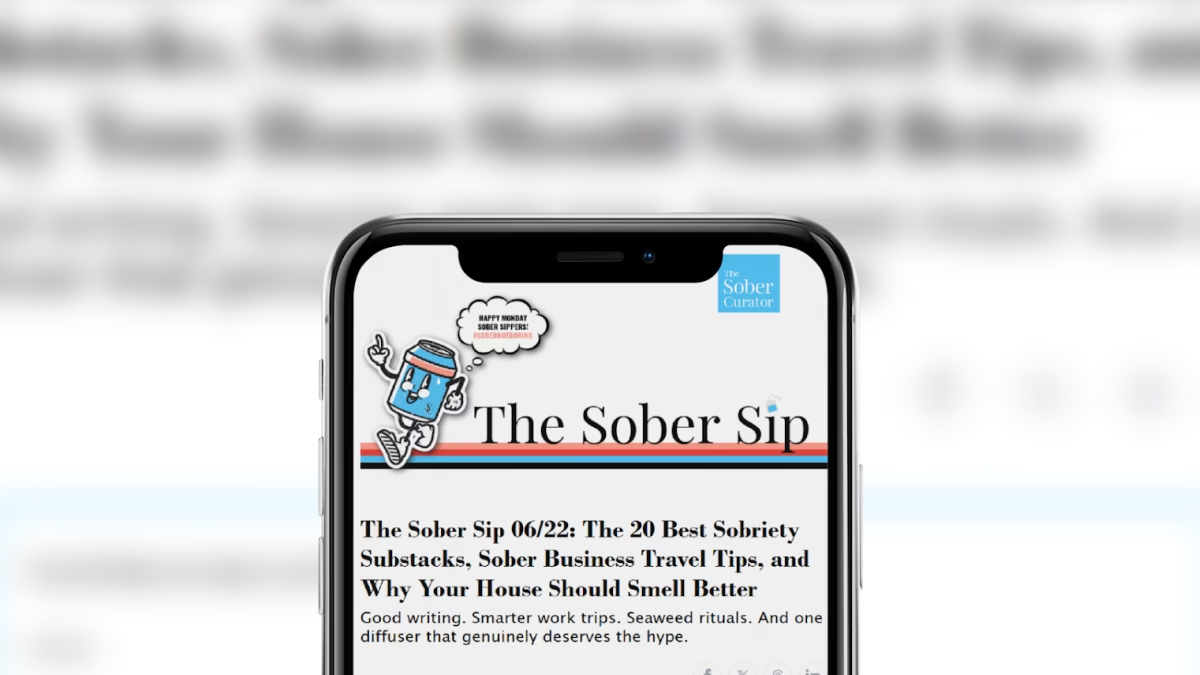
Short intros. Quick hits. Headlines that tell you exactly what you’re getting. Read it in the school pickup line, on the treadmill, or while pretending to listen on a conference call.
The Sober Sip: three times a week, zero fluff.
Resources Are Available
If you or someone you know is experiencing difficulties surrounding alcoholism, addiction, or mental illness, please reach out and ask for help. People everywhere can and want to help; you just have to know where to look. And continue to look until you find what works for you. Click here for a list of regional and national resources.

Follow The Sober Curator on LinkedIn
Can therapy help with sobriety and addiction recovery?
Yes. Therapy can help people explore trauma, anxiety, relationships, emotional regulation and other issues that may surface during recovery. Sobriety and therapy can complement each other by supporting both behavioral change and deeper emotional healing.
What is emotional sobriety?
Emotional sobriety generally refers to learning how to experience and respond to emotions without relying on old coping mechanisms or substances. It can include developing boundaries, emotional awareness, self-regulation and healthier responses to stress.
Does therapy replace recovery meetings or sober community?
No. Therapy and peer recovery support serve different purposes. Therapy provides professional mental health support, while meetings and sober communities can provide shared experience, accountability, connection and belonging.
What are some useful tools for staying sober?
Common recovery tools can include HALT — checking whether you are hungry, angry, lonely or tired — playing the tape forward, reaching out to supportive people, mindfulness, boundaries, grounding techniques, meetings and professional mental health support.
Why can emotional issues become more noticeable after getting sober?
Removing alcohol or other substances can make emotions, unresolved experiences and relationship patterns easier to recognize. Sobriety may provide the clarity needed to begin addressing those issues through therapy, community support and healthier coping strategies.