
Everybody has the same advice for a bad job. Just leave.
Great. Where are you going?
The job market in 2026 is not handing out exits. Most people I know are not choosing between a bad job and a good job. They’re choosing between a bad job and no job. And for those of us in recovery, “just quit” has a cost nobody factors in. A paycheck is also structure, insurance, and a reason to put pants on at 8 a.m.
So this week’s episode is about the job you have. Not the one you’d like. The one you have.
The Guest I Needed Ten Years Ago
Lynnae Brown is a work navigation strategist. Yes, that’s a thing. She helps people get oriented inside difficult or confusing work situations, figure out what’s actually happening, and decide how they want to move through it. She spent more than a decade in workforce development with people in mental health recovery, helping them prepare for, enter, and navigate the workplace. She also just joined the Comma Club: 1,000-plus days sober.
Her whole practice rests on one line. You don’t have to change jobs to change your experience of work.
Back with us: our resident sober HR lady, Sarah Alaimo, who has been giving the same advice to unhappy employees forever. “Please, please, please do not leave until you have something else.”
Lynnae’s thesis, which I said out loud before we went anywhere else: the goal is not to love your job. The goal is relief, and more room for the rest of your life. Loving it is a bonus. It’s not the requirement.
I Burned the Candle at Every End
I have a burnout story. It ended in emergency heart surgery at 40.
I was ten years sober, publisher of a city magazine, and a wild workaholic. I said yes to every event, every board, every “can you just.” Workaholism doesn’t get talked about in recovery because there’s a badge of honor attached to being the one who worked the most. Nobody gives you a chip for it. They give you a promotion.
Lynnae’s version: 2018, director of a mental health employment program, social services, where there’s always more work than resources and the staff fill every gap. Angry. Resentful. All of it.
And she couldn’t leave. She wasn’t a trustafarian, she said, and she was seven and a half years into the Public Service Loan Forgiveness program with about two years to go. Six figures of loans on the line. So she stayed. And that’s where work navigation started.
You Don’t Argue With the Map
Here’s the frame that rewired my brain.
Work isn’t a place to negotiate. It’s a place to navigate.
Think about your GPS. You find where you are. You decide where you want to go. You look at the routes. “You don’t argue with the map.” You don’t yell at it because the left turn should be a right turn.
So instead of “my boss shouldn’t micromanage me,” it’s “my boss micromanages. That’s how he shows up. How do I get around it?”
Lynnae’s boss insisted on writing every email with her. Every single one. She’d suggest she draft it and send it over. He’d say no, let’s sit together. She’d sit there seething.
Then two things clicked. He did it with everyone, so it wasn’t personal. And she was on the clock. So she’d nod, say “Oh, yeah. Sure,” watch the hour and a half go by, and reprioritize the rest of her day so she could still leave at 5.
Did she tell him any of that? “Absolutely not.”
Every time she told that story, I got mad on her behalf. That’s the point. She stopped getting mad. I’m still working on it.
Three Things to Try This Week
I asked for homework. She gave us three.
Ask yourself if you even want a promotion. This was her big epiphany. She looked around the agency and realized there was nothing else she wanted to do there. Which meant the political stuff, the extra niceties, the culture-committee energy, was optional. “I don’t have to go to the gala.” So she stopped going, quietly. People might get a little irked. Lynnae’s test is simple: is your job actually in danger, or is someone just a little irritated? “You can handle a little irking.”
Listen to what you complain about. “I can’t believe he’s doing this again” is your cue that you haven’t accepted it. And acceptance is not agreement. Nobody’s saying it’s okay. You’re saying it is what it is. “It goes from irritant to information.” The upside: you’ve complained about this person so long, you know exactly what they’ll do next.
Run the quiet experiment. Lynnae is working with someone who was putting in 7 to 7. Nothing on the books required it. So: try 8 to 6. Don’t announce it. See if anyone notices. Then maybe 8:30 to 5:30. No meetings, no HR, nobody’s radar.
This Is Resentment Work
Somewhere in the middle of all this I realized what we were actually talking about. Managing resentments. You can spend all day in your head about the micromanager, or you can find the shortest route through and let it go.
Sarah, who was taught as a millennial to do what the boss says and never question it, watched Gen Z set boundaries she didn’t learn until she got sober, and was too afraid to use even then. She left corporate to set her own schedule. Her question for all of us: “Do you wanna be right or do you wanna be happy?”
She fought for both for years. “Didn’t work.”
Same, Sarah. Same.
Lynnae’s version is funnier. If she doesn’t trust your judgment, she’s not spending her energy changing your mind. You’re not her people. She’ll just find the route around you. And she’s sober, so she’s got an allegiance to her health and her wellbeing, and she’s not letting your email rock it.
What none of this means: phoning it in. “You’re still doing your job.” You’re just holding it differently, so it doesn’t run your life.
Know Where You’re Starting From
The part of the map analogy that stuck with me: you don’t just pick a destination. You have to know where you’re starting from. That starts with one question most of us never slow down enough to ask.
What do I actually want here?
Most of the time, I don’t care nearly as much as I’m acting like I do.
Lynnae said it best on her way out. It really is simple, but it’s not easy. Which is the most recovery sentence I’ve ever heard about work.
Where to Find Lynnae
Follow Lynnae on LinkedIn, where she posts every day about finding the places you have agency at work. Her site is lynnaebrown.com, and she archives her work on Substack.
And she’s coming to BACKSTAGE for a Q&A panel. BACKSTAGE is our private culture club membership, not peer support. It’s where we hang out and either entertain ourselves or learn something, often at the same time. Bring her your micromanager.
So tell me: if you don’t want the promotion, what’s one thing you’d quietly put down this week?
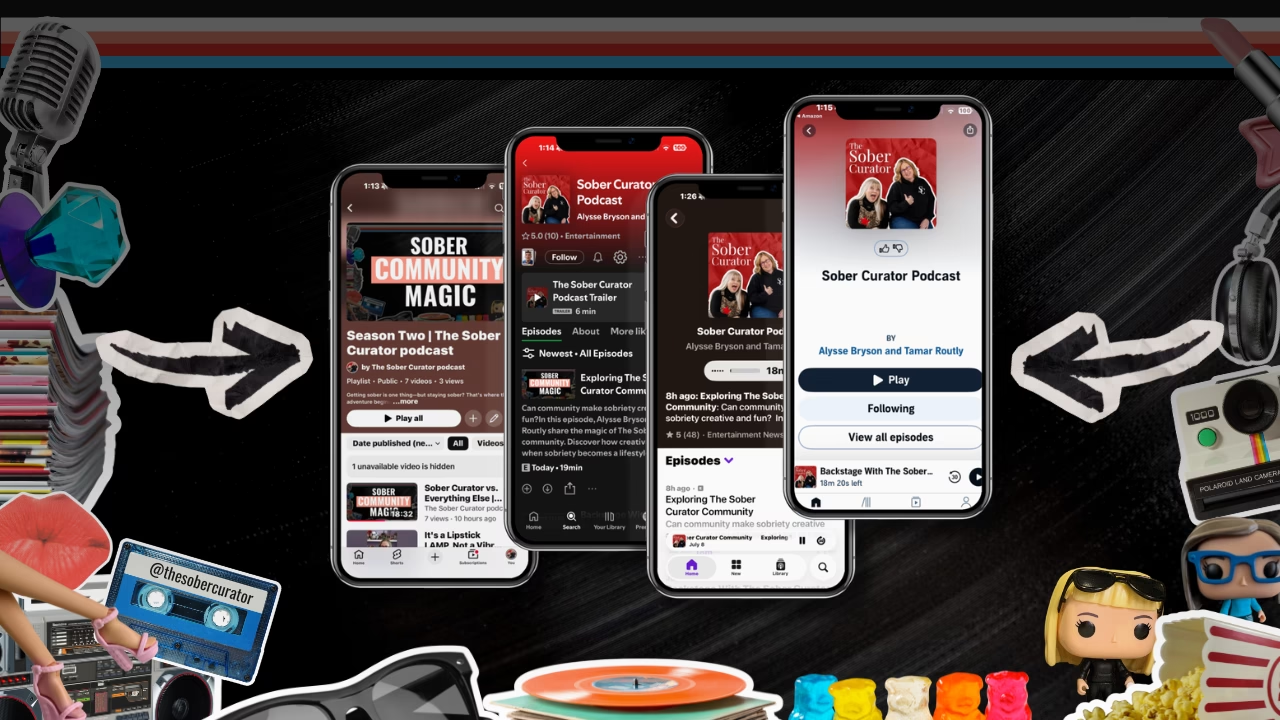
The Sober Curator Podcast is available across all major platforms
👉Watch or listen to the show on Spotify
👉Listen to the show on Apple Podcasts

LIFESTYLE: Does Being Sober Help or Hurt Your Career? The Professional Upside of Sobriety
SOBER CURATOR PODCAST: Recovery Friendly Workplace: What It Is, How to Get Certified + Whether to Tell Your Boss You’re Sober
You’ve got mail from The Sober Curator

Resources Are Available
If you or someone you know is experiencing difficulties surrounding alcoholism, addiction, or mental illness, please reach out and ask for help. People everywhere can and want to help; you just have to know where to look. And continue to look until you find what works for you. Click here for a list of regional and national resources.

Follow The Sober Curator on LinkedIn
What is emotional sobriety at work?
Emotional sobriety at work means staying steady at your job instead of letting it run your mood, your hours, or your recovery. On The Sober Curator Podcast, work navigation strategist Lynnae Brown describes it as accepting how a workplace actually operates, deciding what you want from it, and choosing the least draining route there, without needing your boss or coworkers to agree.
What is a work navigation strategist?
A work navigation strategist helps people get oriented inside difficult or confusing work situations, understand what’s actually happening, and decide how to move through them. Lynnae Brown, who holds that title, says the approach is about navigating work rather than negotiating with it. Her practice is grounded in the idea that you don’t have to change jobs to change your experience of work.
How do you deal with a micromanaging boss without going to HR?
Lynnae Brown’s approach is to stop arguing with how the boss shows up and plan around it. Her own micromanager insisted on co-writing every email. She noticed he did it with everyone, so it wasn’t personal, treated the time as paid time, and reprioritized the rest of her day so she could still leave on time. She never confronted him about it.
What does “acceptance is not agreement” mean?
It means acknowledging that a person or situation is the way it is without saying it’s okay. Lynnae Brown uses it to turn workplace frustrations into information: if you keep saying “I can’t believe they did this again,” you haven’t accepted it yet, and once you do, you can predict the behavior and plan for it.
Should you quit your job if you’re burned out in recovery?
Not necessarily. On the episode, HR expert Sarah Alaimo’s standing advice is not to leave until you have something else, and Lynnae Brown recommends figuring out exactly what you dislike first, so you don’t repeat it at the next job. Lynnae notes that a toxic or abusive workplace is a different situation. For people in recovery, a job can also provide structure and insurance.
Where can I find Lynnae Brown?
Lynnae Brown is at lynnaebrown.com, on LinkedIn at linkedin.com/in/lynnaebrown, where she posts daily, and on Substack at substack.com/@lynnaebrown. She was a guest on Season 2, Episode 20 of The Sober Curator Podcast.