You know this feeling even if you’ve never heard it named.
You know the exact thing that would help. The phrase. The reframe. The tool your therapist handed you that one time and you nodded and said, yes, that, I’ll use that. And then your brain gets loud and it goes blank. Gone. You are standing in your kitchen at 11 p.m. with twenty years of sobriety and zero access to the one sentence that would fix the next ten minutes.
Recovery didn’t erase that gap for me. If anything, long-term sobriety just means I’ve gotten very familiar with how fast I can go from “I know better” to “I feel awful and the world is ending.”
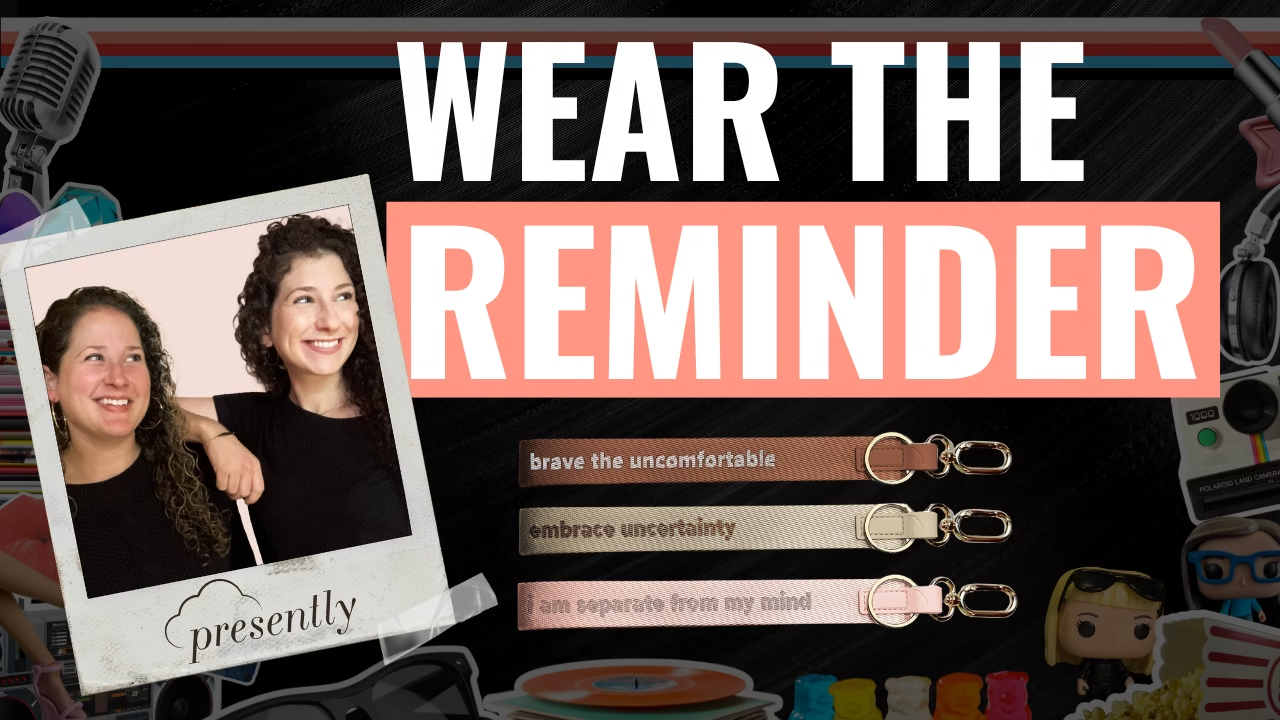
Emily and Lindsay Stetzer built an entire company around that gap. Not by fixing your anxious brain. By making the helpful thoughts impossible to lose.
How we found them: OCDCon, Seattle, July
Quick backstory, because it matters. In July I got invited to the International OCD Foundation’s annual conference, which was in Seattle this year, to interview a few of their guests, including Tiffany Jenkins of Juggling the Jenkins. I’ve read both of her books. I could not say yes fast enough.
I have never been officially diagnosed with OCD. I have all of the markers, and I’ll get to those. A lot of us in recovery are carrying a second thing alongside the first one, and being compulsive lends its hand very nicely to addiction. So I grabbed my ride or die, Amy Liz Harrison, and off we went, expecting a stuffy room of medical professionals and boring panels. At best I figured there’d be some stickers and a fidget spinner.
We walked into the exhibit hall. There were the stickers. There were the fidget spinners. And then, at the end of the aisle, a disco light at the end of the tunnel: this peach, cream, tan, Skims-vibes swash of color and two sisters standing in front of it.
Amy was mesmerized. Amy bought one of everything. I wrote about the brand that week and knew we had to get them on the show.

Meet the sisters
Lindsay is the older one by five years, though everyone assumes it’s Emily because of her personality (Emily’s words: “I’m the one that usually has the ‘tude”). Lindsay’s OCD showed up in elementary school. Lining up her shoes. Flipping the light switch a certain number of times so nothing bad would happen to her family. She got an official diagnosis as a junior in high school.
Her first line on the misconception everybody has: “everyone thinks OCD is about cleanliness, which it’s not at all. There’s so much more to it.”
Emily was the anxious kid. Didn’t want to go to school, separation anxiety, and by middle school she was confessing things to her parents that didn’t need confessing. Her version came with the “what does this mean about me” loop, a lot of it aimed at relationships. She didn’t get to therapy until after college. Two sisters, same house, two completely different flavors of the same thing, and neither of them knew the other one had it.
That’s the whole reason they talk about it out loud now. “There’s all these different flavors,” Emily said. “It’s a wide net.”
Everyone has these thoughts
Here is where I confess mine. I will not move your things. If you come into my space and touch my stuff, totally fine. But when you leave, I will put it back where it belongs, even if you moved it a quarter of an inch to the left. In high school my friend Christy and I read the day off the traffic lights on the way to school. All reds meant why bother, I’m going home.
Lindsay’s name for it: magical thinking. Amy’s contribution: “border hoarders.” She has a pre-pandemic fear that they’ll stop making her shampoo, so she buys 50,000 of everything. Twenty lightsabers, in case one breaks.
And then Lindsay said the thing I keep thinking about.
“Every single person has had the same thoughts that we have. It’s just to the extreme that you take them to, or it’s just the obsession that you latch onto.”
Emily added the compulsion you perform because of the thought. That’s the line. The thought is not the disorder. What you do with it, and how far it drags you, is. Every human wants to be 100 percent certain the day is going to go fine, and we’ll find a traffic light or a shampoo stockpile to promise it to us.
Not a live, laugh, love situation
Let me be clear before we talk about affirmation jewelry: this is not that.
In early sobriety, late 2000s, I decorated my house in word art because it was cuter than the Post-It notes I’d been using. I still have “Be still” tattooed on the inside of my right wrist, as in be still and know that I am God, as in settle down, take a breath, don’t react. I wish I could tell you that tattoo fixed everything. It sure doesn’t. But when I remember to look at it and do what it says, it is super handy.
Emily’s version was a giant sign over her college bed that said “Good vibes only.” Her friends made fun of her. She was trying to manage something she didn’t have a name for yet.
Then she went to therapy and learned the sign was the problem.
“A lot of those mantras that you talk about, like live, laugh, love, good vibes only, choose happiness, those are almost like giving in to the things that OCD wants you to give into,” she said. “It’s not like everything’s hunky dory all the time. Things are uncomfortable, and you need to sit with it. Life is uncertain, and you need to accept that.”
Which is why nothing on a Presently bracelet is trying to make you happy. Read the list. Embrace uncertainty. Brave the uncomfortable. It’s okay to feel how I feel. I let go of what I can’t control. I am separate from my mind. My thoughts are passing clouds. Every one of those is a therapist’s sentence, and every one of them is a little bit unpleasant, on purpose.
The matching sweatsuit
The company started during COVID, when both sisters had moved back home. Emily’s boyfriend was about to leave the state for three years of law school. She was in therapy and doing the work and still, every time she spun up, she could not find the tool in time.
“Why am I going to therapy if I can’t even remember what I need to know in order to survive this?”
Beaded bracelets were everywhere that year. Lindsay was already making them. Emily went online looking for one with a phrase that would actually help someone with OCD or anxiety and, in 2020, found nothing. So she went with the one phrase she remembered, the one Lindsay had taught her years before her own therapist brought it back up: my thoughts are passing clouds.
Then, per Lindsay: “She ran down the stairs. She was in a matching sweatshirt and sweatpants because that was the thing during COVID, to have matching sweatshirt and sweatpants, hair in a bun.”
“Lindsay, I think I have an idea for, like, a business.”
Emily is a graphic designer. She made a logo and a Squarespace that day. Lindsay made the bracelets. They bought a whiteboard on Amazon, had it shipped overnight, and, in Lindsay’s words, “started whiteboarding the shit out of what our phrases could be on bracelets.” The six phrases came off that whiteboard and they have not changed. The cloud in the logo is the first one.
Start messy. I say it constantly and here it is again, in sweatpants.
The quiz, the colors, and the invisible brother
Two business notes, because I am who I am.
The quiz. At the booth there was an iPad. You answer a handful of questions and it tells you which phrase is yours. Amy and I got different answers, and then Amy bought all six anyway. It exists because when they first popped up at Artists & Fleas in Brooklyn, they decided not to talk to anyone, since Emily hates being talked to while shopping, and then nobody came. The quiz gives people a way to figure out what they need without having to explain themselves to a stranger. It also captures emails. Good job, sisters.
The colors. Neutral with a hint of feminine. The giant color-blocked banners at the conference are what pulled us across the room, and once the sisters noticed that, everything got color-coded by phrase. Amy’s read: products about being present should look balanced and neutral. Cohesive. It warms the cockles of her heart.
Also: they have a momager (their mom is an accountant), a dadager (his job is commenting on the Facebook posts), and a brother named Justin who got mentioned on a podcast for the first time in the company’s history. Hi, Justin.
Lanes, for the founders reading this: Emily is design and everything else. Lindsay is production, fulfillment out of her apartment, new beads, and people. “Thanks for putting me in that lane.”
Why this is on a sobriety podcast
Neither sister identifies as having substance use disorder, and I wanted them on anyway. Because a lot of us in recovery are living with a second thing, and sobriety is often what finally lets you see it. Your mind isn’t altered anymore. All the feelings show up. Sometimes the feelings are super scary.
Amy was diagnosed with ADHD late in life. (Read her book on that here) I walked out of OCDCon convinced beyond a doubt about my own situation. (I also learned that part of OCD treatment is facing the fear on purpose. Emily explained it: ERP, exposure and response prevention, first line of defense. Tiffany Jenkins told us she had to write out her particular fear and read it over and over until it stopped scaring her. Sounds like complete torture. Also makes total sense.)
Lindsay’s version of exposure is television. She refused to watch “Silo” because they’re stuck underground. Then she watched it, felt physically uncomfortable, and kept going. “It’s such good exposure for me because it makes me face the things that make me uncomfortable.” She is now big into “Silo.” Emily is watching the new season of “Ted Lasso” and just saw Hilary Duff live.
The sober gift problem = solved
This is the part I said in the cold open and I meant it. Presently is the perfect sober gift. Anniversary gift. Milestone gift. Just-because gift. Stocking stuffer. Sober people are impossible to shop for, because the default gift in this country is a bottle, and everyone in your life has figured out that’s off the table and then frozen.
A five-dollar mirror decal that says “I let go of what I can’t control.” A twenty-dollar keychain wristlet. A chain bracelet in silver or gold. And here’s the thing I’ve learned from wearing sober apparel out in the world: it starts conversations with strangers. Amy said it best earlier in the podcast season: it’s the Seahawks jersey effect. You see your colors of your team on someone in another city and you light up. They’re your people. Presently on a wrist works the same way. I haven’t had my first one in the wild with the purse charm yet, but I will.
#ADDTOCART & Shop Presently. Take the quiz first.
BACKSTAGE
These are exactly the kinds of conversations we’re having Backstage with The Sober Curator. It’s the room where you don’t have to explain why your brain does what it does, because everybody in there gets it. If you’ve ever needed a physical reminder that you’re allowed to be a work in progress, come find us.
You’re allowed to tape a reminder to your mirror. You’re allowed to wear an affirmation on your wrist or your purse. Needing help remembering what helps doesn’t mean you’re doing anything wrong. It means you have cute accessories, and good for you.
So tell me: what’s the reminder that actually works for you when your brain goes loud? Not the one on the throw pillow. The real one.
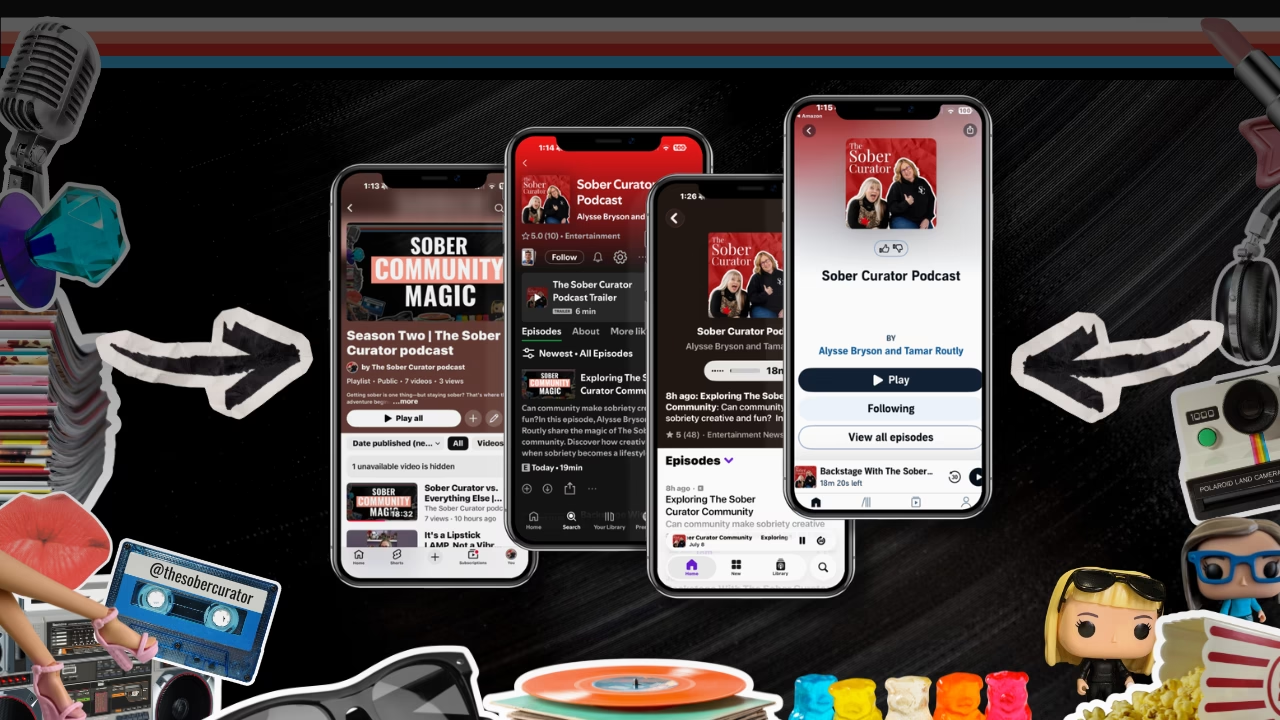
The Sober Curator Podcast is available across all major platforms
👉Watch or listen to the show on Spotify
👉Listen to the show on Apple Podcasts
Presently’s products are reminders, not treatment. If you think you might have OCD or anxiety, talk to a licensed professional. The International OCD Foundation is at iocdf.org. If you’re struggling with alcohol or substance use, our Alcohol + Substance Use Disorder Guide is always open, and SAMHSA’s National Helpline is 1-800-662-4357, free and confidential, 24/7.
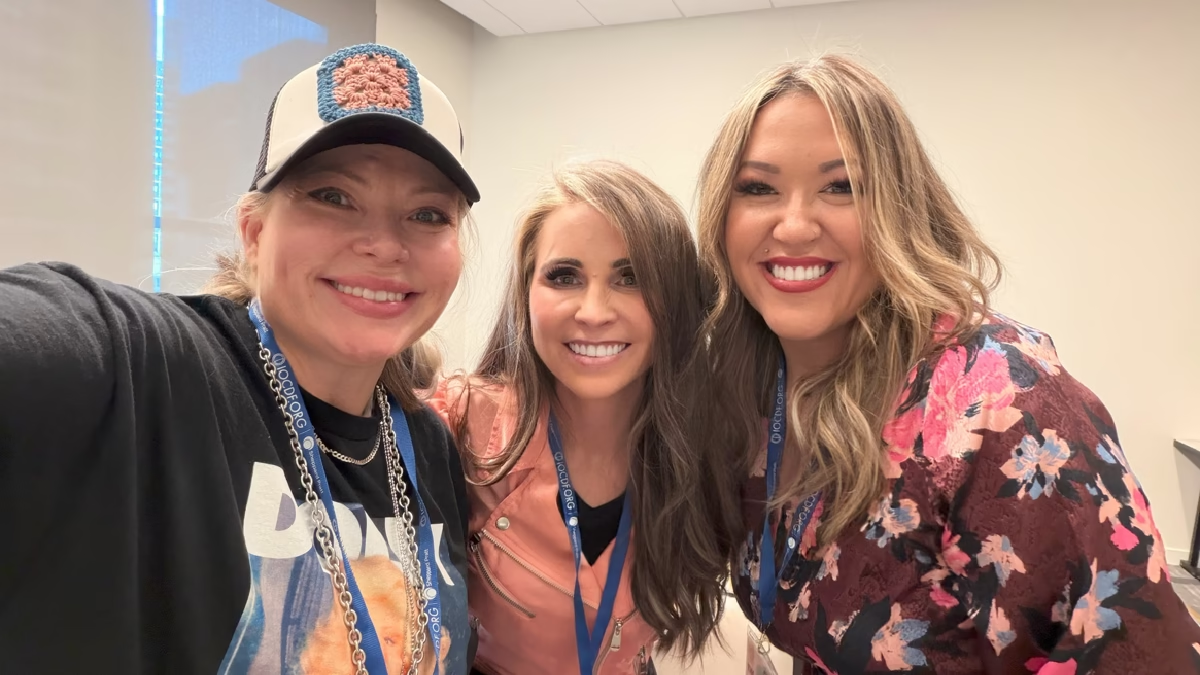
SOBRIETY IN THE CITY: OCD Con 2026 Recap: Tiffany Jenkins Forgot Her Clothes, Found Her People, and Took Home the Illumination Award
Books by Tiffany Jenkins:
- High Achiever By Tiffany Jenkins Is The Recovery Memoir You Will Want To Add To Your #QUITLIT Library Right Now
- #QUITLIT Review: A Clean Mess by Tiffany Jenkins
God, grant us the serenity to #ADDTOCART! Sober retail therapy is our favorite kind of workout—mindful, fun, and community-focused. In this section, you’ll discover unique sobriety gifts, premium recovery swag, and must-have merch we can’t stop raving about. We love featuring small businesses founded by people in recovery, sober creators, and brands that champion mental health and the sober lifestyle. From #QUITLIT reads to stylish glassware and meaningful recovery keepsakes, our curated picks make every purchase a celebration of sober living.
Shop our classic Sober Curator merch on SHOPTHESOBERCURATOR.COM for and explore our TSC Amazon Storefront featuring curated lists packed with gifts, books, and sober essentials.
🛍️ Submit a Product for Review NA beverages, sober-friendly tools, alcohol-free brands, and products built for the way our audience actually lives. Submit your product →
You don’t need a sobriety date to be here.

Sober, sober-curious, “just taking a break,” California sober and questioning it… The Sober Sip doesn’t check IDs at the door.
If you want the culture without the lecture, get on the list. Free, three times a week.
Resources Are Available
If you or someone you know is experiencing difficulties surrounding alcoholism, addiction, or mental illness, please reach out and ask for help. People everywhere can and want to help; you just have to know where to look. And continue to look until you find what works for you. Click here for a list of regional and national resources.
Follow The Sober Curator on TikTok
What is Presently Bracelets?
Presently is a mental health accessories brand founded by sisters Emily and Lindsay Stetzer, who both live with OCD and anxiety. The line includes chain, beaded, nylon, and macrame bracelets in silver and gold, keychain wristlets, mirror decals, and yoga mats, each carrying one of six therapy-rooted phrases. The brand donates five percent of bracelet sales to a mental health nonprofit the customer chooses. It sells at presentlybracelets.com.
What are the six Presently phrases?
My thoughts are passing clouds. Embrace uncertainty. Brave the uncomfortable. It’s okay to feel how I feel. I let go of what I can’t control. I am separate from my mind. All six came from the sisters’ own therapy and were whiteboarded during the company’s first week in 2020. The brand’s “find your reminder” quiz matches you to one.
Are Presently Bracelets a treatment for OCD or anxiety?
No. They are reminders of tools people learn in therapy, designed to be visible in the moment your brain goes blank. The founders say so on the record, and Emily Stetzer notes she is not a therapist or psychologist. The first-line treatment for OCD is exposure and response prevention (ERP) with a licensed clinician. The International OCD Foundation at iocdf.org can help you find one.
Is OCD common in people recovering from addiction?
Co-occurring conditions are common in recovery, and many people first notice anxiety, OCD, or ADHD symptoms once they are sober and no longer numbing them. On this episode, Alysse Bryson describes having “all of the markers” of OCD without a formal diagnosis, and co-host Amy Liz Harrison was diagnosed with ADHD as an adult. If you suspect a second diagnosis, a licensed professional can assess it; a podcast cannot.
What is a good sobriety anniversary gift?
Something that marks the milestone without a bottle. A Presently bracelet, keychain, or mirror decal with a phrase like “I let go of what I can’t control” works as a sober anniversary gift, a milestone gift, or a stocking stuffer, and the brand’s quiz helps you pick the phrase for the person. Prices run from $5 for a decal to roughly $60 for a bracelet.
Why is “good vibes only” a problem for people with OCD?
Because OCD is driven by the need for certainty and comfort, and slogans like “good vibes only” or “choose happiness” tell you to chase exactly that. Therapy for OCD teaches the opposite: sit with the discomfort, accept the uncertainty, let the thought pass without acting on it. Presently’s phrases are built on that second set of instructions, which is why none of them promise you’ll feel good.