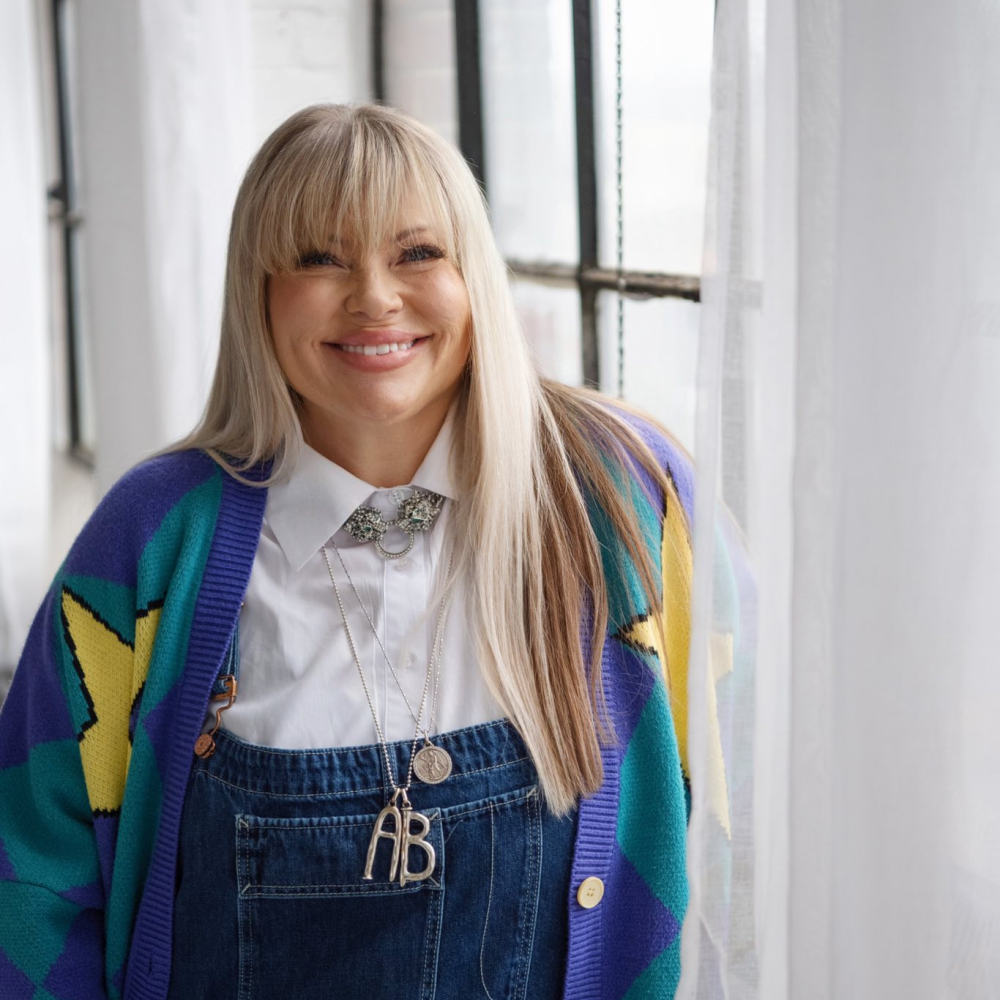
Tiffany Jenkins flew across the country to accept an award and forgot to pack her clothes.
“All I packed was a pair of pajama pants and a thong,” she told us, completely unbothered. She had a cute dress picked out for the weekend. It never made it into the suitcase. “I just get so distracted so easily.”
For anyone else, this would be a travel disaster. For the comedian and bestselling author behind Juggling the Jenkins, it was just Thursday. And somehow it was the perfect entrance for a weekend built entirely around the idea that brains are messy, and nobody here is pretending otherwise.
Welcome to OCD Con
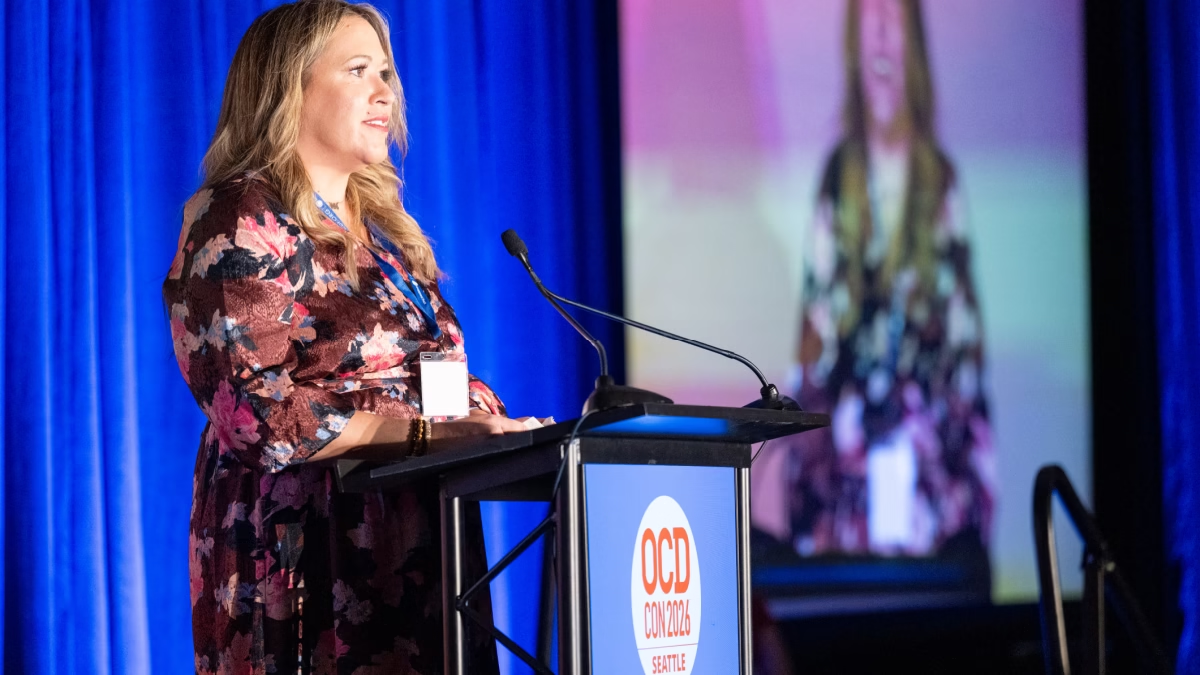
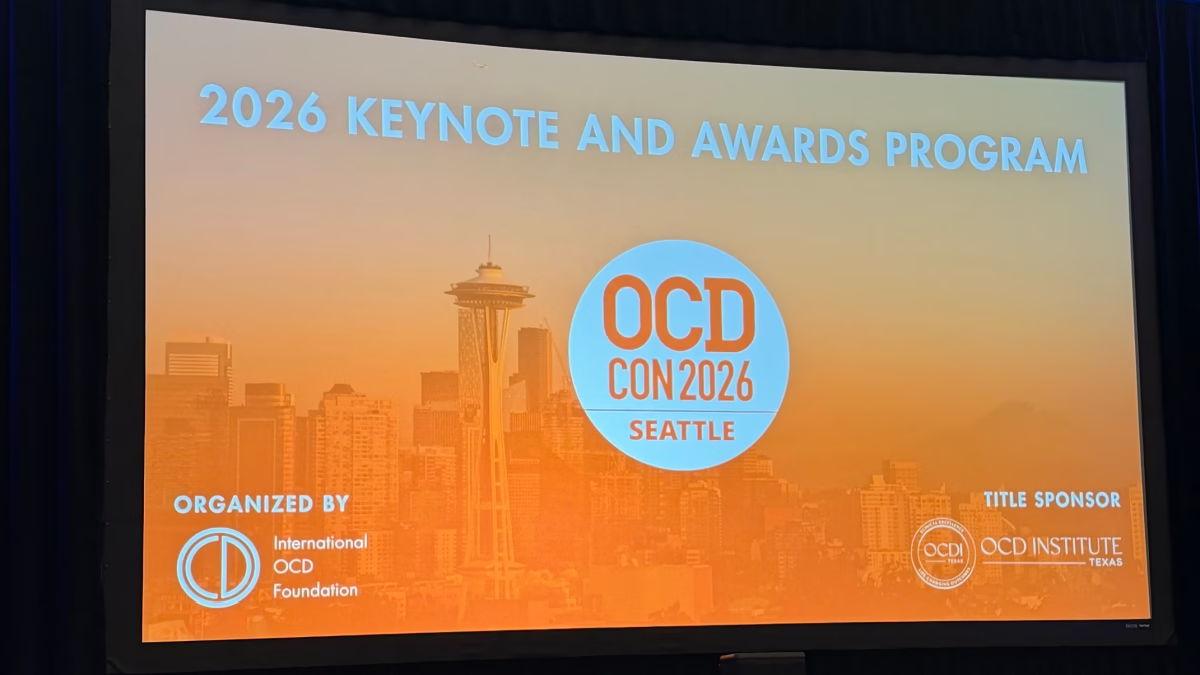
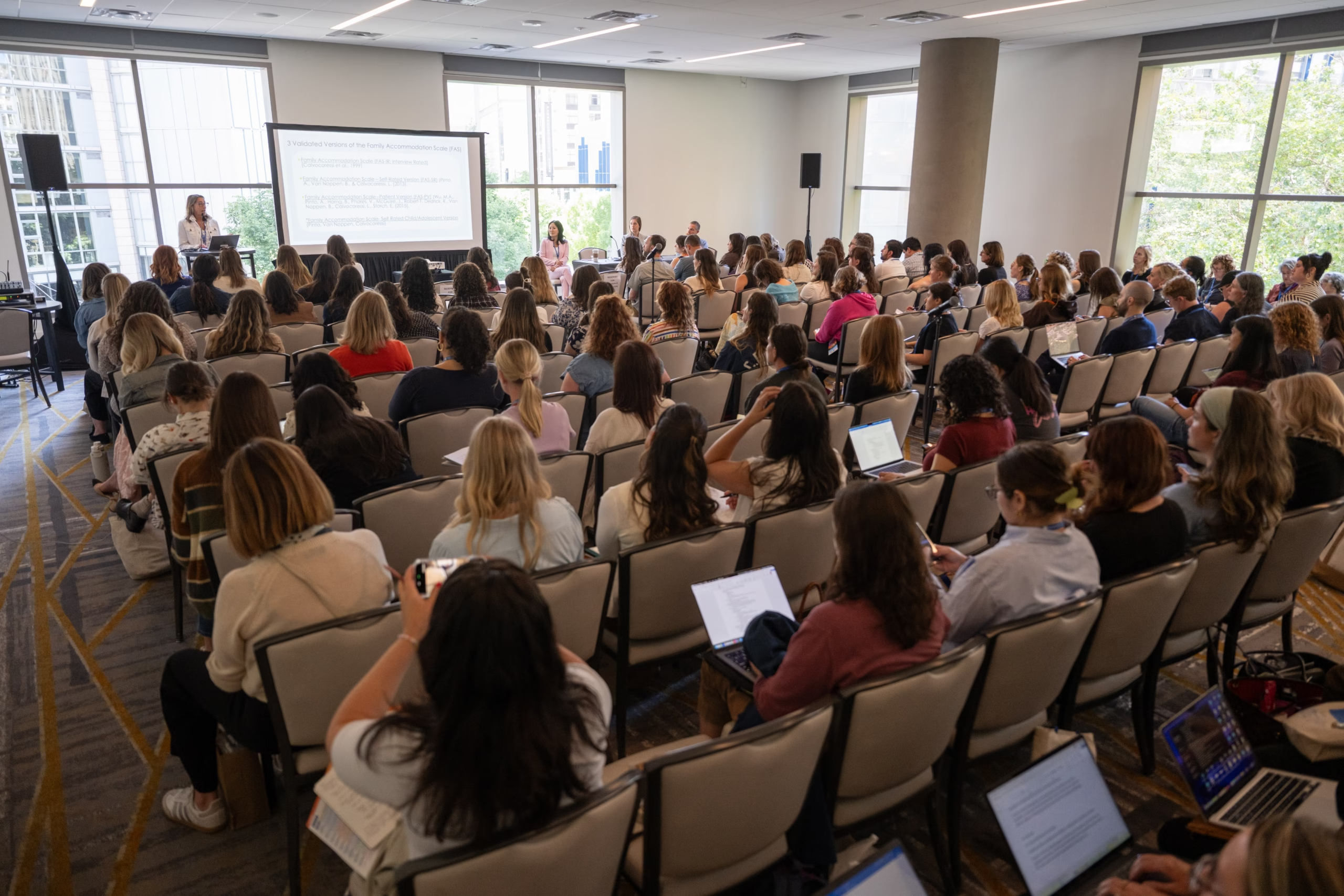
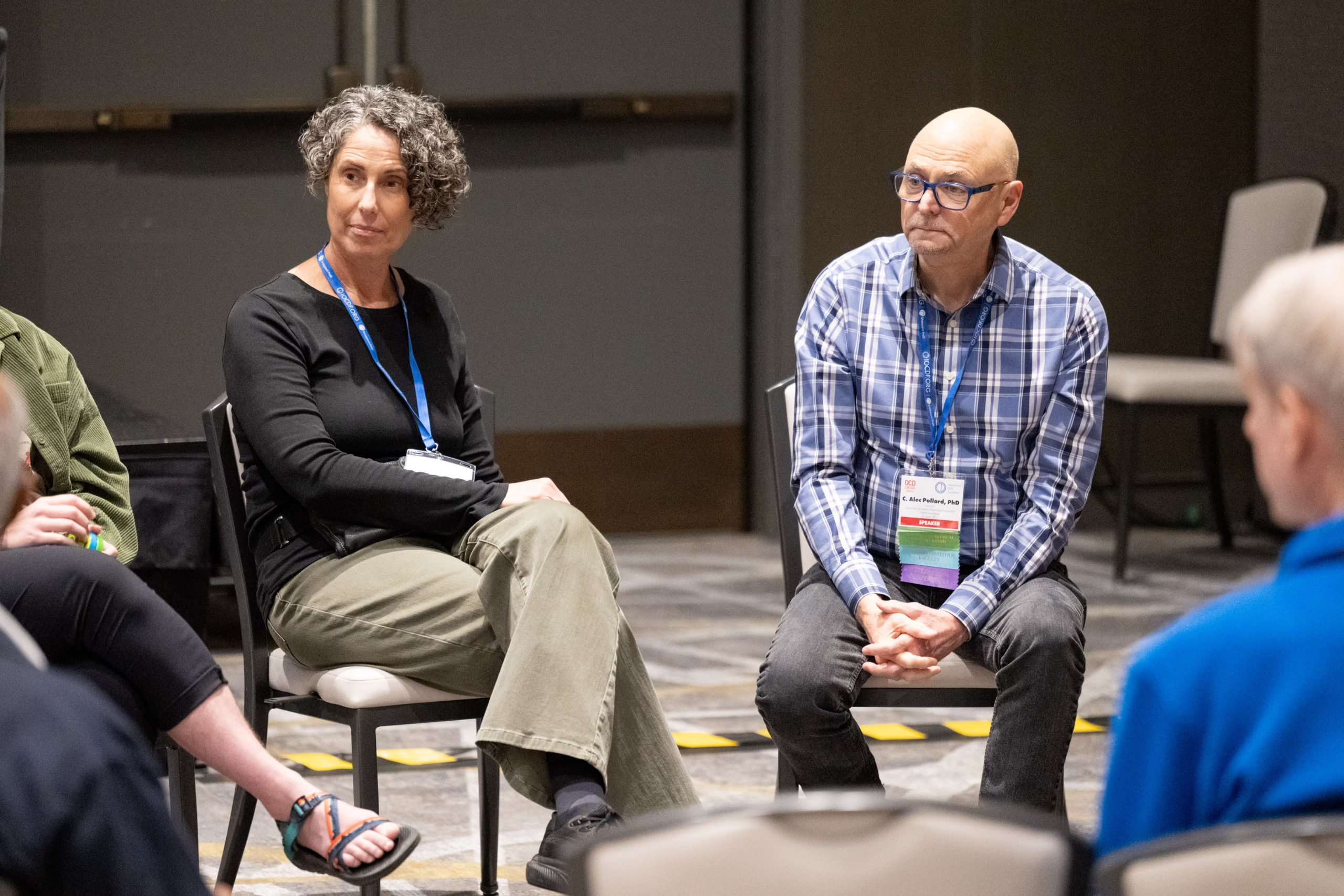
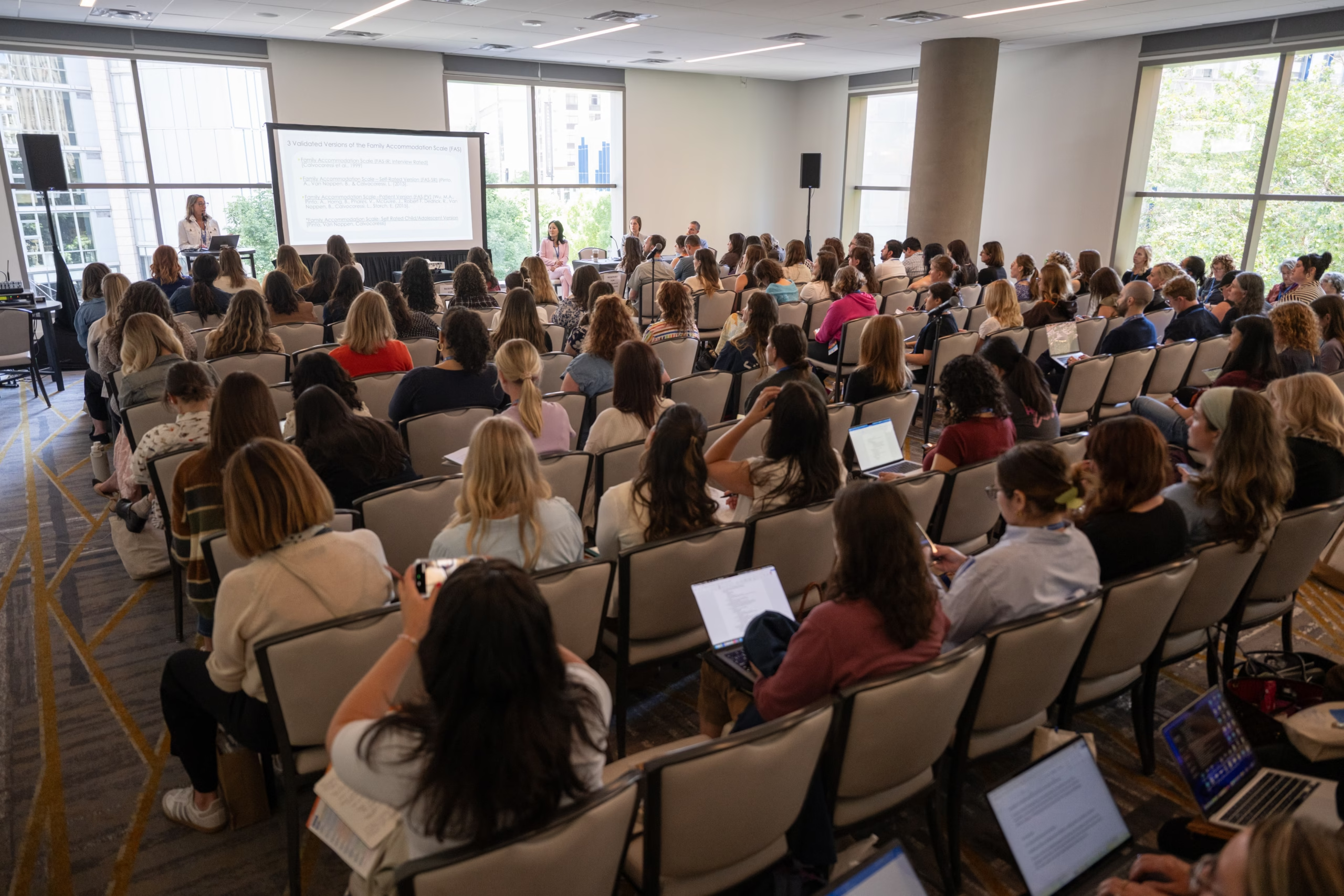
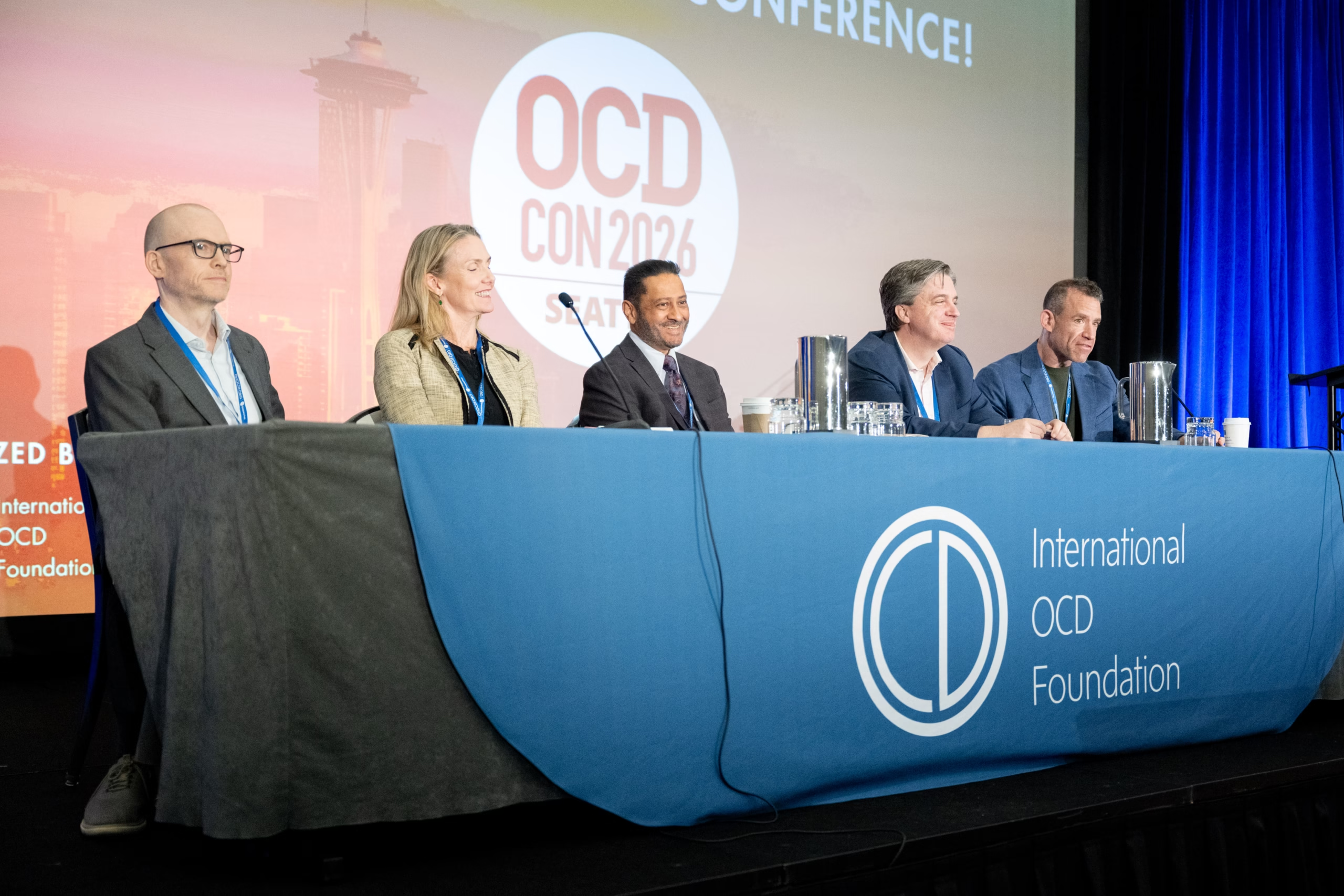
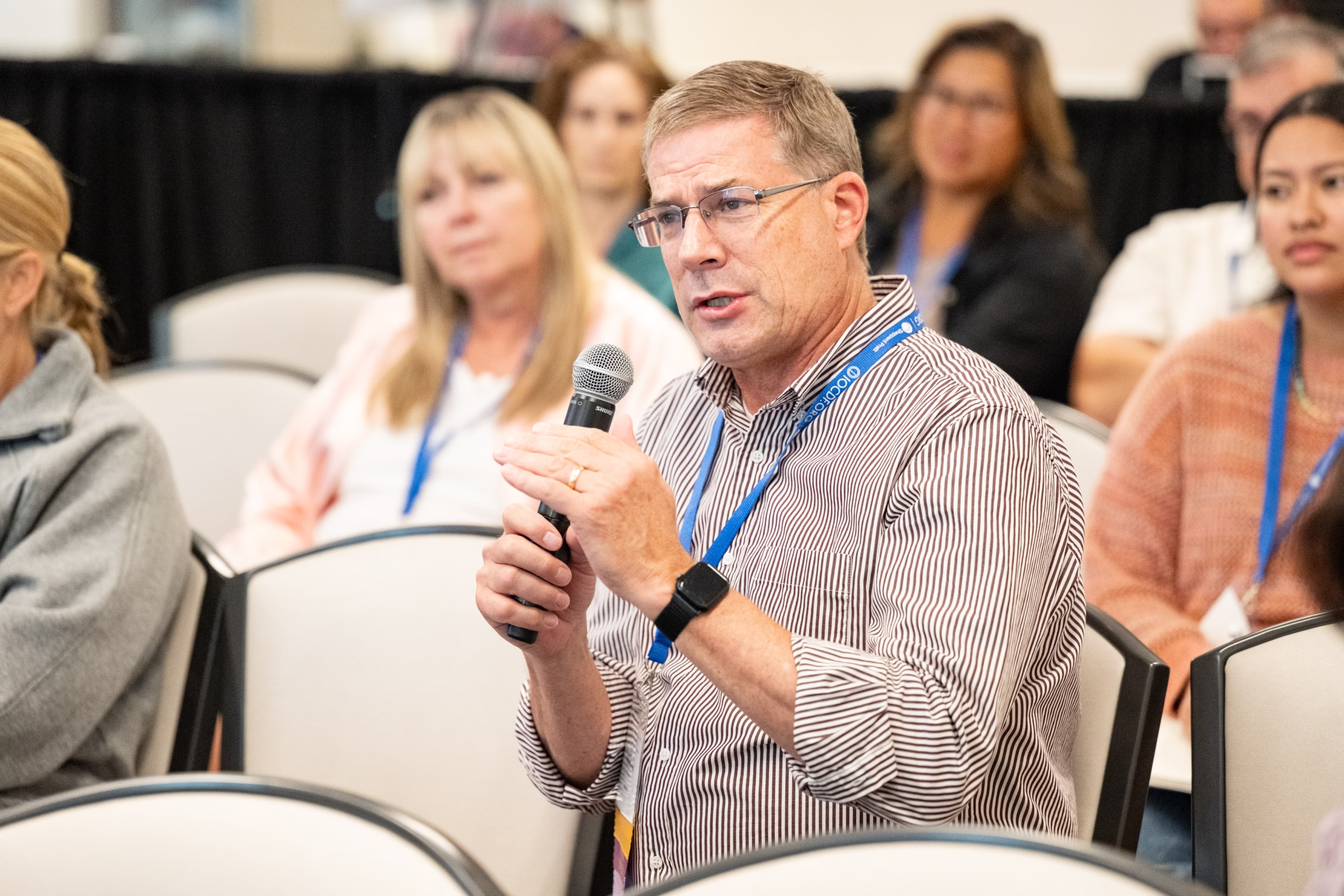
The 31st Annual OCD Conference, OCD Con to its friends, took over the Hyatt Regency Seattle July 9 through 12. Hosted by the International OCD Foundation, it is the largest event in the world focused solely on OCD and related disorders. People with lived experience, families, clinicians, and researchers all under one roof, sharing the latest research and building the kind of community you cannot fake.
Ten million Americans have OCD. According to the IOCDF’s own research, roughly 95% of them are not getting the treatment that actually works. Years between first symptoms and correct diagnosis. A shortage of trained clinicians. Care that requires knowing the right zip code. The conference exists because that gap is real, and someone has to keep saying so out loud.
You wouldn’t know any of that from the vibe on the ground. Kids were everywhere, which surprised even the guest of honor. Fidget spinners were out in the open like membership cards. Nobody was performing okay-ness.
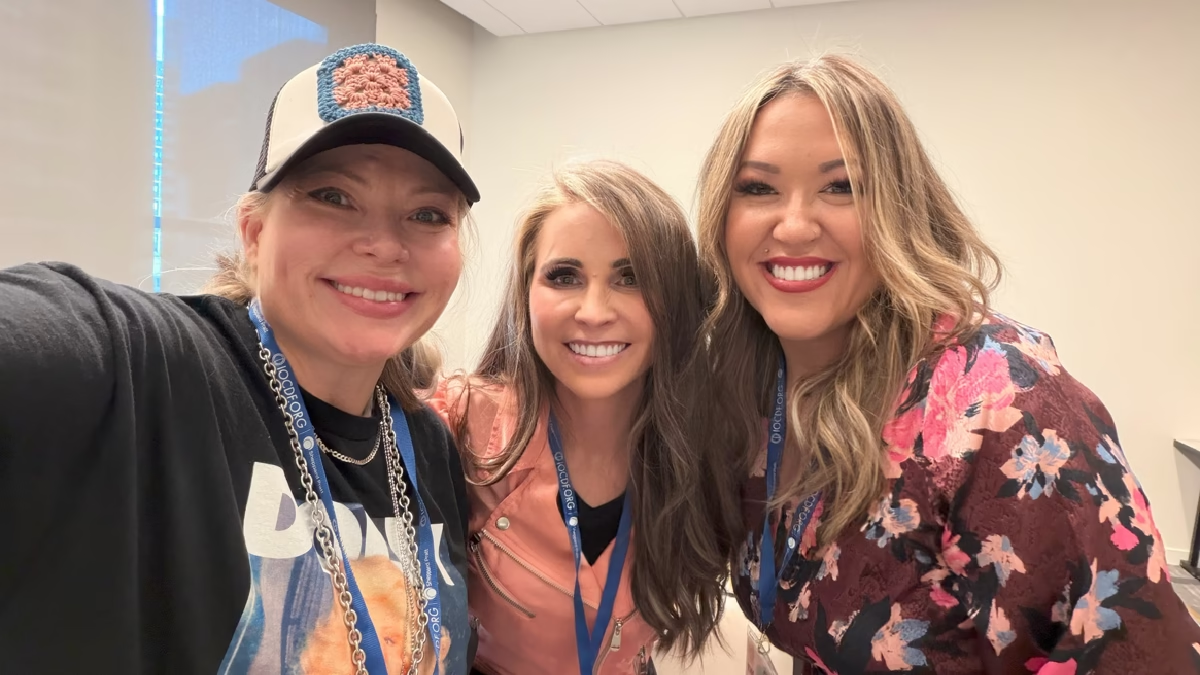
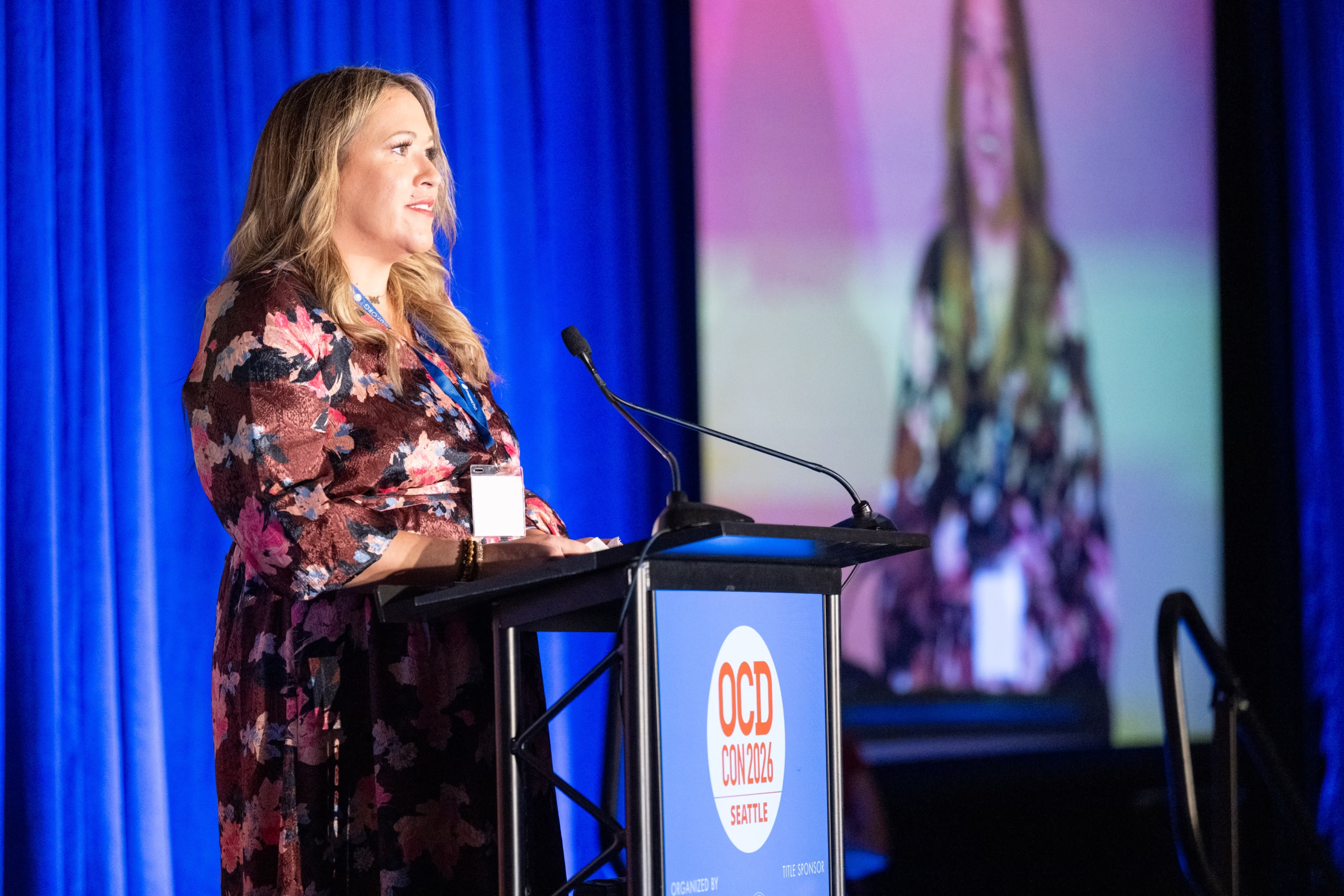
On Saturday evening, the Foundation honored Tiffany with its 2026 Illumination Award for helping change the conversation around OCD through her honesty, humor, and advocacy. Before the ceremony, we got an hour with her. She showed up glamolicious (her word, we are keeping it) and held absolutely nothing back.
First, the Question Everyone Wants Answered
We had to start with it. Is High Achiever ever going to become a movie?
“I’ve been trying forever. Like, who do I have to call?” she laughed. She has had offers over the years that never came to fruition, but she is currently talking to someone about film rights. Then came the casting problem: “I’m too old to play myself now, though.”
So who plays Tiffany Jenkins? “Probably somebody who could do both comedy and really serious, like maybe Jennifer Lawrence.” Not that she has thought about it. There is definitely not a spreadsheet.
If you have read High Achiever, you already know why Hollywood keeps circling. The memoir about her addiction, jail time, and recovery reads like a movie. What most people do not know is how it started. “I actually wrote it by myself in my house with, like, kids running around everywhere. I had no followers or anything at the time, and I self-published it first on Amazon, and it sold like 50,000 copies, and I was so confused and delighted.”
A traditional publisher picked it up from there. But her favorite part is where the book ends up now. “People will get out of jail and be like, ‘I read your book in there.’ And it’s just so cool. ‘Cause I remember reading books when I was in jail. To have it come full circle is just such an honor.”
She spent 120 days in jail. Her book now sits on the shelf right next to the Big Book. That is a full-circle moment you cannot script. We’ve given High Achiever 4.5 Sobees score, and I have to tell you, it is one of my personal favorites in my entire curated sober library.
The Oversharing Business
Tiffany built an audience of millions by saying the stuff the rest of us barely admit to our therapists. She is the first to tell you it is not exactly a strategy. “It’s also, like, a compulsion I have, this oversharing thing.”
But every time she posts something she thinks will finally scare people off, the opposite happens. “There’s people out there who genuinely feel seen when somebody else is saying something that they are thinking or experiencing.”
The flip side is knowing when to log off. If you follow her, you know she disappears sometimes, and she tells you she is going. We thanked her for that, because somebody with her reach giving everyone else permission to take a break is no small thing.
“I can’t pretend to be okay if I’m not okay,” she said. “If my head isn’t right, then I have nothing to offer anybody.”
She is also refreshingly clear-eyed about the money side of influencer life. “I have never made money my god.” Coming from someone whose livelihood is literally attention, that lands.
The Psych Ward Story
This is where the conversation went somewhere most award-weekend interviews do not go.
A couple of months ago, after a stretch of years she describes as full of betrayal and anger she could not regulate, Tiffany checked herself in for psychiatric care. She thought she was headed to, in her words, an “elite medical hospital where you could wear soft lounge wear and do puzzles.” Her insurance had other plans. She landed in a state-funded facility, in a hospital gown, asking questions like “When do I get my nicotine patch?”
Answer: you do not.
She was out in 12 hours. Her takeaway about that kind of facility was blunt: “They’re not in the business of getting you well.” What actually helped came next. Her boyfriend signed her up for intensive outpatient therapy, and she was on week 16 of it the day we spoke. “They’re teaching me how not to catastrophize everything.”
She talks about the dark days with the same honesty she brings to the funny ones, because they are the same life. “People are like, ‘You’re so funny,’ and I’m like, ‘You should catch me on a Wednesday.’”
Worry Scripts, Hot Dogs, and the Therapy That Works
Tiffany’s OCD story starts at age seven, at the kitchen table, eating an after-school snack when police came through the door and took her dad away. From that day forward her brain latched onto the idea that anyone she loved could vanish at any moment.
Nobody told her that not every kid was lying awake convinced their parents would die in their sleep.
Decades later, exposure and response prevention therapy, the gold-standard OCD treatment everyone at this conference champions, changed everything. When she became a mom, her obsessive fear that her kids would die meant she would not let them out of her sight. Her therapist had her write a worry script, a start-to-finish story of her worst fear, and read it until it no longer made her cry. Sometimes that took 30 reads.
“It was horrific. But it worked, and now my kids have hot dogs and popcorn and I don’t even glance in their direction.” Her kids go to sleepovers. Her son plays tackle football. That therapy is also why she joined the film Anxiety Club. She wants people to see that treatment actually works.
Here is the part that belongs in this publication specifically. We asked if getting sober cranked the volume on everything underneath, and she did not hesitate. “I couldn’t numb it anymore. I just had to feel everything.” Recovery rarely travels alone. OCD, ADHD, bipolar, anxiety, addiction, they overlap and blur, and untangling them sober is the whole messy assignment.
“I Am Home”
Tiffany told us that at most events she never leaves her hotel room. Anxiety wins, every time. This weekend was different.
“Wait a minute, I think everybody here gets anxiety,” she said. “I feel like I’m with my people, and I don’t have to pretend not to be nervous, ’cause everybody’s effing nervous.” She watched attendees walking the halls with fidgets and thought, “I am home.”
As for the Illumination Award, she almost talked herself out of deserving it. She was not sure whether to write a speech, so she did not, and then she did, on papers and receipts in the back of the car. We offered to be her hype girls in the front row. She accepted, on the condition that we laugh and clap loudly. Done and done.
Where does she see herself in five years? First answer: “under the covers eating Cheetos.” Real answer: “I hope that in five years I will have learned that it’s okay to pause.” She is also quietly writing a third book, though she may keep this one for herself, and she is eyeing fiction next. When the movie finally happens, we have front-row seats. She promised.
The Through Line
We also sat down with Dr. Patrick McGrath, PhD, Chief Clinical Officer at NOCD and one of the most recognized names in OCD treatment. Two decades of clinical work. Author of The OCD Answer Book and Don’t Try Harder, Try Different. The guy who took the therapy behind Tiffany’s worry scripts and built a teletherapy platform around it so people don’t have to live near a specialty clinic to access it.
That conversation was so fascinating that it deserves its own piece. It’s coming soon to BACKSTAGE with The Sober Curator, where you can listen in as Dr. McGrath shares his experience in the field over the last 26 years.
A Mother on a Mission: Margaret Sisson and Riley’s Wish
Margaret Sisson traveled from Georgia to speak on a panel at OCD Con, and we are so glad she said yes, because her story is the reason The Sober Curator exists in rooms like this.
Her son Riley had OCD and substance use disorder, and the treatment world made him pick a lane. “They’d treat the OCD but not the substance,” she told us. Residential programs turned him away unless he was already clean. One prescribed Klonopin that sent him sideways, then kicked him out for it. He admitted he lied to get into treatment at all. Riley died of fentanyl in 2014, back when Margaret had to ask the coroner how to spell it.
Here is the statistic she wants everyone to sit with: an estimated 30 to 40% of people with OCD also struggle with substance use. Two disorders, one person, and almost no clinicians trained to treat them at the same time. “I think Riley would be here today if that had been offered,” she said. Not one after the other. Not “come back when you have 90 days.” Together.
So she built what did not exist. Riley’s Wish Foundation educates families, raises awareness, and pushes for therapist training at the intersection of OCD and addiction. The Riley’s Wish Lectureship has been running for six years, offering CE credits and speakers like Dr. McGrath, and she is now working with the IOCDF to develop dedicated OCD and substance use training for clinicians.
Two Riley stories we cannot stop thinking about. He once hid his phone under the podium while telling his story at a meeting, recording himself so he could listen back and make sure he had not said anything that might hurt someone. And when he stood in front of a judge after two DUIs, he came with AA started and a collegiate recovery program lined up at Kennesaw State. The judge told him, “Everybody comes in and says they’re sorry for what they did, but no one has a plan.” Riley had a plan.
Margaret now keeps the plan going for him. “I always thought I’d be his cheerleader,” she said. “So I feel like that’s my purpose, to keep this going.”
We will be featuring Riley’s Wish in our nonprofit directory, and Margaret has a standing invitation to BACKSTAGE with The Sober Curator. Full feature on her story coming soon.
The Takeaway
Tiffany said something near the end that we keep coming back to. If she had known as a kid that her fear had a name, and a treatment, her whole life would have been different. That’s what the next generation gets that we didn’t. Names for things. Rooms full of people who get it. Kids at a conference, nervous for two hours, then running the halls like they own the place.
What we try to do at The Sober Curator is archive, in real time, the way our community is finally being seen. Real, meaningful, and hopefully funny. Tiffany Jenkins is doing her part. She’s got an award to prove it.
(Also: if you ever find yourself in jail, ask for socks. They have them. They will not offer. We’re putting that in the lifestyle section.)
SAVE THE DATE 2027: OCD Annual Conference will be in New York City next year, July 8-11, 2027


#QUITLIT Review: A Clean Mess by Tiffany Jenkins
ANXIETY CLUB (2025) – Official Trailer | JOLT

Recovery isn’t the end of the story.
Recovery has been framed as survival. Staying sober as maintenance.
We’re interested in something else.
Not just getting through life — but actually engaging with it.
Identity.
Culture.
Celebration.
Taste.
Expansion.
This is the room where the conversation finally aligns with who you’ve become — and where you’re going next. LEARN MORE AND JOIN TODAY →

SOBER EVENTS at The Sober Curator keeps you in the loop on alcohol-free gatherings happening nationwide. From sober comedy shows and non-alcoholic tastings to festivals, retreats, and sporting events, we highlight vibrant, community-driven experiences from coast to coast. Our goal? To keep you entertained, inspired, and connected—no matter where you live. Need more sober time than one event? We’ve got your back with our Sober Retreat Calendar.
📅 Submit a Sober Event: NA tastings, sober socials, recovery conferences, fitness meetups, alcohol-free festivals, virtual gatherings, and events of all kinds. Anything that gives our readers something worth showing up for. Submit your event →
🏝️ Submit a Sober Retreat Recovery-focused, wellness, spiritual, creative, and adventure retreats. Listings start free. Featured and Sponsored placements available for retreats that want full editorial coverage. Submit your retreat →
All the cool kids go to rehab…

Resources Are Available
If you or someone you know is experiencing difficulties surrounding alcoholism, addiction, or mental illness, please reach out and ask for help. People everywhere can and want to help; you just have to know where to look. And continue to look until you find what works for you. Click here for a list of regional and national resources.
Follow The Sober Curator on TikTok
What is OCD Con?
OCD Con is the nickname for the Annual OCD Conference hosted by the International OCD Foundation (IOCDF), the largest event in the world focused solely on OCD and related disorders. The 31st annual conference took place July 9 through 12, 2026, at the Hyatt Regency Seattle, bringing together people with lived experience, families, clinicians, and researchers. Yes, kids attend too, and they run the halls like they own the place.
Who won the 2026 Illumination Award?
Tiffany Jenkins, the comedian, bestselling author, and creator of Juggling the Jenkins, received the IOCDF’s 2026 Illumination Award on Saturday evening for helping change the conversation around OCD through her honesty, humor, and advocacy. She wrote her acceptance speech on receipts in the back of a car, which is exactly on brand.
Is Tiffany Jenkins’ book High Achiever becoming a movie?
Not yet, but she is currently in conversations about film rights after years of offers that never came to fruition. Her dream casting for the lead? Someone who can do both comedy and drama, “like maybe Jennifer Lawrence.” She self-published High Achiever on Amazon with no following at all, sold around 50,000 copies, and it was later picked up by a traditional publisher. Today it circulates in jails and rehabs across the country.
How common is OCD, and are people getting treated?
An estimated 10 million Americans have OCD, and according to the IOCDF’s recent national study, roughly 95% of them are not receiving the most effective evidence-based treatment. Delayed diagnosis, a shortage of trained clinicians, and limited access to specialized care all contribute to the gap. Closing it is the whole point of the conference.
What treatment actually works for OCD?
Exposure and response prevention (ERP) is the gold-standard treatment for OCD. Tiffany Jenkins credits it with transforming her life as a parent, from writing “worry scripts” she read up to 30 times until they lost their power, to watching her kids eat hot dogs and popcorn without a second glance. Dr. Patrick McGrath, Chief Clinical Officer at NOCD and author of The OCD Answer Book, has spent over two decades expanding access to ERP, including through teletherapy.
What is the connection between OCD and addiction?
An estimated 30 to 40% of people with OCD also struggle with substance use, often as self-medication, yet very few clinicians are trained to treat both at the same time. Margaret Sisson founded Riley’s Wish Foundation after losing her son Riley, who had OCD and substance use disorder and was repeatedly forced to treat one condition at a time. The foundation pushes for education, awareness, and clinician training at that intersection.
What is Riley’s Wish Foundation?
Riley’s Wish Foundation educates families and advocates for therapist training where OCD and substance use disorder overlap. Founded by Margaret Sisson in memory of her son, the foundation runs the Riley’s Wish Lectureship, now in its sixth year of offering continuing education credits, and is working with the IOCDF to develop dedicated OCD and substance use training for clinicians.
Why is The Sober Curator covering an OCD conference?
Because recovery rarely travels alone. OCD, ADHD, anxiety, bipolar disorder, and addiction overlap and blur, and untangling them sober is the whole messy assignment. The Sober Curator archives, in real time, how our community is finally being seen: real, meaningful, and hopefully funny.