


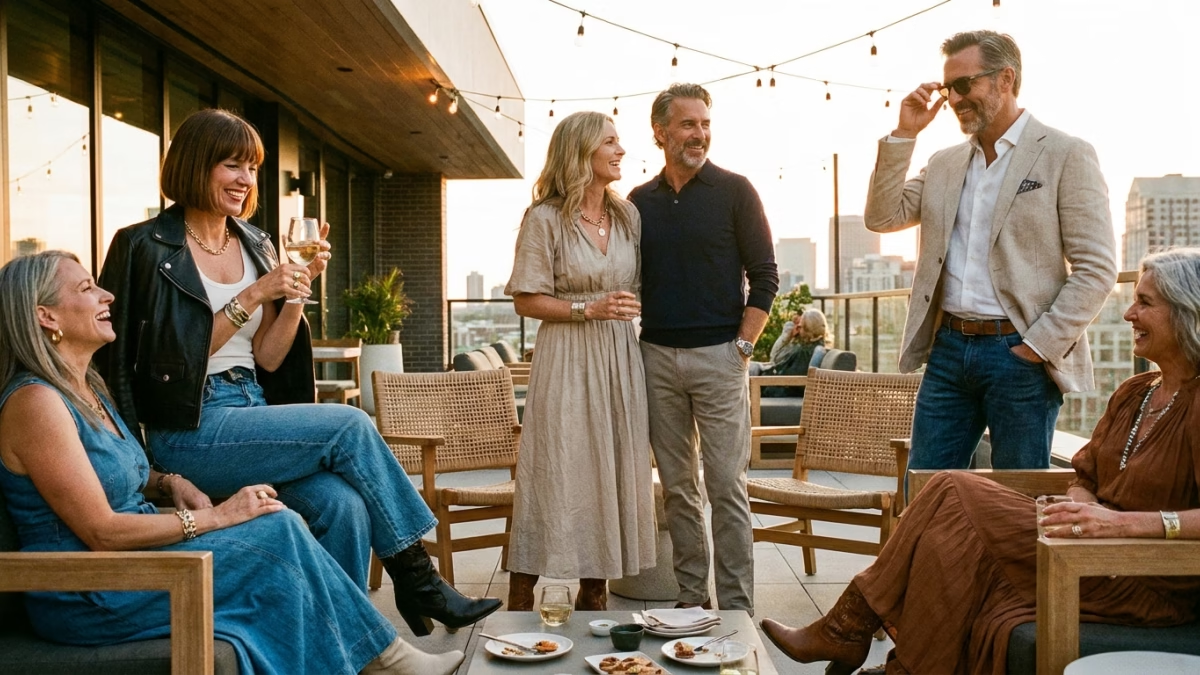

Gen X grew up with alcohol as part of the social landscape. Now, as health, longevity, and time become more valuable, we are beginning to ask what we actually want to do with our lives.
A few weeks ago, I read a story about a bar in Philadelphia that had figured out something the alcohol industry is beginning to understand: Gen X is still going out; the difference is that we may want to do it a little earlier.
The bar was hosting a Prince-themed dance party. There was purple, dancing, cocktails, and most of the crowd was over 50. The party started at 7:30. I actually laughed when I read that because, honestly, that sounds about right. I am old enough to remember when going out at 10 p.m. was considered early, and I am now old enough to understand that being home by 10 p.m. can be the best decision!
The article got me thinking about Gen Xers because we are in a strange place. We were raised in a culture where drinking was part of almost everything. We met people at bars. We celebrated with drinks. We drank after work. We drank on vacation. We drank because it was Friday. We drank because it was Tuesday and someone had a bottle of wine, always.
Now we are living in a completely different conversation.
We are being told to protect our sleep, build muscle, manage stress, improve metabolic health, think about our cardiovascular health, and pay attention to longevity. Many of us are also taking care of aging parents while raising children, helping adult children financially, managing careers, and trying to figure out what the hell happened to our knees.
And then there is the information. There is always more information. Too much information, it’s not good for our brains, at all.
Our phones are full of news, work, health advice, political arguments, children’s schedules, family emergencies, social media, and the latest thing we should apparently be doing to live another 40 years. I think Gen X is exhausted in a very specific way. We came of age before the internet and then spent our entire adult lives watching the world speed up.
So yes, some of us still go to the bar. But I think the more interesting question is why.
For a generation that learned early that alcohol was an easy way to change how you felt, drinking can become part of the mechanism for turning down the volume. You finish work, pour something, sit down, and finally feel like the day is over.
I understand that ritual; I lived around it for years.
But I also think we are beginning to ask a different question: What if I don’t actually need another thing to change how I feel? What if I need my life to be different?
That is a much harder question to answer, and a much more interesting one.
The numbers show that something is changing. Gallup reported that only 54% of American adults said they drink in 2025, the lowest level in its nine decades of polling. Younger adults are driving much of the decline, but Gen X is still part of the conversation. The University of Michigan’s long-running Monitoring the Future study has also documented significant declines in alcohol use among younger generations.
The alcohol industry has noticed. Any why wouldn’t it?
If younger people aren’t filling the bar stools, businesses will look for people who will. That is where Gen X becomes interesting. We have money, we know how to drink, and many of us still associate going out with alcohol.
But another force sits across the table from the alcohol industry: longevity.
Gen X is watching people take GLP-1 medications, track their sleep, measure their glucose, lift weights, join running clubs, and spend serious money trying to stay healthy for as long as possible. The research on GLP-1 medications and alcohol consumption is still developing, but researchers are actively studying whether these drugs may reduce alcohol cravings or consumption in some people.
Whether that turns out to be a major driver or simply another piece of the puzzle, the larger shift is already happening.
People are reconsidering what they want their time to feel like.
Maybe Friday night is not three cocktails and Saturday morning on the couch. Maybe it is a six-mile run with a group of strangers who become friends. Maybe it is dinner, home early, and waking up feeling good. Maybe it is traveling somewhere beautiful and remembering the entire trip. Maybe it is coffee with a friend at 8 a.m. instead of drinks at 8 p.m.
That does not mean alcohol disappears. It means alcohol stops automatically getting first dibs on our time. And I think that is where this conversation gets much more interesting than another article about whether people are drinking less.
I don’t think Gen X needs another person telling us what we should or shouldn’t consume. We have had enough of that. We need to start looking at what we are choosing and why.
I have spent 29 years sober, and one thing I have learned is that removing alcohol is only the beginning. The real question is what you do with the life that becomes available afterward.
That is the conversation I am interested in now: not simply sobriety, but intentional living. What happens when we stop automatically doing what we have always done and start paying attention to what actually gives something back?
That is also the lens behind Sober in San Francisco, where I am interested in the places, experiences, food, travel, and small rituals that make a life feel bigger rather than smaller without alcohol. You can find that work at soberinsanfrancisco.com, and you can find my work around stress, biology, and capacity at lanekennedy.com.
Because maybe the real question isn’t whether Gen X is still drinking. Maybe the real question is what we’re finally ready to do instead.
Senior Sober Curator Lane Kennedy has been sober since 1996 and is a longtime contributor to The Sober Curator. She is a stress management educator, meditation teacher, DNA wellness practitioner, and creator of The Capacity Report, where she explores nervous system regulation, recovery, and the biology of resilience.

SOBER EVENTS at The Sober Curator keeps you in the loop on alcohol-free gatherings happening nationwide. From sober comedy shows and non-alcoholic tastings to festivals, retreats, and sporting events, we highlight vibrant, community-driven experiences from coast to coast. Our goal? To keep you entertained, inspired, and connected—no matter where you live. Need more sober time than one event? We’ve got your back with our Sober Retreat Calendar.
📅 Submit a Sober Event: NA tastings, sober socials, recovery conferences, fitness meetups, alcohol-free festivals, virtual gatherings, and events of all kinds. Anything that gives our readers something worth showing up for. Submit your event →
🏝️ Submit a Sober Retreat Recovery-focused, wellness, spiritual, creative, and adventure retreats. Listings start free. Featured and Sponsored placements available for retreats that want full editorial coverage. Submit your retreat →
Welcome to HAPPY EVERY HOUR, your go-to hub for all things NA (non-alcoholic). We review alcohol-free beers, ciders, wines, spirits, RTDs (ready-to-drink), and share NA cocktail recipes that taste just as good—if not better—than the boozy originals. Whether you’re sober, sober-curious, or just taking a break, this is where great taste meets zero proof.
TRIGGER WARNING: People in early sobriety may want to proceed with caution. Always read labels. Please hydrate responsibly … #becausedrunkneverlooksgood.
🛍️ Submit a Product for Review NA beverages, sober-friendly tools, alcohol-free brands, and products built for the way our audience actually lives. Submit your product →
Grab Your Copy of Sobriety for Dummies now! Be sure to tune in to the Your Sober Now What? Podcast to hear an expansion on the themes discussed in SFD!
Resources Are Available
If you or someone you know is experiencing difficulties surrounding alcoholism, addiction, or mental illness, please reach out and ask for help. People everywhere can and want to help; you have to know where to look. And continue to look until you find what works for you. Click here for a list of regional and national resources.

Subscribe to The Sober Curator on YouTube
Why are Gen Xers embracing alcohol-free nights out?
Gen Xers are increasingly choosing alcohol-free nights out as they seek healthier lifestyles focused on longevity and wellness. Growing up in a culture where drinking was the norm, many are now reevaluating this habit. With an emphasis on improving sleep, reducing stress, and enhancing overall health, alcohol-free socializing offers a way to enjoy nightlife without the downsides of alcohol.
How can bars cater to Gen Xers who want alcohol-free options?
Bars can attract Gen Xers by offering a variety of alcohol-free drinks, hosting themed events that appeal to their interests, and creating an inclusive atmosphere. By recognizing the trend towards intentional living, bars can include alcohol-free cocktails on their menu and organize events that start earlier, allowing patrons to enjoy their night without compromising their next day’s responsibilities.
What are the benefits of choosing alcohol-free social events for Gen X?
Opting for alcohol-free social events allows Gen Xers to prioritize their health and wellbeing. Benefits include improved sleep, enhanced mood, and better cognitive function. Additionally, these events often foster deeper connections without the haze of alcohol, offering a more authentic social experience that aligns with the goals of living a healthier, longer life.
Can Gen X still have fun at parties without alcohol?
Absolutely! Gen X can have a great time at parties without alcohol by focusing on the experience and interactions. Engaging in themed events, dancing, enjoying good food, and connecting with friends can offer fulfilling and memorable experiences without the need for alcohol consumption.
What alternatives to alcohol can Gen Xers explore on nights out?
Gen Xers have a wide range of alcohol-free alternatives available, such as mocktails, alcohol-free beers, and specialty non-alcoholic beverages. These options allow them to enjoy flavorful drinks while maintaining a clear mind. Bars and restaurants are increasingly offering such alternatives, making it easier to enjoy social events without alcohol.
