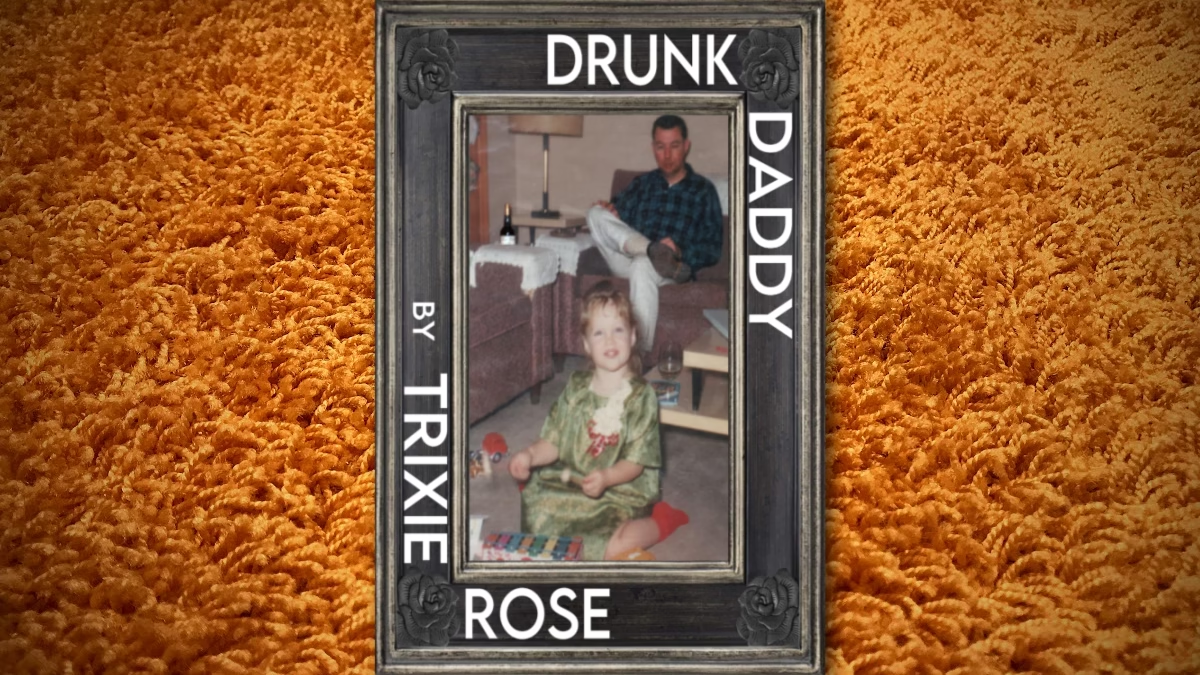
For those of us in long-term recovery, there’s a kind of reading that isn’t comfortable but is necessary: the story told from the other side of the bottle. We know our own side by heart — the using, the wreckage, the long climb back. What we don’t always let ourselves sit with is how our drinking landed on the people who loved us while we were in it. Trixie Rose’s Drunk Daddy is that version of the story, narrated not by the drinker but by his daughter — the kid who got off the school bus each day — and it’s exactly the uncomfortable, necessary mirror the rooms are always telling us to look into.
Rose grew up idolizing her father, Tony, and learning to feel nothing about what his drinking cost her. She calls her memories “untouchable marvels behind glass; museum pieces for anthropological consideration” and warns, two sentences in, that “there is an emotional asteroid headed directly for this planet.” Reader, the asteroid lands. It just takes her 61 years to let it — and watching her finally feel it is a quiet gut punch of a lesson in how long the people we love can carry what we hand them.
Drunk Daddy is an 84-page installment in a series the author calls “Bad Memoir,” and “bad” is doing a lot of ironic heavy lifting. This is a very good memoir wearing a “bad memoir” name tag so it can sneak past your defenses and gut-punch you in the parking lot. Whether you drank or grew up around someone who did, you’ll recognize this story from the inside so completely it’s almost … rude.
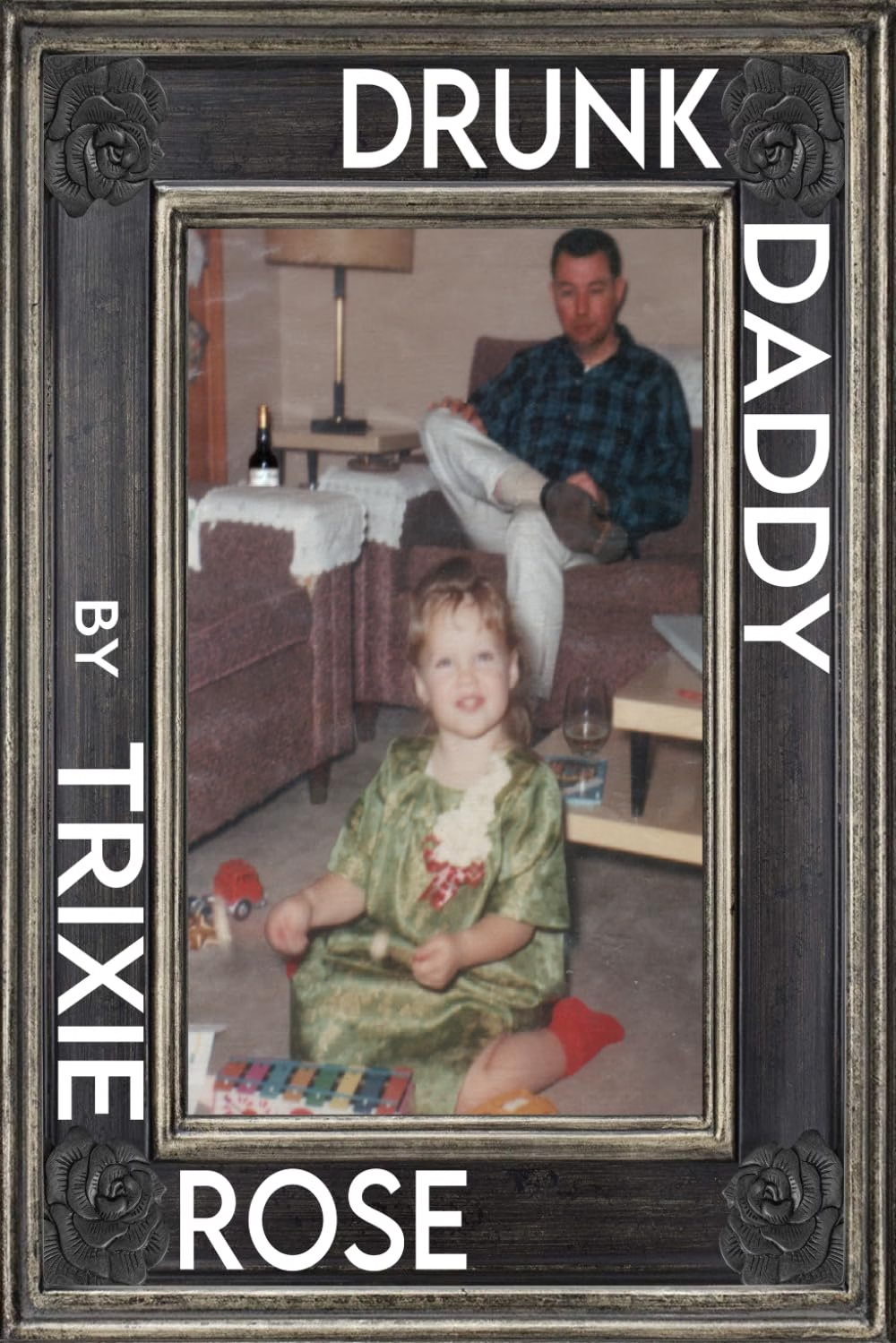
The Setup
Trixie is Daddy’s girl. Daddy is Tony — a charming, RUM-and-COKE-tattooed, born salesman and con man who could “sell you (yes you) anything, and you’d buy it with pleasure.” Tony also drinks. On the wagon, off the wagon, “we all lost count.” Then, one March afternoon in 1975, 11-year-old Trixie gets off the school bus to find an ambulance and three police cars in front of her house. She watches two men hold her father up by the armpits while his feet drag and his chin lolls on his chest. It’s a master class in how trauma actually files itself — not as a feeling, but as a set of very specific camera angles and one “lazy red light” spinning “lethargically and somehow off kilter.”
The Book Is Named After the Drunk, but It’s Secretly About the Woman Who Kicked Him Out
Here’s the move I didn’t see coming. Ceil — Trixie’s mother, a factory worker and the breadwinner — learns from a coworker that the bank is foreclosing because Tony drank the mortgage money. So she goes to the bank, refinances the house in her name alone, drops his name from hers and has him removed. In one day. Then Rose zooms out to remind us it’s 1975, and women had only been able to hold a credit card in their own names since the Equal Credit Opportunity Act of 1974 — one year earlier. Ceil’s escape wasn’t just brave; it was newly legal. That’s the context that turns a sad family story into social history, and it’s handed to you like a key, not a lecture. (Then Trixie surrenders her beloved flute for the fife because they can’t make the payments, tells her crying mother, “It’s OK,” and if you got through that dry-eyed, I don’t believe you.)
Learning to Cope With Someone Else’s Behavior: “I Was Numb Because I Felt Everything”
This is what makes it essential #QUITLIT and not just a well-told hard-luck story. Rose is ruthless about her own coping mechanism, which is this: Nothing bothers her. Dad’s a drunk? No skin off my nose. Kicked out? Good riddance. “It works for everything painful,” she writes. And the kicker: “And then. I just. Never checked back in.” That’s the whole psychology of the adult child of an alcoholic in four sentences — the “I’m fine” reflex worn so smooth it becomes a personality. She doesn’t drink like Tony did; instead, she attracts drinkers and appoints herself their rescuer, smoking her pain for decades the way he drank his. Different delivery system, same wound.
It all pays off at 48 — the exact age Tony was when he died — when she visits his grave, pours a nip of vodka on his marker, says, “No hard feelings?” and invites his spirit to get in the car. He declines. And her read on that — that he loved her enough to spare her “the tired spirit of someone else’s wasted, drunken life” — is where the tragicomic armor finally cracks into something tender and earned. “Jung would call it integration.” Drunk Daddy is the sound of a woman finally checking back in.
The Verdict
Is it messy? Gloriously, on purpose — Rose digresses, doubles back and rewrites the same memory twice. But the mess is the method; memory doesn’t file itself in order, and neither does grief. There’s no rock-bottom-to-riches fairy tale, either — just a woman leaning, finally, into the truth of it. For adult children of alcoholics, for the sober and sober-curious, and for anyone who ever loved somebody impossible and buried the feeling so deep they forgot it was there: Read Drunk Daddy.
As someone who falsely assumed my drinking affected no one but me, I recommend bringing tissues. Settle in with this short book on a delicious late night of bed-rotting, and bring your sense of humor. Bring it to your book club, or have a friend read it, too, so you can unpack it together.
#QUITLIT Sobees Score: 4 out of 5


#QUITLIT: Kiss Your Brain Series by Amy Liz Harrison
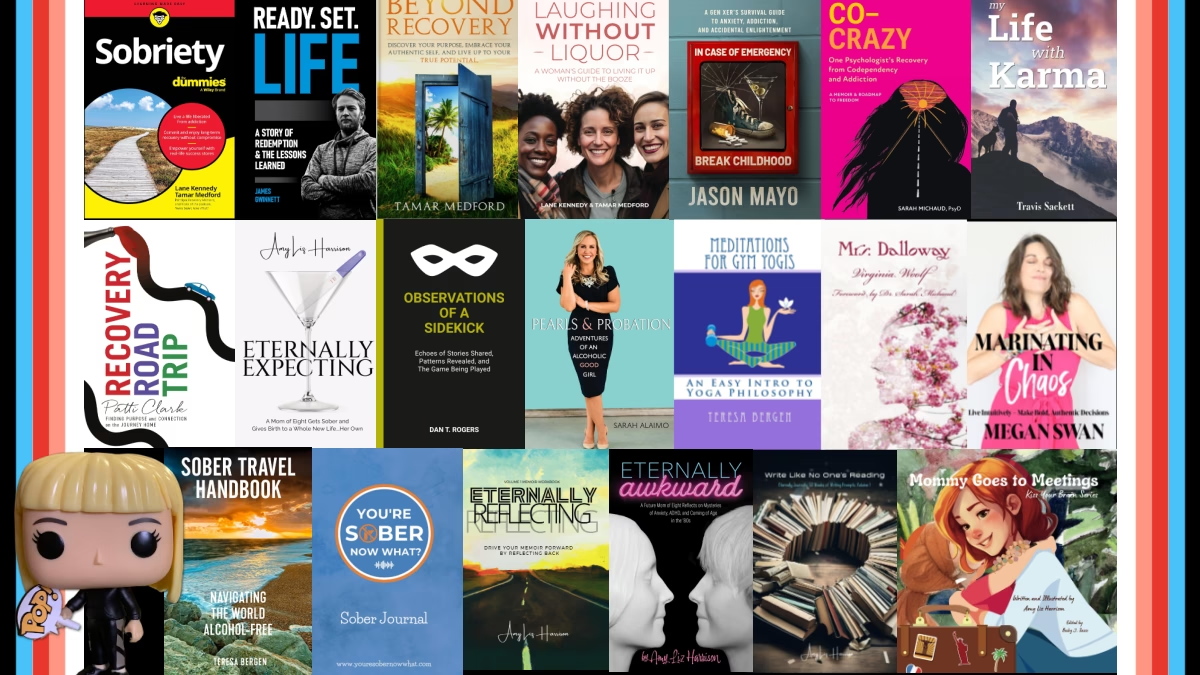
#QUITLIT: Sober Authors You Should Know – Books By Our Very Own
TSC LIBRARY: Welcome to The Sober Curator Library! This isn’t your average stack of books—we’re talking full-on story immersion, Audible binges, and reviews with personality. Browse our four go-to genres: #QUITLIT, Addiction Fiction, Self-Help, and NA Recipe Books. And if you’re collecting recovery reads like rare trading cards, check out our Amazon #QUITLIT list—Early Sobriety Survival: Books for Your First 90 Days.
📘 Submit a Book for our #QuitLit Library: Welcome to the largest culturally-driven sober book collection on the internet. Memoir, fiction, criticism, quit lit, anything that fits a Gen X or Millennial sober reader past initiation. Submit your book →
Flashback Friday – Your Weekly Rewind on the Top Trending Articles
Resources Are Available
If you or someone you know is experiencing difficulties surrounding alcoholism, addiction, or mental illness, please reach out and ask for help. People everywhere can and want to help; you just have to know where to look. And continue to look until you find what works for you. Click here for a list of regional and national resources.
We know you’re a skimmer. We wrote a newsletter for skimmers.
Short intros. Quick hits. Headlines that tell you exactly what you’re getting. Read it in the school pickup line, on the treadmill, or while pretending to listen on a conference call.
The Sober Sip: three times a week, zero fluff.
Resources Are Available
If you or someone you know is experiencing difficulties surrounding alcoholism, addiction, or mental illness, please reach out and ask for help. People everywhere can and want to help; you just have to know where to look. And continue to look until you find what works for you. Click here for a list of regional and national resources.

Follow The Sober Curator on LinkedIn
What is Drunk Daddy by Trixie Rose about?
Drunk Daddy is a short memoir about Trixie Rose’s childhood with an alcoholic father, the choices her mother made to protect the family and the emotional coping mechanisms Rose carried into adulthood.
Is Drunk Daddy part of a series?
Yes. Drunk Daddy is part of Trixie Rose’s Bad Memoir series, a collection of brief memoirs that use humor, reflection and nonlinear storytelling to explore difficult personal experiences.
Is Drunk Daddy considered quit lit?
The book fits within the broader quit lit conversation because it examines alcoholism and its effects on a family. Unlike many recovery memoirs, however, it centers the experience of the child rather than the person drinking.
Who may connect with this book?
Adult children of alcoholics, people in recovery, sober-curious readers and anyone who has loved someone with an alcohol problem may recognize themselves in the book’s themes of trauma, emotional detachment and healing.
How long is Drunk Daddy?
The memoir is 84 pages, making it a short read that still addresses complex themes related to addiction, family dynamics, grief and emotional survival.
What score did Amy Liz Harrison give Drunk Daddy?
Amy Liz Harrison gave Drunk Daddy a Sobees Score of 4 out of 5.