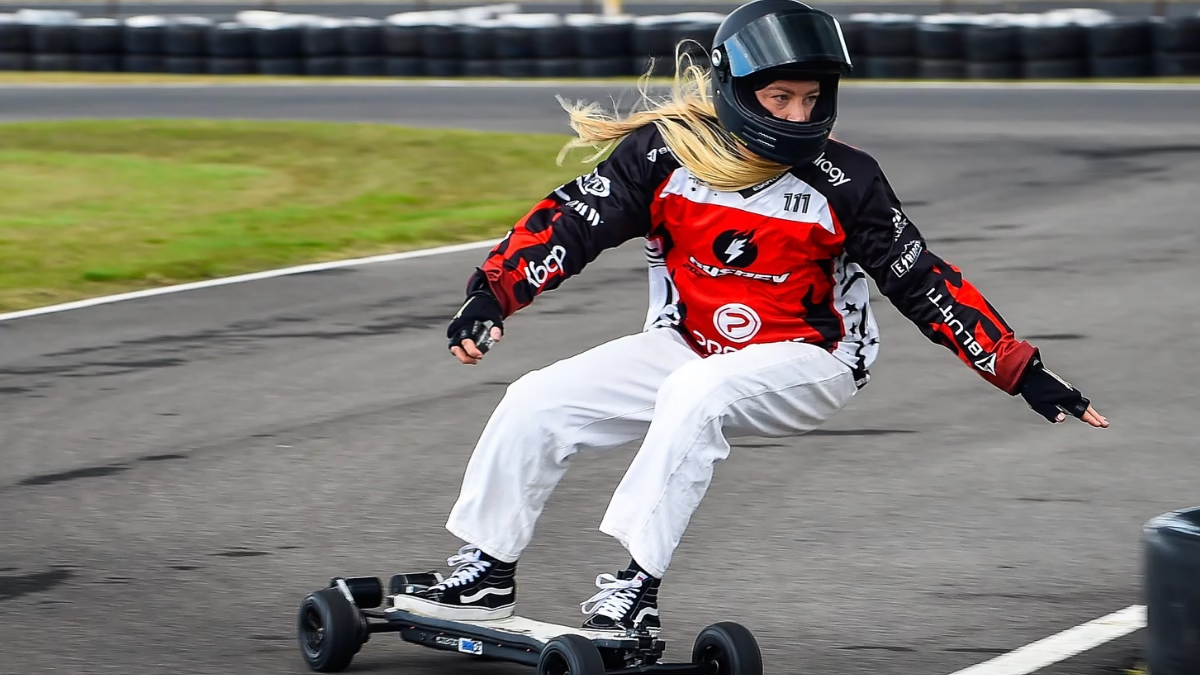
She finished last at the 2026 AUS PEV Nationals. She is treating it like a podium, and honestly, so am I.
It is 11:30 in the morning on Thursday in the Gold Coast, Australia, and Bianca Criaco is standing on her desk chair to show me via Zoom how to ride an electric skateboard at 80 kilometers an hour. Straight body. Lean into the corner. Trust the speed to hold you up.
I have just moved into my childhood bedroom at my 80-year-old parents’ house, fallen off a ladder hanging curtains in the backyard podcast cottage (the curator cottage) they built me, and spent a night in the ER convincing myself my heart condition was acting up. It was the ladder. Bianca, a Pilates instructor by trade, listens to this whole story and says, “If you can fall off a ladder, you can get on a board.”
That is the pitch. Not the sport. That immediately showed me who Bianca is.
The competition
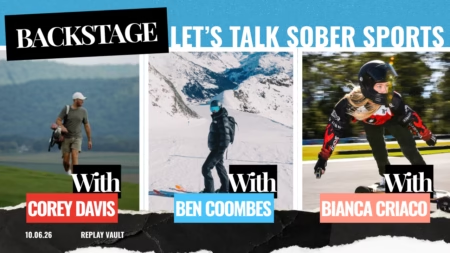
The AUS PEV Nationals is Australia’s national championship for personal electric vehicles: electric skateboards and electric unicycles, raced around a go-kart track at speeds that make a Bravo reunion look calm. This year it ran August 21 through 23 at the Coffs Harbour Kart Racing Club, and for the first time it included a Novice class for people who had never raced before.
Bianca found out it existed on a group ride. Somebody mentioned a competition. She asked how a skateboard competition works. “You ride around against each other,” they said. She thought it was a joke, then signed up, then trained for two months without knowing what she had signed up for. Gotta love newly sober people being game to try new things. Mad respect.
Her board was not a race board. It was speed-limited to 42 kilometers an hour. The pros there were doing 80. She remembers standing at the start line watching them go and thinking: that is a completely different sport. Someone put her on a proper race board for one heat and filmed her on an Insta360, and she thinks she cracked 49. The rider who won the whole thing flew in from the United States and, in between his own heats, stood next to her and corrected her stance.
She had been riding low, crouched, surfing it. That is how she had trained her body for years. Wrong. You stand tall, you counterbalance the speed with gravity, and you lean into the corner like you mean it.
“You have to connect so much with your body,” she told me. “If you make one wrong move, if you’re distracted, it goes beyond a flow activity. You really do need to be so focused.”
She came last. Dead last. The important take-away? She finished. She almost pulled out the week of, because the race had become a bigger thing than a race, and she could not stand the idea of quitting in front of everyone who had been following along.
Everyone, it turned out, included the pros. And the sponsors. And a local TV news crew that interviewed her at the track and asked about her sobriety, then cut that part before air. One of the sponsors is now building her a race board in hot pink. She runs an Instagram page called esk8.women, and there are so few women racing this sport that you can count them on one hand across two continents.
“I love that I came last,” she said. “I feel like it’s a comeback story.”
The board came first
Here is the part the news crew cut.
Bianca is 37. Both her parents still drink. She grew up one of six kids inside a high-control religion, started drinking at 13, and left the religion and came back to it more than once, the last time after moving home from the U.S. in 2019. She married inside it. The marriage was abusive. When she asked the elders for help, she was told to stay and make it work.
So she drank more. By the time she went to the police and then left the religion for good in July 2025, she was drinking around four bottles of wine a day, had been hospitalized for withdrawals, and had a stage 1 liver disease diagnosis. She had also lost every relationship she had. Her siblings still do not speak to her.
She could not take the standard withdrawal medications. A cancer diagnosis at 19 and 32 removed lymph nodes had left her body intolerant to most of them. The alcohol and drugs team she was working with eventually told her there was nothing more they could do.
She picked a date anyway. September 1. First day of spring in Australia, she said, then corrected herself: technically it is the 21st, but she is a dates person and she wanted a fresh start with a calendar to prove it. The night of August 31, 2025, she filmed a video saying, out loud, that she was choosing to be sick on purpose and hoped it would be worth it. You can watch that video HERE and you should.
Then she got through it. Every morning of those first weeks she woke up with tremors, crying, wanting a drink. And every morning she stepped outside and got on the electric skateboard she had bought not long before.
“It gave me this sense of connection and freedom,” she said. “It really got me through that period.”
Friends told her she was being childish. A 37-year-old on a skateboard. Her psychologist asked what she loved as a kid. Surfing, she said, but she has limited movement in one arm now. The board was the closest thing to a wave she could still stand on. While skating is not the only thing that helped Bianca get to year one, alcohol-free, it did play a major role. As many of us have experienced, it takes rolling up your emotional sleeves and doing the hard innerwork. After an hour with Bianca, I saw a woman who has started her recovery journey on a firm foundation of healing, connecting with her body, inside and out, and her spirit.
What one year looks like
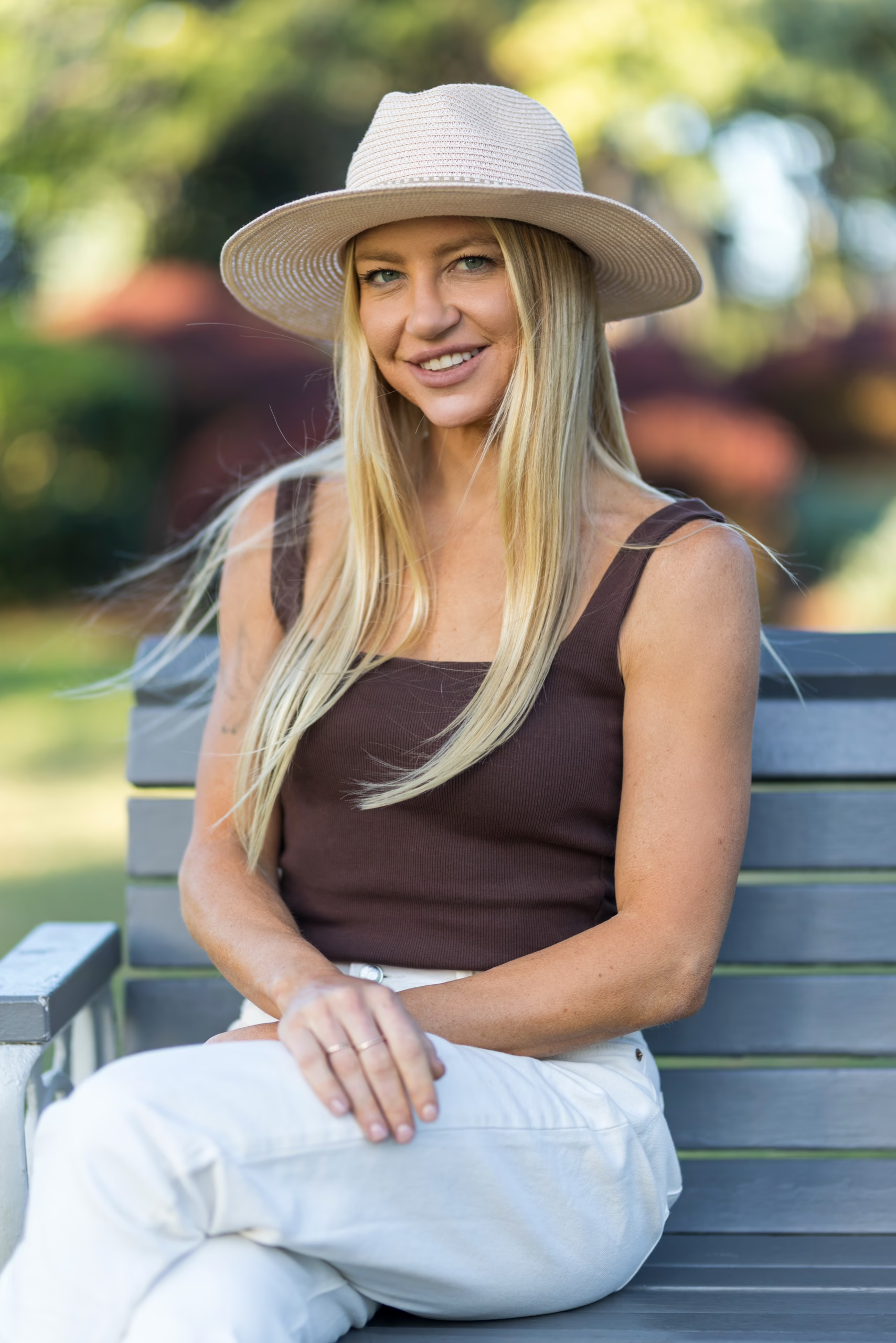
Bianca is spending her first soberversary doing three things, which is the most Cancer-sign thing I have ever heard.
She is recording the first episode of her podcast, The Choice, with her housemate and co-host. The format: one choice that changed a life, who you were before, how it went, what happened after. Guests already booked include authors, business owners, athletes, and a former prison officer who was silenced for two decades before her case went public.
She is going on what she describes as a very large, very well-known sobriety podcast, name withheld until it airs. (And now I have total fomo waiting to hear which one it is.)
And she is reading this. Because when I asked if I should hold the article for September 1, she said it would be something tangible she could look back on every year. So here it is, published at 12 AM my time so it lands on the right day in hers. Time zone math is a skill.
Her chapter in the upcoming anthology When Women Finally Speak is called “Survival to Living.” When people comment that she looks different than she did a year ago, she tells them it is because she doesn’t drink. We had a good laugh about sobriety being one of the best skincare programs on the market today.
Full circle
I asked how she found The Sober Curator, expecting Instagram. It was ChatGPT. She had asked it where to pitch a story about a sober woman racing electric skateboards, and it handed her a list of Australian local papers and one website in Washington State run by a woman who has never been on a skateboard in her life.
So I am now following a woman I have never met who lives 7,000 miles away and is trying to get me on a board. She thinks it would be easy for me because my center of gravity is low. I am 5’3″. I am, as I told her, travel size.
For the record: behind my parents’ house, the house I grew up in and just moved back into, is a church parking lot the size of a football field that belongs to the same religion Bianca left. It is empty most days, leaving plenty of room for me to practice electric skating.
I could not make that up if I tried.
My favorite thing about interviewing Bianca, besides the fact I have a new bestie down under, was how her face lite up when she told me she came in dead last in the competition. To me, that is exactly what recovery looks like in action. We show up for life, we meet each challenge head-on, often not knowing what we are doing or if we are doing it right, and we do the hard things. We don’t just talk about them, we actually do them.
Congrats on year one, dear Bianca. I promise you, new friend, the best is yet to come.
SOBER SPORTS at The Sober Curator celebrates the connection between sobriety, wellness, and an active lifestyle. This section features articles, interviews, and personal stories from athletes and fitness enthusiasts who are thriving without alcohol. By showcasing the benefits of sober living—and the powerful role sports and fitness play in maintaining recovery—we’re reframing what wellness looks like and promoting a positive, empowering approach to life after booze.
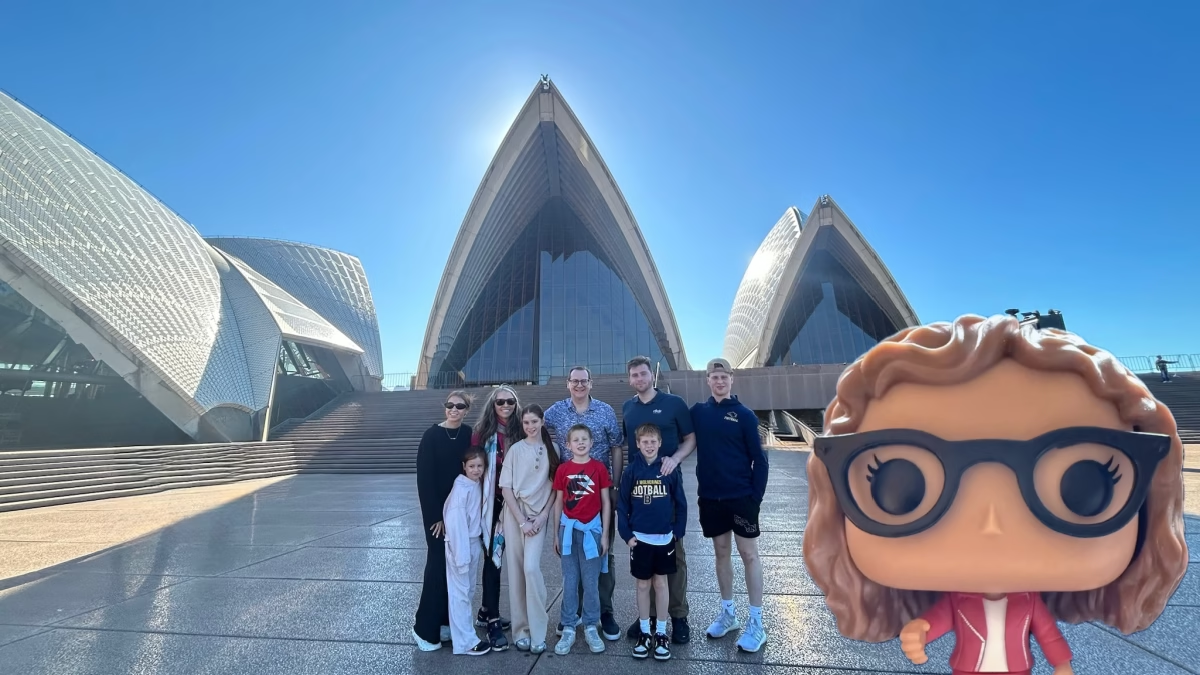
WHAT A TRIP! Sober Travel to Sydney, Australia: A Riveting Experience

WHAT A TRIP! Great Ocean Road in Melbourne, Australia: Twelve(ish) Apostles and Twelve Steps
We know you’re a skimmer. We wrote a newsletter for skimmers.
Short intros. Quick hits. Headlines that tell you exactly what you’re getting. Read it in the school pickup line, on the treadmill, or while pretending to listen on a conference call.
The Sober Sip: three times a week, zero fluff.
Resources Are Available
If you or someone you know is experiencing difficulties surrounding alcoholism, addiction, or mental illness, please reach out and ask for help. People everywhere can and want to help; you just have to know where to look. And continue to look until you find what works for you. Click here for a list of regional and national resources.

Follow The Sober Curator on Facebook
What is the AUS PEV Nationals? The AUS PEV Nationals is Australia’s national championship for personal electric vehicle racing, covering electric skateboards and electric unicycles. The 2026 event ran August 21 to 23 at the Coffs Harbour Kart Racing Club and included a new Novice class for first-time racers.
How fast do electric skateboards go in racing? Competitive riders at the AUS PEV Nationals reach speeds around 80 to 100 km/h on purpose-built race boards. Consumer boards like Bianca’s are typically speed-limited to around 40 to 45 km/h.
Can exercise help with alcohol withdrawal and early sobriety? Movement is widely used as a coping tool in early sobriety, and many people in recovery credit a physical practice with getting them through cravings. It is not a substitute for medical supervision during withdrawal, which can be dangerous. Bianca worked with an alcohol and other drugs team throughout her first months.
Who is Bianca? Bianca is a Gold Coast, Australia Pilates instructor, cancer survivor, and electric skateboard rider who marked one year alcohol-free on September 1, 2026. She runs the eSkate Women Instagram page, co-hosts The Choice podcast, and contributed a chapter to the anthology When Women Finally Speak.