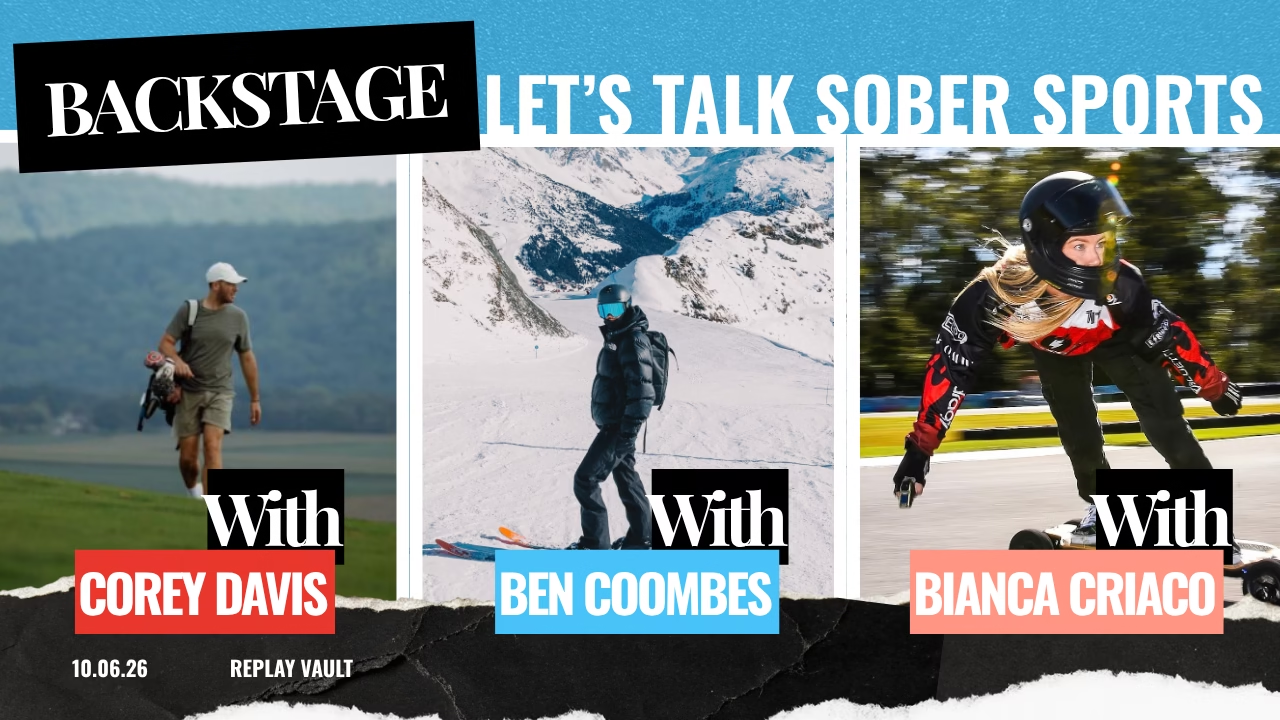
Golf has the 19th hole. Skiing has après.
On Oct. 6, three sober athletes on three continents logged into BACKSTAGE to tell us what happens when you keep the sport and lose the drink.
I’ll be upfront about my credentials. I haven’t skied since high school. I’ve been sober since May 1, 2006, and in twenty years, my most athletic achievement has been building a media company out of a website I accidentally published. As I said on air, apparently my sport is content.
But I know what these three were describing. When the drink goes, it leaves a hole the size of your whole social life. You grab onto something, anything, to fill it. If you’re lucky, that something turns into the life you didn’t know you were allowed to have.
Corey Davis, Ben Coombes and Bianca Criaco all got lucky. Then they did the work.

From Mr. Potential to a 3 Index
Corey got sober at 22. He celebrated 16 years this year.
Before that, he was what he calls “Mr. Potential.” He barely graduated high school and was working at a supermarket while his best friends came home from college with degrees. “Hyper-focused on finding my next fix” is how he put it.
Then COVID hit. Corey and his family left Brooklyn and moved in with his in-laws, who happen to live on a golf course. He bought clubs on eBay and showed up at the local muni every single day for six months.
Four years later, he went from a 30 index to a 3.
If you don’t speak golf, trust me: that’s absurd.
What stuck with me, though, wasn’t the number. It was how Corey connects the game to recovery. In early sobriety, people kept telling him, “I wish you a long, slow recovery.” Golf works the same way. Tour pros shoot six under and then head back to the range to fix something.
“With golf, there’s no destination,” he said.
That idea is now Soba Golf, a community of almost 2,000 sober and sober-curious golfers in its Discord, plus a podcast and retreats. Corey had just gotten back from Soba’s second retreat, in Ireland, where the itinerary included breathwork, mindset coaching and group sessions led by a psychotherapist instead of a pub crawl.
He also made a point about men that I can’t stop thinking about. “Walking shoulder to shoulder, especially men, men have a very, very tough time sharing about what’s going on in their life,” he said. Four-plus hours on a course changes that.
I was maybe his 10th follower on Instagram. I’m proud of my early-adopter instincts here.
The Skier Who Started Sober in the Hardest Place
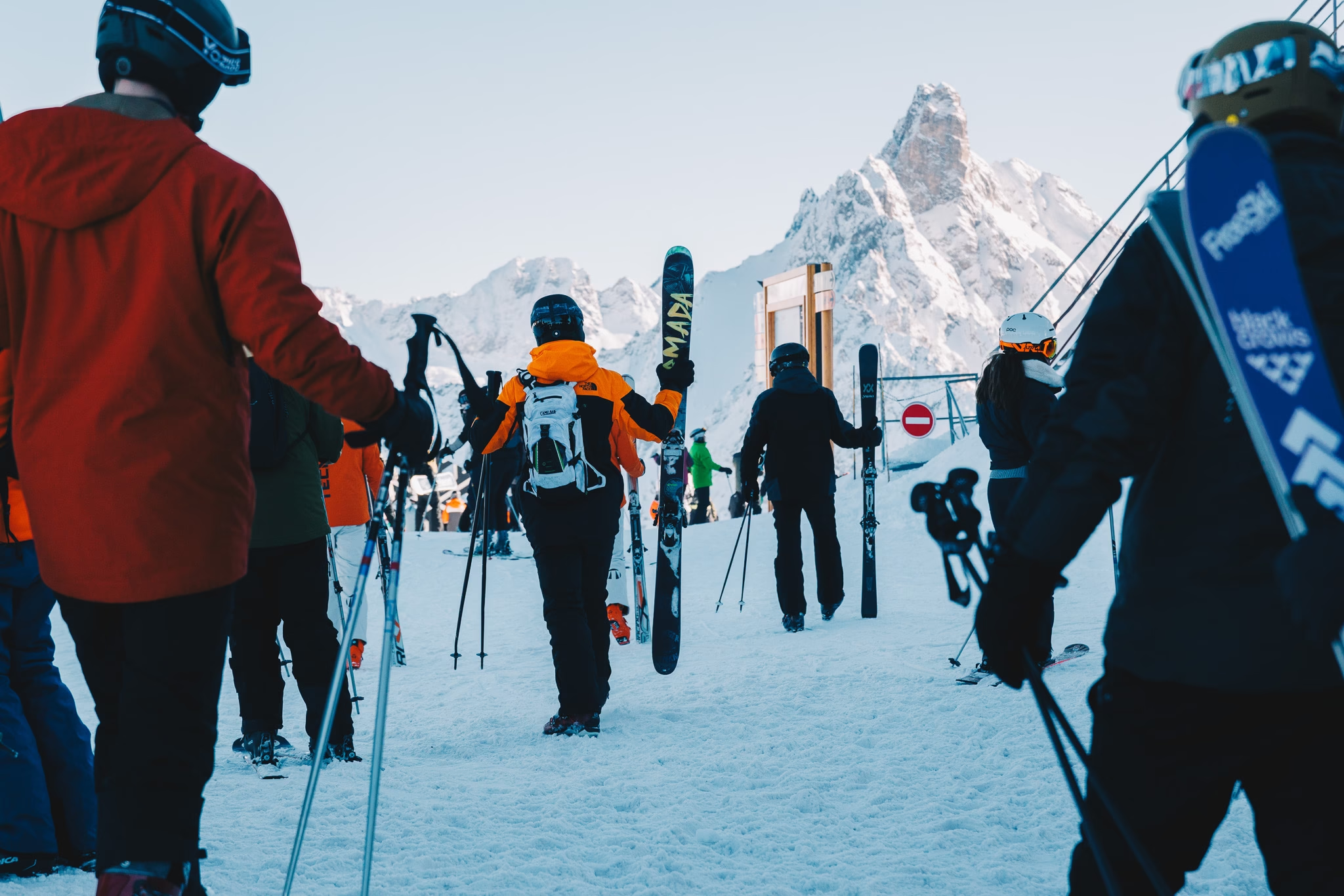
Ben Coombes is 28. He found skiing around 21, quit his job, moved to a ski resort and walked straight into what he called a “relentless amount of drinking.”
It got so bad he almost quit skiing altogether.
Instead, he quit drinking, and he picked the hardest possible place to do it. Just before Christmas, in a ski town, for a three-month season.
“If I can stop drinking in a ski resort, in the place where I know is like the epicenter for drinking… that would be enough proof for me,” he said.
It worked. Ben hits two years in December. He called that first season “the launchpad for everything that I do now,” and what he does now is Soberski: alcohol-free ski retreats in the French Alps with yoga, breathwork and mindset work. The goal is a week you don’t need another week to recover from. The next one runs in January.
His line about why it matters is going on my wall: “I want to be able to remember these experiences.”
Ben is also our newest Sober Curator contributor. If you want more of him, his full interview is on Episode 16 of the podcast.
Dead Last Is Still a Finish
Bianca Criaco set a 5 a.m. alarm on Australia’s Gold Coast to be with us. That alone earns her a medal.
She’s a Pilates instructor, a wellness educator and host of the podcast The Choice. She’s also about a year sober, and early sobriety hit her hard. She has talked about it openly on her socials.
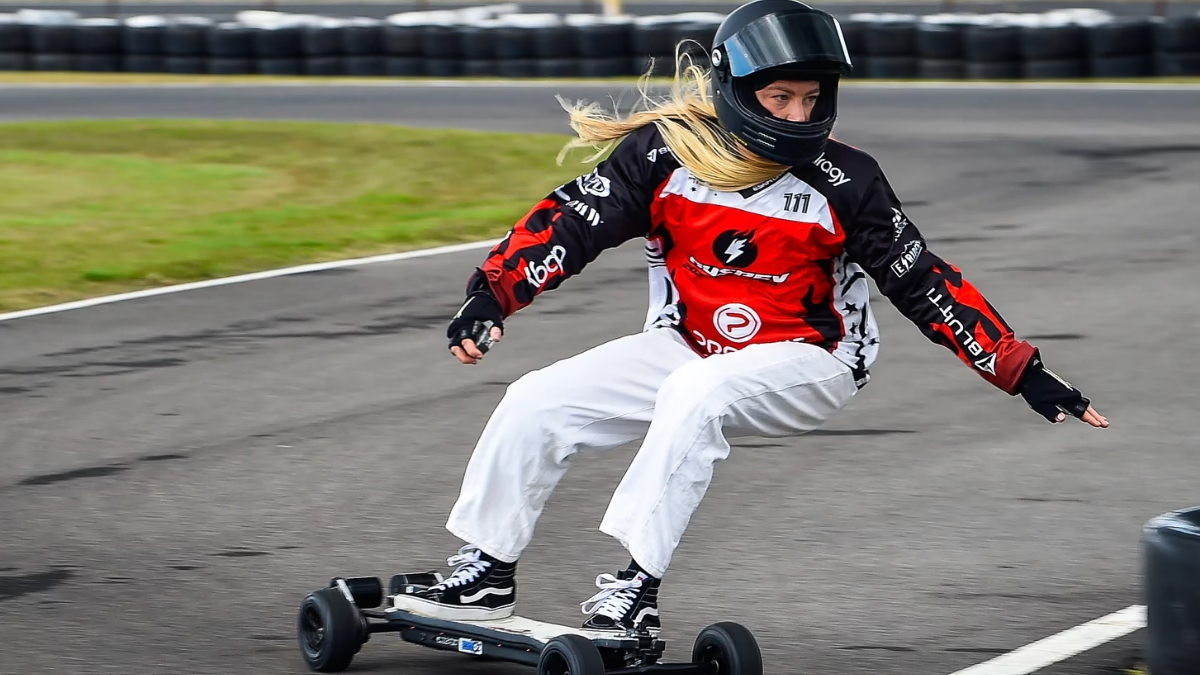
She’d been riding an electric skateboard for a few years. When things got rough, she got on the board, and the flow and focus of riding pulled her through. It went from a necessity to a pleasure.
Then she signed up for nationals. She didn’t know races happened on a track. She didn’t know other riders hit speeds three times as fast as hers. (Her board does 42 km/h, about 26 mph. Some boards hit 80.)
She finished dead last. When she told me after the race, she was delighted, and my only reaction was: you finished!
On the panel, she said riding has shown her what she’s physically and mentally capable of. Then she said the line that got Tamar and me:
“Joy, especially for me, is something that I don’t think I’ve had my entire life, especially my adult life, so it’s given me that.”
I’m not crying. You’re crying.
Everyone Was Told They Had “Potential”
Tamar asked the question that cracked the panel open: were you told you had potential growing up?
All three were.
Ben said the hardest part was knowing other people had hopes for him that he wasn’t meeting. His conclusion: “Nobody’s going to reach your potential for you.”
Corey went somewhere I didn’t expect. He’s more interested in intuition than potential now, in being able to hear what he called “my most true thought” and follow it.
I think that’s the real flex of long-term sobriety. Not becoming the most optimized version of yourself, but finally being able to hear yourself think.
Relentless Counts as a Sport
Near the end, I asked Corey what he’d tell himself two or three years ago, before SOBA. His answer: “Be prepared to be relentless, you know, in your pursuit of what you believe in.”
That hit home. I’ve been building The Sober Curator for six years, and there have been blood, sweat and a lot of tears. There have been nights I wondered if any of it made a difference.
Most of the time, you never see the ripple effect. You keep going anyway.
Which brings me to my question for you: what did you grab onto when the drink was gone, and what did it turn into?
SOBER SPORTS at The Sober Curator celebrates the connection between sobriety, wellness, and an active lifestyle. This section features articles, interviews, and personal stories from athletes and fitness enthusiasts who are thriving without alcohol. By showcasing the benefits of sober living—and the powerful role sports and fitness play in maintaining recovery—we’re reframing what wellness looks like and promoting a positive, empowering approach to life after booze.
You’ve got mail from The Sober Curator

Resources Are Available
If you or someone you know is experiencing difficulties surrounding alcoholism, addiction, or mental illness, please reach out and ask for help. People everywhere can and want to help; you just have to know where to look. And continue to look until you find what works for you. Click here for a list of regional and national resources.
Follow The Sober Curator on TikTok
What is SOBA Golf? SOBA Golf is a community for sober, sober-curious and wellness-minded golfers, founded by Corey Davis. It has almost 2,000 members in its Discord and runs in-person meetups, retreats and a podcast.
What is Soberski? Soberski runs alcohol-free ski retreats in the French Alps, founded by Ben Coombes. Weeks include skiing plus yoga, breathwork and mindset work. The next trip runs in January.
Is electric skateboarding a competitive sport? Yes. It’s an emerging sport with track racing and national competitions, including Australia’s nationals, where Bianca Criaco raced in 2026. Some boards reach 80 km/h.
Does sobriety make you better at sports? Our panel says yes. Asked whether he could have gone from a 30 to a 3 index while still drinking, Corey Davis said, “Oh no, definitely not.” All three guests credited sobriety with the focus, energy and presence their sports demand.
How do sober athletes handle drinking culture in golf and skiing? They choose their people. Corey said, “I could play with whoever, but I also choose who I want to play with now.” Ben built Soberski so skiers can do a whole week in the Alps without the après hangover.
What is BACKSTAGE with The Sober Curator? BACKSTAGE is The Sober Curator’s membership community. Members get live monthly conversations like Sober Sports, the replay vault, the BACKSTAGE Book Club and The Story Session writers group.
Watch the full replay, listen on Spotify, Apple, Amazon or iHeart, and join BACKSTAGE to be in the room next time