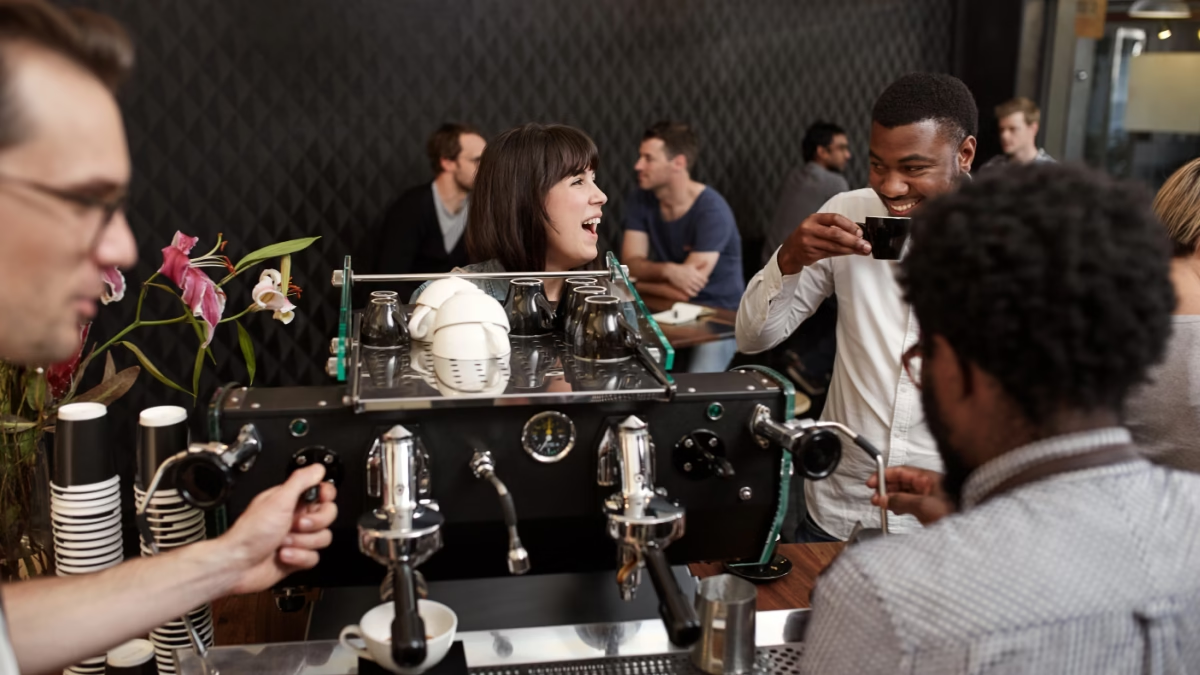
The DJ booth is tucked between the espresso machine and the pastry case. It’s 10 AM on a Saturday, and house music pulses through the small coffee shop in LA’s Echo Park. People are dancing—actually dancing—holding lattes instead of cocktails, wide awake instead of three drinks in. Someone’s wearing pajama pants. A couple is doing a synchronized shimmy near the milk bar. The barista is head-bobbing while steaming milk.
This isn’t a club. This isn’t even nighttime. And yet, this is where community is being built in 2026.
I’ve spent to much time avoiding sobriety because I was worried about what we lose when we stop drinking—the easy social lubricant, the built-in gathering places, the rituals that mark time and celebration. But as we all know you actually have more confidence over time as you figure out who the heck you really are, have more energy to party (at least during the day!) and can find the best new communities eva!
Now we’re watching something emerge that’s far more interesting and in fact increasingly mainstream, not just ideal for us sober folks. We’re witnessing the birth of new tribal gathering spaces, and they’re showing up in the most unexpected places: bakeries in Brussels with DJs spinning at sunrise on rooftops in Manhattan, saunas in Calgary where strangers become friends through shared heat and cold, coffee shops across the globe where the dance floor opens at 6 AM and closes by noon.
The traditional club culture is dying. But community – real, sober, connected community is being reborn in its place. And it’s happening in ways that feel more authentic, more inclusive, and infinitely more sustainable than anything the bar scene ever offered.
The Death of Club Culture (And Why That’s Actually Good News)
Let’s start with what’s actually happening. Over the last five years, more than a third of Britain’s nightclubs have closed, driven by rising costs, declining attendance, and fundamental shifts in how younger generations want to socialize. A 2025 study found that 61% of people aged 18-30 reported going out less frequently, with only 16% going out after 10pm.
This isn’t just about economics. It’s cultural. Gen Z continues to be the most sober generation, with 39% not drinking alcohol at all. But here’s what’s crucial: they’re not staying home alone. They’re simply rejecting the alcohol-centered social model and creating something new.
For those of us in long-term sobriety, this shift is validating. For years, we’ve navigated a social landscape designed around drinking, making endless accommodations, explaining ourselves, feeling other. Now, the broader culture is catching up. The question isn’t “why don’t you drink?” anymore. It’s “where should we meet that isn’t a bar?”
And the answers to that question are getting wildly creative.
Coffee Shops: The New Nightclubs
The coffee rave movement exploded across 2025 and shows no signs of slowing. What started as quirky one-offs—a Sunday morning at Trades Delicatessen in Dallas where customers danced with baguettes while a DJ spun from behind the register—has evolved into a full-fledged cultural phenomenon.
Cities across North America now have regular morning and afternoon DJ sets at coffee shops. In Utah, Breakfast Blend brings DJs to local coffee shops for three-hour sets starting in the morning, creating what one founder describes as a more sober-friendly environment where music brings people together without the late nights and hangovers.
Chicago’s Drip Collective hosts DJ sets in the West Loop, where the music plays while people order their regular coffee drinks, some staying to work on laptops, others dancing between the tables. The vibe is relaxed, inclusive, and accessible. No cover charge. No dress code. No pretense.
What makes these gatherings particularly powerful for people in recovery or the sober-curious is the complete inversion of the club experience. You’re caffeinated, not intoxicated. It’s daytime, not the middle of the night. You can have a full conversation without shouting. You can leave whenever you want without the sense that the night is “ending early.” And you’re forming connections with people who are fully present, fully themselves.
The intimacy of these spaces creates different dynamics. One organizer noted they want to “play music you might not hear at a bar or club” and “gather like-minded individuals that love music and love something different”. These aren’t massive anonymous crowds. They’re communities—people learning each other’s names, recognizing faces week to week, building genuine friendships.
In Los Angeles, Couplet Coffee has been hosting pop-up coffee parties since 2021 and now operates in two brick-and-mortar locations. They’ve hosted queer Latinx-focused parties, acoustic events, and genre-spanning DJ sets. In Austin, early-morning sessions are sprouting up across the city, with groups like The Mushroom Cowboy hosting 10 AM sets at various venues with the tagline “hangouts without the hangover.”
Even internationally, the trend is accelerating. Bangkok’s Before Midnight throws themed coffee raves including a pet-friendly event where guests bring their dogs to a cafe with a DJ, play area, and dog pool. Seoul’s Paccha Coffee Party blends quality coffee with DJ sets, attracting everyone from celebrities to creatives. Singapore’s Beans & Beats was founded on the mission that underground music can be better enjoyed in sober spaces, hosting events in unexpected locations that keep participants on their toes.
Bakeries and Delis: Where Quality Carbs Meet Community
Perhaps nothing captures the delightful absurdity and genuine joy of this movement better than bakery raves. Yes, you read that correctly. Bakeries—those places where you buy croissants—are becoming unlikely dance venues.
The viral European deli rave videos inspired Trades Delicatessen in Dallas to host their own morning rave, which became their most profitable Sunday. Videos showed cooks dancing on the line while customers used baguettes as dance props, pieces of bread flying like confetti.
In Amsterdam and Antwerp, DJs have spun sets in actual bakeries, transforming spaces known for early-morning pastries and quiet coffee into impromptu dance parties. There’s something wonderfully subversive about it—taking these utilitarian community spaces and injecting them with unexpected joy and movement.
These aren’t planned, ticketed events. They’re organic eruptions of celebration in everyday spaces. And that’s precisely what makes them feel so revolutionary. We’re not segregating “party time” from “normal time.” We’re recognizing that community and celebration and dancing and connection can happen anytime, anywhere, without needing alcohol as the entry ticket.
Saunas: The Heat That Brings People Together
While coffee shops are creating energetic gathering spaces, saunas are building community through a different kind of shared experience—one of vulnerability, physical presence, and ritual.
Calgary has become an unexpected hub for social sauna culture. Offline Wellness Club started as a run club that ended at bars, but founders Nina Hill and Katherine Smith realized they wanted to create a space where people could “continue to reap the benefits of how activity, exercise and socialization made their bodies feel good” without alcohol.
Now, Offline is Calgary’s largest screen-free social wellness club, featuring a sauna that seats over 30 people, individual cold plunge tubs, and a lounge with both dedicated social hours (upbeat music, encouraged conversation) and “anti-social hours” (quiet, rest-focused). The space hosts breathwork classes, mobility sessions, and guided experiences, all centered around the communal sauna experience.
What’s remarkable about sauna communities is the particular intimacy they create. You’re physically vulnerable—hot, sweating, often in minimal clothing. There’s nowhere to hide, no way to perform. This stripping away of pretense creates conditions for genuine connection.
What unites these spaces is their recognition that wellness is inherently communal. Yes, you can buy a home sauna. But there’s something irreplaceable about sweating with strangers, sharing the discomfort and the relief, emerging together into cold water or cool air. The physical intensity of the experience—the heat, the cold, the contrast—creates bonds that feel primal and immediate.
For people in sobriety, these spaces offer something particularly valuable: embodied community. You’re not connecting over shared consumption of a substance. You’re connecting through shared physical experience, co-regulating nervous systems, supporting each other through discomfort. The bonds formed feel more substantive, more grounded in actual presence than connections made over drinks ever did.
The Nervous System Connection: Why Physical Co-Regulation Matters
There’s science behind why these new tribal spaces feel so different from bar-based socializing. When humans share physical experiences like dancing together, breathing in sync, enduring heat or cold side by side, because we engage in what researchers call “co-regulation.”
Co-regulation is the process by which one person’s regulated nervous system helps regulate another’s. It’s why being around calm people helps you feel calm, why group meditation feels different from solo practice, why dancing in a crowd creates energy that solo dancing doesn’t.
In bar culture, we used alcohol to artificially regulate our nervous systems aka forcing relaxation, lowering inhibitions, numbing anxiety. But this bypasses our natural regulatory mechanisms and prevents us from developing genuine capacity for self-regulation and co-regulation.
In coffee shop dance floors, saunas, and other new gathering spaces, we’re learning to regulate collectively without chemical intermediaries. The synchronized movement of dancing, the shared intensity of heat therapy, the collective breath of group practices, these actually create nervous system attunement that’s sustainable and skill-building rather than depleting.
This is why many people report that friendships formed in these contexts feel different. You’ve literally regulated each other’s nervous systems. You’ve been present to each other’s full emotional range without numbing mechanisms. The connection runs deeper because it’s built on actual attunement rather than chemically-induced sociability.
Intergenerational and Cross-Cultural Bonds
One of the most striking aspects of these new tribal spaces is their intergenerational nature. Traditional nightclubs skew young. But morning coffee raves? Sauna sessions? These attract everyone from twenty-somethings to grandparents.
At Breakfast Blend events in Utah, you’ll see college students dancing next to middle-aged parents. At Offline Wellness Club in Calgary, the run club and sauna sessions bring together Gen Z, millennials, Gen X, and boomers. The shared activity creates common ground that transcends age.
This intergenerational mixing is profoundly important for building resilient communities. Younger people benefit from the wisdom and perspective of older generations. Older people benefit from the energy and fresh perspectives of younger folks. And everyone benefits from escaping age-segregated social spaces where we only interact with people in our own life stage.
The traditional nightclub scene often involves subtle (or not-so-subtle) gatekeeping like dress codes, cover charges, insider knowledge about which nights are “good,” social dynamics that favor certain demographics. The new tribal spaces tend toward radical inclusivity. Can you afford a coffee? Can you handle the heat? Can you move your body? Then you belong.
Podcast Circles: Virtual Communities Finding Physical Expression
An unexpected development in community formation is the rise of podcast-centered circles—groups that gather in person to listen to and discuss podcasts together, then often transition to other shared activities.
This might sound odd if you’re used to podcasts as solo activities during commutes or chores. But consider: podcasts create para-social relationships with hosts and guests. When you find others who share your favorite podcast, you’ve immediately identified shared values and interests. The podcast becomes a launching point for deeper connection.
Some groups gather weekly to listen to new episodes of sobriety podcasts, then discuss how the themes apply to their own lives. Others use podcasts about wellness, philosophy, or personal growth as conversation starters. The structure provides scaffolding for people who might struggle with completely unstructured social time.
These gatherings often expand beyond podcast listening. The group that starts by discussing a sobriety podcast together might also start hiking together, or attending coffee raves, or booking group sauna sessions. The podcast was the excuse to gather; genuine community the reason to stay.
Digital connection finding physical expression—it’s a theme we see repeatedly in these new tribal formations. Online communities are valuable, but humans need embodied connection. The most resilient modern communities use digital platforms for organizing and maintaining connection, but prioritize regular in-person gathering.
Retreats That Build Community: A Different Approach
This brings us to thinking about wellness retreats differently. Rather than one-off experiences where strangers briefly gather then disperse, some retreat models are being designed specifically for friendship formation where the explicit goal is helping people find their wellness community and building structures to maintain those connections long-term.
What might a community-forming retreat look like? The model that’s emerging in places like Chiapas combines several elements:
Foundation Building: Comprehensive health assessments so everyone understands their starting point, shared activities designed for co-regulation like group breathwork and partner yoga, communal meals, storytelling circles, cultural immersion learning about local community traditions like Temazcal ceremonies, and explicit teaching about nervous system co-regulation and sustainable connection.
Deepening Practice: Nature-based challenges that require collaboration. For example multi-day hikes, river crossings, navigation exercises. Skill-sharing workshops where participants teach each other (someone knows herbalism, another teaches guitar, someone else shares their cacao expertise). Service projects in local communities—building, teaching, co-creating. Daily practices that groups commit to maintaining together after returning home.
Integration and Commitment: Creating concrete plans for ongoing connection, like monthly video calls, annual reunion plans, shared online spaces. Pairing or small-group formation based on geographic proximity and shared goals. Ritual closings that honor the community formed and commit to its continuation.
Post-Retreat Connection: Post virtual gatherings, regional in-person meet-ups, shared online journals where community members document their wellness journeys, annual return reunions.
The key is intentionality. Rather than hoping connections happen organically and then disappear when everyone returns to regular life, these structures support real community. The value isn’t just the retreat itself then, it’s also the community you’re part of for years afterward.
Building Your Own Community: Practical Steps
If this vision of communal wellness resonates but you’re not ready to book an international retreat, here are concrete ways to start building your tribe locally:
Find Your First Gathering Space: Look for coffee shops hosting DJ sets, local saunas offering group sessions, yoga studios with community classes, running clubs, or any regular gathering where people show up with wellness intentions. Show up consistently ‘cause community forms through repeated proximity.
Create What’s Missing: If your area doesn’t have morning dance parties or sauna socials, be the person who starts them. Partner with a local coffee shop owner. Rent sauna time and invite friends (who invite their friends). Start small. Organic growth is fine.
Use Digital to Enable Physical: Join online communities related to your wellness interests (sobriety, running, cold plunging, meditation, whatever draws you), but immediately move toward suggesting local meet-ups. “Anyone in Denver want to meet for a hike?” turns virtual connections physical.
Prioritize Regularity Over Intensity: A monthly casual gathering that happens consistently for two years builds more community than an intense weekend retreat that never repeats. Commit to showing up regularly to the same place at the same time. Let people find you through that consistency.
Bring People Together: When you meet someone interesting at the coffee shop DJ set, invite them to the sauna session. When someone at the sauna mentions wanting to run more, connect them to your running group. Be the person who builds bridges between your various tribal spaces.
Honor the Vulnerability: Real community requires showing up as yourself, especially on tired days, struggling days, confused days, not just your polished days. Practice being present to others’ full range of emotions too. The depth of connection is directly proportional to the honesty you bring.
The 2026 Shift: From Consumption to Contribution
What we’re witnessing in 2026 is a fundamental shift in how communities form. The old model was consumption-based: we gathered to consume alcohol, entertainment, and experiences. Identity was built around what we bought, what we consumed, where we were seen.
The new tribal model is contribution-based: we gather to create, serve, practice, grow. Identity is built around what we offer, what we’re becoming, how we show up.
Coffee shop dance floors aren’t about buying expensive drinks at inflated prices. They’re about contributing your dancing body to collective energy. Sauna communities aren’t about being seen in exclusive venues. They’re about showing up vulnerable and regulating each other’s nervous systems. Retreats aren’t about consuming transformation. They’re about contributing to each other’s ongoing growth.
This shift toward contribution over consumption makes communities inherently more sustainable. You can’t consume your way into belonging—as anyone who’s bought rounds trying to make friends in bars can attest. But you can absolutely contribute your way into community. And the bonds formed through mutual contribution, through seeing and being seen in the full messiness of being human, through regulating each other’s nervous systems in embodied practices—these bonds last.
The Courage to Seek Community
There’s vulnerability in acknowledging you want community, you need people, you’re seeking belonging. Our culture prizes independence and self-sufficiency. Admitting you’re looking for your tribe can feel like admitting weakness.
But here’s what I’ve learned through sobriety and through building community beyond bars: seeking your tribes(s) isn’t weakness. It’s recognition of a fundamental human truth. We are tribal animals. We evolved to live in close-knit groups, to regulate each other’s nervous systems, to share resources and knowledge and care. The modern fiction of rugged individualism makes us sick. Literally, isolation and loneliness are as dangerous to health as smoking or obesity.
Finding your tribe – your people, your community, your nervous-system-regulating companions on this weird journey of being human. It is one of the most important things you can do for your health, happiness, and sobriety.
And in 2026, you have more options for finding that tribe than ever before. Not in the places our parents looked, but in coffee shops at 8 AM, in saunas on Tuesday evenings, on trails with running groups, in bakeries where DJs spin while you eat your croissant, in retreat centers in Chiapas where strangers become family.
Your tribe is out there. They’re dancing with baguettes, sweating in cedar-lined rooms, drinking raw cacao, running through parks at dawn, gathering around podcasts, creating new rituals for marking time and celebration and connection.
All you have to do is show up. Consistently. Honestly. As yourself. And let the magic of human connection, that ancient, irreplaceable magic do what it does best: create belonging.
The DJs aren’t in the clubs anymore. They’re in the coffee shops and bakeries and unlikely spaces, spinning sets for communities that are just beginning to form. And maybe that’s exactly where they need to be, not in spaces designed for consumption and escape, but in spaces designed for daily life, for real connection, for the kind of community that sustains us not just for a night, but for a lifetime.
Where are you finding community in your sobriety or wellness journey? Have you discovered unlikely gathering spaces or new tribal formations? Share your experience, we’re all still figuring this out together, and that’s exactly the point.

WELLNESS AS A WAY OF LIFE is a coaching practice and podcast by Senior Sober Curator Contributor Megan Swan dedicated to helping powerhouse women create sustainable, joyful health habits. Embracing a “less is more” philosophy, each episode blends modern science with timeless wellness wisdom—offering insights that energize, boost confidence, and keep you focused on your goals without burnout. Through authentic conversations, expert guidance, and inspiring stories, we help you design personalized practices that seamlessly fit into your lifestyle. Think of it as a wellness mocktail—fresh, uplifting, and naturally sweet—crafted to bring clarity, calm, and lasting vitality.
Megan will guide you in finding personalized wellness practices that fit seamlessly into your lifestyle, making wellness a joyful habit rather than a task. Imagine a sparkling blend of vitality, like a mocktail of fresh berries and mint—refreshing and naturally sweet. Tune in and transform your wellness journey with clarity and calm, inspired by authentic stories and expert guidance.
SOBER EVENTS at The Sober Curator keeps you in the loop on alcohol-free gatherings happening nationwide. From sober comedy shows and non-alcoholic tastings to festivals, retreats, and sporting events, we highlight vibrant, community-driven experiences from coast to coast. Our goal? To keep you entertained, inspired, and connected—no matter where you live. Need more sober time than one event? We’ve got your back with our Sober Retreat Calendar.
📅 Submit a Sober Event: NA tastings, sober socials, recovery conferences, fitness meetups, alcohol-free festivals, virtual gatherings, and events of all kinds. Anything that gives our readers something worth showing up for. Submit your event →
🏝️ Submit a Sober Retreat Recovery-focused, wellness, spiritual, creative, and adventure retreats. Listings start free. Featured and Sponsored placements available for retreats that want full editorial coverage. Submit your retreat →

The Sober Curator’s MENTAL HEALTH + WELLNESS section is your go-to guide for nurturing emotional well-being—especially for those in recovery. Explore resources, expert insights, and personal stories that connect the dots between mental health, sobriety, and self-care. From managing anxiety and depression to building mindfulness and emotional resilience, we provide practical tools and inspiration to help you thrive alcohol-free. By fostering open, stigma-free conversations, we empower our community to make emotional wellness a cornerstone of long-term recovery.
Dedicated columns on this TSC channel:
- Codependency – Insights & Recovery with Sober Curator Contributor Dr. Sarah Michaud
- Financial Sobriety – with Sober Curator Contributor Greg Downs, author of the forthcoming book 12 Steps to Financial Sobriety, and leader of The Sober Money Club financial support group.
- Mastering Mental Fitness with Sober Curator Contributor James Gwinnett
- Mental Health – Emotional Wellness in Recovery
- Relationships – Love, Connection & Boundaries in Sobriety
- Sober Poetry – Recovery in Verse
- Speak Out! Speak Loud! – Stories & Creative Expression in Recovery
- Spiritual Substance – Mindfulness, Science & Soul with Senior Sober Curator Contributor Lane Kennedy
- Wellness As A Way of Life – Sustainable Health for Powerful Women with Senior Sober Curator Contributor Megan Swan

Recovery is hard 24/7, 365 – Please know that resources are available
If you or someone you know is experiencing difficulties surrounding alcoholism, addiction, or mental illness, please reach out and ask for help. People everywhere can and want to help; you just have to know where to look. And continue to look until you find what works for you. Click here for a list of regional and national resources. If your life or someone else’s is in imminent danger, please call 911. If you are in crisis and need immediate help, please call: 988.
Follow The Sober Curator on X, the artist formerly known as Twitter
What is a sober community?
A sober community is a group of people who connect, socialize, and support one another without alcohol being the center of the experience. These communities can form around recovery, wellness, creativity, fitness, spirituality, pop culture, or shared lifestyle values.
How can I find sober friends?
You can find sober friends by consistently showing up in alcohol-free spaces such as coffee shop events, wellness classes, run clubs, recovery meetings, sober meetups, sauna clubs, book clubs, volunteer groups, and sober-friendly online communities that also host in-person gatherings.
What are some fun sober social activities?
Fun sober social activities include coffee raves, morning dance parties, sauna and cold plunge sessions, hiking groups, yoga classes, podcast discussion circles, book clubs, wellness retreats, alcohol-free happy hours, creative workshops, and community fitness events.
Are coffee raves sober-friendly?
Yes. Coffee raves are typically daytime or morning events where people gather around music, dancing, coffee, and community instead of alcohol. They are a great option for people who want nightlife energy without the late night, booze, or hangover.
Why are people looking for alternatives to club culture?
Many people are looking for alternatives to club culture because they want more meaningful connection, better sleep, lower costs, safer spaces, and social experiences that do not revolve around drinking. Younger generations are also drinking less and creating new ways to gather.
How do wellness communities support sobriety?
Wellness communities support sobriety by offering connection, routine, movement, emotional regulation, and shared experiences without relying on alcohol. Activities like dancing, sauna sessions, breathwork, retreats, and group fitness can help people feel grounded and connected.
What does it mean to find your community in sobriety?
Finding your community in sobriety means discovering people and spaces where you can show up honestly, connect without alcohol, and feel a sense of belonging. Your tribe may form around recovery, wellness, creativity, movement, spirituality, or shared values.
Can sober community help with loneliness?
Yes. Building sober community can help reduce loneliness by creating regular opportunities for connection, shared experiences, and emotional support. Consistent, alcohol-free gatherings can help people build deeper friendships over time.
What are wellness communities?
Wellness communities are formed around shared practices that support health, connection, and personal growth. These may include sauna groups, run clubs, yoga communities, meditation circles, sober meetups, retreats, or creative wellness gatherings.
How do I start building my own sober community?
Start by showing up consistently to alcohol-free spaces, inviting people to join you, and creating what you wish existed. A monthly coffee meetup, walking group, podcast circle, or wellness gathering can become the beginning of a meaningful sober community.