



I know this is a huge topic, and there’s no way I’ll be able to cover all the different aspects of authenticity and shame in one week. But I honestly feel that, as women, it’s important for us to look at how deeply the two are intertwined in our lives.
As women, we are shamed into covering up so many parts of ourselves. All the parts that are “too much” for others. The things that make people uncomfortable: too bossy, too loud, too fierce, too messy, too masculine, too sexy, too prudish, too quiet, too serious. The list could go on and on.
In particular, I want to talk about the idea of small “s” shame, what I like to call micro-shames. They are all those words, ideas, and opinions that we absorb over the years. They come from our parents, families, teachers, friends, partners, the media. They are all the “shoulds” placed on us.
And so many of these messages are completely contradictory.
You shouldn’t wear revealing clothing, you’re just asking for it.
But you should dress to attract others.
A mother should stay home and raise her children. She shouldn’t work outside the home.
But mothers should work outside the home so they can contribute something and serve as role models for their children.
Layer after layer, we absorb these messages because we want to fit in and do things the “right” way. But somewhere along the line, we begin losing ourselves.
And for many of us, alcohol became a way to soften that discomfort for a little while — to quiet the shame, loosen the rules, or temporarily escape the exhausting pressure of trying to be who everyone else expected us to be.
I know we’ve all had different experiences in this group. We grew up in different eras, different parts of the country, or different countries altogether, with different families, cultures, expectations, and pressures. All of that shapes the ways we experience shame. But I’m fairly certain every single one of us has encountered these micro-shames in some form.
Because alongside all of this is the deep desire to belong.
Until eventually it all becomes too much, and we realize we were never really meant to fit neatly into any of it in the first place.
How can we be genuine when we are constantly trying to manage and control how others perceive us? How do we stand up for what we believe in when we are working so hard to keep everyone around us comfortable — afraid that if we don’t, they’ll get angry, dismiss us, or put us down?
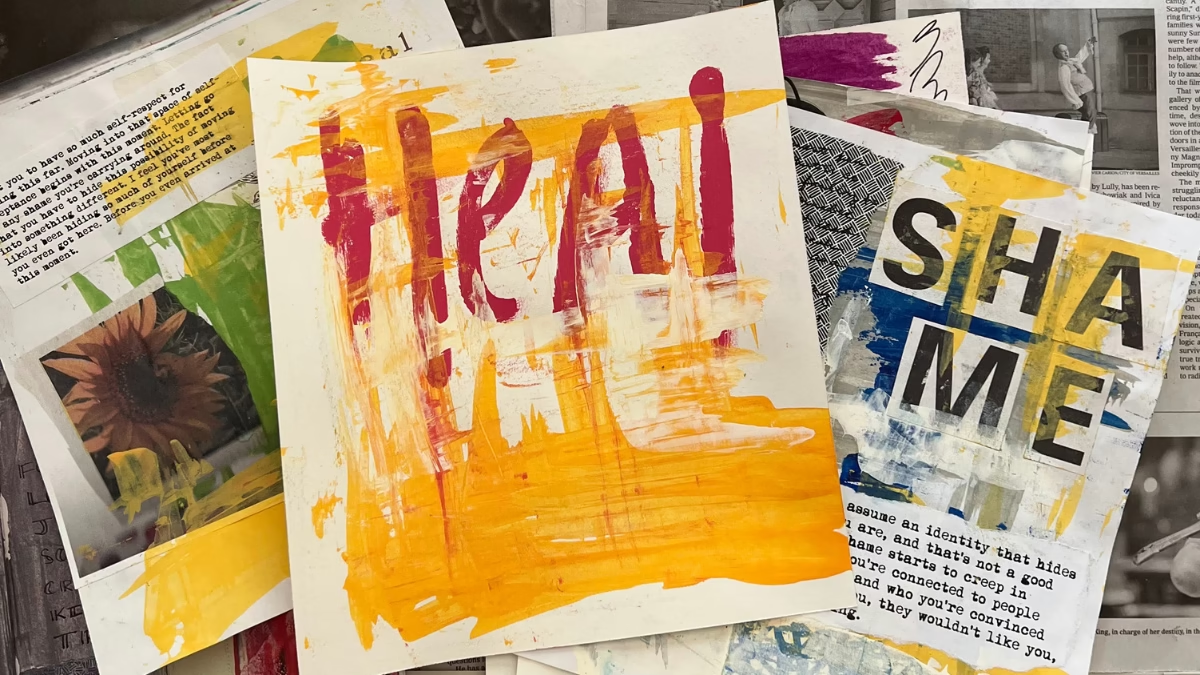
UnPolished Practice: Phrase Poetry
Grab a few magazines, newspapers, junk mail, or anything with words on it.
Cut out words or phrases that speak to you, especially the ones that feel connected to the authentic parts of yourself. The parts you’ve hidden, softened, minimized, or are just beginning to reclaim.
Play around with the words on the page before gluing anything down. Rearrange them. Layer them. Let unexpected connections emerge.
You might notice themes appearing:
- freedom
- anger
- softness
- desire
- rest
- boldness
- becoming
Add color, paint, scribbles, marks, or images around the words. Let the page become messy and alive. Don’t worry about making it beautiful. Let it feel true.
Capture the parts of yourself that are finally rising to the surface.
Love this post and want more art prompts from Krysty? We’ve got you.
- Unpolished: Make It Anyway | Krysty Krywko
- Unpolished: When “I’m Fine” Is a Red Flag | A Creative Practice for Honest Self-Reflection
- Unpolished: Numb the Beige — An Art Therapy Journaling Practice for Sobriety
- Unpolished: A Bi-Weekly Creative Practice for Sober & Sober-Curious Women

CURATED CRAFTS at The Sober Curator is all about keeping your hands busy and your mind inspired in sobriety. Whether you’re diving into art therapy, channeling your inner Sober Picasso, or laughing your way through a Pinterest fail, creative expression can be a powerful tool for stress relief and emotional healing. Crafting isn’t about perfection—it’s about expanding your mind, expressing your feelings, and having fun along the way.
Follow our latest DIY inspiration on Pinterest, or, if crafting isn’t your thing, check out our #QUITLIT section for book recommendations that feed the soul. You can also shop our curated list of supplies on our Amazon Storefront.
What are micro-shames?
Micro-shames are the small messages, judgments, expectations, and “shoulds” people absorb over time. They may come from family, culture, media, relationships, school, or society, and they often teach women to hide, soften, or edit parts of themselves.
How does shame affect authenticity?
Shame can make authenticity feel risky. When people are taught that they are too loud, too quiet, too bossy, too emotional, too serious, too sexy, or not enough in some way, they may start managing how others see them instead of living from their true selves.
Why does this article focus on women and shame?
Christy focuses on women because many women are raised with contradictory expectations about how they should look, behave, work, parent, speak, and take up space. These mixed messages can make it difficult to feel fully authentic without fear of judgment.
How can sobriety connect to authenticity?
For some people, alcohol becomes a way to quiet shame, loosen self-imposed rules, or escape the pressure of trying to meet everyone else’s expectations. Sobriety can create space to notice those patterns and begin reconnecting with the authentic self underneath them.
What does “too much, not enough” mean?
“Too much, not enough” refers to the impossible double bind many women experience. They may be told they are too bold, too quiet, too ambitious, too emotional, too messy, or too intense — while also being told they are not doing enough, giving enough, or being enough.
What is the Unpolished Practice in this article?
The Unpolished Practice is Phrase Poetry. Readers are invited to cut words and phrases from magazines, newspapers, junk mail, or other printed materials, then arrange them into a creative page that reflects the parts of themselves they are reclaiming.
Do I need to be artistic to try Phrase Poetry?
No. The practice is not about making something perfect or beautiful. Christy encourages readers to let the page become messy, alive, and true. The point is expression, not polish.
What themes might come up in this creative practice?
Christy suggests that themes like freedom, anger, softness, desire, rest, boldness, and becoming may begin to appear. The words and images can help reveal parts of the self that have been hidden, minimized, or are just starting to rise.
Who is this article for?
This article is for readers interested in sobriety, recovery, creativity, self-reflection, women’s experiences, shame resilience, and the process of becoming more authentic after years of trying to fit into other people’s expectations.
What is the main takeaway?
The main takeaway is that authenticity can be hard to access when shame has taught us to hide who we are. But through awareness, sobriety, creativity, and self-compassion, we can begin reclaiming the parts of ourselves that were never actually too much.
