Just a five-minute boat ride from The Bahamas’ lively capital city is the quiet Sivananda Ashram, a natural holdout in a place now dominated by cruise ships and big hotels.
Among the paths lined with plum and sapodilla trees, I got to know Durga Leela, founder of Yoga of Recovery. This revered teacher is warm and funny, making sense of complex Indian philosophy in her Scottish accent.
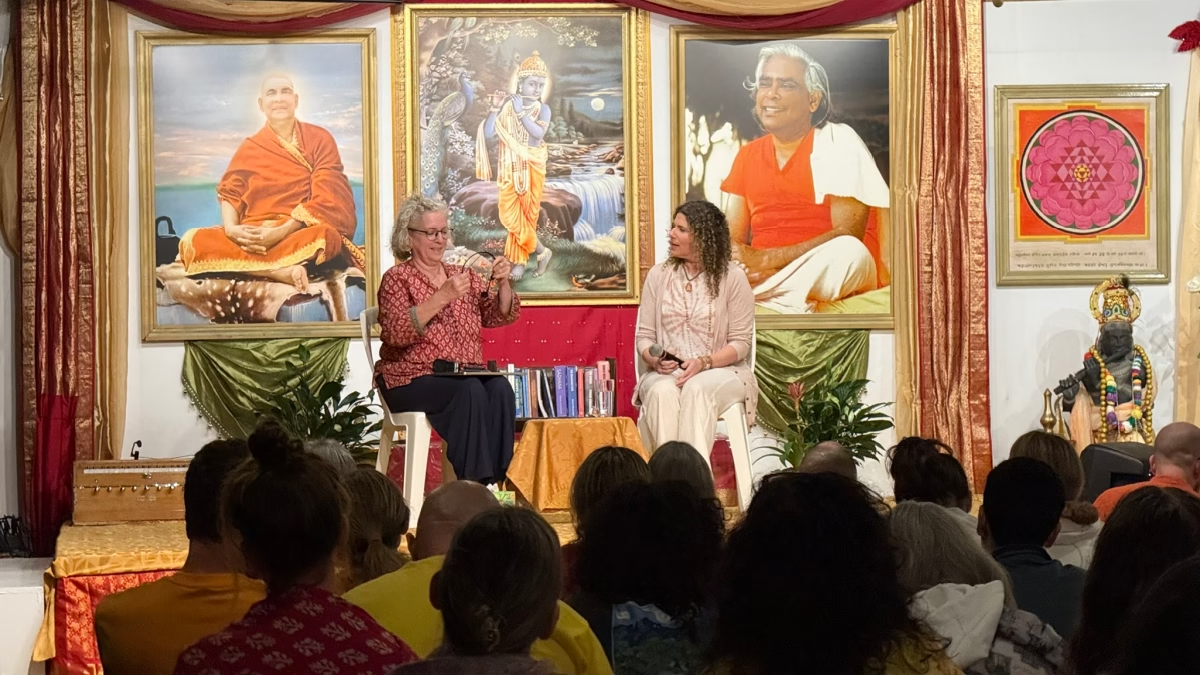
Durga was at the spiritual retreat center leading her annual Yoga of Recovery Symposium, based on her work adapting tools from yoga and Ayurvedic medicine to address addiction. Her co-presenter at the symposium, Julie Reisler, was also a joy to meet.
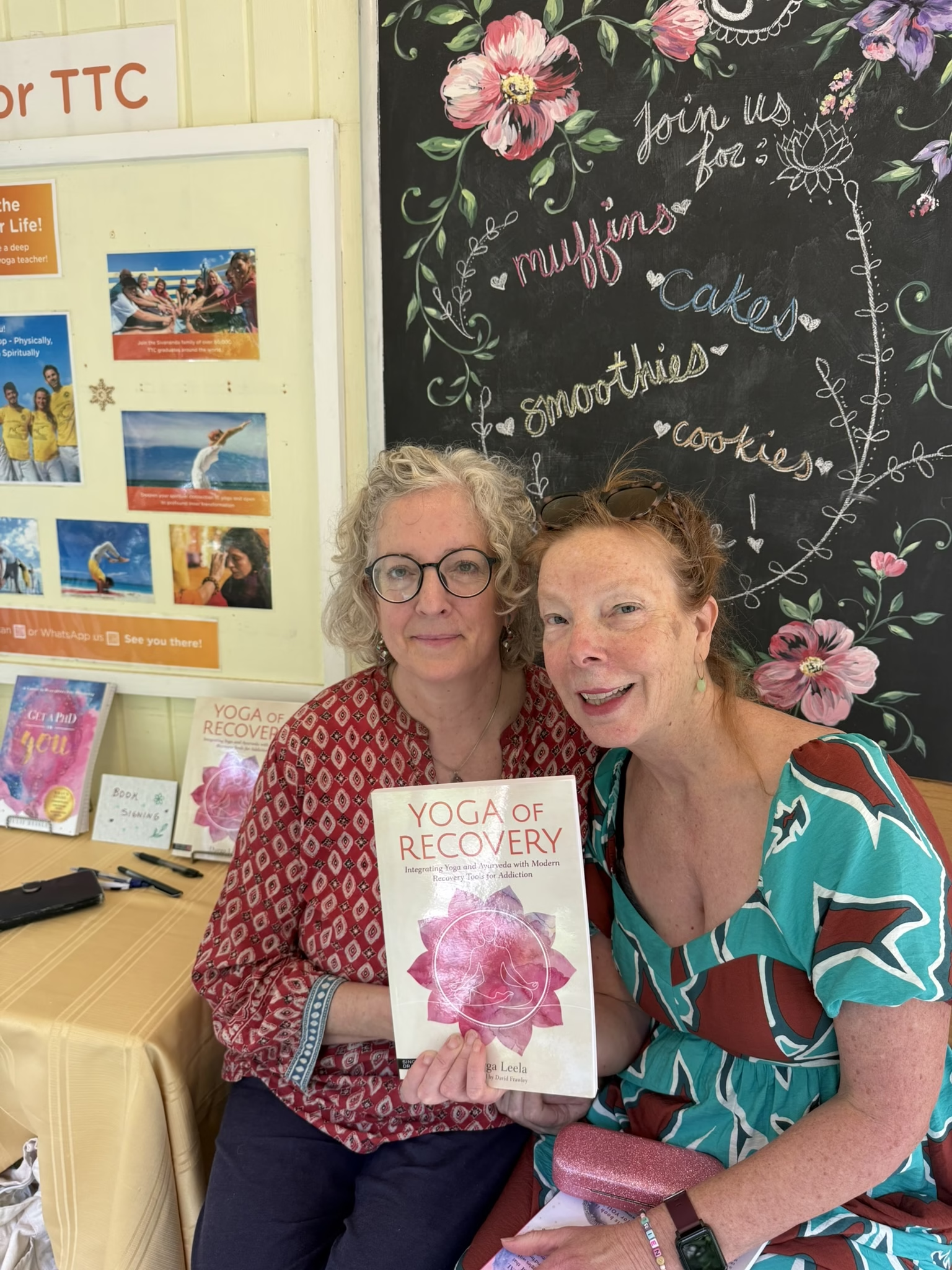
Durga has devoted her life to helping people through a busy schedule of teaching in-person and online courses, hosting retreats and writing her book, Yoga of Recovery: Integrating Yoga and Ayurveda With Modern Recovery Tools for Addiction.
You can join her online class on second Saturdays for a combination of lecture, small group work and yoga movement. Or sign up for next year’s symposium and get some beach time along with recovery tools, fellowship, and lots of yoga and vegetarian food.
Durga took time to talk to me about her work on a post-retreat phone call. She’s the kind of person I could talk to all day. Our conversation was long and meandering, touching on many interesting topics.
I’ve sliced and diced it here for length and flow. Yoga, Ayurveda and recovery are very rich and complicated subjects, so read Durga’s book, attend her online class or join an in-person retreat to get a fuller picture.
We are just scraping the surface here!
How Did You Get Into Yoga?
Teresa: How did you get into yoga?
Durga: I lived in London and I had a corporate job. And I think I just saw a brochure. Maybe, I can’t remember where, but it said something that Sivananda Organization still does: open house.
So like once a month, they open their doors and anybody can walk in, and they’ll give them a free taste of yoga, a free class, and you can see the place. And yeah, I saw that, and I was like, oh, I’m going to go and do this.
I went and did this class. Immediately I loved how I felt.
Now, everybody was doing the gym, right? And I just would not. I wouldn’t go to the gym and I wouldn’t go to group exercise classes, the kind of dancing around aerobics. I just thought they were sort of stressful and ridiculous in a way.
When I got on that mat, it’s like I met myself.
And that was a real help to me because I feel like I was always externalized, trying to prove myself and succeed, and study. It was just all these external goals and success points. And I felt kind of hollowed out by it.
And then I just went back, even though I thought they were very strange. I was like, I’m not sure about these people, but I definitely like that practice.
That was a long time ago before yoga was really popular. But man, that worked for me. It gave me some connection to sanity in my crazy life.
Getting Sober and Leaving Corporate Life Behind
Teresa: How did you wind up living in California?
Durga: I lived in London for my career, my first career after college. And then I moved to Lake Tahoe, and that’s where I got sober.
And I was supposed to be taking a year out, but during that year out, I very much hit bottom, and then got sober in the 12-step program.
I always had the feel-the-feelings piece, and take a year off and kind of work out your life before you dive back in. And I could never find the yes to going back to the city, especially for a corporate job.
But we moved here because of my husband. He’s a forest firefighter with the federal government, and he’d been on the Truckee hotshot crew. He did that for I think 20 years and needed a rest for his physical body, so he came up here because he took a job on a bulldozer crew.
So that’s what brought me to Weed, California. Fires.
I think it’s a cosmic joke that I moved to Weed, California, as the Yoga of Recovery person.
How Ayurveda Can Support Recovery
Teresa: I know that Ayurveda is a healing system that goes back thousands of years in India and is individualized to the needs of the person. How is it useful today?
Durga: Ayurveda means the science of life, or the science of self-healing.
So we lead with person-centered imbalances and how to rebalance your system with things like diet and lifestyle and herbs and seasonal routines. The rhythm of life.
And so living one day at a time in rhythm with your own constitutional system, your own tendency towards stress reaction imbalances, your own kind of storehouse of lived experience, like ACE and trauma. That’s just a natural part of our whole being medicine.
Because your house, the body, it needs different things in the summer compared to the fall, compared to the winter, from childhood to your middle years to your elder years.
So there’s this rhythm and flow. Not this kind of one-size-fits-all, one-stop-shop, pill-for-every-ill type of thing.
And when I speak like this, I definitely don’t ever mean that the Western medical model isn’t good because it’s absolutely lifesaving.
It just needs to perhaps allow other players into the field a little bit more, integrate some of the systems.
Yoga of Recovery isn’t simply about adapting yoga and Ayurveda to address addiction. It looks at the “one addiction process” — the underlying human tendencies that can lead us to seek relief, fulfillment or connection outside ourselves — bringing together yoga, Ayurveda and modern recovery to address the roots of addictive behaviors, rather than only their symptoms.
Spirituality, Sobriety and Finding Your Dharma
Teresa: From talking to you, it sounds like spirituality and finding your purpose were crucial to your sobriety.
Durga: When I got to America and hit bottom, and I was in the 12-step program, and was seeing a therapist. They asked me to see a psychiatrist. Then they diagnosed me with clinical depression.
But 18 months sober, and this is clean and sober for me because I did about 11 months on the old marijuana maintenance program. And then they wanted to medicate me, give me antidepressants.
I am not suggesting that people in recovery shouldn’t take antidepressants or other appropriate medication. But I didn’t think that was the right move for me at that point in my recovery.
Because I really had that spiritual experience, and it was ongoing. It was like a constant awakening. And I was just able to feel that the life that I’d been living was lived for someone else.
Because my mother was alcoholic.
And so you know, in the great magical thinking of a youngster, I thought that if I got the degree and the job and set myself up really well with the success that people are supposed to go for, that would stop her drinking.
But she died.
So that I had a really kind of strange relationship with my career. I was like, well, it didn’t work.
That was part of my recovery to look into what had I done that for. And that was just trying to cure the disease of alcoholism in a parent through success.
So I don’t know what child that is, right? You know when they talk about the family system, the hero, the scapegoat, whatever.
But it was a big part of my early recovery, and I would say particularly the word dharma — the Hindu idea of finding one’s path, purpose or right work in life — right? To find what I was here to do.
Because I really couldn’t find a way to live unless I was to do what I was here to do.
The Swamis that run all the Sivananda ashrams very quickly identified that Yoga of Recovery was my dharma. And they asked me to come and teach it.
Learn More About Yoga of Recovery
Do you want to learn how to apply Ayurvedic teachings to your recovery and find your dharma?
Sign up for Durga’s Yoga of Recovery: Ayurveda’s Metabolic Approach to Healing Addictions in The Bahamas, March 28-30, 2027.
SOBER RETREATS: with Senior Travel Sober Curator Contributor Teresa Bergen is your go-to space for alcohol-free travel tips, insider guides, and honest reviews from a sober perspective. Teresa blends her passions—animals, wildlife conservation, sustainability, geography, culture, outdoor adventure, and yoga—into enriching travel stories that inspire mindful exploration. From kayaking and hiking to visiting historic cemeteries and sacred spaces, she uncovers the beauty where history, art, and spirituality meet.
🏝️ Submit a Sober Retreat Recovery-focused, wellness, spiritual, creative, and adventure retreats. Listings start free. Featured and Sponsored placements available for retreats that want full editorial coverage. Submit your retreat →

SOBER TRAVEL – WHAT A TRIP! is The Sober Curator’s guide to exploring the world alcohol-free. From insider travel tips and honest destination reviews to our curated Sober Retreats Calendar, we help you plan trips that are fun, fulfilling, and booze-free. Whether your jet-setting overseas or planning a weekend getaway, our stories and resources prove that sober travel is anything but boring. Looking for a sober getaway? We’ve got your back with our Sober Retreat Calendar. Need a night out on the town? Check out our Sober Events Calendar.
We also recommend soberscribing to The Sober Sip for weekly and monthly travel + events updates. Have a life-changing sober trip to share? Send your tips and photos to thesobercurator@gmail.com—we’d love to feature your journey.
🏝️ Submit a Sober Retreat Recovery-focused, wellness, spiritual, creative, and adventure retreats. Listings start free. Featured and Sponsored placements available for retreats that want full editorial coverage. Submit your retreat →
You’ve got mail from The Sober Curator

Resources Are Available
If you or someone you know is experiencing difficulties surrounding alcoholism, addiction, or mental illness, please reach out and ask for help. People everywhere can and want to help; you just have to know where to look. And continue to look until you find what works for you. Click here for a list of regional and national resources.

Follow The Sober Curator on Pinterest
Who is Durga Leela?
Durga Leela is the founder of Yoga of Recovery and the author of Yoga of Recovery: Integrating Yoga and Ayurveda With Modern Recovery Tools for Addiction. Her work combines yoga, Ayurveda and modern recovery practices to support people affected by addiction.
What is Yoga of Recovery?
Yoga of Recovery is an approach developed by Durga Leela that integrates yoga and Ayurvedic principles with contemporary addiction recovery tools. The approach looks at recovery through physical, emotional, spiritual and lifestyle practices.
How can Ayurveda be used in addiction recovery?
Ayurveda takes an individualized approach to well-being. Durga describes using practices such as diet, lifestyle changes, herbs and seasonal routines to help people understand and rebalance their own patterns of stress and imbalance.
What role did spirituality play in Durga Leela’s sobriety?
Durga describes spirituality and finding her sense of purpose, or dharma, as central to her recovery. After getting sober through a 12-step program, she began questioning the life and career she had built and ultimately found purpose in teaching Yoga of Recovery.
Where does Durga Leela teach Yoga of Recovery?
Durga teaches through online classes, retreats and in-person programs, including her annual Yoga of Recovery Symposium at the Sivananda Ashram in The Bahamas.