


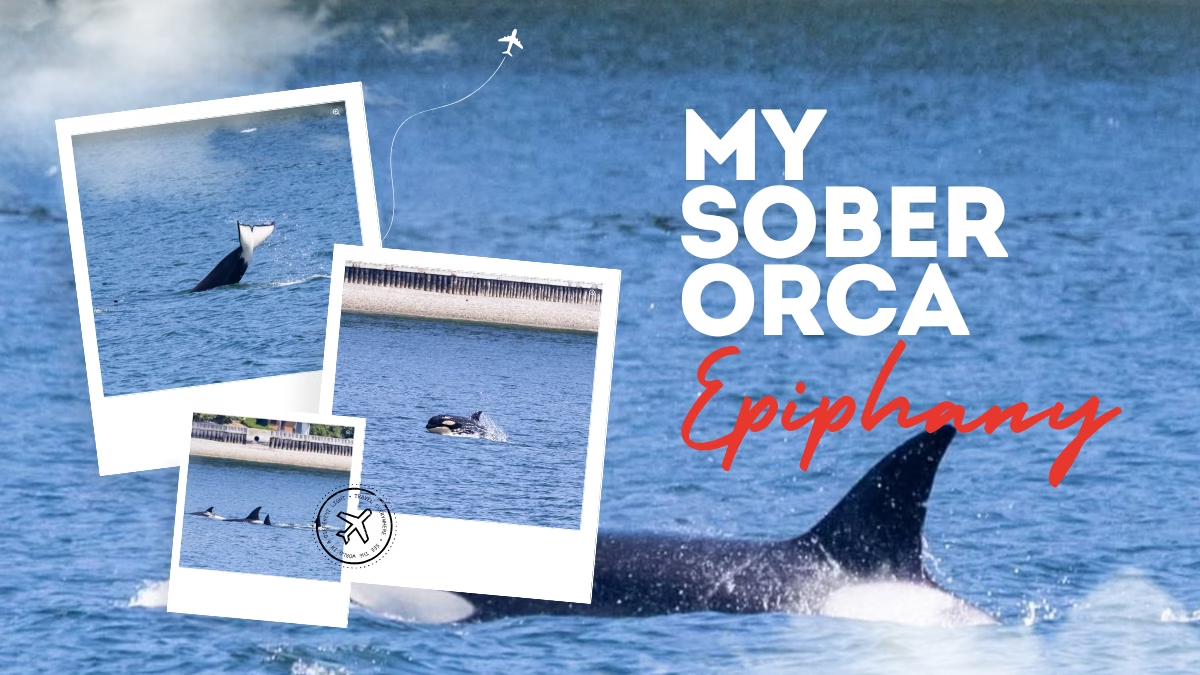

What a pod of orcas in Puget Sound taught me about rage, healing, and finally coming home to myself
When I watched “Free Willy” as a kid, something lit up in me—a sacred rage to protect the vulnerable.
That same feeling had already been living in me. I was a kid trying to shield my brother and sister from the chaos around us. I stepped into a role no child should have to fill, but I didn’t see another option. I did what I could to keep us safe because I felt like no one else was going to.
I learned early what vulnerability looked like. And I decided only kids and animals deserved help. They were innocent. Helpless. Adults, especially addicts, were different in my eyes. I thought they’d made their choices. I thought they could help themselves.
I see that differently now because of my own addiction.
For a long time, I believed I’d pulled myself up by the bootstraps. I thought I’d beaten the odds because I made better choices. I believed that’s all it took. But I didn’t truly understand until I struggled with it myself.
Until I saw how pain rewires you.
Until I felt what it’s like to want to change and still not be able to.
Until I realized healing isn’t about willpower.
And I learned that those kids grow into damaged adults. Ones who still need help. Ones who still deserve compassion. Ones who are still vulnerable, even when they act like they don’t care.
I still carry that sacred rage. But now it’s for all of us. The ones still sick and suffering. The ones who made it out. The ones still healing. The ones who learned not to ask for what they needed.
And then, on this trip, in the middle of Puget Sound, I saw orcas in the wild for the first time.
I sobbed. Literally shook and sobbed. I saw them, wild and free, exactly as they should be.
And for the first time in my life, I’m realizing I’m free, too.
Not almost. Not almost-there. I’m realizing I’m there.
I’m free.
I’m living a life I used to only wonder if I could ever live. Living on my own. Recovering out loud. Making my own choices. Trusting myself to build something and standing on my own two feet.
Because recovery was never a straight line and it was never willpower. It’s the slow work of learning you were always worth protecting too. The kid who watched “Free Willy” and the woman who finally watched them swim free are the same person. It just took me this long to believe I get to be free right alongside them.
So if you’re still in it, still barely out, still learning to ask for what you need, hear me on this: You are not the exception to compassion.

MOVIE NIGHT WITH THE SOBER CURATOR: is your go-to guide for films and documentaries that intricately weave addiction, recovery, and mental health into powerful storytelling. Think of us as your bee-zy movie critics, curating a hive of must-watch titles that inspire, educate, and spark conversation.
Our review archives are neatly organized into Drama, Dramedy, and Documentary categories, making it easy to find your next captivating watch. Whether you’re in the mood for a heartfelt indie, a laugh-through-the-tears comedy, or a thought-provoking doc, we’ve got you covered.
WHAT A TRIP! We trip as often as possible because travel is our jam! Here you’ll find insider information, tips, and honest reviews from a sober perspective.
Did you have a life-changing, globe-trekking sober trip you would like to share? Send us a postcard or write to us at thesobercurator@gmail.com.
🏝️ Submit a Sober Retreat Recovery-focused, wellness, spiritual, creative, and adventure retreats. Listings start free. Featured and Sponsored placements available for retreats that want full editorial coverage. Submit your retreat →
You’ve got mail from The Sober Curator
Resources Are Available
If you or someone you know is experiencing difficulties surrounding alcoholism, addiction, or mental illness, please reach out and ask for help. People everywhere can and want to help; you just have to know where to look. And continue to look until you find what works for you. Click here for a list of regional and national resources.
What inspired the author to connect with orcas and their significance in their recovery journey?
The author was inspired by watching ‘Free Willy’ as a child, which sparked a sacred rage to protect the vulnerable, a feeling that resonated with their own experiences of shielding their siblings from chaos.
How did the author’s perception of addiction and vulnerability change over time?
Initially, the author believed addiction was a choice, but personal struggles with addiction taught them that healing isn’t about willpower and that adults, like children and animals, also need help and compassion.
What role did seeing orcas in Puget Sound play in the author’s recovery process?
Witnessing orcas in the wild symbolized freedom for the author, mirroring their own journey to realizing they, too, are free and deserving of a life they once only imagined.
How does the author describe the process of recovery?
The author describes recovery as a non-linear journey that involves learning self-worth and realizing that they were always deserving of protection, rather than relying solely on willpower.
What message does the author convey to others who are struggling with recovery?
The author encourages those still struggling to understand that they are not exceptions to compassion and that they too deserve help, healing, and freedom.
