



Almost 30 years later, I finally understand that getting sober was only the beginning of what he was talking about.
The first time I heard Anthony Hopkins speak at a recovery meeting, I was about 90 days sober, clueless, terrified, and still wondering if I had just made the dumbest decision of my life. I was at the Log Cabin in West Hollywood, and those were the days. Oh my God, the 90s were such a brilliant time to find recovery in Los Angeles. The music (catching a dinner show at Largo with Aimee Mann or Fiona Apple), the rise of MAC cosmetics and my need to never leave the house without lipstick, Friends, the fashion, and then this entire underground world of sober people meeting in rooms all over LA trying to figure out how to live without drinking. What an amazing time to be alive. Gosh!
Plenty of high-profile people were at those meetings. I had found my permanent spot plastered against the side wall with a bunch of long-timer guys who would sit there reading the sports pages and pretending they weren’t dying inside. I fit in perfectly because I was really good at disappearing back then. I could be in a room filled with people and still make sure nobody got too close, which I now understand very differently after all these years of studying stress and the nervous system.
Then Anthony Hopkins stood up and started talking.
I mean, come on, Hannibal Lecter was standing in front of me talking about God, anxiety, alcohol, fear, and being human. I laughed and cried and probably had no idea what my nervous system was doing because I certainly wasn’t using words like “nervous system regulation” in 1996. I was mostly trying not to drink and trying to understand how everyone else in the room seemed to know how to do something I had absolutely no idea how to do.
What I remember about Anthony Hopkins (Tony) wasn’t necessarily the exact words he said. I remember how I felt listening to him. There was an enormous amount of depth in him, but there was also something very ordinary about what was happening. This incredibly famous, enormously talented actor was standing in the same kind of room I was sitting in because alcohol had brought him there too. Fame hadn’t protected him from alcoholism, and apparently an Academy Award wasn’t going to keep him sober either. He had to do the same work everyone else in that room had to do.
When you have 90 days sober, seeing someone with years of recovery matters because you are looking everywhere for proof. You don’t know what your life will look like. You don’t know whether you’ll ever have fun again. You don’t know whether you are going to become one of these people who talk about sobriety for the rest of your life, which frankly can sound horrifying when you are new. You just need to know somebody else did this and somehow built a life on the other side.
A few years later, when I had maybe four years sober, my girlfriends and I went to RODEO in Beverly Hills. RODEO was a big meeting and everyone showed up dressed to impress. There was Tom Ford, Prada and Louboutins everywhere, and you had to arrive an hour early just to get a chair. It was like a film festival for alcoholics, which probably could only have happened in Los Angeles.
Tony spoke again that night, but this time I sat in the front row. I wasn’t the same woman who had been plastered against the wall at the Log Cabin. I had a few years behind me and had started to understand that sobriety was going to be much more than not drinking. He talked about waking up and living in reality, and I remember him tearing up and me tearing up. There is something about the depth of that man’s soul that has stayed with me all these years.
After those big meetings, everyone would line up to thank the speaker, which was basically another hour of socializing. When I finally got to him, I held out my hand, and he embraced me instead. It was sweet and surreal, but at the same time it wasn’t surreal at all because in that room we were in this thing together. For that moment he wasn’t Sir Anthony Hopkins and I wasn’t some terrified woman trying to figure out sobriety. We were two alcoholics who had found the same way into the room.
Over the years, I would occasionally see him around town, and he would smile at me. We never became friends, although some of my friends were friends with him and would say, “Hey, we’re hanging out with Tony, do you want to come?” My answer was always no. I didn’t want to know Tony. I wanted Anthony Hopkins to stay Anthony Hopkins because I wanted to continue watching one of the greatest actors of my time without knowing what he ate for breakfast or whether he was annoying at dinner. Call me odd, but that’s where I stand.
Underneath all of that, though, I knew something about him that had nothing to do with acting. At the end of the day, he was another drunk like me who kept doing the work.
Now here we are. Anthony Hopkins has celebrated 50 years of sobriety, and I am approaching 30. I have been thinking about that number because fifty years is extraordinary, but not for the reason I would have thought when I was sitting in that meeting with 90 days. Back then I would have thought the miracle was that he hadn’t had a drink in all that time. Today I think the miracle is that he continued learning how to live.
That is a very different thing.
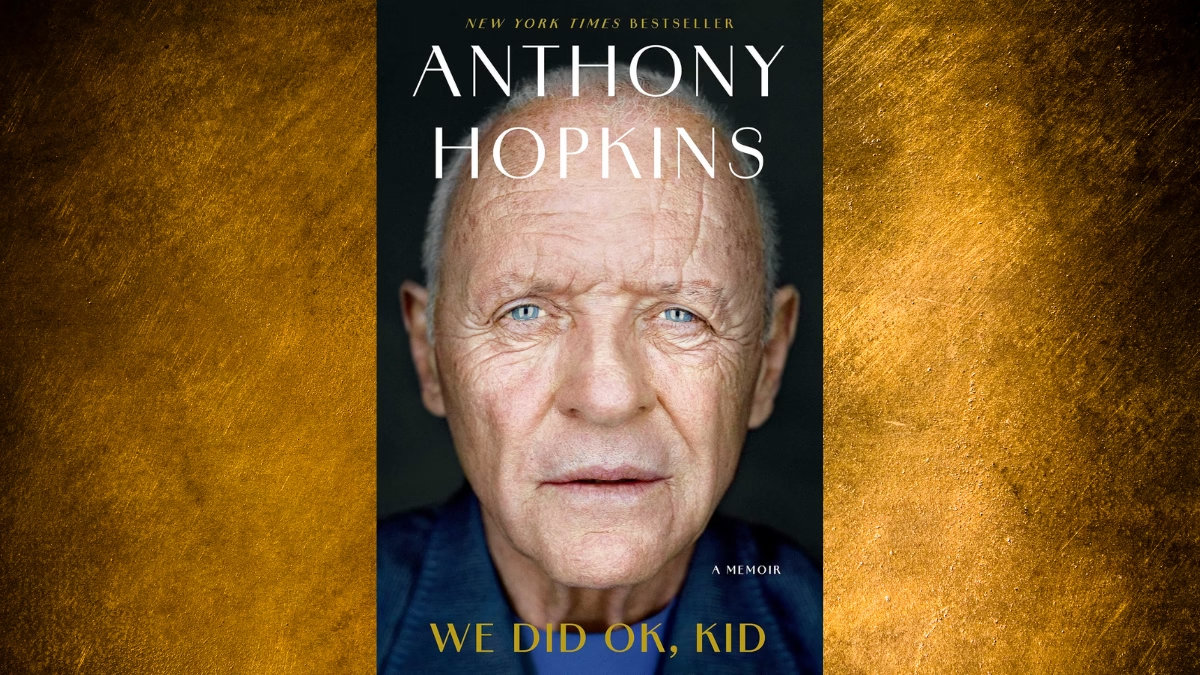
Reading his memoir, We Did OK, Kid, made me understand the man I had listened to in those rooms a little differently. This isn’t really a recovery memoir, although sobriety runs through it. Hopkins begins with the lonely kid from Port Talbot, Wales, the son of a baker who struggled in school, never quite felt like he belonged (just like me), and eventually discovered acting. From there, his life becomes almost absurd in scale: Laurence Olivier, the National Theatre, Hollywood, Hannibal Lecter, Academy Awards and a career most actors couldn’t dream up. But the famous people and movies weren’t what interested me most.
What stayed with me was the loneliness underneath so much of it. Hopkins writes about his father, his childhood, anger, drinking and his tendency to keep himself separate from other people. He doesn’t turn sobriety into a tidy redemption story either. Alcohol damaged his relationships, including his first marriage and his relationship with his daughter, and getting sober didn’t magically repair everything. I appreciated that honesty because anyone who stays sober long enough eventually learns that putting down the alcohol doesn’t give you a personality transplant or erase the consequences of the years before it.
When you’re newly sober, though, you secretly think it might. You imagine that if you do everything correctly, eventually your life will arrange itself into something that makes sense. People will forgive you, relationships will heal and you’ll become this wonderfully evolved sober person who responds appropriately to everything. Then you accumulate some years and discover that some things heal beautifully and others don’t. Recovery gives you a chance to live differently, but it doesn’t rewrite history.

That is part of what makes the title We Did OK, Kid so moving. Hopkins has described looking at an old photograph of himself as a boy with his father and thinking about that younger version of himself with a kind of tenderness. I kept thinking about my own younger self while reading it, especially that woman with 90 days sober sitting against the wall at the Log Cabin. She was terrified, trying not to be noticed and had absolutely no idea what her life was going to become.
I can look at her very differently now. She didn’t know about nervous system regulation or understand why she was so good at disappearing. She certainly didn’t know she would stay sober for almost 30 years. She just knew that drinking wasn’t working anymore and that she needed to find another way to live. Sitting in that room listening to Anthony Hopkins was part of finding evidence that another way might actually exist.
I also came away from the memoir understanding his acting differently. There is so much intensity, isolation and darkness in his story, and acting seems to have given some of that somewhere to go. So did painting and music. That interests me because I don’t think long-term recovery can remain entirely about what we stopped doing. Eventually, we need somewhere for all that life to go.
That may be what impresses me most about Hopkins at 50 years sober. He kept creating and kept living. His memoir doesn’t read like the story of a man who conquered alcoholism and then sailed peacefully into enlightenment. Thank God, because I would find that incredibly annoying. It reads like the story of a complicated man who got sober and then had to live with himself, his gifts, his mistakes, his relationships, his losses and the extraordinary life that followed.
At 90 days sober, I needed Anthony Hopkins to show me that an alcoholic could stop drinking and still have a life. A few years later, when I heard him speak at RODEO, I understood more of what he meant when he talked about waking up and living in reality. Almost 30 years later, I hear something else entirely: sobriety isn’t really about escaping the hard parts of being human. It gives us the chance to be here for them.
That is what We Did OK, Kid gave me more than anything. It brought me back to those rooms in Los Angeles and made me grateful that I happened to be sitting there when I was. Anthony Hopkins didn’t know he was giving a frightened woman with 90 days sober some evidence that this thing could work. He was simply telling his story, which is one of the beautiful things about recovery. We rarely know who is listening or what they might carry with them for the next 30 years.
I never did take my friends up on those invitations to hang out with Tony, and after reading the book, I’m still glad I didn’t. I got to keep Anthony Hopkins as Anthony Hopkins, one of the greatest actors of my lifetime, while also knowing that underneath all of it was another alcoholic who had to wake up every day and live his actual life.
He has now done that sober for 50 years, and I’m coming up on 30. Reading his memoir made me think about how impossible both of those numbers would have sounded to the woman sitting against that wall in 1996. She didn’t need to know where any of it was going. She just needed to stay long enough to find out.
For Anthony Hopkins, his memoir and all those years ago when he stood in a room and told the truth to people like me, I am deeply grateful.
#QUITLIT Sobees Score: 4 out of 5

Lane Kennedy | Senior Contributor, The Sober Curator
Lane Kennedy has been sober since 1996 and is the author of Sobriety for Dummies. As a Senior Contributor to The Sober Curator, she writes about long-term recovery, stress, nervous system regulation and what happens after we stop escaping our lives and begin learning how to live inside them. Her work at Lane Kennedy focuses on stress, capacity and nervous system regulation, and she is the creator of Sober in San Francisco, an intentional-living and travel project about slowing down, noticing more and experiencing life with alcohol no longer at the center of it.

TSC LIBRARY: Welcome to The Sober Curator Library! This isn’t your average stack of books—we’re talking full-on story immersion, Audible binges, and reviews with personality. Browse our four go-to genres: #QUITLIT, Addiction Fiction, Self-Help, and NA Recipe Books. And if you’re collecting recovery reads like rare trading cards, check out our Amazon #QUITLIT list—Early Sobriety Survival: Books for Your First 90 Days. Grab your backpack, book nerd.
📘 Submit a Book for our #QuitLit Library: Welcome to the largest culturally-driven sober book collection on the internet. Memoir, fiction, criticism, quit lit, anything that fits a Gen X or Millennial sober reader past initiation. Submit your book →
#QUITLIT: Sober Celebrity Memoirs Worth Reading – Books Written by People Who’ve Actually Been There
Recovery isn’t the end of the story.
Recovery has been framed as survival. Staying sober as maintenance.
We’re interested in something else.
Not just getting through life — but actually engaging with it.
Identity.
Culture.
Celebration.
Taste.
Expansion.
This is the room where the conversation finally aligns with who you’ve become — and where you’re going next. LEARN MORE AND JOIN TODAY →

Recovery is hard 24/7, 365 – Please know that resources are available
If you or someone you know is experiencing difficulties surrounding alcoholism, addiction, or mental illness, please reach out and ask for help. People everywhere can and want to help; you just have to know where to look. And continue to look until you find what works for you. Click here for a list of regional and national resources. If your life or someone else’s is in imminent danger, please call 911. If you are in crisis and need immediate help, please call: 988.

Follow The Sober Curator on Facebook
How long has Anthony Hopkins been sober?
Anthony Hopkins celebrated 50 years of sobriety on Dec. 29, 2025. He has said that a drunken blackout in 1975 helped him recognize that he needed help and change the direction of his life.
What is Anthony Hopkins’ memoir about?
In We Did OK, Kid, Anthony Hopkins recounts his childhood in Wales, acting career, struggles with alcohol, complicated relationships and decades of sobriety. The memoir explores both his celebrated career and the loneliness, anger and isolation beneath it.
Is We Did OK, Kid a recovery memoir?
We Did OK, Kid is not exclusively a recovery memoir, but alcoholism and sobriety are central to Hopkins’ story. He writes about the damage caused by his drinking and the life he built after getting sober.
When was Anthony Hopkins’ memoir published?
We Did OK, Kid: A Memoir was published by Summit Books, an imprint of Simon & Schuster, on Nov. 4, 2025.
Who is Lane Kennedy?
Lane Kennedy is a Senior Contributor to The Sober Curator and the author of Sobriety for Dummies. Sober since 1996, she writes about long-term recovery, stress, nervous system regulation and learning how to live without escaping.
