Have you noticed what’s happening lately?
Silent book clubs are filling up. Run clubs have become the new happy hour. Independent bookstores are hosting packed author events. Pottery classes have waitlists. Community gardens are thriving. People are joining knitting circles, birding groups, walking clubs, volunteer organizations, and neighborhood cleanups. Heck, I even signed up for Forest Bathing a few weeks ago.
It feels like we’re looking for each other again.
Sociologists have a name for these gathering spaces. They call them third places.
Home is the first place.
Work is the second.
A third place is somewhere you go simply to be with other people. Somewhere you’re known. Somewhere you become a regular.
I don’t think this growing interest in third places is really about pickleball or pottery.
I think it’s absolutely about belonging.
For decades, alcohol has been marketed as the answer to one of our most human needs. We don’t just drink to celebrate. We drink to connect. Think about how many moments in life automatically come with a drink in your hand.
First dates.
Networking events.
Girls’ nights.
Concerts.
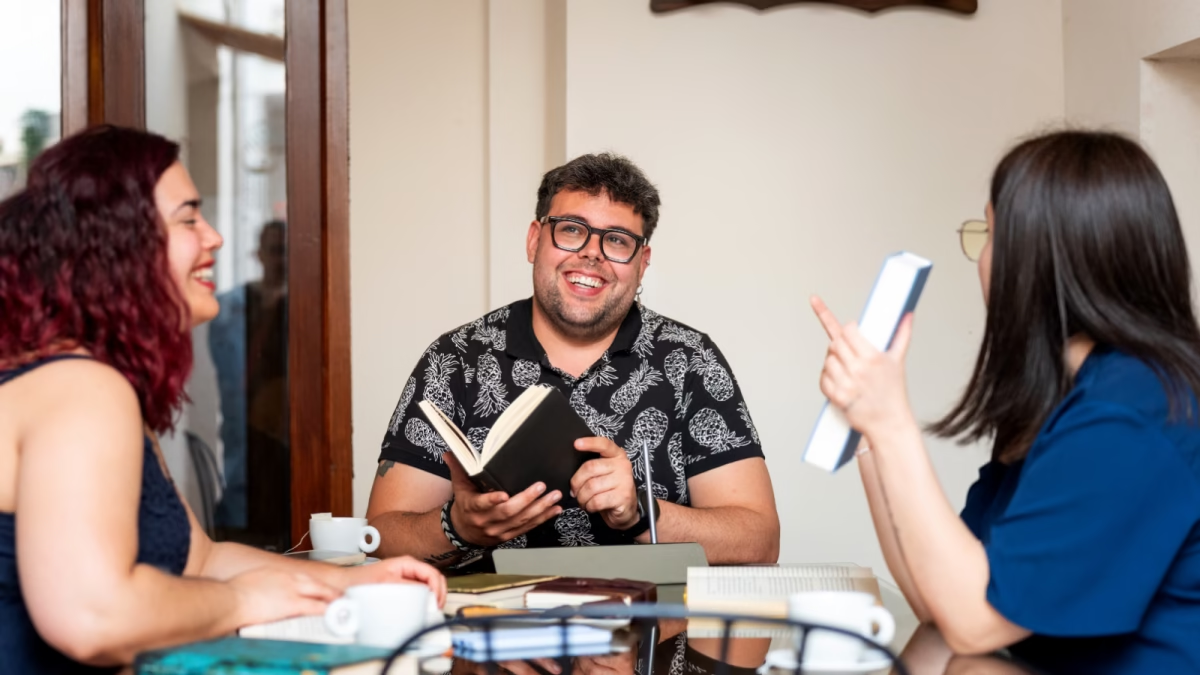
Book clubs.
Vacations.
Holiday parties.
Retirement celebrations.
Even airports seem to assume you’ll want a drink while you wait for your flight.
Somewhere along the way, we started confusing alcohol with community.
For many of us in recovery, one of the hardest parts of getting sober was wondering where we belonged now.
If everyone is meeting for drinks after work, where do you go?
If a book club revolves around wine, do you still join?
If every celebration ends at a bar, how do you stay connected without feeling like you’ve become the difficult one?
Recovery asks us to build a life that doesn’t depend on alcohol. What no one tells you is that this often means rebuilding your social life from the ground up.
You don’t just need something new to drink.
You need somewhere new to belong.
That’s why I find this cultural shift so interesting.
People aren’t simply looking for hobbies. They’re looking for places where someone notices if they don’t show up.
A place where the barista knows their order.
A community garden where people ask how their tomatoes are doing.
A running group that saves them a spot.
A bookstore where familiar faces gather every month.
A coffee shop where they always end up talking to the same stranger.
These places don’t have to be spectacular.
They simply have to make room for us.
One of the greatest gifts recovery has given me is the understanding that belonging doesn’t happen all at once. It grows slowly. It grows because we keep showing up. We learn names. People learn ours. We stop feeling like visitors and begin feeling like part of the landscape.
That’s something alcohol could never give me.
It could give me the illusion of connection.
It couldn’t give me community.
Community is built over time.
It’s built through ordinary Tuesdays.
It’s built by remembering birthdays, checking in after hard weeks, helping stack chairs at the end of a meeting, lingering after yoga class, volunteering at the food pantry, or becoming the person who always brings homemade cookies to book club.
None of those moments are glamorous.
But all of them are revolutionary.
Because in a culture that has spent decades telling us to buy another drink, upgrade our lifestyle, or scroll a little longer, choosing to know and be known is a quiet act of resistance.
Maybe that’s why the third place revolution feels so hopeful to me.
Recovery taught me that alcohol wasn’t the opposite of loneliness.
Belonging was.
So here’s the question I’ve been sitting with.
Where is your third place?
Where do you leave feeling more like yourself than when you arrived?
Who notices when you’re missing?
If you don’t have that place yet, what small step could you take this month to begin finding it?
The third place revolution isn’t really about coffee shops, run clubs, or pottery wheels.
It’s about remembering something we have always needed.
A place to belong.
BACKSTAGE WITH THE SOBER CURATOR – BOOK CLUB: Second Sunday of every month! Read Receipts is one hour a month where we go around the room and talk about what is on the nightstand right now. No assigned book. No pop quiz. Nobody is making you finish anything. Just a room full of grown-ass sober adults with excellent taste comparing notes on what is worth your time and what you can safely abandon at chapter three.
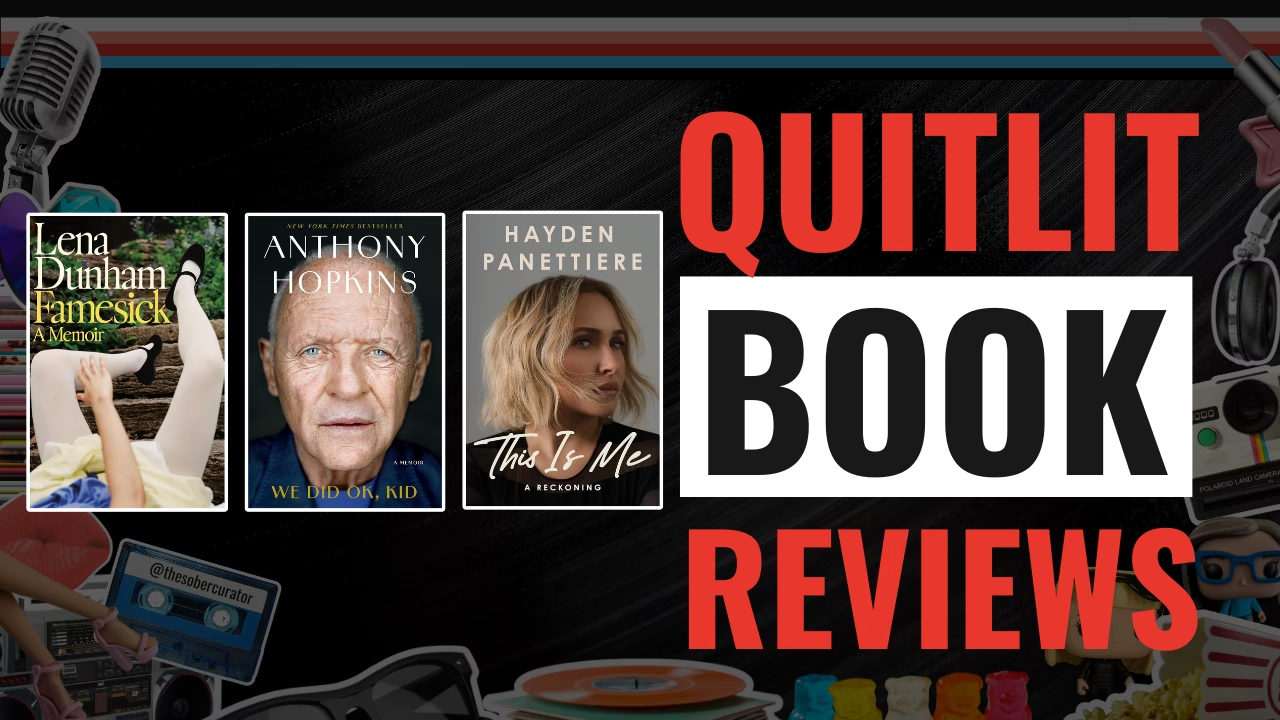
SOBER CURATOR PODCAST: Quit Lit Book Reviews: “Famesick,” “We Did OK Kid” + “This Is Me,” Rated by Sober Readers
TSC LIBRARY: Welcome to The Sober Curator Library! This isn’t your average stack of books—we’re talking full-on story immersion, Audible binges, and reviews with personality. Browse our four go-to genres: #QUITLIT, Addiction Fiction, Self-Help, and NA Recipe Books. And if you’re collecting recovery reads like rare trading cards, check out our Amazon #QUITLIT list—Early Sobriety Survival: Books for Your First 90 Days. Grab your backpack, book nerd.
📘 Submit a Book for our #QuitLit Library: Welcome to the largest culturally-driven sober book collection on the internet. Memoir, fiction, criticism, quit lit, anything that fits a Gen X or Millennial sober reader past initiation. Submit your book →

SOBER POP CULTURE at The Sober Curator is where mainstream trends meet the vibrant world of sobriety. We serve up a mix of movie, podcast, fashion, and book recommendations alongside alcohol-free cocktails, celebrity features, and pop culture buzz—all with a sober twist.
We’re here to shatter the “sobriety is boring” myth with a mash-up of 80s neon, 90s hip-hop edge, early 2000s bling, and today’s hottest trends. From celebrity shoutouts to red-carpet style inspo, this is where sober is as chic as it is fun. To the celebs using their platform for good—our Sober Pop Trucker hats are off to you!
Resources Are Available
If you or someone you know is experiencing difficulties surrounding alcoholism, addiction, or mental illness, please reach out and ask for help. People everywhere can and want to help; you just have to know where to look. And continue to look until you find what works for you. Click here for a list of regional and national resources.

Follow The Sober Curator on Pinterest
What is a third place?
A third place is a social space outside of home and work where people gather regularly, connect with others and develop a sense of belonging. Examples can include coffee shops, bookstores, community gardens, run clubs and hobby groups.
Why are third places important in sobriety?
Sobriety can change how and where people socialize, especially when previous routines revolved around bars, drinking or alcohol-centered events. Third places can provide opportunities for connection and community without making alcohol the focus.
How can someone build a social life after getting sober?
Building a sober social life often starts with consistently showing up in spaces that match your interests and values. Classes, volunteer groups, walking clubs, bookstores, fitness communities and local organizations can all create opportunities to form relationships over time.
Do sober people need sober-only spaces to find community?
Not necessarily. Some people benefit greatly from recovery-specific spaces, while others also find meaningful connection in broader community settings where alcohol is absent or simply not central to the activity.
Why does belonging matter in recovery?
Feeling connected to other people can help make life in sobriety feel fuller and more sustainable. As Anne Marie writes, real community is built gradually through ordinary moments, consistency and becoming known by the people around us.