



I have been sober for eight years.
I say that with real gratitude. Eight years is a long time, and it represents more grace and work and community than I can adequately describe. But I want to tell you something that took me a while to say out loud.
Being sober did not fix my relationship with my body. It helped. It helped enormously. And my body and I are still, after all this time, figuring each other out.
Nine months ago I was diagnosed with fibromyalgia.
And a lot of things started to make sense.
What I Drank At
For years I worked as a nanny. I loved the work. I loved the children. And I gave my body to that job completely. Up and down stairs. Up off the floor. Carrying babies and diaper bags and backpacks and car seats. Loading and unloading and lifting and kneeling for years, and then doing it all again with the next family when the kids got old enough for school.
I came home in the evenings and I opened a bottle of wine.
It felt like relief. I know now that it was a false relief. But it felt so real. My body hurt, and the wine made the hurt softer, and that felt like a solution for a very long time.
Pain is something a lot of us drink at. Or use at. We don’t always call it that in the moment. We call it unwinding. Taking the edge off. Just getting through the day. But underneath those words, for many of us, is a body that is speaking and a self that has learned not to listen too closely.
I was a few years into recovery when I started to understand that pain had been part of what I was managing all along. According to research cited in Psychology Today, about forty percent of people living with chronic pain meet the criteria for substance use disorders. The brain pathways involved in pain and addiction overlap in ways that are just now being fully understood. This is biology, asking for help in the only language it had been taught.
The Diagnosis
Nine months ago a doctor gave a name to what my body had been carrying for years. Fibromyalgia. Widespread pain, fatigue that doesn’t lift with rest, brain fog, days that get shaped entirely by what my nervous system decides to do.
In early recovery I had a morning routine I loved. A warm beverage. Journaling. Prayer. An hour of gentle, intentional beginning. Now it takes me two to three hours most mornings just to quiet my pain enough to function. That is a grief I am still sitting with. The version of my days that I had built so carefully in recovery looks different now. Some days it barely resembles itself.
I cancel plans. Things stay on my to-do list for days, sometimes weeks, because I don’t have the energy or the stamina to get to them. There is a particular loneliness in that. In knowing what you want to do with a day and having your body simply say, no. In being someone who built a life around community and connection and finding yourself alone more than you planned.
There is grief in chronic illness that people don’t always name. The grief of the self you were before.
When Your Body Has Been a Place That Wasn’t Safe
Getting good medical care when you live in a body that isn’t believed is its own kind of exhausting.
I have been told to lose weight. To take a specific vitamin combination. To take a walk. To do yoga. And more than once, by someone who was supposed to be helping me, I have been told to drink a glass of wine to relax. I am eight years sober. The casual cruelty of that suggestion, offered as medical advice, is something I still think about.
The emotional labor of chronic illness is real and it is relentless. Making the appointment when you are already depleted. Preparing to explain yourself clearly when your brain is foggy and your body is loud. I now bring a medical chaperone to appointments with new doctors. A witness. Someone to sit in the room with me so that if I am too tired or in too much pain to track what is happening, someone I trust is paying attention. That this is a thing a person has to plan for says everything about how much work it takes to be sick and also be taken seriously.
And Then, Slowly, Something Else Started Happening
I am learning to rest without guilt. That is not a small thing for someone who spent years measuring her worth by what she could carry, literally and otherwise. The to-do list that doesn’t get done is not an indictment. It is just a list. And I am more than what I accomplish on any given day.
Creativity, it turns out, does not wait for a good pain day. New ideas still find their way through the flares and the fatigue. A thought arrives while I’m lying down. A sentence forms while I’m waiting for the pain to quiet. That feels, honestly, a little miraculous. Like my inner life decided it was not going to be held hostage by my nervous system. Like some part of me is still very much here, still reaching, still thirsty for something.
Still wondering. Still alive to it.
What Recovery Taught Me That Helps Now
Recovery taught me to tell the truth about what is actually happening.
That practice is the one I reach for most in living with chronic illness. The truth that today is hard. The truth that I need help. The truth that my body is doing something real, even when no one can see it. Even when I look fine. Even when I looked fine for years while drinking at something I couldn’t name.
Recovery taught me that healing is not linear. That a bad day is not the whole story. That showing up imperfectly still counts as showing up.
Recovery taught me that I am allowed to need things. Rest. Support. Softness. A different kind of morning than I planned.
And recovery taught me, slowly and sometimes reluctantly, that my body is not my enemy. It is the place I live. It is doing its best with what it has been given. So am I.
An Invitation
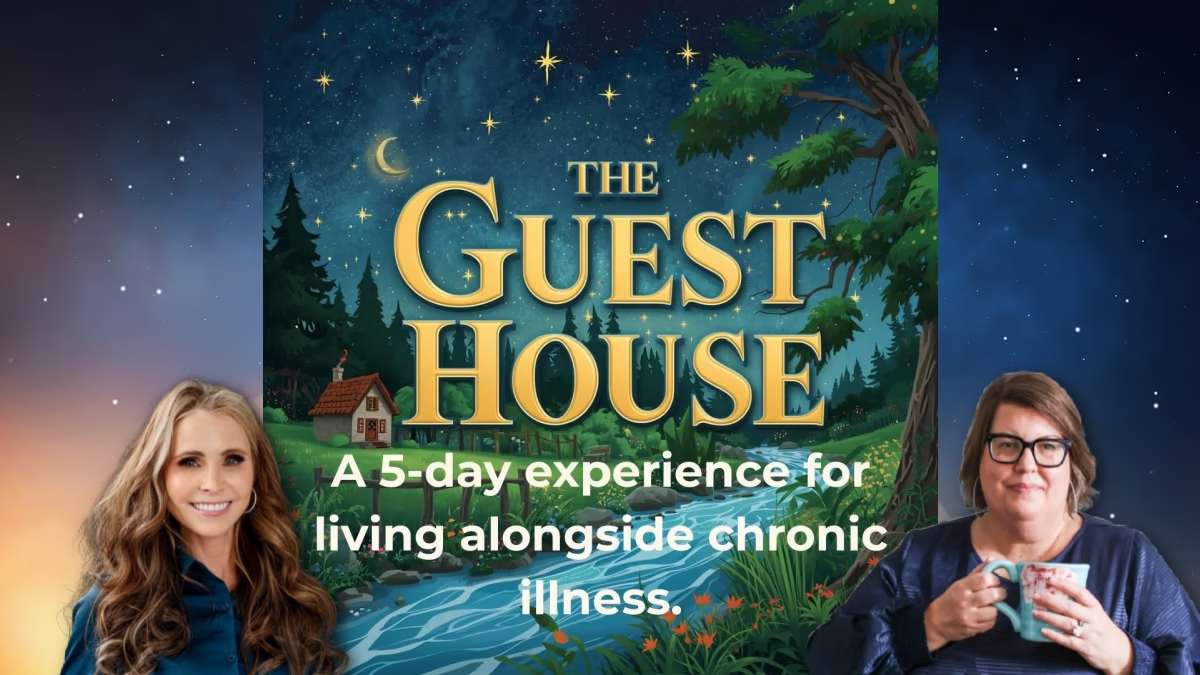
My friend and fellow Sober Curator contributor Amy Liz Harrison and I are offering something together soon. We are calling it The Guest House.
It is a five-day gentle exploration of living with illness, pain, and the unexpected. Delivered by daily email, with an audio option if reading is too much on a given day. Low pressure. Low energy requirements. Nothing to complete, nothing to get right.
We built it from our own lived experiences. Because we know what it is to have a body that doesn’t always cooperate. Because we know what it is to be in recovery and also be in pain and to need a space that holds both of those things without asking you to choose.
The Guest House runs April 27 through May 1. No one will be turned away.
Rumi wrote the poem this offering is named for. The idea at its center is radical hospitality toward your own experience. Meeting what arrives, even the difficult guests, with curiosity. Offering yourself the same welcome you would offer someone you love.
If that sounds like something your body and your story need right now, we would be honored to have you.
We’ll save you a seat.

THIRSTY FOR WONDER: at The Sober Curator, led by Anne Marie Cribben—a passionate recovery coach and spiritual companion based in Washington, DC—offers 1:1 coaching, spiritual guidance, and recovery support rooted in compassion and empowerment. As the creator of The Wellspring: A Celtic Recovery Journey, Anne Marie blends the Celtic calendar with sobriety, connecting participants to ancient wisdom and the rhythms of nature.
A fierce advocate for sobriety as liberation and self-love, she challenges the targeted marketing of alcohol to women and champions authentic, joyful living. Her work goes beyond addiction recovery, fostering a life of vibrancy, purpose, and connection.
The Sober Curator’s MENTAL HEALTH + WELLNESS section is your go-to guide for nurturing emotional well-being—especially for those in recovery. Explore resources, expert insights, and personal stories that connect the dots between mental health, sobriety, and self-care. From managing anxiety and depression to building mindfulness and emotional resilience, we provide practical tools and inspiration to help you thrive alcohol-free. By fostering open, stigma-free conversations, we empower our community to make emotional wellness a cornerstone of long-term recovery.
Dedicated columns on this TSC channel:
- Break Free Foundation – Scholarships & Support for Recovery with Sober Curator Contributor Alexandra Nyman
- Codependency – Insights & Recovery with Sober Curator Contributor Dr. Sarah Michaud
- Mastering Mental Fitness with Sober Curator Contributor James Gwinnett
- Mental Health – Emotional Wellness in Recovery
- Relationships – Love, Connection & Boundaries in Sobriety
- Sober Not Subtle with Sober Curator Contributor Jason Mayo
- Sober Poetry – Recovery in Verse
- Speak Out! Speak Loud! – Stories & Creative Expression in Recovery
- Spiritual Substance – Mindfulness, Science & Soul with Senior Sober Curator Contributor Lane Kennedy
- Wellness As A Way of Life – Sustainable Health for Powerful Women with Senior Sober Curator Contributor Megan Swan

Follow The Sober Curator on LinkedIn
Can sobriety help with chronic pain?
Sobriety can help someone better understand their body, patterns, and needs, but it does not automatically fix chronic pain. In this essay, Anne Marie Cribbin writes that sobriety helped enormously, while also acknowledging that her relationship with her body is still evolving.
What is the connection between chronic pain and substance use?
Many people use alcohol or substances to cope with physical pain, even if they do not name it that way at the time. The article explains how pain can hide underneath phrases like “unwinding,” “taking the edge off,” or “getting through the day.”
What is fibromyalgia?
Fibromyalgia is a chronic condition often associated with widespread pain, fatigue, brain fog, and nervous system sensitivity. Anne Marie shares that receiving a fibromyalgia diagnosis helped explain symptoms her body had been carrying for years.
Why can chronic illness feel isolating in recovery?
Chronic illness can change someone’s energy, plans, routines, and ability to connect with others. For people in recovery, that can be especially painful when community and connection are part of staying well.
What does recovery teach people about living with chronic illness?
Recovery can teach people to tell the truth, ask for help, accept imperfect days, and understand that healing is not linear. Those same lessons can support someone navigating chronic pain or chronic illness.
What is The Guest House?
The Guest House is a five-day gentle email experience from Anne Marie Cribbin and Amy Liz Harrison for people living with illness, pain, and the unexpected. It is designed to be low-pressure, low-energy, and supportive for people whose bodies may not always cooperate.
