


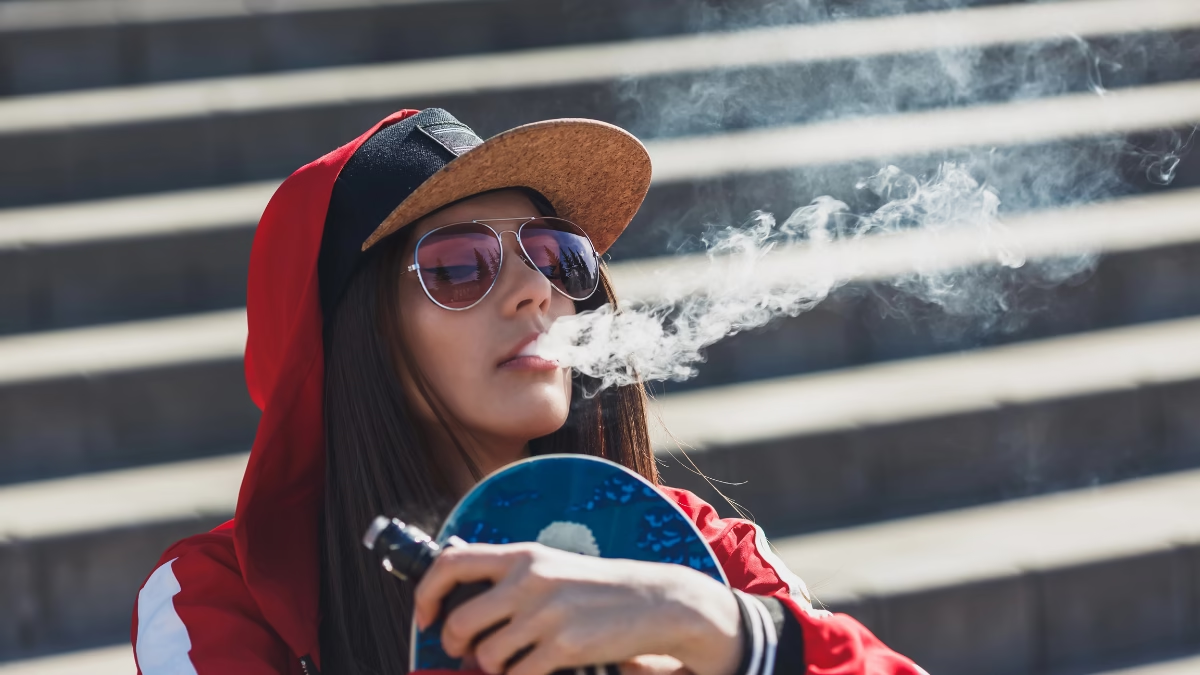

You did the hard thing. You quit drinking. Maybe you’ve got years, maybe you’ve got months, but either way you rebuilt your entire life around not picking up.
So why is there a vape in your pocket?
If you just felt personally attacked, welcome. Pull up a chair. This is one of the worst-kept secrets in recovery: rooms full of people with serious sobriety who chain-vape in the parking lot between meetings. Coffee and nicotine have been the unofficial sponsors of recovery since long before anyone said the words “watermelon ice.”
Nobody’s judging. But if you’ve been thinking about putting down the vape and don’t know where to start, this one’s for you.
Why quitting nicotine feels different in recovery
Here’s the tricky part. If you’re sober, you already know how to quit something. You’ve white-knuckled cravings, you’ve sat through urges, you’ve learned that feelings pass. That experience is a genuine advantage.
It can also work against you. Some of us treat quitting nicotine like a moral test we should be able to pass on willpower alone, because hey, we quit drinking. Then when the vape wins round after round, the shame spiral starts, and shame is not exactly a neutral substance for people in recovery.
So let’s get one thing straight: nicotine is one of the hardest dependencies to break, full stop. Most people can’t quit cold turkey. Struggling with it says nothing about your recovery.
Protect your sobriety first
Before anything else, a ground rule. Your sobriety is the house. Quitting nicotine is a renovation. I was nearly 5 years sober when I finally gave up nicotine.
Some people in early recovery are told by sponsors or counselors to wait before taking on nicotine, and there’s wisdom in not overloading yourself. Other research suggests quitting smoking can actually support long-term recovery. There’s no single right answer, which means this is a conversation to have with your own support system, not a rule to download from the internet.
What we can tell you: if quitting nicotine starts destabilizing your sobriety, pause and regroup with your people. The vape is not worth a relapse, and the timeline is yours to set.
What actually works (according to science, not vibes)
Quitting nicotine has been studied for decades, and the results are consistent.
1. Nicotine replacement therapy doubles your odds. Clinical trials show NRT, meaning lozenges, gum, and patches, doubles your chances of quitting smoking compared to going cold turkey. It works by stepping your dose down gradually so your brain isn’t in full revolt while you rebuild your habits.
2. Behavioral support stacks on top of that. A Cochrane review found that behavioral support like counseling, advice, and peer groups increased quit success by an additional 20% for people using NRT. And a randomized clinical trial from Truth Initiative found text-based support increased quit rates among young adult vapers by nearly 40%.
If that combination sounds familiar, it should. Tools plus community plus one day at a time. You’ve literally already run this play.
3. Cravings pass in about a minute. Most nicotine cravings peak and fade within 60 seconds. The entire game is having something to do for that one minute that isn’t reaching for the vape.
Our recommended quit kit
We reviewed Quit With Jones earlier this year and it remains our top pick for exactly this playbook. Jones pairs FDA-approved nicotine mints (2mg and 4mg) with a free app built around one-minute craving tools, a streak tracker, and a community of 60,000+ quitters cheering each other on.
For lighter users and social vapers, their Low & Slow Quit Kit uses only 2mg mints for a gentler step-down. You take a free dependency quiz, they build you a personalized quit plan, and you taper over about 12 weeks.
The part we love most for this community: Jones is explicitly shame-free. Whether you want to quit entirely or just cut back, they meet you where you are. Sound familiar? It should. That’s harm reduction, and it’s the same compassion we extend to people at every stage of recovery.
Read our full Quit With Jones review here, or take their dependency quiz and get your personalized plan.
Borrow from your own recovery toolbox
You have skills the average quitter would kill for. Use them:
- One day at a time works for nicotine too. Don’t quit forever. Quit today.
- Play the tape forward. That vape hit buys you five minutes of relief and another day of dependency.
- Tell your people. Secrets keep us sick, and that includes the secret vape in the glove box.
- Replace the ritual, not just the substance. The hand-to-mouth habit, the stepping outside, the deep inhale. Build new versions. A mint, a walk, an actual deep breath.
- Celebrate streaks out loud. You count sober days. Count nicotine-free days the same way.
The bottom line
Quitting vaping while sober isn’t a graduation requirement, and it isn’t a referendum on your recovery. It’s just the next right thing for a lot of us, whenever we’re ready for it.
And when you are ready? You won’t be doing it on willpower alone this time. Tools, community, one minute at a time.
You’ve done harder things. We watched you.
HEALTH & WELLNESS: Quit With Jones Review – The FDA-Approved Nicotine Mints + Digital Support App
#ADDTOCART: Six Years In, We Made You a Mixtape – SOBER SNAIL MAIL IS HERE!
You don’t need a sobriety date to be here.

Sober, sober-curious, “just taking a break,” California sober and questioning it… The Sober Sip doesn’t check IDs at the door.
If you want the culture without the lecture, get on the list. Free, three times a week.
Resources Are Available
If you or someone you know is experiencing difficulties surrounding alcoholism, addiction, or mental illness, please reach out and ask for help. People everywhere can and want to help; you just have to know where to look. And continue to look until you find what works for you. Click here for a list of regional and national resources.

Follow The Sober Curator on TikTok
Should I quit vaping in early sobriety or wait?
There’s no universal rule. Some sponsors and counselors suggest waiting until your sobriety feels stable, while some research suggests quitting smoking can support long-term recovery. Talk to your own support system, and if quitting nicotine ever destabilizes your sobriety, pause and regroup. Your sobriety comes first, always.
Does vaping break my sobriety?
No. Nicotine dependency doesn’t reset your sober date or make you less sober, and anyone turning this into a purity test has missed the point. You can be fully sober and still want to be free of nicotine. Both things are true.
Why is quitting nicotine so hard even though I already quit drinking?
Nicotine is one of the hardest dependencies to break, and most people can’t quit cold turkey. Quitting drinking gives you real advantages, like knowing cravings pass, but willpower alone isn’t a quit plan for nicotine any more than it was for alcohol. Tools and community double your odds.
What’s the best way to quit vaping without risking my recovery?
Use the same playbook that got you sober: tools plus people plus one day at a time. FDA-approved nicotine replacement therapy doubles your quit odds, and adding behavioral support and community increases success another 20%. That combination is why we recommend Quit With Jones, which pairs NRT mints with a free support app.
How long do nicotine cravings last?
Most pass in about a minute. The whole game is having something to do for that one minute, whether that’s a mint, a walk, or checking in with a community that gets it.
