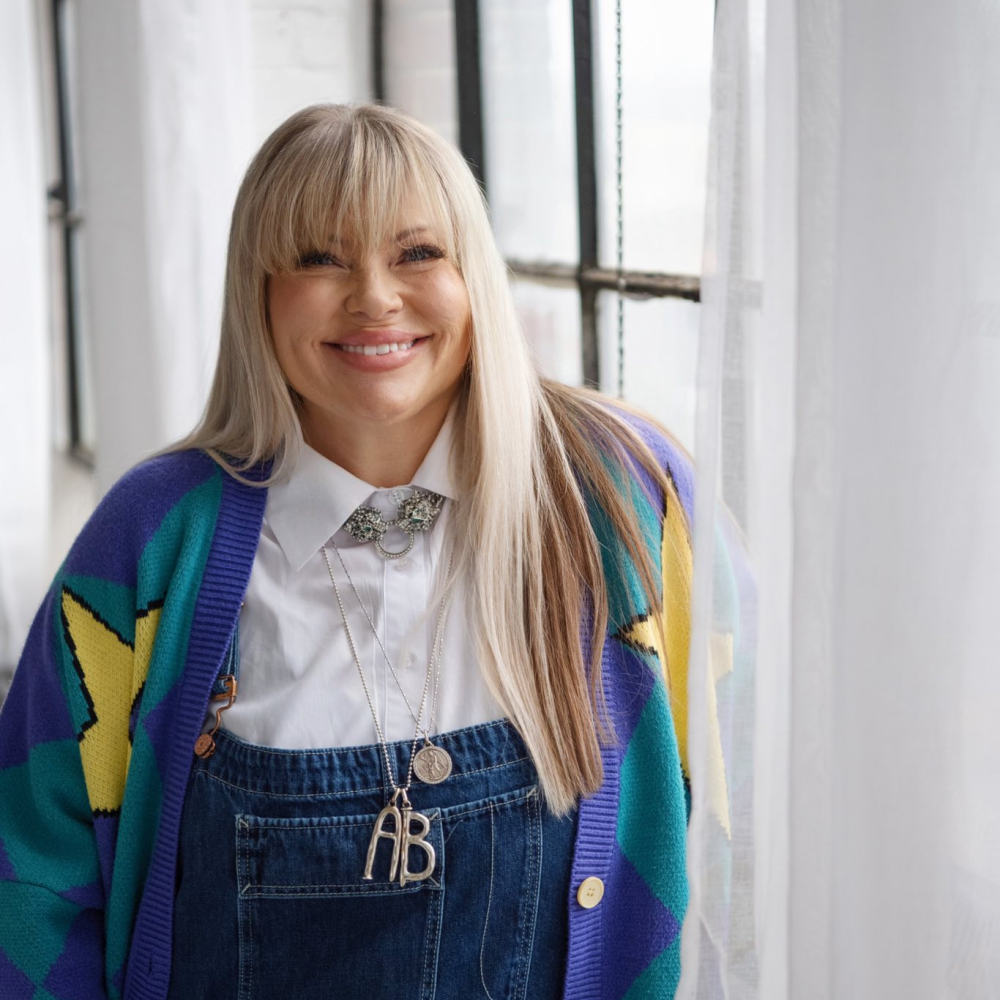
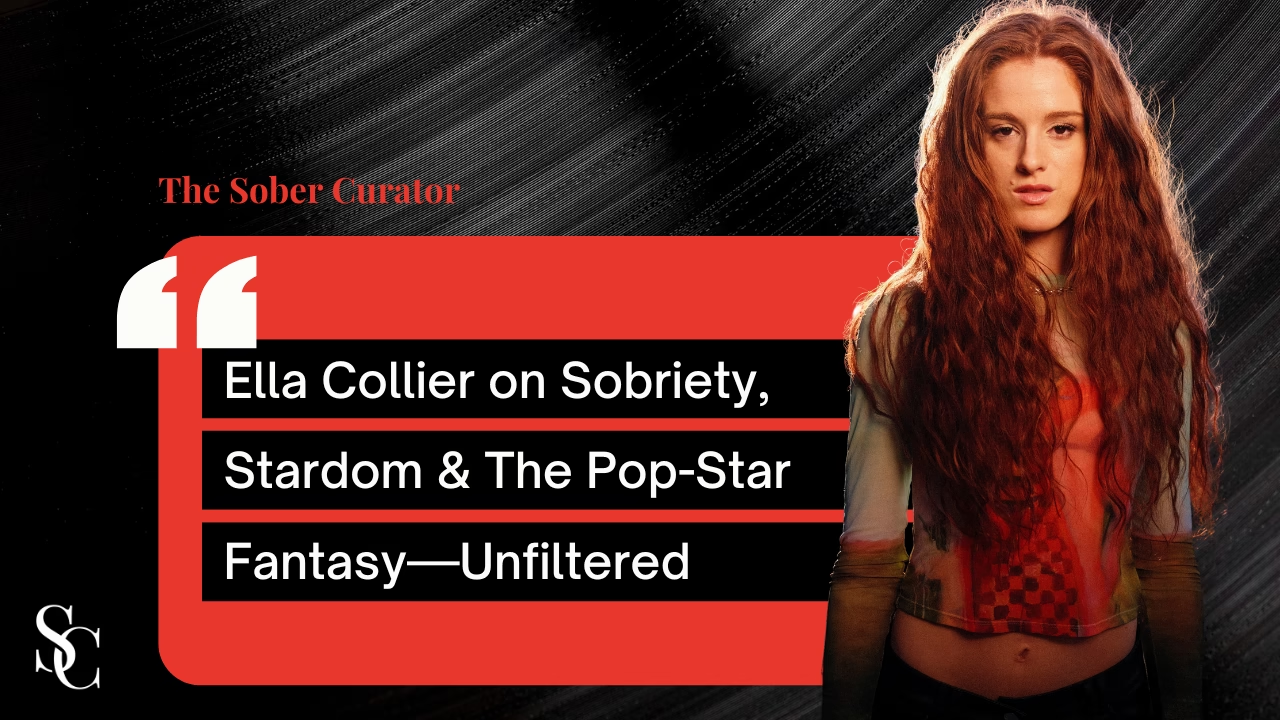
There’s a moment early in the episode when pop artist Ella Collier says something so deeply Gen Z, so emotionally fluent, and so unintentionally poetic that you can practically hear the internet quietly nodding in recognition.
“I think I’ve always been addicted to a problem,” she tells Alysse. “Survival mode was my baseline.”
And there it is: the thesis statement for an artist who builds sparkling, hyperpop worlds while writing lyrics that feel like torn-out diary pages. Ella exists at the intersection of glitter and grit—pop fantasy and radical self-awareness—which makes her sobriety not just a lifestyle choice, but an artistic catalyst.
Because for Ella, getting sober didn’t dim the spotlight.
It supercharged it.
Anxiety, Artistry & Emotional Sobriety
Before Ella was playing Love Island, NBA2K, X Games, and Spotify’s SALT playlist, she was a kid absorbing the world with a sensitive, hungry nervous system. Anxiety wasn’t an interruption to her creativity—it was fuel for it.
“There was always tension between what I felt and what I wanted to feel,” she says, describing the emotional undercurrent of her work. Sobriety didn’t erase that tension; it removed the static. Suddenly she could hear herself clearly.
In one of the episode’s most relatable moments, she confesses that she once believed artists needed chaos to create. Without the emotional rollercoaster, would the art even exist? Wasn’t suffering basically the muse?
Spoiler:
Turns out sobriety comes with its own drama.
Just… cleaner drama.
It’s heartbreak, but with better boundaries.
It’s sadness, but with hydration.
It’s anxiety, but with actual coping skills.
And the way Ella channels that into her songwriting feels raw, cinematic, and emotionally mature in a way that still fits inside a pink, sparkly pop universe.
Pop-Star Fantasy (and the Truth Beneath It)
Ella laughs as she talks about the “pop-star fantasy” she loves to exaggerate online—the glam outfits, the perfect lighting, the hyper-curated content that looks like someone sprinkled fairy dust on an iPhone.
But she’s also the first to admit that there are tears between takes, heartbreak behind the filters, and a very human girl trying to figure out how to balance ambition with emotional health.
She and Alysse bond instantly over dramatic self-expression, ADHD-coded enthusiasm, and the endlessly relatable desire to turn every experience—good, bad, chaotic—into a piece of content.
Ella jokes about the contradictions of her brand:
The girl who can belt a pop anthem on stage…
is the same girl who gets socially awkward at a sober hangout.
But that honesty is the brand.
It’s why Gen Z loves her.
It’s why her music lands.
It’s why this episode sparkles.
Creativity Without Chaos
Somewhere around the 49-minute mark, Ella shares her reflections on releasing “I Don’t Do Drugs,” and the brilliance of the moment is how casually she frames it:
Not as a moral stance, not as a recovery manifesto—just a truth she’s accepted as part of who she is.
Sobriety gives her the energy to produce, collaborate, and create the community-centered spaces she values. She hosts Zoom release parties with fans, pulls back the curtain on her creative process, and refuses to hide the messy, awkward, deeply human parts of being an emerging artist.
And then there’s the skin glow-up.
Yes, she talks about it.
Yes, it’s iconic.
Yes, sobriety really is the original anti-aging serum.
She says it with the seriousness of someone revealing a top-secret beauty drop, but the truth lands:
Her creativity didn’t need alcohol.
Her confidence didn’t need alcohol.
Her identity definitely didn’t need alcohol.
She got more money, more time, more libido, more clarity—and suddenly the idea of drinking felt less like a vibe and more like a glitch in the matrix.
When Sobriety Becomes the Better Party
One of the funniest detours is Ella’s reaction to Alysse introducing her to “Muppet Recovery.” The instant recognition that it needs to exist in her life is so genuine you feel the serotonin through the speakers.
Yes, she writes it down immediately.
Yes, a Muppet-themed recovery TikTok is probably already in the works.
But then the conversation softens into something profound.
Ella says that sobriety gave her the space to feel deeply without combusting.
To love without losing herself.
To create without burning out.
And in response, Alysse drops the line that should be printed on T-shirts, billboards, and maybe even tattooed somewhere cute:
“Sobriety isn’t the end of the party—it’s the start of a better one.”
Ella agrees.
And with that, the episode becomes more than a conversation—it becomes a love letter to authenticity.
A New Face of Sober Creativity
Ella Collier isn’t your traditional sober icon.
She’s glittery.
She’s chaotic in a charming way.
She’s self-aware to the point of comedy.
She’s emotional without being messy.
She’s the pop-star fantasy…
and the girl behind it.
Her sobriety doesn’t silence any of that—
it amplifies it.
She shows that sobriety isn’t about restriction.
It’s about expansion.
More clarity.
More color.
More connection.
More life.
If this episode proves anything, it’s that Gen Z’s sober movement isn’t subtle—it’s expressive, creative, emotionally intelligent, and fueled by artists like Ella who aren’t afraid to shine without the haze.
And honestly?
The future looks bright.
Like… neon hyperpop bright.
Follow Ella
- Ella Collier Music — ellacolliermusic.com
- Instagram: @ellacollier
- Spotify: Ella Collier
- TikTok: @ellacollier
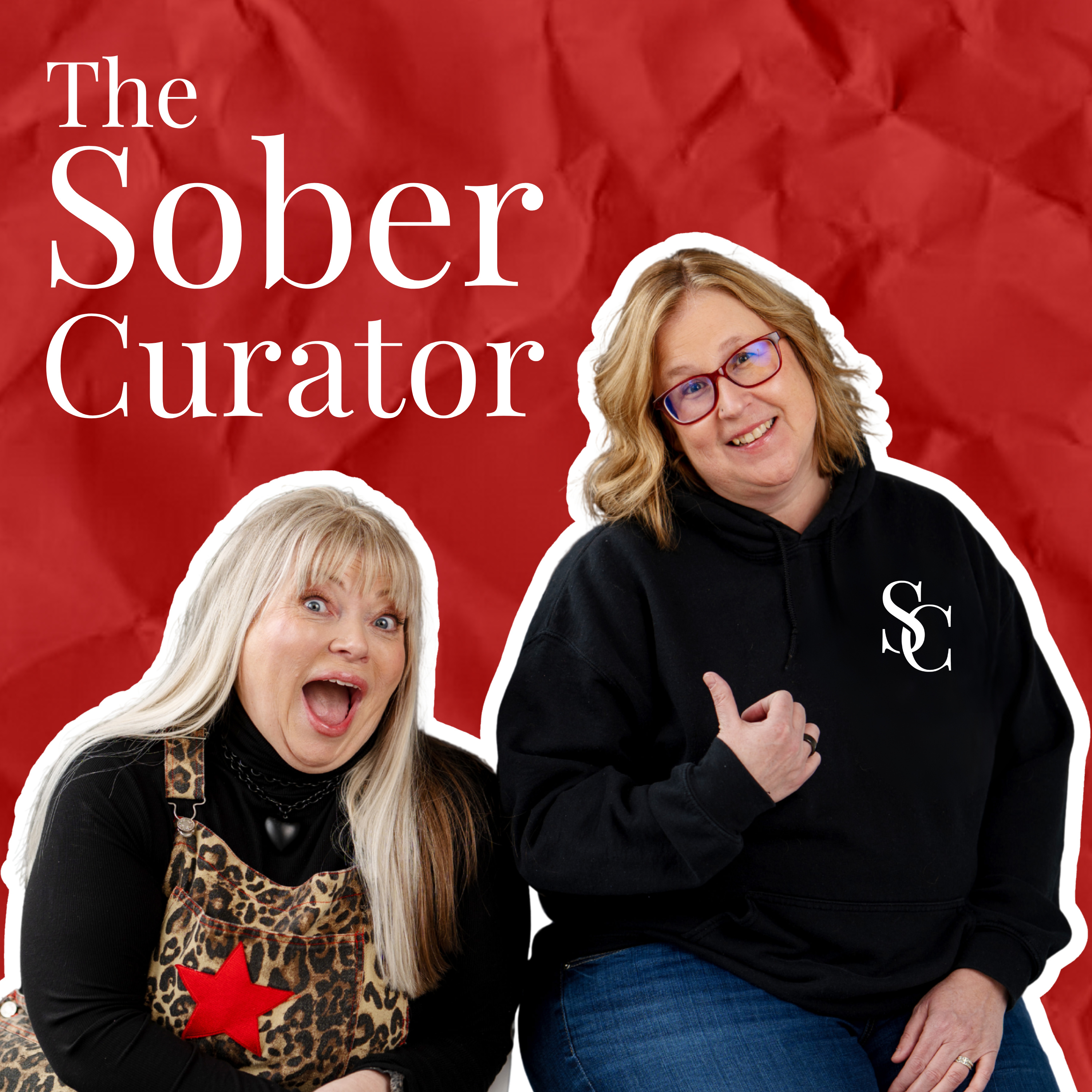
Hosted by Alysse Bryson & Tamar Routly, and produced by Podcast Impact Studio, The Sober Curator Podcast brings sober lifestyle, pop culture, & recovery to the mic. Alongside Alysse & Tamar, rotating global contributors join as co-hosts to explore zero-proof drinks, sober travel, quit lit, entertainment, & mental health. This is sober media with personality, perspective, & a glitter bomb of honesty. Sober-curious or living alcohol-free, we’ve got you! We’re not here to help you get sober. We’re here to help you live sober: and love it.
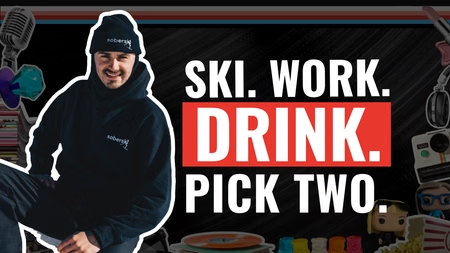
Golf has the 19th hole. Skiing has après. Every sport comes with a drink attached, and three sober athletes on three continents decided to keep the sport and lose the drink.
In this bonus episode, recorded live at BACKSTAGE with The Sober Curator, SOBA Golf founder Corey Davis, Soberski founder Ben Coombes and electric skateboarder Bianca Criaco join Alysse Bryson and co-host Tamar Routly to talk obsession, potential and the rush that beats the buzz.
In this episode:
– How Corey went from a 30 index to a 3 in four years, and why golf has no finish line
– Why Ben quit drinking in the one place he knew would be hardest: a ski resort
– Bianca on how an electric skateboard got her through early sobriety, and finishing dead last at nationals
– ”Mr. Potential” and what happens when you finally stop wasting it
– Walking shoulder to shoulder: why sport gets people talking
– What each guest's sport gives them on a bad day
CHAPTERS 0:00 Welcome to BACKSTAGE: Sober Sports 1:52 Corey Davis and SOBA Golf 6:13 Ben Coombes and Soberski 9:25 Bianca Criaco and electric skateboarding 13:21 ”I came in dead last” 13:54 How sport changes recovery 22:27 Sober on top of a mountain 23:47 How fast is an electric skateboard? 29:12 The guests interview each other 30:10 ”Mr. Potential” 33:52 Intuition over potential 41:33 Quitting in the hardest place first 46:30 Hindsight: be relentless 50:38 What your sport gives you on a bad day 54:51 Wrap-up
Sober Shots:
”With golf, there's no destination.” (Corey Davis)
”Joy, especially for me, is something that I don't think I've had my entire life.” (Bianca Criaco)
Mentioned in this episode:
– SOBA Golf: https://soba.golf
– Soberski: https://www.soberski.co.uk
– Bianca Criaco + The Choice podcast: https://www.biancacriaco.com
– Hear more from Ben on Episode 16: https://thesobercurator.com/sober-ski-trips-are-real-inside-soberskis-alcohol-free-chalet-week/
– Join BACKSTAGE for live conversations like this every month
Getting sober matters. Staying sober matters more.
SEASON 2 MERCH: https://shopthesobercurator.com/
SC RESOURCES:
– Alcohol + Substance Use Disorder Guide
– Recovery Nonprofit Resource Guide
– LGBTQ+ Recovery Resource Guide
CONNECT: www.thesobercurator.com | The Sober Sip newsletter: https://www.thesobercuratornewsletter.com/ | @thesobercurator on Instagram, X, TikTok, YouTube + Pinterest
Love the show? Rate, review + follow. It takes 60 seconds and helps more people find us. Feedback + guest ideas: thesobercurator@gmail.com
Hosted by Alysse Bryson with co-host + producer Tamar Routly. For informational and entertainment purposes only; not a substitute for professional advice.
Music: TSC S2 theme ”Sober Shots” created by Alysse Bryson using Suno AI, under Suno's commercial license.
PLAY IT AGAIN is The Sober Curator’s curated playlist of sobriety anthems—songs that capture the essence of recovery journeys and lift the spirit. From timeless classics to modern hits, these tracks inspire, heal, and motivate, no matter what genre of choice. Each song is handpicked for its power to transport you to another state of mind and remind you why living alcohol-free rocks.
Got a favorite sobriety theme song? We want to hear it! Send your picks to thesobercurator@gmail.com and help us keep the playlist growing.

SOBER POP CULTURE: Nostalgia, Memes, and Sobriety: How Muppet Recovery on Instagram Became a Beloved Gem

SOBER POP CULTURE at The Sober Curator is where mainstream trends meet the vibrant world of sobriety. We serve up a mix of movie, podcast, fashion, and book recommendations alongside alcohol-free cocktails, celebrity features, and pop culture buzz—all with a sober twist.
We’re here to shatter the “sobriety is boring” myth with a mash-up of 80s neon, 90s hip-hop edge, early 2000s bling, and today’s hottest trends. From celebrity shoutouts to red-carpet style inspo, this is where sober is as chic as it is fun. To the celebs using their platform for good—our Sober Pop Trucker hats are off to you!
Resources Are Available
If you or someone you know is experiencing difficulties surrounding alcoholism, addiction, or mental illness, please reach out and ask for help. People everywhere can and want to help; you just have to know where to look. And continue to look until you find what works for you. Click here for a list of regional and national resources.