



The messy middle isn’t the beginning.
And it’s not the breakthrough.
It’s what comes after you’ve done the obvious work.
After you’ve put things down. After you’ve changed your habits. After you’ve proven, both to yourself and maybe to others, that you can live differently.
And then, nothing fully clicks into place.
You’re no longer who you were.
But you’re not entirely sure who you are now.
In sobriety, this can feel like you’ve removed the thing that helped you cope; but you haven’t yet built a life that feels expansive.
In midlife, it can feel like you’ve outgrown roles, expectations, even versions of yourself, but there’s no clear next identity waiting for you.
So, you sit in it.
Not broken.
Not lost.
Just in between.
The temptation here is to rush. To fix it. To fill the space with something new, something certain.
But the messy middle is where capacity is built.
Capacity to sit with yourself.
Capacity to not know.
Capacity to choose, instead of react.
If you move too quickly, you don’t build that capacity. You just replace one form of coping with another.
So instead of solving it, try letting yourself see it.
Even if it’s layered. Even if it doesn’t make sense yet.
The Practice
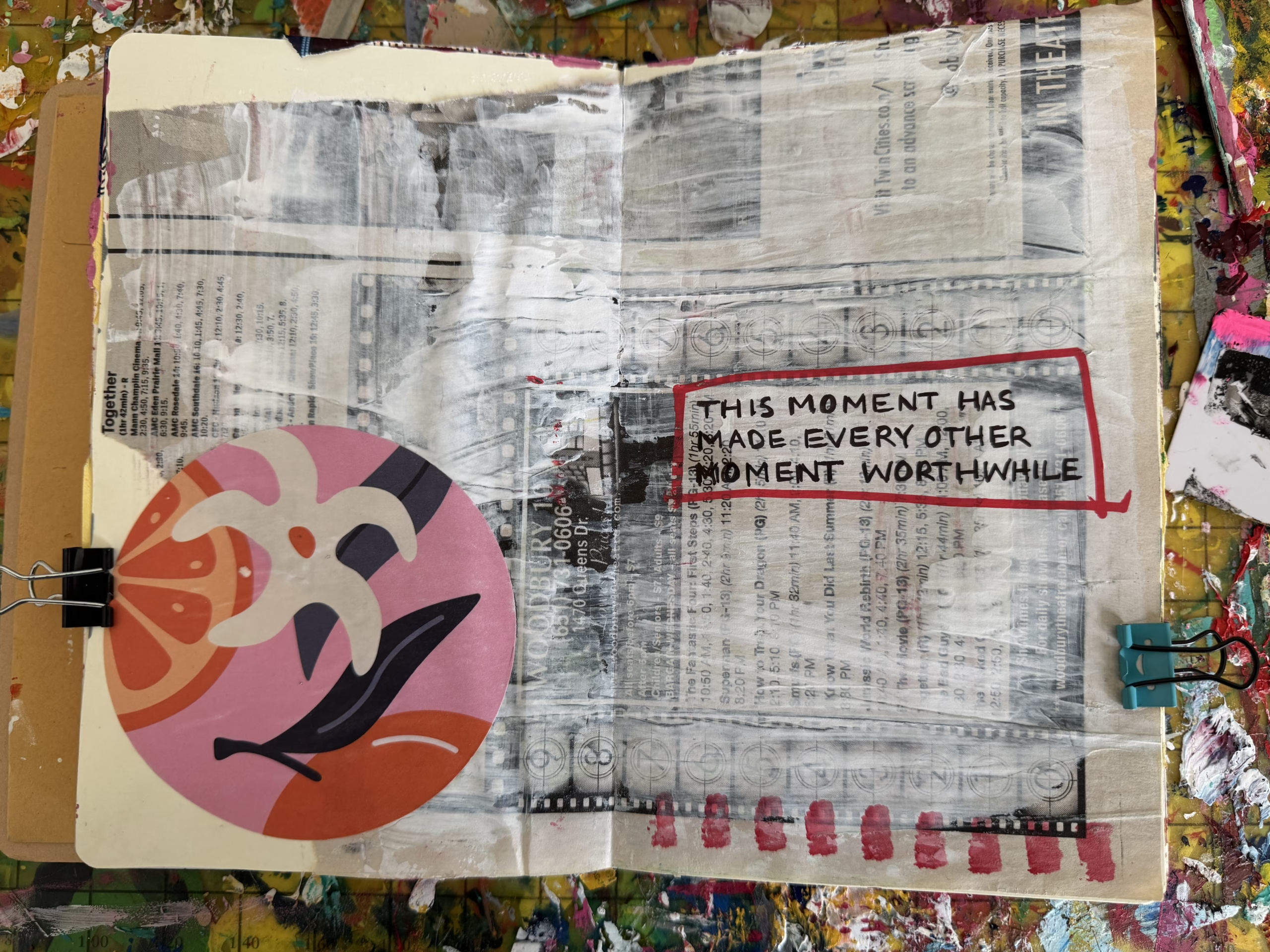
Take a blank page.
At the top, write: Right now, I’m in between…
Without overthinking, begin listing:
- Things you’ve outgrown
- Things that no longer fit
- Things you’re not fully ready to claim yet
Let it be fragmented. Messy. Incomplete.
Now pause.
Look through old magazines, newspapers, or junk mail. Tear out:
- words or phrases that catch your attention
- images, colors, or textures that feel like this moment
Glue or tape them onto your page—around, over, or even covering parts of what you wrote.
You can:
- layer over words you’re not ready to fully see
- highlight or frame the ones that feel important
- add color, marker, or paint in a way that matches the energy of the page
Let some of it be hidden. Let some of it stand out.
Stop before it feels finished.
The Reflection
- What feels unfinished, but important?
- What are you no longer willing to go back to?
- What happens when you don’t rush to resolve it?
This is not a problem to solve.
It’s a place you’re learning how to stand.

Unpolished Supplies List:
- Spiral Bound Sketchbook
- Spiral Bound Artist Sketch Pad
- 100 Unruled 3×5 Index Cards Blank White Heavy Rounded Corners
- 60 Colored Dual Tip Markers
- Acrylic Paint Markers
- 36 Colors Acrylic Paint Set with Brushes & Palette

Unpolished Series by Krysty Krywko:
- Unpolished: Make It Anyway | Krysty Krywko
- Unpolished: When “I’m Fine” Is a Red Flag | A Creative Practice for Honest Self-Reflection
- Unpolished: Numb the Beige — An Art Therapy Journaling Practice for Sobriety
- Unpolished: A Bi-Weekly Creative Practice for Sober & Sober-Curious Women

Follow The Sober Curator on Pinterest
1. What is Unpolished?
Unpolished is a bi-weekly creative practice for sober and sober-curious women. Each post includes a short reflection and a simple, hands-on exercise designed to explore identity, creativity, and life after drinking.
2. Do I need to be sober to participate?
No. Unpolished is for anyone who is sober, sober-curious, or questioning their relationship with alcohol. The practice meets you where you are.
3. Do I need artistic experience?
Not at all. No art skills are required. The exercises are about honesty, not aesthetics. The goal isn’t to create something beautiful — it’s to create something true.
4. What materials do I need?
You only need a notebook or paper and a pen or pencil. Optional materials include markers, inexpensive paint, or collage materials like magazines or junk mail.
5. How does creativity support sobriety?
Sobriety removes the numbing. Creativity helps you process what surfaces. A simple creative practice can build self-trust, emotional awareness, and presence without turning your healing into another performance.
6. What if I feel disconnected after getting sober?
That experience is more common than people talk about. Many people feel restlessness, numbness, or uncertainty after quitting drinking. Unpolished is designed to gently explore that space rather than fix it.
7. Is this therapy or art therapy?
No. Unpolished is not therapy. It’s a personal creative practice meant to support reflection and self-awareness. It can complement therapy, coaching, or recovery work, but it does not replace professional care.
8. How often is Unpolished published?
Unpolished is a bi-weekly series offering a reflection and creative prompt every two weeks.
9. Do I have to share what I create?
No. This practice is private unless you choose otherwise. You don’t have to post it, polish it, or explain it to anyone.
10. Who is Krysty Krywko?
Krysty Krywko is seven years sober and works at the intersection of sobriety, identity, and becoming. Through writing, coaching, and creative practice, she supports women exploring their relationship with alcohol and reclaiming their creativity.

1 Comment
@krystykrywko I am REALLY looking forward to your BACKSTAGE session in a few weeks for ZIRL (Zoom in real life) journaling instructions! Plus, I love being on Zoom and crafting and making art with people. So much more fun than doing it alone.