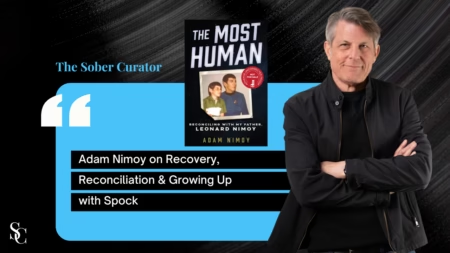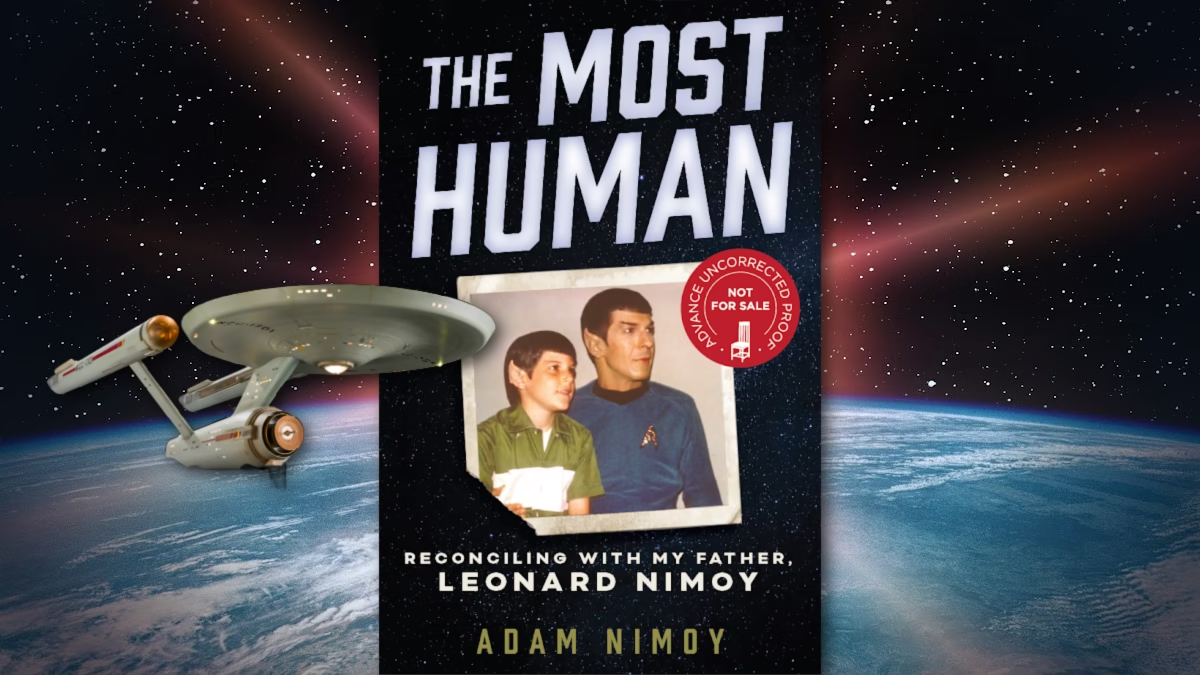
What does it mean to be “the most human”? In “The Most Human”, Adam Nimoy invites readers into a deeply personal journey — one marked by addiction, emotional distance, regret, and a long path toward reconciliation. This memoir is not a fan’s treasure trove of a famous parent, but a raw, honest account of a son learning to navigate his own demons — and, in doing so, trying to heal old generational wounds.
From the opening pages, Nimoy sets the stage: growing up as the child of a global icon, always in the shadow, adored by millions for his role, yet emotionally elusive within his own family. He was able to relate to and love his father’s character, Spock, but could not connect with the man as a son yearns to communicate with his father. Over time, as he struggled with his direction in life and other emotions, he found refuge in substance use and escapism. In Nimoy’s hands, addiction is not sensationalized. It’s portrayed as a coping mechanism, a means to silence inner turmoil in a world that relentlessly demanded normalcy from an abnormal childhood.
What makes “The Most Human” so powerful — and so resonant — is that Nimoy does not shy away from the most brutal truths. He reveals how addiction shaped his relationships: with his father, with his children, with himself. But he also shows something rarer in addiction memoirs: the slow, painful, hopeful work of recovery. Through 12-Step recovery and honesty, through the process of “making amends,” Nimoy embraces vulnerability and begins to dismantle the walls between him and his father.
What might read externally as a celebrity memoir — stories of a famous dad, “behind the scenes” glimpses, Hollywood in the background — becomes deeply internal. The fame is not the point. The points are survival, identity, and healing. Nimoy doesn’t exploit his father’s legacy for drama; instead, he uses it to show how even a life lived under the spotlight can hide pain and dysfunction. And how, sometimes, even the children of icons end up fighting the same battles as anyone else: addiction, fear, emotional disconnection, and longing for love they never fully received.
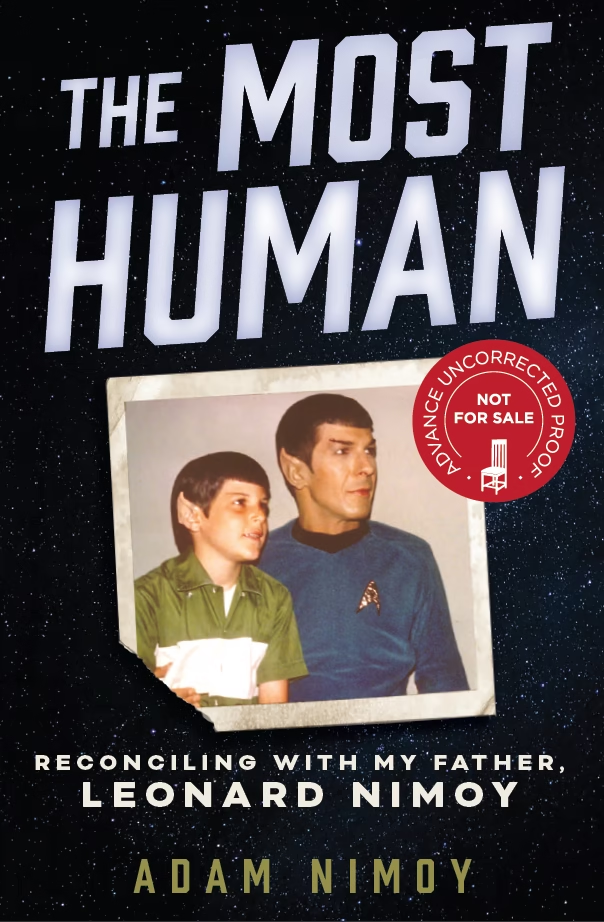
Adam loved his father deeply and was proud of his work. He enjoyed being Spock’s son and being part of the Star Trek mania. As stated earlier, he could relate to Spock but not Leonard. He attributes much of the disconnection to generational differences. His father and grandparents led hard lives, and Leonard moved to Hollywood with no money or connections, having to work hard for everything he had. Adam was living a different life as the son of a successful actor with no financial worries, focused on being a kid immersed in 60s culture.
As the story unfolds, addiction becomes more than a private struggle. It becomes a thread that ties father and son together — each battling demons of his own, each sometimes failing, each sometimes stubbornly holding on. Nimoy doesn’t shy away from portraying his father’s flaws: emotional distance, alcoholism, and the difficulty of reconciling public fame with private vulnerability. But he also doesn’t demonize. Instead, he approaches with compassion and complexity. He asks hard questions about legacy, nature versus nurture, and whether the cycle can be broken.
What stands out most is the book’s message of hope — not heroic, not miraculous — but real. It’s about reconciling fallible human beings to fallible human beings. It’s about accepting that being human means making mistakes, sometimes terrible ones, and still trying to repair, rebuild, and be better. For Adam Nimoy, that meant restoring his relationship with his father and learning to be a different kind of father to his children.
For readers looking for a celebrity memoir, “The Most Human” offers more depth than glitz. It is a mirror to addiction, of intergenerational pain, to the often-invisible burden carried behind success. But it is also a map of recovery, reconciliation, healing, and the difficult but necessary work of loving when love has been complicated.
If you care about memoirs that don’t shy away from the dark — yet still insist on redemption, on growth, on humanity — “The Most Human: Reconciling with My Father, Leonard Nimoy” is essential. It’s a courageous testament to the idea that even when you inherit scars, you don’t have to pass them on. It’s a story of fragility, strength, failure, forgiveness — and ultimately, what it means to survive, to heal, and to become the most human version of yourself.
#QUITLIT Sobees Score: 5 out of 5

SOBER CURATOR PODCAST: “You Can Be Right or You Can Be Happy”: Adam Nimoy on Recovery, Reconciliation & Becoming More Human
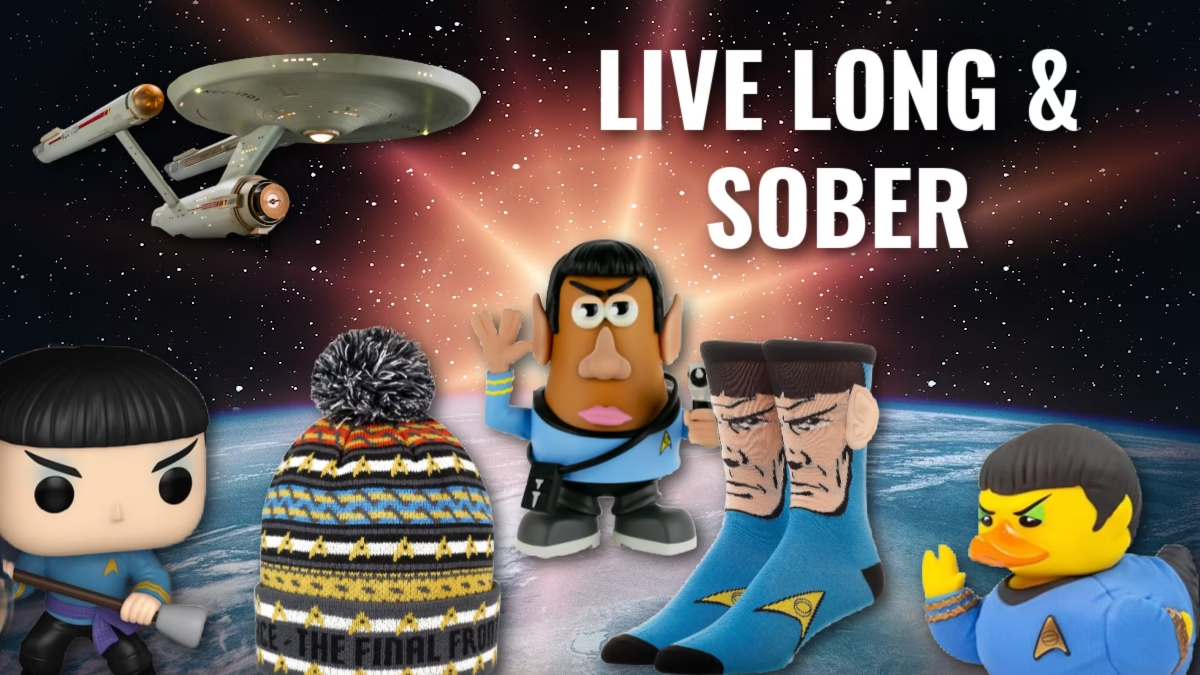
#ADDTOCART: Sober Trekkies, assemble. 🖖✨A Curated Idea List of Pop Culture Merch for the Sober Trekkies in Your Life.
You are one click away from beaming down of pop culture goodies for the logical, the loyal, and the gloriously alcohol-free. 🖖
May your carts be full, your boundaries intact, and your beverages forever non-alcoholic.
SOBER POP CULTURE + CELEBS at The Sober Curator is where mainstream trends meet the vibrant world of sobriety. We serve up a mix of movie, podcast, fashion, and book recommendations alongside alcohol-free cocktails, celebrity features, and pop culture buzz—all with a sober twist.
We’re here to shatter the “sobriety is boring” myth with a mash-up of 80s neon, 90s hip-hop edge, early 2000s bling, and today’s hottest trends. From celebrity shoutouts to red-carpet style inspo, this is where sober is as chic as it is fun. To the celebs using their platform for good—our Sober Pop Trucker hats are off to you!
SOBER POP CULTURE + CELEBS at The Sober Curator is where mainstream trends meet the vibrant world of sobriety. We serve up a mix of movie, podcast, fashion, and book recommendations alongside alcohol-free cocktails, celebrity features, and pop culture buzz—all with a sober twist.
We’re here to shatter the “sobriety is boring” myth with a mash-up of 80s neon, 90s hip-hop edge, early 2000s bling, and today’s hottest trends. From celebrity shoutouts to red-carpet style inspo, this is where sober is as chic as it is fun. To the celebs using their platform for good—our Sober Pop Trucker hats are off to you!
TSC LIBRARY: Step into The Sober Curator Library! Here, books are more than pages—they’re portals. We read them, listen to them, obsess over them, and then spill our thoughts in curated reviews.
Explore our four signature genres: #QUITLIT, Addiction Fiction, Self-Help, and NA Recipe Books.
Want even more inspo? Our Amazon #QUITLIT list is packed with nearly 400 powerhouse reads.
We’re channeling our inner Pokémon trainer because, honestly… we really do wanna read ’em all.
Resources Are Available
If you or someone you know is experiencing difficulties surrounding alcoholism, addiction, or mental illness, please reach out and ask for help. People everywhere can and want to help; you just have to know where to look. And continue to look until you find what works for you. Click here for a list of regional and national resources.

Follow The Sober Curator on Facebook
TSC LIBRARY: Welcome to The Sober Curator Library! This isn’t your average stack of books—we’re talking full-on story immersion, Audible binges, and reviews with personality. Browse our four go-to genres: #QUITLIT, Addiction Fiction, Self-Help, and NA Recipe Books. And if you’re collecting recovery reads like rare trading cards, check out our Amazon #QUITLIT list—almost 400 titles ready for your TBR. Grab your backpack, book nerd. We’re on a quest to read every last one.