


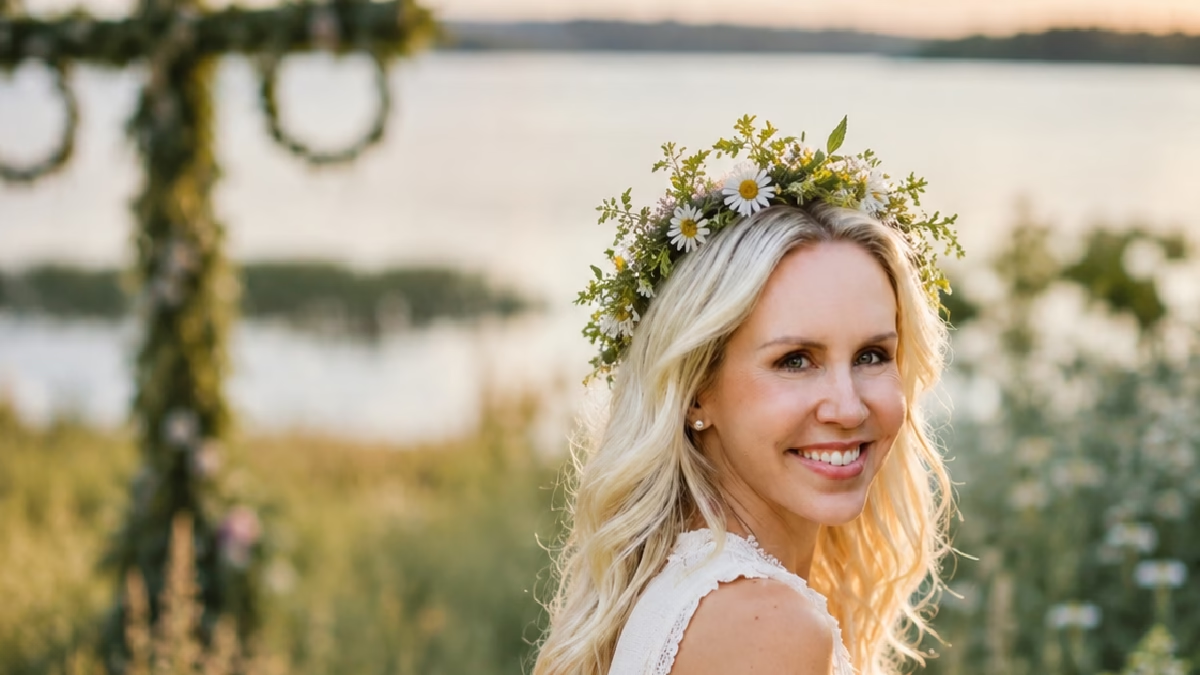

I come from people who knew how to drink.
My ancestry is a map of some of the world’s most storied drinking cultures: English, German, and Finnish. Pints in the pub, steins at the festival, lonkero (“tentacle” or long drink) by the lake. Alcohol is woven into the folklore, the food, the ritual, and the very soil of each of those traditions. While my own family of origin was never heavy in their relationship with alcohol, my extended family was, going back generations. The cultural gravity of it was always there, quiet and assumed, the way a backdrop is always present even when no one is looking at it.
It was not until I got sober that I began to understand just how deep those roots go, and more importantly, how much of what I loved about those traditions had absolutely nothing to do with the alcohol in them. Sobriety did not separate me from my heritage. It handed it back to me, clearer and more fully than I had ever been able to hold it before. My years working at the Swedish Club in Seattle only deepened that. Immersed in Scandinavian culture and community, I found that the warmth, the ritual, the togetherness, none of it required a drink in my hand. It never had.
The midnight sun and the question I started asking
Juhannus, the Finnish Midsummer celebration, falls on the Saturday between June 20 and June 26 each year. Due to Finland’s northern geography, this is the time of year when the sun barely sets. The light lingers. People linger too. They leave the cities in a mass migration toward lakes and cottages, light enormous bonfires called kokko on the water’s edge, heat the sauna, eat new potatoes with dill, swim in cold water, and stay awake until a sky that never fully darkens finally shifts from gold to something almost blue.
It is, on paper, one of the most beautiful celebrations in the world. It is also, historically, one of the most alcohol saturated.
The question, in my sober life, is not whether I could attend, but whether I could fully belong. Whether the magic was in the traditions themselves, or in the substance so many people used to access them.
What I found, both in lived experience and in research, surprised me.
A region with sobriety in its DNA
Here is something most people do not know: the Nordic countries were doing sober curious, before sober curious was a hashtag.
Finland went completely dry for 15 years until 1932. Iceland tried it too. Norway nearly voted itself into prohibition and only missed by a hair. These were not small fringe movements. They were national reckonings with alcohol’s real cost, and they left a lasting mark.
Today Finland, Sweden, Norway, and Iceland all operate government-owned stores that control how, when, and at what price alcohol is sold. In February 2025, the WHO held them up as a global model for reducing alcohol harm. The philosophy baked into the policy is the same one many of us arrived at the hard way: the cost of drinking is higher than the culture lets on.
That is not a sober curious talking point. That is 100-plus years of national policy.
The organizations that have been here all along
While we were busy discovering Dry January, Scandinavia had already built entire civic institutions around sobriety.
Sweden has been at it since 1879. Not a support group. Not a treatment program. A community. Think 46,000 members across 1,000 local groups, folk high schools, study circles, and a genuine belief that people can choose, together, to build a life around something better than alcohol. Find them at iogt-nto.se.
Norway has been doing the same since 1877. Their youth wing, Juvente, has been organizing young people around an alcohol-free lifestyle since the early 20th century.
Movendi International (Stockholm) is the global body connecting sober and alcohol-harm-reduction organizations in 63 countries. It has been operating since 1851. That is not a typo. Find them at movendi.ngo.
These are not underground movements. They are institutions, as embedded in Scandinavian civic life as bonfires and maypoles.
What the Swedish Club taught me
When I worked at the Swedish Club in Seattle, I learned that Scandinavian culture is, at its core, about togetherness. The Swedes call it lagom, the idea that “just the right amount” is always better than excess. They call communal warmth fika, which is really just coffee and a pastry, and the decision to slow down and spend time with a friend.
The Finns have SISU, a concept that translates as grit and resilience, the stubborn refusal to let circumstances diminish you. And they have the sauna, which is not primarily a wellness trend but a democratic institution: a place where class, status and pretense are all left outside the door.
None of these things require alcohol. In fact, I would argue they are most fully themselves without it.
The bonfires of Juhannus are lit whether you are drinking or not. The midnight sun rises whether you are drinking or not. The sauna warms you; the lake cools you, and the potatoes taste like summer whether you are drinking or not.
What changes when you remove alcohol from these experiences is not the meaning. It is the memory. You get to keep all of it.
You don’t have to be Finnish to celebrate Juhannus sober
Juhannus falls on June 21 this year. If you have Finnish blood, Scandinavian ancestry, or simply a deep appreciation for firelight and long summer evenings, here is what I want you to know.
The heart of Juhannus is not alcohol. It is light. It is the stubborn insistence of the sun, staying above the horizon long past when it should have given up. It is bonfires, and birch branches, and cold water, and the people you choose to be with. It is SISU: the refusal to let darkness win.
Those of us who live sober know something about that refusal.
This Midsummer, light a fire. Sit by water if you can. Open an NA beverage or make a glass of something cold, sweet, and entirely your own. Stay up later than you planned because the sky will permit you.
The traditions are yours, with or without the alcohol. They always were.
Resources and further reading: IOGT-NTO (iogt-nto.se), IOGT Norway via Movendi International (movendi.ngo), Visit Finland’s guide to Juhannus (visitfinland.com)
✈️ Sober Adventures Wanted!
Have you taken a trip without the booze but with all the epic vibes? Did you hike majestic trails, sip fancy mocktails poolside, or just find a quiet corner of the world where your soul could exhale? We want the juicy details (and the jaw-dropping pics)! The Sober Curator is putting together the ultimate sober travel guide—and your story could be the highlight.
Send us a postcard!
(And by that we mean… save the stamp and shoot us an email. We’re cool like that.)
🏝️ Submit a Sober Retreat Recovery-focused, wellness, spiritual, creative, and adventure retreats. Listings start free. Featured and Sponsored placements available for retreats that want full editorial coverage. Submit your retreat →
What is Midsummer, and how is it celebrated?
Midsummer is a seasonal celebration rooted in Nordic tradition, honoring the longest days of the year with light, nature, food, and community. In Finland, Juhannus is often celebrated with bonfires, sauna, lake swimming, new potatoes with dill, and time with loved ones.
Can you celebrate Midsummer sober?
Yes. A sober Midsummer can include all the meaningful parts of the tradition: bonfires, time outdoors, festive food, cold nonalcoholic drinks, sauna, swimming, and connection. Alcohol is not what makes the celebration meaningful.
What is Juhannus in Finland?
Juhannus is Finland’s Midsummer celebration, held on the Saturday between June 20 and June 26. It is closely tied to the midnight sun, cottage life, lakes, bonfires, sauna, and the beginning of summer.
What are sober ways to celebrate Nordic Midsummer?
Sober ways to celebrate Nordic Midsummer include lighting a fire, gathering near water, making a special meal, serving nonalcoholic drinks, enjoying coffee and pastries, taking a sauna, or staying up late to watch the summer sky. The focus is on presence, tradition, and togetherness.
Is alcohol required for traditional Midsummer celebrations?
No. While alcohol has been common in many Midsummer gatherings, the core traditions are about light, nature, resilience, food, and community. Celebrating without alcohol can make the experience more memorable, grounded, and meaningful.
