Most advice about sober cruising focuses on the ship: which line runs recovery meetings, which one pushes drink packages the hardest, and where to find a quiet spot when the pool deck gets loud.
That’s useful information. It’s also not the whole picture.
Two cruises on the same ship, with the same cruise line, can be very different trips depending on where they go.
The destination shapes what you do ashore, who is likely to be traveling alongside you, and whether the excursion menu naturally leads toward museums and hiking trails or beach clubs and rum tastings.
If you’ve been sober for a while, you probably already choose your environments carefully in the rest of your life. The same thinking applies here.
This guide looks at that subject specifically: which cruise destinations tend to make sober travel easier, and which require a little more thought when you choose the sailing. There will be separate articles on each destination to follow.
How We Judge a Sober-Friendly Destination
Five things shape our view of how easy a destination is for a sober traveler:
- Shore and port experience.
Is there plenty to do off the ship that has nothing to do with alcohol? Glacier viewing, wildlife trips, and museum visits are naturally different propositions from wine tastings and beach-club crawls. - Passenger mix.
Who is likely to be on the ship matters. A destination that attracts an older, culturally motivated crowd can feel very different from one associated with short, party-focused getaways. - The cruise lines serving the region.
Some lines put more emphasis on nightlife and drinks; others build their experience around food, wellness, lectures, enrichment, or adventure. That identity travels with the ship. For more on the major cruise lines, see how they compare. - Drinking culture.
Some destinations have a stronger alcohol-tourism component than others. That doesn’t make them off-limits, but it can mean being more deliberate about excursions and where you spend your time ashore. - Season.
The same port can attract a noticeably different crowd depending on when you visit. School holidays, spring break, peak summer, and shoulder seasons can all change the character of a sailing.
Price matters too, but mainly because it shapes who’s on board and which line ends up running the ship. That’s why it isn’t broken out separately for each destination below. Instead, price works through the other four factors rather than sitting alongside them.
The individual destination guides, starting with the Mediterranean, will get into actual pricing for each region.
For more information on how to price a cruise in 2026, please see this article.
None of these factors works in isolation. A budget Caribbean sailing in March can be a very different trip from a premium Caribbean sailing in October, even though technically they share the same destination.
So think of the scores below as a guide to how much work you may need to put into choosing the right sailing, rather than a list of destinations sober travelers should or shouldn’t visit.
Each destination carries a score out of 10, a rough guide to how much effort it takes to have a good sober trip there, not a verdict on whether it’s worth visiting at all.
How to Read the Scores
- 7–8: Generally straightforward, but choose your sailing carefully
- 5–6: More deliberate planning of ship, season, and excursions recommended
- Below 5: Not necessarily unsuitable, but requires considerably more thought
The Destinations, Ranked
Alaska (8/10): The Easiest Trip, If the Scenery Is the Point
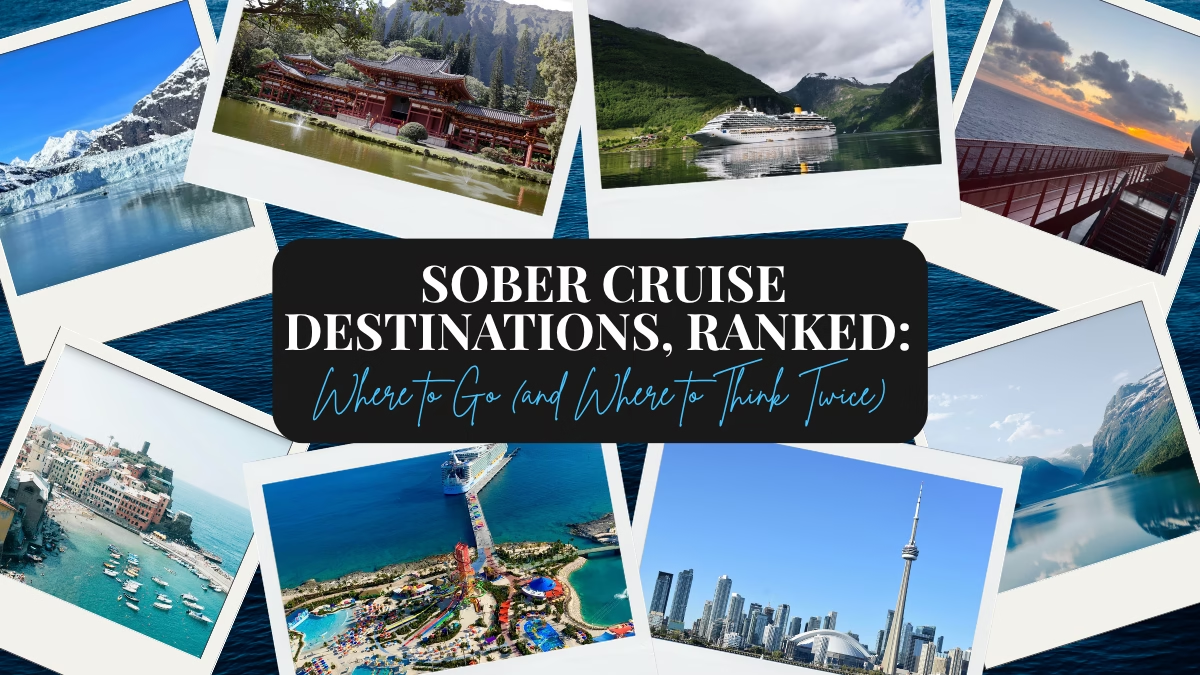
Alaska is one of the clearest examples of a destination where the experience itself does much of the work.
The standard shore activities such as glacier viewing, wildlife tours, scenic rail journeys, and wilderness excursions are already sober-friendly by default. There is very little you need to plan around.
The season is relatively short (May to September), the itineraries are destination-focused, and the region tends to attract a more mature, destination-oriented cruising audience. Princess and Holland America are major players and both fit naturally with that style of travel.
Rain is likely no matter when you sail. Southeast Alaska is a temperate rainforest, and even May and June, the driest stretch of the season, still see regular showers.
If wildlife and scenery genuinely excite you, this is one of the strongest places to start. If glaciers and rain aren’t your thing, the Mediterranean makes an equally good first sober cruise and asks less of your patience with the weather.
Mediterranean (8/10): Choose Well and It’s Nearly Perfect
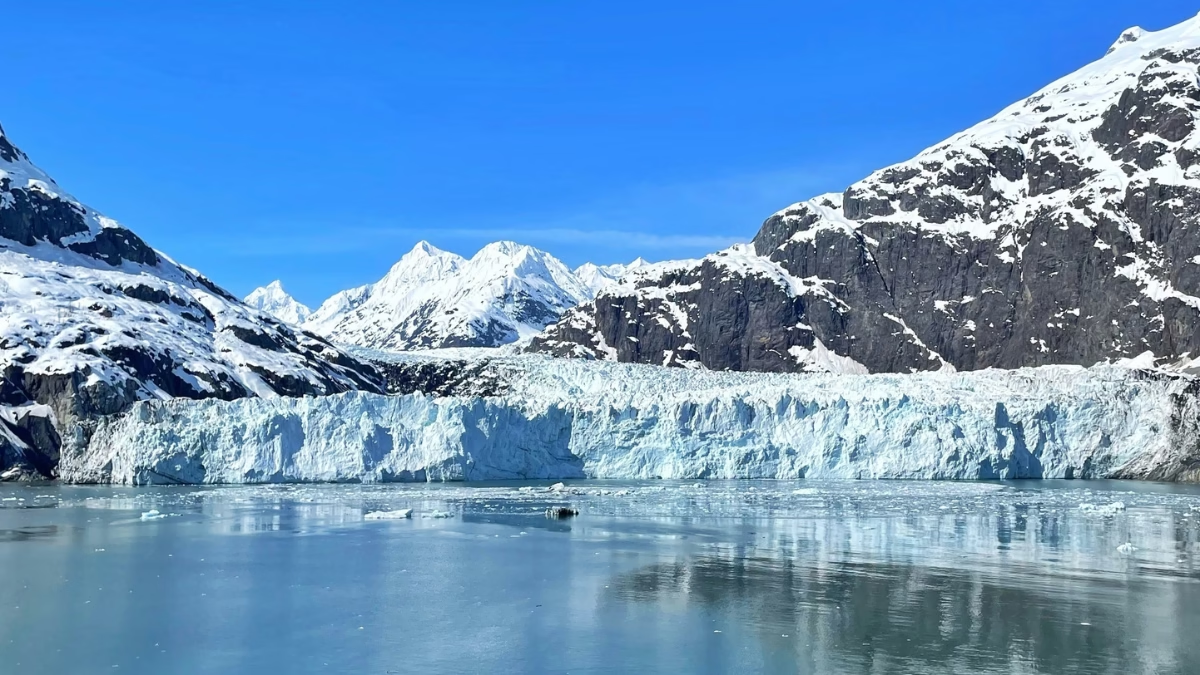
The Mediterranean has almost everything a sober traveler could want ashore: ancient ruins, major museums, historic cities, beautiful coastal walks, and some of the world’s great food.
Of all destinations, the Mediterranean has the most variety. This is probably the destination in this guide where the choice of ship and season makes the biggest difference. July and August bring the heaviest heat, along with more families and children on board, which is worth weighing before the choice of ship even comes into it.
A budget sailing from Barcelona in the height of summer can have a very different atmosphere from a Celebrity or Virgin Voyages sailing in May or October. The destination itself isn’t the issue. The combination of ship, itinerary, and timing is.
Choose carefully and the Mediterranean is one of the best sober-cruising options available.
Northern Europe (8/10): Built for Long Conversations, Not Long Nights
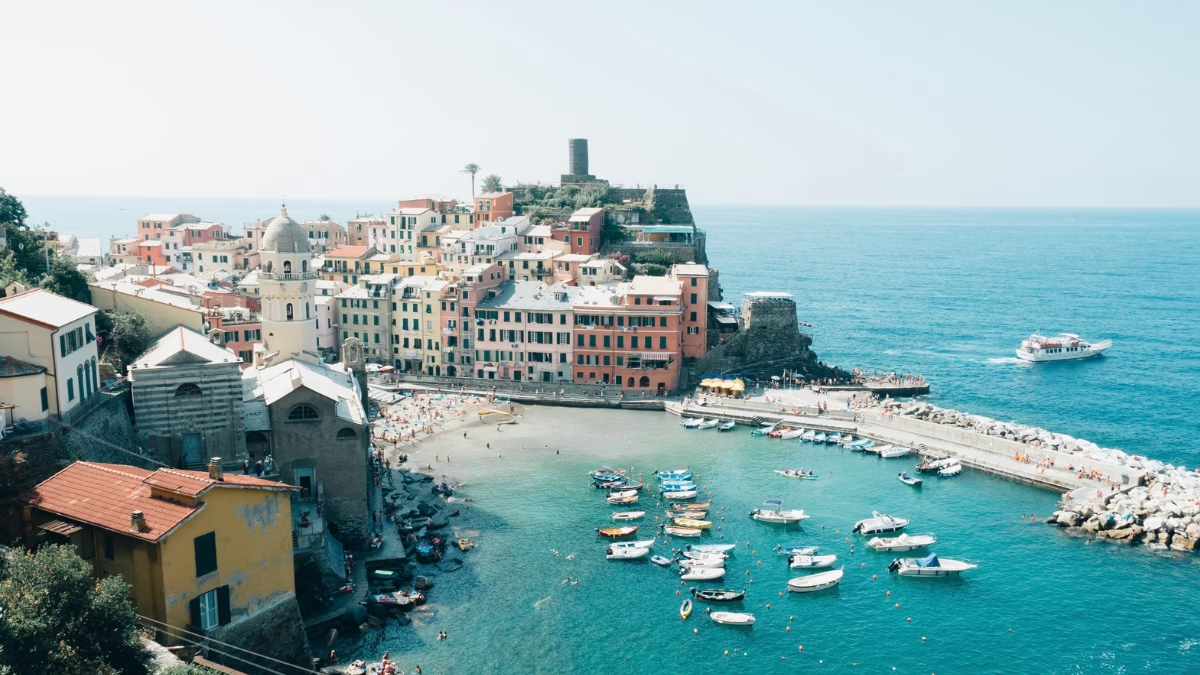
The Norwegian fjords, Baltic capitals, and northern European ports naturally lend themselves to sightseeing, history, and cultural exploration.
The onboard experience can reinforce that. Lines such as Viking have built much of their identity around destination, lectures, and enrichment rather than nightlife, while the region’s itineraries tend to attract travelers who are there for the places they are visiting.
For solo travelers, there’s another advantage: the destination itself creates opportunities for conversation and shared experiences outside a bar setting.
It’s a particularly good choice if you want a cruise where the scenery and the itinerary are the main event.
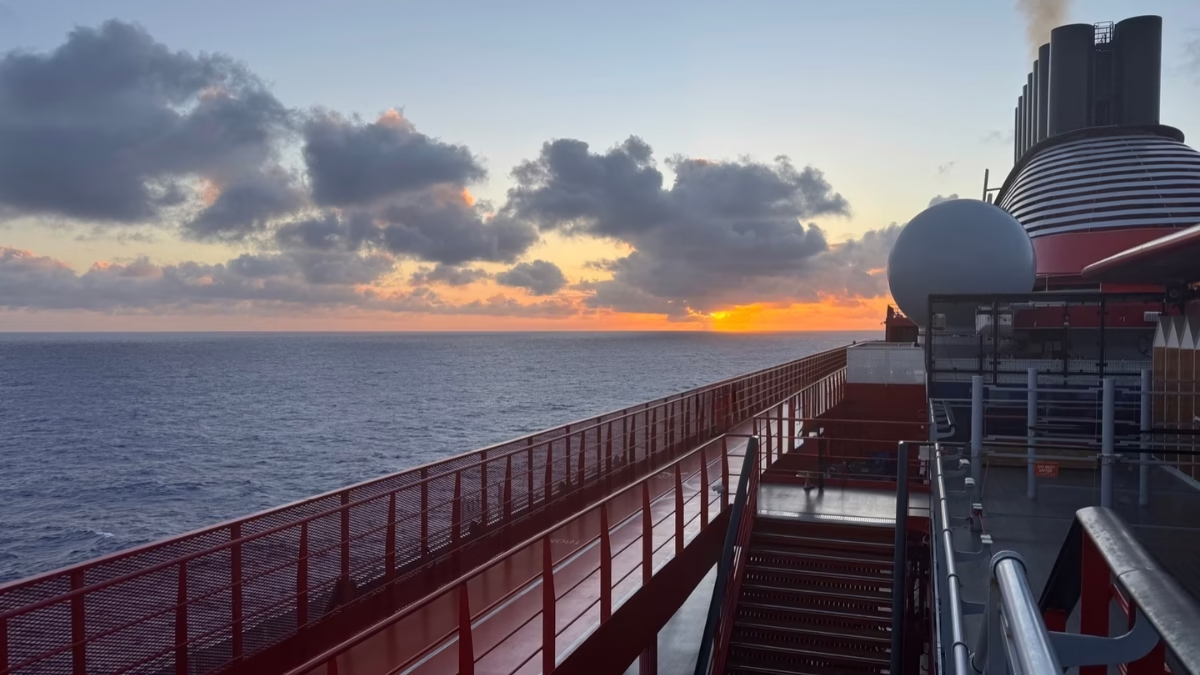
Transatlantic Crossings (7/10): No Ports, No Pressure
With no shore days to fill, the focus shifts to the ship itself: food, entertainment, fitness, classes, and social activities carry the days rather than a single bar or pool deck. Lines such as Virgin Voyages and Norwegian Cruise Line (NCL) offer plenty to do that has nothing to do with drinking.
The real question worth asking yourself before booking is whether several consecutive days at sea will feel relaxing or confining. That’s worth being honest about, particularly since a winter North Atlantic crossing can be genuinely rough. Crossings that start or end in Florida, such as Virgin Voyages’ Barcelona to Miami route, tend to see calmer, warmer conditions than a classic North Atlantic crossing in winter, so destination and season both matter when weighing that risk. The pleasant surprise is price: repositioning and transatlantic sailings can sometimes offer remarkably good value compared with a standard round-trip itinerary.
Read our full guide on why transatlantic cruises are ideal for sober people.
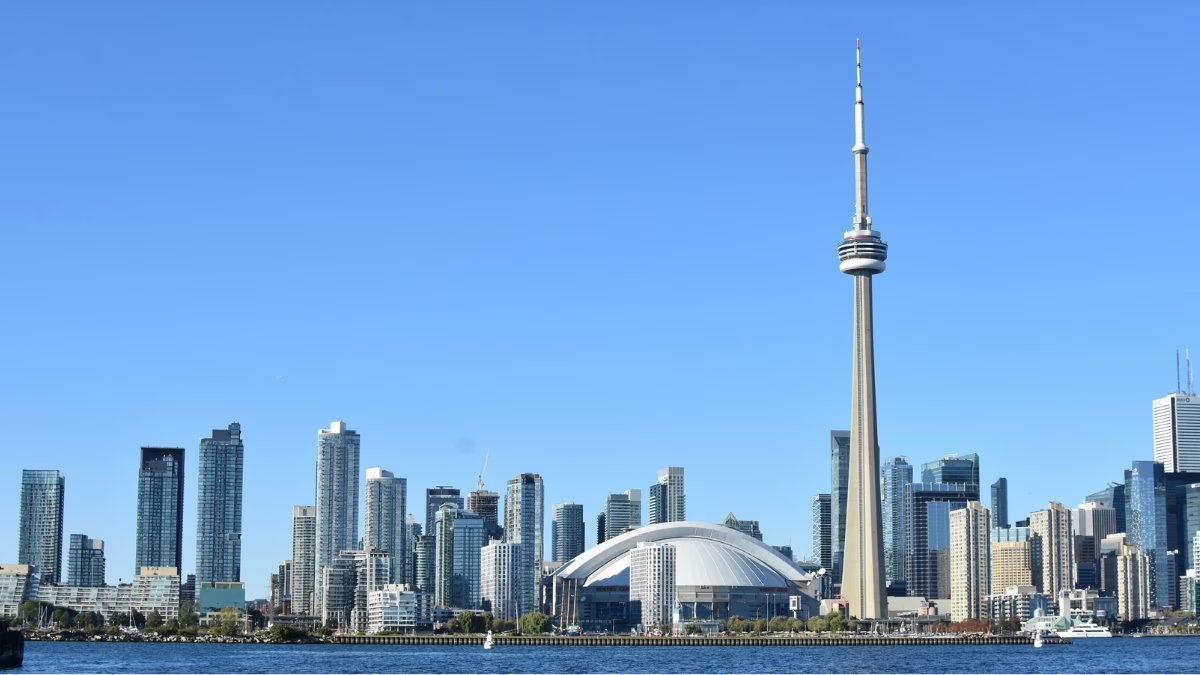
Canada & New England (7/10): The Quiet Understudy
This may not be the most dramatic region on the list, but it is one of the easiest to make work.
Lighthouse towns, historic walking routes, scenic rail trips, and autumn foliage don’t require an alcohol narrative to make them interesting.
The passenger mix also tends to be more mature and destination-focused, particularly on itineraries built around New England and Canada. Smaller operators such as American Cruise Lines can take that feeling even further.
The fall foliage season is particularly appealing if you want a trip where the destination is very clearly the reason everyone is there.

Asia (7/10): Do Your Homework First
Asia offers an enormous amount for the sober traveler, from temples and historic districts to food markets, gardens, museums, and some of the world’s great cities.
The important point is not to assume that the region will feel like a Western cruise simply because the ship does.
Drinking norms vary considerably between countries, ports, and cruise lines, and the onboard culture can be quite different depending on where the ship is based and who is traveling on it.
That makes research more important here.
Look at the specific ship and itinerary rather than making assumptions about the destination as a whole.
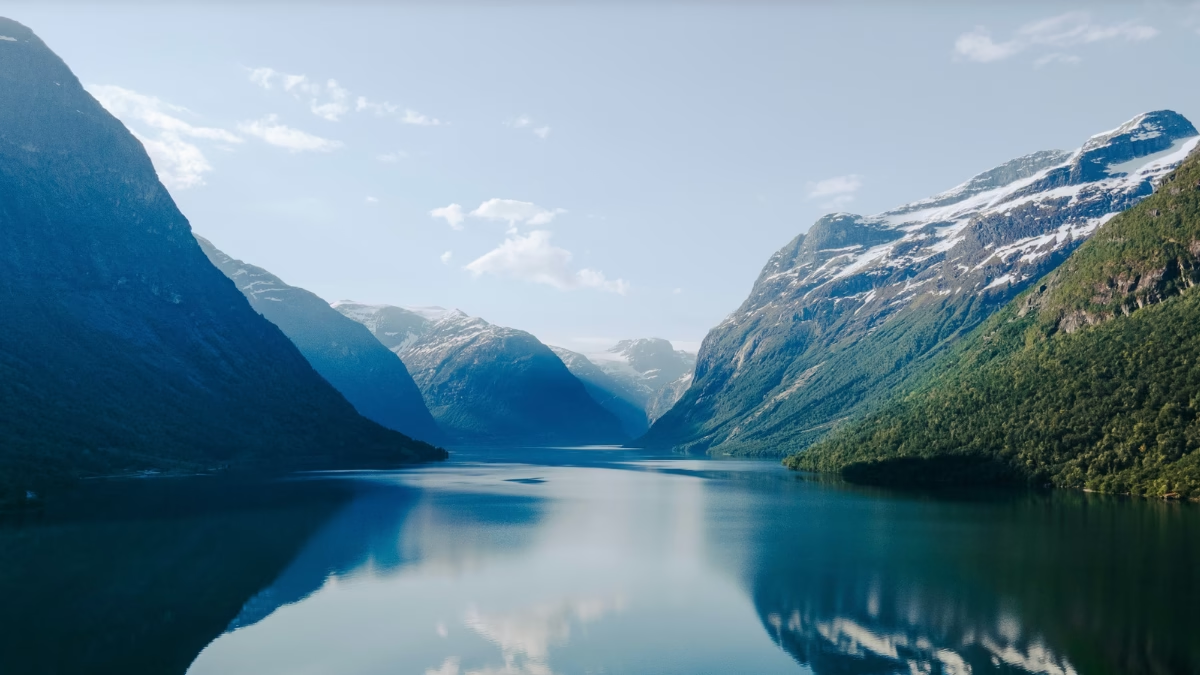
South America (7/10): Two Destinations Wearing One Name
South America illustrates perfectly why regional scores need context.
Premium expedition sailings through Patagonia and the Chilean fjords, on lines like Silversea, Ponant, and Australis, can be among the strongest sober-cruising experiences anywhere: small ships, wildlife and landscape-focused excursions, and passengers who have generally come for the destination.
Other sailings can feel completely different, particularly around major festivals and on shorter, more entertainment-led itineraries.
So the region gets a middle score, but that number hides a substantial range.
The particular sailing matters enormously.
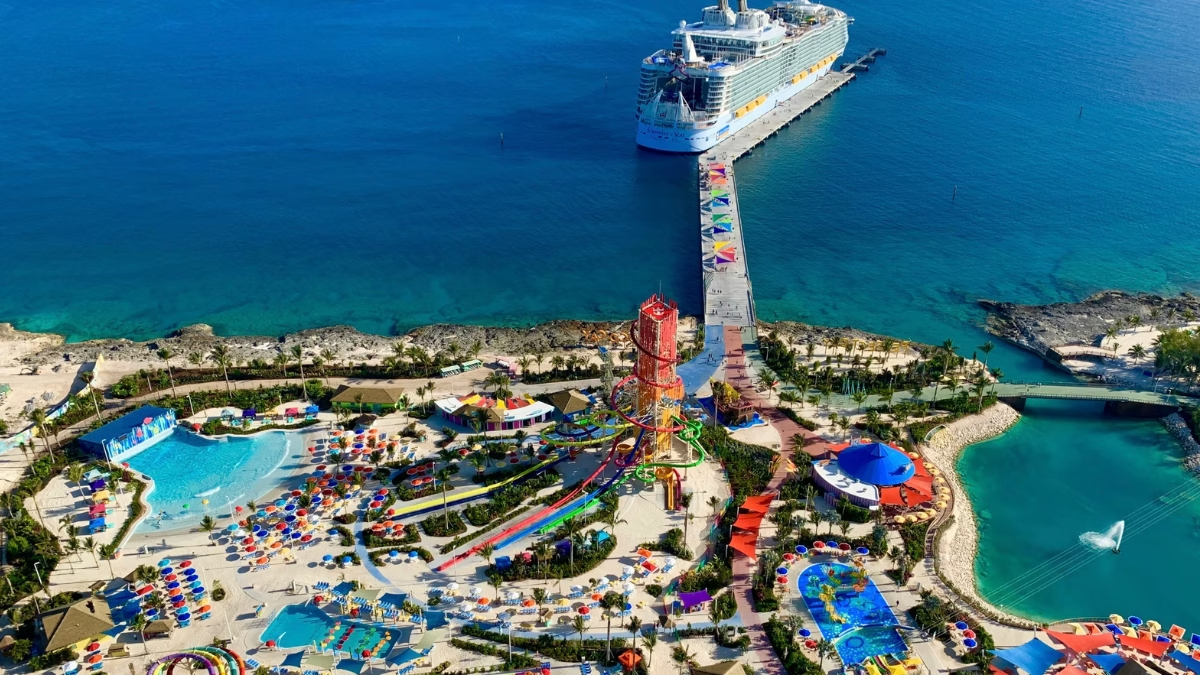
Caribbean (6/10): The One That Takes the Most Work
The Caribbean is the most popular cruise region in the world, but it is also the destination where a sober traveler may need to be most deliberate about the sailing they choose.
Some standard excursions lean heavily toward beach clubs, drinks tours, and party-focused experiences. Certain short itineraries can also have a noticeably more party-oriented atmosphere, particularly at peak holiday periods.
But a 6/10 does not mean “avoid the Caribbean.”
A budget Carnival sailing over spring break and a Virgin Voyages sailing from Miami in October are the same destination on paper and not much alike in practice.
The Caribbean also has plenty of sober-friendly alternatives. Forts, reefs, rainforest hikes, wildlife encounters, historic towns, and cultural excursions are available in many ports if you look beyond the standard party itinerary.
Adults-only ships and strong zero-proof programs can also make a significant difference. Virgin Voyages is one example, but the wider onboard culture matters more than any single feature.
The lesson is simple: in the Caribbean, choosing the right ship and season matters more than it does in some other regions.
The Takeaway
Destination matters. Alaska and the Caribbean are not the same kind of trip, even at their best. But destination sets a range, not a fixed outcome, and the cruise line, ship, itinerary, and season determine where inside that range you actually land.
If you’ve cruised sober before, you probably already sense this. It’s still worth spelling out, because “avoid the Caribbean, book the Mediterranean” is decent advice as far as it goes, but it leaves plenty of options on the table in both directions.
None of this is really about fear, or about what you can handle. It’s about where your energy goes. Every choice adds up: the ship, the line, the season, and the destination all either work in your favor or add friction to the trip. Sometimes the better choice is simply the Mediterranean in May instead of August. Sometimes it’s choosing a ship whose culture suits you rather than writing off an entire region. The destinations that score well here tend to share one thing: they give you enough to do and see that alcohol doesn’t need to be part of the conversation.
We’re covering each of these destinations in more depth over the coming weeks, starting with the Mediterranean, with more detail on excursions, passenger mix, pricing, cruise lines, and weather.
Read The Sober Curator’s Sober Cruising Guide
For more on sober cruising, explore our Sober Cruising Guide.
Want to Travel with a Sober Group?
If you’d prefer not to navigate the experience entirely on your own, traveling with a sober group can change the equation again.
You can enjoy a regular cruise itinerary while arriving with a ready-made community of people who understand why the experience matters.
The Sober Cruise runs group sailings for people in recovery and anyone living sober who wants to see the world without the pressure to drink.
For more details see how our group sailings work.
Find out more at The Sober Cruise.
Author Profile
Contributor Mark Carlin has been sober for over 23 years and has taken more than 25 cruises in that time, across lines including Virgin Voyages, Norwegian, Royal Caribbean, Cunard, MSC, and Celebrity. This guide draws on that firsthand experience combined with research into cruise line policies, seasonal patterns, and passenger demographics, to help other sober travelers choose a destination that sets them up to enjoy their trip rather than navigate it.
Mark is also co-founder of The Sober Cruise, a sober group-cruise company mentioned in this article.
Got a destination we’ve missed or a correction to make? Get in touch.
SOBER TRAVEL – WHAT A TRIP! is The Sober Curator’s guide to exploring the world alcohol-free. From insider travel tips and honest destination reviews to our curated Sober Retreats Calendar, we help you plan trips that are fun, fulfilling, and booze-free. Whether your jet-setting overseas or planning a weekend getaway, our stories and resources prove that sober travel is anything but boring. Looking for a sober getaway? We’ve got your back with our Sober Retreat Calendar. Need a night out on the town? Check out our Sober Events Calendar.
🏝️ Submit a Sober Retreat Recovery-focused, wellness, spiritual, creative, and adventure retreats. Listings start free. Featured and Sponsored placements available for retreats that want full editorial coverage. Submit your retreat →
You’ve got mail from The Sober Curator

Resources Are Available
If you or someone you know is experiencing difficulties surrounding alcoholism, addiction, or mental illness, please reach out and ask for help. People everywhere can and want to help; you just have to know where to look. And continue to look until you find what works for you. Click here for a list of regional and national resources.

Follow The Sober Curator on Pinterest
What is the best cruise destination for someone who wants to avoid alcohol without making sobriety the focus of the holiday?
The Mediterranean, Alaska, and Northern Europe all work well here, for the same underlying reason: each gives you so much to do ashore that alcohol becomes incidental rather than something you’re actively avoiding. The differences between them come down to what kind of engagement you want, cultural exploration, scenery and wildlife, or a slower, lecture-led pace, not how much willpower any of them demand.
Which destination is best for a first sober cruise?
It’s genuinely a toss-up between Alaska and the Mediterranean, and the right answer depends on what you actually want from the trip.
Alaska works best if you’re excited by scenery and wildlife. The shore excursions are activity-led by default, and the passenger mix tends to be older and calmer than on a typical mainstream sailing. The trade-off is the weather: you need to be comfortable with rain, cool temperatures, and the possibility that the scenery won’t always arrive on schedule. If the glaciers and wildlife are the draw, that’s an easy trade; if they aren’t, the appeal wears thin quickly.
The Mediterranean is the better start if you want cultural variety, better weather, and more choice in how the days unfold, provided you book a premium or adults-only line in shoulder season rather than a budget sailing in August. Neither needs the other’s caveats to work. They just suit different people.
Is the Caribbean off the table for a sober traveler, or just harder work?
Just harder work. The default shore-excursion menu leans on beach clubs and alcohol-based tours, so you have to seek out the alternative (forts, reefs, rainforest hikes) rather than defaulting to what’s marketed. Line and season do most of the heavy lifting here: a Virgin Voyages sailing in October is a different trip from a budget line over Spring Break.
Are expedition cruises a good destination choice if I’m sober?
Often yes, and for a specific reason. Busy, activity-led itineraries, the kind found on Alaska and South America’s expedition sailings, leave little room for the unstructured time that can be harder to manage. Early starts for wildlife viewing and full days ashore tend to work in a sober traveler’s favor regardless of destination.
Is a transatlantic crossing risky, given there’s nowhere to get off the ship?
It can be, and it’s worth being honest with yourself before booking one. Several consecutive sea days with no port to disembark can feel confining if getting off the ship is one of your main coping tools. That said, lines like Virgin Voyages and Norwegian Cruise Line (NCL) fill those days with food, entertainment, fitness, and classes, which tends to keep the bar from becoming the default center of gravity.
Which destination has the least alcohol pressure built into the ports themselves?
Canada & New England, especially the fall foliage sailings. The ports, lighthouse towns, and historic walking routes simply aren’t built around a drinking-tourism economy, so there’s very little to actively avoid in the first place.
Does the season really change how sober-friendly a destination is?
Considerably, especially in the Mediterranean and the Caribbean. A budget sailing in peak summer draws a very different crowd from a premium sailing in shoulder season, on the same ship, sometimes the same ports.
I want cultural, temple-and-history excursions without a big alcohol scene. Is Asia a good fit?
Yes, with one caveat. Western drinking-culture assumptions don’t map cleanly onto this region, and norms vary a lot by ship and by port, so it’s worth researching the specific line rather than assuming it behaves like a familiar sailing.
Sober cruise companies mention destinations like Egypt, Costa Rica, and river cruises through Europe. Why aren’t those covered here?
This guide focuses on the major mainstream cruise regions rather than every niche itinerary a dedicated sober cruise operator might run. River cruises and smaller specialist voyages are worth a separate look, and generally score well for the same reason expedition cruises do: structured days and little unstructured downtime.
Which destination works best for someone traveling solo and sober?
Alaska, Mediterranean, Northern Europe, and transatlantic crossings all score especially well solo, since activities, entertainment, shared excursions, and destination talks create low-pressure ways to be around people without a bar being the default meeting point.