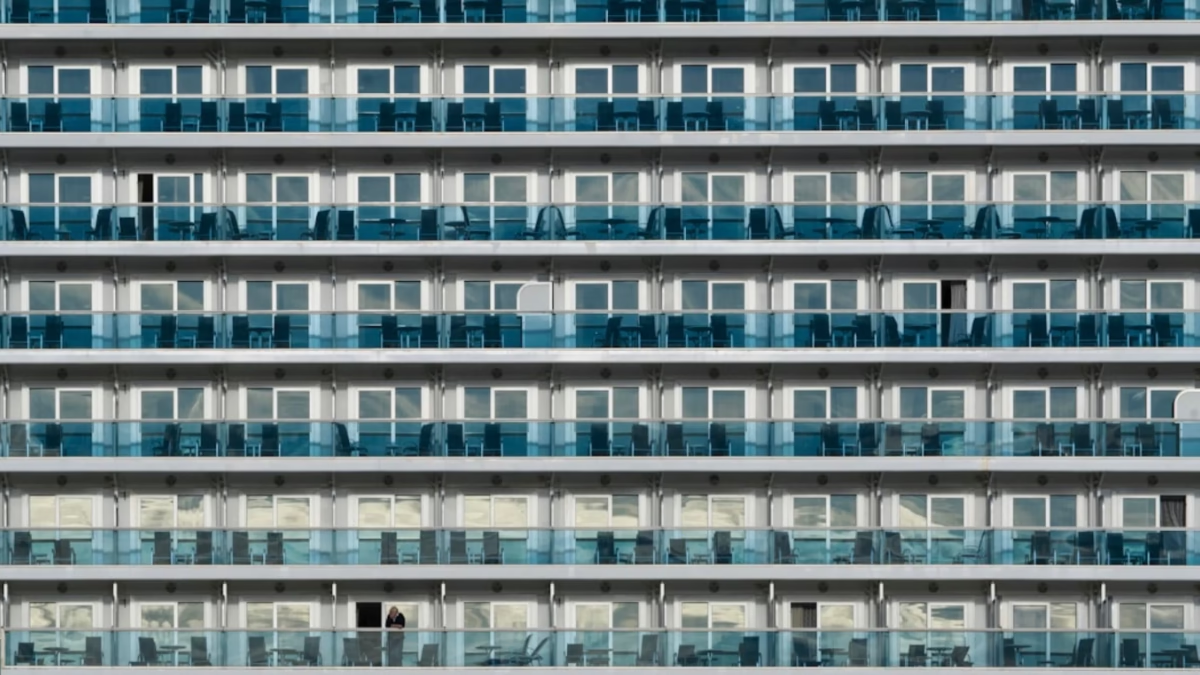
Three deaths. Eleven confirmed or probable cases. A ship that spent weeks at sea under international health surveillance before docking in Tenerife under WHO supervision. The MV Hondius outbreak is serious — and it deserves to be treated that way.
But serious is not the same as systemic. And for most people planning a cruise in 2026, the evidence supports a clear conclusion: mainstream cruise travel remains safe. Here is what the situation actually looks like, without minimizing what happened or inflating what it means.
What Happened on the MV Hondius
The MV Hondius, operated by Oceanwide Expeditions, departed Ushuaia, Argentina, on April 1, 2026, bound for Antarctica and remote South Atlantic islands. By early May, an outbreak of Andes virus hantavirus had been identified on board. As of May 11, nine cases had been reported in total — seven confirmed, two probable — with the ship having arrived at the port of Granadilla, Tenerife, where disembarkation and repatriation flights took place.
The total number of confirmed and probable cases rose to 11, including two people confirmed to have died from the virus and one whose death remains under investigation. Sixteen American passengers arrived at the University of Nebraska Medical Center, with one who tested positive placed in the biocontainment unit.
The origin traces back to the index case, a Dutch citizen who had gone on a four-month road trip through Chile, Uruguay and Argentina before departure, returning only four days before boarding. Whether infections spread primarily through that initial exposure or through subsequent transmission on board is still under investigation. Critically, the Andes virus is the only known hantavirus documented to spread between people, and the spread on board has been at least partially attributed to human-to-human transmission.
Why This Is Not a Warning About Cruising Generally
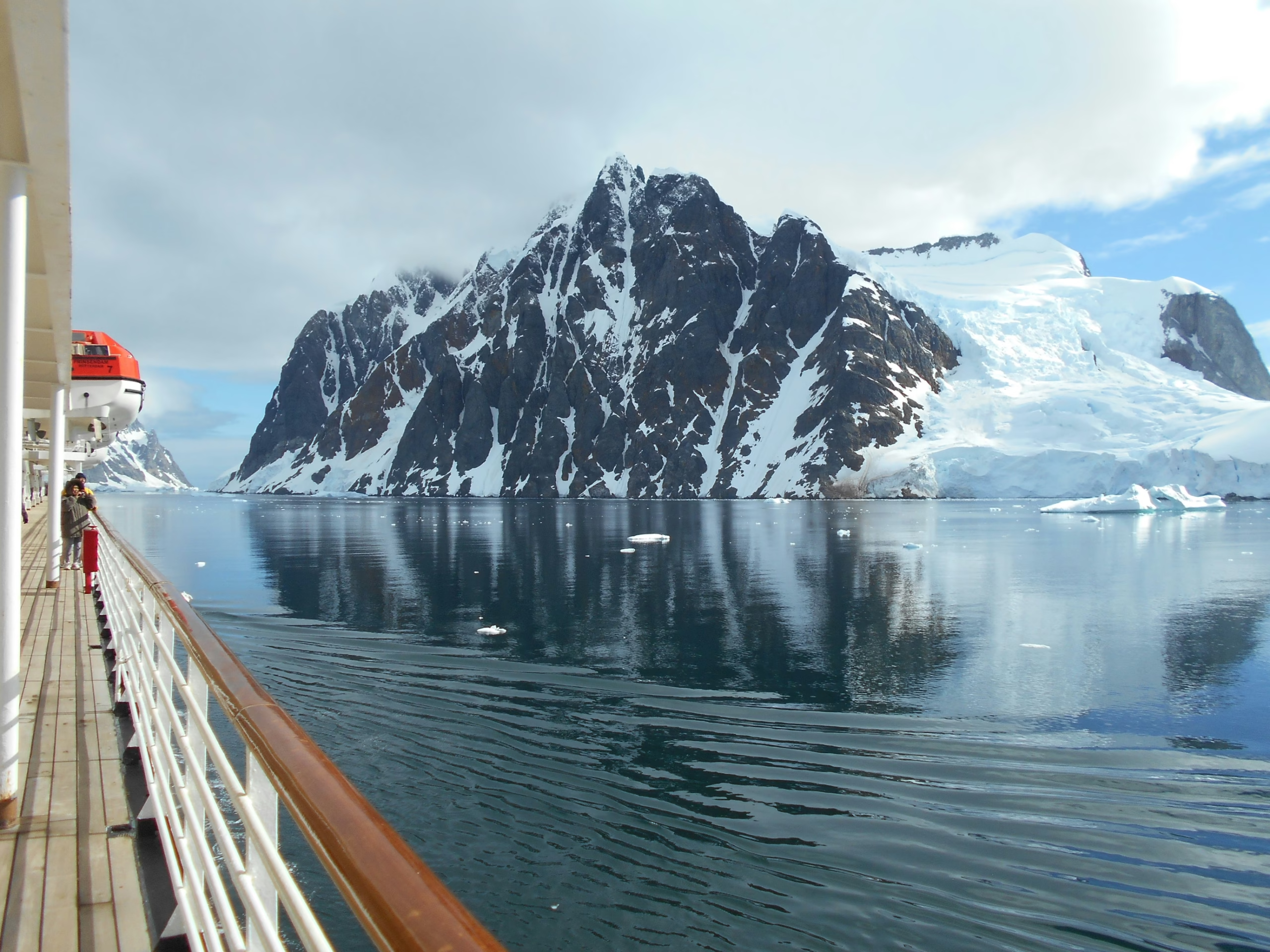
Expedition cruising and mainstream cruising are not the same activity. The MV Hondius was operating in one of the most remote environments on the planet — zodiac landings, wilderness shore excursions, isolated islands with no medical infrastructure nearby. That is a fundamentally different risk profile from a Caribbean sailing, a Mediterranean itinerary or a transatlantic crossing.
WHO Director-General Tedros Adhanom Ghebreyesus said it plainly upon arrival in Tenerife: “This is not another COVID. The risk to the public is low. People shouldn’t be scared and they shouldn’t panic.” No public health authority has recommended against mainstream cruise travel. No cruise-wide restrictions are in place.
That said, this outbreak carries details worth understanding honestly. The fatality rate of the Andes strain can reach 40% to 50%, particularly among elderly people, and the WHO has recommended a quarantine of 42 days for cruise passengers. These are significant numbers. They belong in any serious account of what happened — not to provoke fear, but because informed travelers deserve the full picture.
A Note for the Sober Community
For those of us in recovery, there is a particular kind of pressure that comes with health news like this. Fear can move fast. Uncertainty is uncomfortable. And sometimes the impulse is either to dismiss the concern entirely or to let it expand into something larger than it is.
Neither of those serves us well. What does is the same thing that serves us everywhere: grounding in actual evidence, making informed decisions and staying connected to what we know about ourselves and our needs.
The rhythm of ship life — predictable days, physical distance from routine pressures, structure built into each morning — can be genuinely supportive for some people in recovery. That remains true. This outbreak does not change that.
Practical Guidance for 2026 Travelers
- Choose mainstream itineraries if you have health concerns — developed ports, structured excursions, onboard medical teams
- Research expedition cruise operators carefully if remote travel appeals to you; understand what environmental exposure means before you book
- Avoid contact with wildlife and rodents in unmanaged wilderness environments
- Ensure travel insurance includes medical evacuation coverage, especially for remote destinations
- Follow updates from the CDC, WHO and ECDC rather than social media
The Bottom Line
The MV Hondius outbreak is a tragedy for the people directly affected. It warrants serious attention, honest reporting and careful follow-up from international health authorities.
What it is not is a signal that cruising is broadly unsafe. For mainstream travelers in 2026, the evidence is clear: the risk remains low, and informed travel remains possible.
Clarity over fear. That’s the approach.
For everything else on cruising alcohol-free, see our complete sober cruising guide.
More Sober Cruising Articles by Sober Curator Contributor Mark Carlin:
- Sober Cruising: How to Enjoy an Alcohol-Free Cruise
- A Safe Harbor at Sea: Discovering Community With The Sober Cruise in 2026
- Sober Cruise Cost Breakdown: What a Cruise Really Costs in 2026

SOBER TRAVEL – WHAT A TRIP! is The Sober Curator’s guide to exploring the world alcohol-free. From insider travel tips and honest destination reviews to our curated Sober Retreats Calendar, we help you plan trips that are fun, fulfilling, and booze-free. Whether your jet-setting overseas or planning a weekend getaway, our stories and resources prove that sober travel is anything but boring. Looking for a sober getaway? We’ve got your back with our Sober Retreat Calendar. Need a night out on the town? Check out our Sober Events Calendar.
We also recommend soberscribing to The Sober Sip for weekly and monthly travel + events updates. Have a life-changing sober trip to share? Send your tips and photos to thesobercurator@gmail.com—we’d love to feature your journey.
🏝️ Submit a Sober Retreat Recovery-focused, wellness, spiritual, creative, and adventure retreats. Listings start free. Featured and Sponsored placements available for retreats that want full editorial coverage. Submit your retreat →
All the cool kids go to rehab…

Resources Are Available
If you or someone you know is experiencing difficulties surrounding alcoholism, addiction, or mental illness, please reach out and ask for help. People everywhere can and want to help; you just have to know where to look. And continue to look until you find what works for you. Click here for a list of regional and national resources.
Follow The Sober Curator on X, the artist formerly known as Twitter
Can hantavirus spread easily on cruise ships? Not typically. Most strains spread only through rodent exposure. The Andes strain has limited human-to-human transmission potential, generally requiring close, prolonged contact — though this outbreak has shown that shipboard spread is possible.
Should I cancel a mainstream cruise? No public health authority recommends this. The outbreak is linked to a single expedition voyage in a remote environment.
Are expedition cruises higher risk than standard cruises? Yes, meaningfully so. Remote locations, wildlife exposure and limited emergency access create a different risk profile. Research accordingly.
How long is the recommended quarantine for MV Hondius passengers? The WHO has recommended 42 days for those on board.