


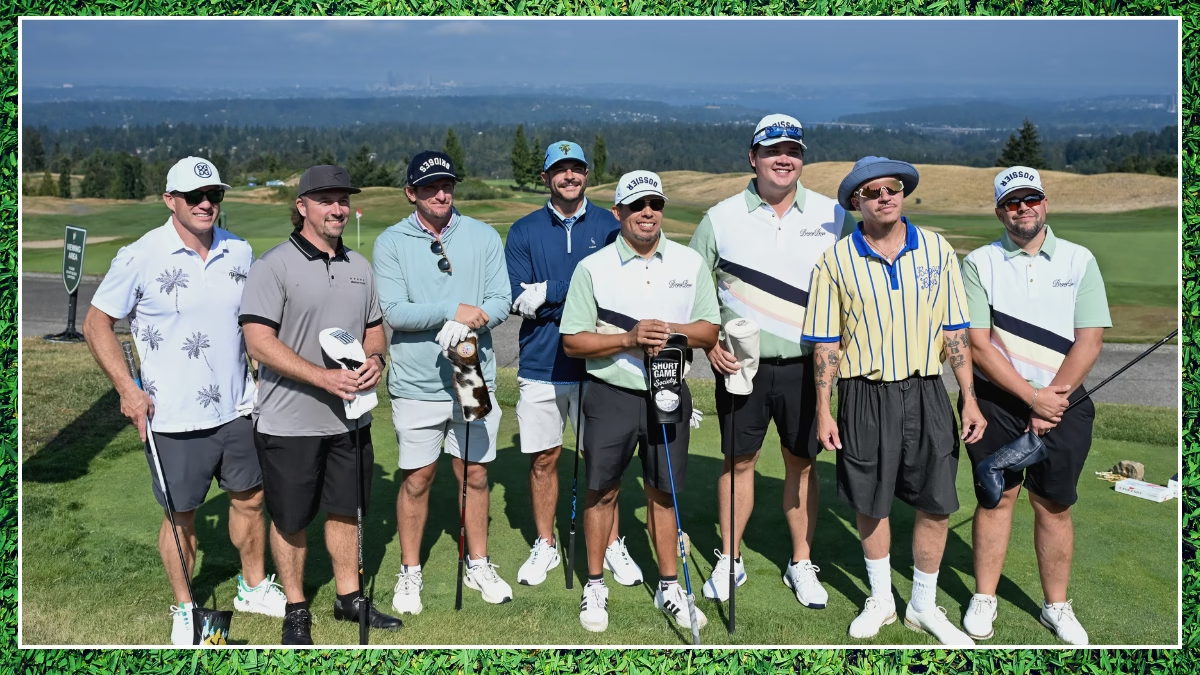

Golf tournaments have a reputation. Birdies for Bridges is not that tournament.
On Tuesday, Aug. 18, golfers rolled into The Golf Club at Newcastle for the fourth annual Birdies for Bridges, the signature fundraiser for Bridges PNW Alternative Peer Groups. Same Cascade views, same Lake Washington backdrop. Very different reason to be there.
Built by Parents Who Didn’t Wait for Someone Else to Fix It
Bridges was founded in 2020 by families of students at Seattle’s Recovery High School. Parents and local professionals looked at the teen substance use crisis, looked at how few resources existed for kids trying to stay sober, and built one themselves.
The model is an alternative peer group, or APG. Translation: peer-led, evidence-based recovery support where teens get sober together. Recovery meetings, yes. Also outings, hobbies, road trips and the radical idea that a 16-year-old can have a social life that doesn’t revolve around getting loaded.
And Bridges serves the whole family, because nobody’s kid gets sick alone. Today the organization is led by Executive Director Ellyse Bracken.
This is the work I wish existed when I was young.
I’ve been sober since 2006. Twenty years. And I can tell you that most of us who found long-term recovery didn’t find a room full of sober peers until our 20s, 30s, or later. Some of us much later. We came in already behind, already carrying years of wreckage, already having missed the version of ourselves that might have existed if someone had shown up sooner.
These kids are finding it at 15.
That’s not a small thing. That’s the whole thing. The earlier someone finds sober community, the more life they get to build on top of it. Bridges is handing teenagers a foundation that most of us spent decades trying to construct from scratch. Friends, this is what the next generation of recovery can look like.

The Speaker Who Made Everyone Put Down Their Scorecards
Every fundraiser has a moment. At Birdies for Bridges 2026, it was Sully.
Sully is 20 years old. On July 3, 2026, she celebrated three years sober. She’s a Recovery High School graduate, a Bridges alum and now a peer counselor on the Bridges staff.
Read that last part again. She now holds the exact role once filled by the people who showed up for her when she was the teenager in the room.
Her story turns on a last-minute invitation. Sully was asked to join a Bridges trip to Orcas Island, and she said yes, assuming it would be her last hurrah with this community.
It was not her last hurrah.
Last year she came back to Orcas as a youth chaperone. This year she’s a highly valued member of the team. That’s the full arc, from kid on the ferry to the adult counting heads on the ferry, in about three years.
“I’ve put in a tremendous amount of hard work to get where I am today, and I give myself credit for that,” Sully told the crowd. “But I could not have built this life without Bridges helping me pave the way.”
I love that quote for the first sentence as much as the second. Recovery culture sometimes asks young people to be all gratitude and no ownership. Sully claims both. That’s what three years of real work sounds like.
What she found at Bridges was a community that wouldn’t just support her. It would let her support them too.
Why the Money Matters
As of this writing, the Birdies for Bridges 2026 Givebutter campaign shows $145,880 raised from 91 supporters. For context, the 2025 campaign page shows $55,716. That’s roughly two and a half times the online total in one year.
Those dollars become something specific: peer counselors like Sully, sober outings, family support and more Orcas Island trips that change the trajectory of a kid’s life.
That’s not a gala line.
For a grassroots nonprofit, it’s the budget.
She Walked In as the Kid. She’s Now the One Counting Heads.
Teen recovery doesn’t get the headlines. It should.
Sully is proof of concept. She walked in as the kid who needed people to show up. She’s now the one showing up.
As Bridges put it: this is why we show up.
To learn more or donate, visit seattleapg.com or the Birdies for Bridges 2026 campaign.
Sober Curator Pro Tip: Check out our IG Reel of this event HERE.

SOBER SPORTS: Introducing Soba Golf – the Intersection of Sobriety, Wellness, and Golf

SOBRIETY IN THE CITY – SEATTLE \ TACOMA: This is your inside look at the city’s vibrant zero-proof and sober-curious scene—where alcohol-free living is as iconic as the Space Needle. From chic NA bottle shops to recovery game nights with the Seahawks or Mariners, we spotlight the best venues, events, and experiences that make Seattle’s sober culture shine.
Whether you’re a lifelong Seattleite, a visitor, or somewhere in between, you’re welcome to raise your glass—without the booze—and join a community that’s reshaping social life while putting wellness front and center.
Have an Emerald City event, product, restaurant, or story to share? Email thesobercurator@gmail.com or DM us on social—we’d love to feature it.
NONPROFIT RECOVERY GUIDE at The Sober Curator, we believe in the transformative power of giving—whether it’s volunteering your time, sharing your unique talents, or donating money. Giving back not only strengthens our communities, but research shows it also increases happiness, promotes longevity, and deepens our sense of connection.
Created in partnership with the Break Free Foundation, our Nonprofit Recovery Resource Guide is a curated directory of reputable, recovery-related organizations. These groups not only welcome donations and volunteers but also provide vital assistance to individuals seeking help for addiction, mental health challenges, and recovery support.
We’re always on the lookout for new ways to give back. If you know of a nonprofit focused on recovery or mental health that should be featured, email us at thesobercurator@gmail.com.
You’ve got mail from The Sober Curator
Resources Are Available
If you or someone you know is experiencing difficulties surrounding alcoholism, addiction, or mental illness, please reach out and ask for help. People everywhere can and want to help; you just have to know where to look. And continue to look until you find what works for you. Click here for a list of regional and national resources.

