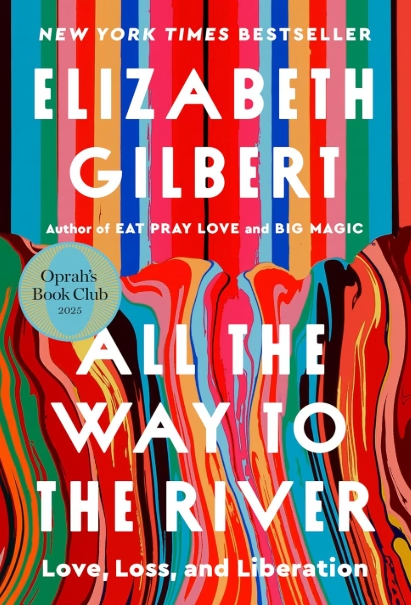
This may sound like an outrageous response to Elizabeth Gilbert’s new memoir, “All the Way to the River,” about the destruction and pain of codependency and love addiction, but it filled me with joy, peace and a renewed spirit.
Someone finally told the truth about what it means to experience the depths of despair of these often-minimized complexities. I have been saying for years that codependency kills people, and nobody gets it. But thanks to Gilbert, they do now. When she writes that she was ready to kill her partner or kill herself — that is where the addictive and codependent relational dynamic ends.
I have worked with addicts and their families for more than 30 years. It became clearer and clearer to me after thousands of sessions that the co-addict can be in as much pain — or more — than the addict. Not only do they often not believe they have a problem (which is the problem), they keep focusing on the fantasy that if only their partner would change or get better, then they would be happy. Which, by the way, is a complete delusion. Gilbert so beautifully illustrates that it is not only about the addict getting well; it’s about the partners who sacrifice their own lives to “save” their loved ones who need to transform too.
Throughout the book, she describes the trajectory in her relationship with her wife, Raya — from friendship to “love” to obsession to addiction to loss of self to insanity — all in the belief that she is “helping.” This is the insidiousness of the codependent. The belief is that we are helping or fixing or saving someone when the real truth is that we are not only NOT helping the person, but we are abandoning ourselves to the point of self-destruction. I call this “The Big Lie.”
We are participating in these enabling and disastrous behaviors because we can’t tolerate our own underlying feeling states or witness others’ suffering. We compulsively feel the need to save another, when we really need to save ourselves.
Liz describes the utter insanity around her own denial — not unlike the addict. She dated an alcoholic/addict who was relapsing but her own addiction to her partner overrode the reality of what was truly happening in the relationship. The fears of abandonment, loss of control, losing her love, making her upset, having to be on her own and needing to feel her own feelings kept her from being in reality.
Just like with an addict in denial of their addiction, Gilbert acknowledges her own denial about what was happening in the relationship; until she got to the point where she was fantasizing about killing her by placing fentanyl patches all over her wife’s body.
Intermittently throughout the book, Liz struggles with her own level of self-blame and the expanding awareness of her participation in the relentless destruction of active addiction as she battles with her own recovery from sex and love addiction. This is a painful place to be. She concludes that she did not make her partner relapse; AND she participated in the insanity of her addiction as much as Raya did. She owns it. This is the key to the codependents healing and a very, very powerful statement.
My experience with seeing codependents for years is that it is very hard for them to own their piece in the progression of this catastrophic decline. It’s so much easier to blame the addict. We don’t make anyone pick up alcohol and drugs, but we can influence a relationship dynamic. It is not as easy as just “Letting Them,” like some previous authors have suggested.
This dynamic is the result of years of training in a particular relational interaction — out of the beliefs, perceptions and interpretations of oneself and others developed by early child/parent paradigms. These are unconscious survival behaviors created out of the need for safety. We become detached with our denial, which makes it difficult to recognize our patterns; only to become crystal clear when we hit a bottom in a relationship.
Thank you, Elizabeth Gilbert, for telling the truth and bringing light to this pervasive and culturally acceptable relational paradigm — and illustrating the destructiveness to both people when one thinks it’s their business to solve others’ problems. Give people the dignity of figuring out their own lives.
#QUITLIT Sobees Score: 4 out of 5

Want to hear Senior Sober Curator Contributors, Dr. Sarah Michaud and Amy Liz Harrison, deep dive into the book?

WHAT A TRIP! So Excited to Share With You My Experience Going to See Elizabeth Gilbert Speak in Mexico City!

#QUITLIT: Secret Life of a Hollywood Sex & Love Addict, A Novel by Brianne Davis
RECOVERY PODCASTLAND & NETWORK at The Sober Curator is your audio haven for all things sobriety and recovery. We’re your bee-zy sober podcast enthusiasts, curating the best shows that educate, inspire, and entertain in the alcohol-free space.
Our archives are neatly organized so you can easily explore Recovery Podcastland—featuring our favorite recovery-based podcasts from across the globe—and the TSC Podcast Network, where we share our own original shows on sober lifestyle, pop culture, travel, entertainment, and more.
Whether you’re seeking practical recovery tips, personal stories, or uplifting inspiration, this is your go-to listening guide.

SOBERSCRIBE NOW!
Resources Are Available
If you or someone you know is experiencing difficulties surrounding alcoholism, addiction, or mental illness, please reach out and ask for help. People everywhere can and want to help; you just have to know where to look. And continue to look until you find what works for you. Click here for a list of regional and national resources.
Follow The Sober Curator on TikTok
1. What is All the Way to the River about?
All the Way to the River is a memoir that shines a light on codependency, love addiction, grief, and the author’s emotional journey toward healing and self-discovery.
2. Who wrote All the Way to the River?
Elizabeth Gilbert, author of “Eat, Pray, Love,” is the author of “All the Way to the River.”
3. What themes does the book explore?
The book explores themes of codependency, love addiction, grief, emotional dependency, healing, forgiveness, and personal transformation.
4. What is codependency?
Codependency refers to patterns of emotional over-reliance on others for self-worth, identity, or validation — often at the expense of personal boundaries and well-being.
5. What is love addiction?
Love addiction is an unhealthy pattern of compulsive emotional attachment where someone seeks intense emotional highs and fears abandonment — often repeating damaging cycles.
6. How does this book approach healing?
The memoir moves beyond trauma into self-reflection, resilience, and the author’s evolving understanding of relationships, self-care, and emotional autonomy.
7. Is this book suitable for people in recovery from addiction?
Yes. While focused on relationships and codependency, the themes resonate with readers in recovery, especially those exploring attachment, self-worth, and emotional healing.
8. What makes this memoir different from other relationship books?
It blends raw storytelling, personal vulnerability, and insight into emotional patterns — connecting grief, attachment, codependency, and healing in a way that feels present and honest.
9. Who might enjoy this book besides people in recovery?
Readers interested in psychology, emotional wellness, healing memoirs, relationship patterns, and self-reflection will find this book compelling.
10. Where can I find All the Way to the River?
The book is available through major booksellers such as Amazon, independent bookstores, and libraries.