
Picture this. A Toronto mixologist spends years pouring drinks for other people’s good nights. She gets sober. And instead of walking away from the bar entirely, she goes to Oaxaca, buys a copper still, and starts making one of the best non-alcoholic spirits you have maybe never heard of.
That is not a pivot, friends. That is a plot twist. And I love a plot twist.
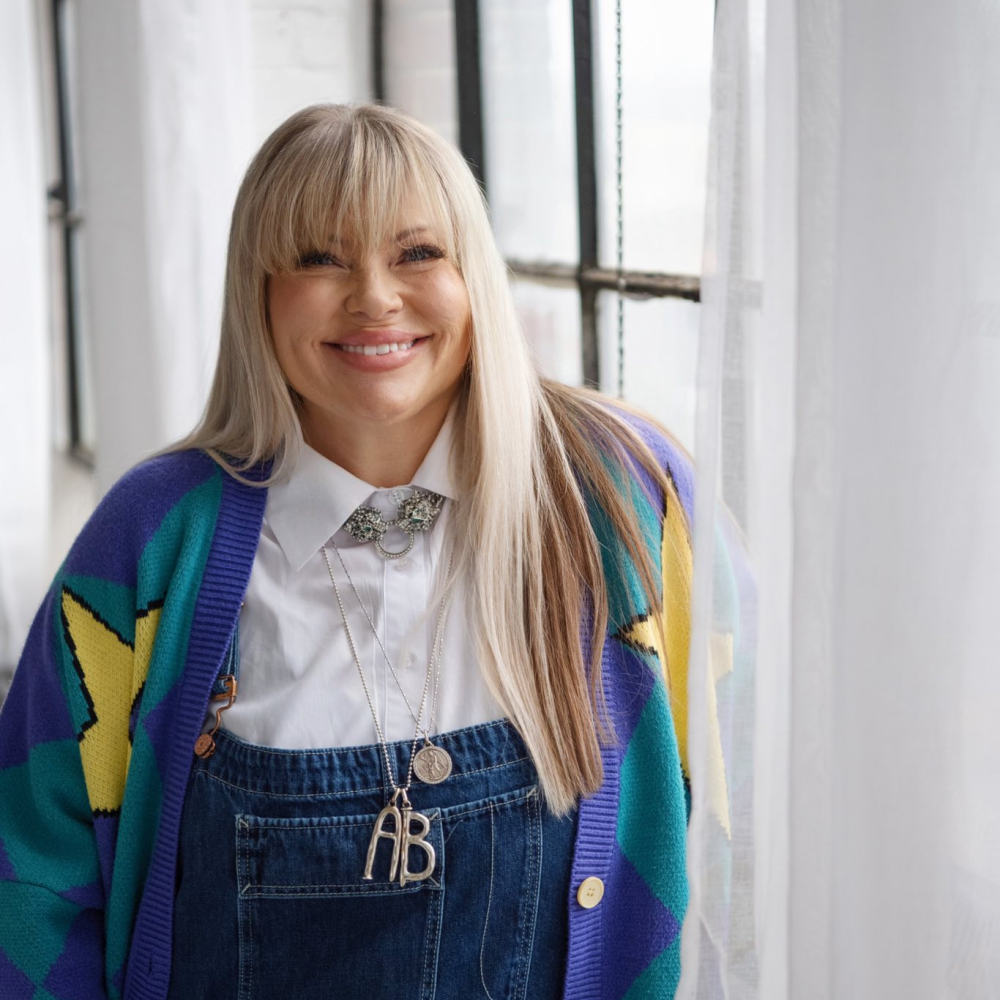
Amanda Chen built TOMONOTOMO, an agave spirit made the traditional way. No shortcuts, no extracts. Fire, copper, and patience. Contributor Kim Parsley reviewed the Tobalá in Happy Every Hour back in May and it is delicious. This week, Amanda told Tamar and me how she got from behind the bar to behind the still.
The grief nobody talks about
If you spent years being the life of the party (most of us did, let’s be honest), you know there is a specific kind of grief in walking away from that identity. Not the drinking. Goodbye, vodka, that part was overdue. I mean the role. The person everybody wanted at their event. The one who knew how to make a room feel good.
Amanda built other people’s nights out for a living. When she got sober, she had to figure out if there was still a place for her in that world at all.
Turns out there was. She had to build it herself.
How I found her
Quick backstory. I met Amanda in November 2025 in Austin at the Sans Bar Academy Awards, where we both left with trophies. I am supposed to call myself a curator. I am supposed to have the inside pulse on everything. I had not heard of her brand until she walked off with the hardware, at which point I got very naturally curious, and here we are.
Start with the birth canal
I told her to start at the beginning, and she did. Toronto bartender, every shift there is: morning, night, club. She was opening a business teaching mixology classes when COVID hit, so she moved the classes onto Zoom. Virtual happy hours for offices. Then cocktail kits, which became the thing every closed office mailed its employees that holiday season.
It was working. And she was standing in her condo, alone, in front of a screen of talking heads, eating takeout with a counter full of drinks and no one to share them with.
“I couldn’t have been less happy with myself.”
Amanda Chen
So she left at her highest moment of success and did the thing every single one of us has fantasized about at least once. She booked a one-way ticket to Mexico.
“I’ll figure it out once I get there.”
Amanda Chen
The reason she chose Mexico is that it was open. She wanted humanity. She wanted to be around people, to be close to people, to live again. She started in Tulum, which she describes as hedonism at a level where nobody knew what tomorrow would bring, and then tomorrow happened, and then it happened again, and everybody started looking around wondering what to do with the rest of their lives.
Ten days of silence
A friend of a friend pointed her to a silent meditation retreat in Mazunte, on the coast of Oaxaca. Amanda had never meditated. She was not a wellness person. She had a vague wish to drink less and zero interest in spiritual resonance. But 10 days of quiet sounded nice after Tulum, so she walked in cold.
She is a Scorpio. All or nothing. Of course she did.
The first few days she could barely keep her eyes open. The spiritual leader talked slowly about spiritual concepts, the food was mushy, and she wanted her coffee. Then the food started tasting real. Then she noticed how badly she wanted to be seen, even while trying not to be. Then, around the halfway point, the loneliness of sitting among strangers with nobody to share a revelation with.
And then the vision, which I am going to let her tell you because I could see it while she said it.
“I was standing at the top of a cliff. I had this huge backpack on, and this backpack had all these really awesome contraptions to make the weight of my backpack feel like nothing. And I was kind of carrying this massive stone.”
She had come to the cliff to drop the stone. To finally live lighter. And when she got there:
“I’m ready to drop the ball, I’m not ready to drop the bag. The backpack with all of my customizations, all of my personality, everything that I built around that ball. I don’t know if I can drop it now because I’ve created my whole personality around it.”
Who am I without the bag? That was the question. The answer was: let’s find out.
After 10 days she had no desire to drink. She went plant-based. She cut caffeine, and when she came back to the world and took a few sips of her regular breakfast coffee, she was bouncing off the walls and had a realization I think a lot of us have had in early sobriety: “I was living with this level of anxiety like it was normal.”
Two years of white-knuckling it
Here is the part I want you to hear if you are new. Getting the desire to drink lifted in a meditation hall is not the same as being sober in the world.
Amanda moved to Oaxaca City, the mezcal kingdom of Mexico. The taxi driver has a mezcal. The laundromat has a mezcal. Literally everywhere has a mezcal. So she did what a lot of us do first: she avoided it. Two years wandering remote towns, retreats, holistic spaces, 6 a.m. yoga sunrises, trying to be like the wellness people who never had a drinking problem in the first place.
“Two years later, I realized how much I was white-knuckling that.”
Amanda Chen
She wanted to drink again and had no one to say it to. No sober friends. Nobody in recovery. Just a lot of very healthy people who did not drink because they never needed to.
A friend of a friend told her about an English-speaking 12-step meeting in Oaxaca. This was still COVID, so the meeting was in someone’s house. You emailed for the address. You got directions. There was a bell. She emailed, heard nothing, and happily assumed the meeting did not exist. Then, an hour before it started, the instructions landed.
She walked onto a patio full of expats, had no idea what to do, and when it came around to her, she broke down in tears: I want to drink, I don’t know anyone, nobody understands me.
The woman next to her said afterward that she herself was “batshit sober.” Just has crazy ideas all the time. Normal. And then everybody kept sharing and laughing.
“Oh my God, you guys can laugh about alcoholic moments?”
Amanda Chen
That is the moment. I have said this on the show before and I will keep saying it: when a 12-step room shows up in a movie, it is a dark church basement and everybody is somber and sad. The rooms I hang out in are like a comedy club. A room full of charismatic storytellers who get each other’s jokes on an intimate level. Amanda found that on a patio in Oaxaca, and it is the reason she is still sober.
“I didn’t realize how much I needed community to keep living sober, not just avoiding drinking and being around people that don’t drink.”
Amanda Chen
On the word “drink”
Tamar asked the question I love: what does the word “drink” mean to you now? Because she and her ex, both in recovery, used to get asked “did you want a drink?” at restaurants and he would say “we don’t drink” while she ordered a Diet Coke or a mocktail.
Amanda’s answer is one of the most useful things in the episode. For those two avoidance years, “do you want a drink?” felt like an attack, and she answered it like one. Intense. “I don’t drink.” Then she’d refuse to explain, which of course made people ask why, which made her angrier. She realized she was instigating the whole thing.
It was her now-fiancée who called it, a few months into dating. Paraphrasing: I admire that you don’t drink and I admire why. I’ve asked you this question and you happily answered. So why does a stranger asking the exact same thing get aggression? It’s literally a question.
Sometimes the person with a drink in their hand is pushing you. Most of the time, someone in a kitchen is asking if you want water.
For the record, people used to try to protect me too. “Oh, she doesn’t drink.” And I’d say: I still consume liquids. It’s okay. I still consume liquids.
The flip from not drinking to living sober
Now the drink. Early on, Amanda’s idea was simple: make a non-alcoholic spirit so she could keep bartending, keep her life, and be normal again. Her bottle next to your bottle at the same party.
“The reason I was doing this non-alcoholic product was essentially to be normal again.”
Amanda Chen
But she is Amanda, so she refused to do it the easy way. No lab. No extract. No sticker on somebody else’s bottle. She wanted copper stills and real agave, which meant getting better at Spanish, visiting palenque after palenque, learning the families and the histories behind every producer, and building a second community from scratch.
“I didn’t wanna make anything from a lab. I didn’t wanna just slap on a sticker on a bottle, call it mine.”
Amanda Chen
Somewhere in there she threw out the idea of making a non-alcoholic mezcal and decided to make a true, well-designed non-alcoholic agave spirit that is simply a piece of Oaxaca. Her words: “that was the flip from just not drinking to living sober.”
And then the twist inside the twist. The mezcaleros she was working with, people who live on mezcal and have never once considered drinking less, started looking at her life and wanting it. Not hungover in the morning. Morning yoga. Cooking vegan dinner. “Suddenly my life was desirable from a lot of these really heavy drinkers.”
That is the change she wants TOMONOTOMO to represent. And she could not have gotten there by shipping a product. She had to move in.
Tomo, no tomo
Tomo means I drink. No tomo means I don’t drink. Every time someone in Oaxaca handed her a mezcal: “Gracias, pero no, no tomo.” The working name during R&D was No Tomo. Then Tomo. Then she realized: well, I drink, but I don’t drink. Tomo, no tomo, like plucking petals off a flower. Say it all together and it sounds a little Japanese and kind of funky.
Kim already told you to say it five times fast. She was right.
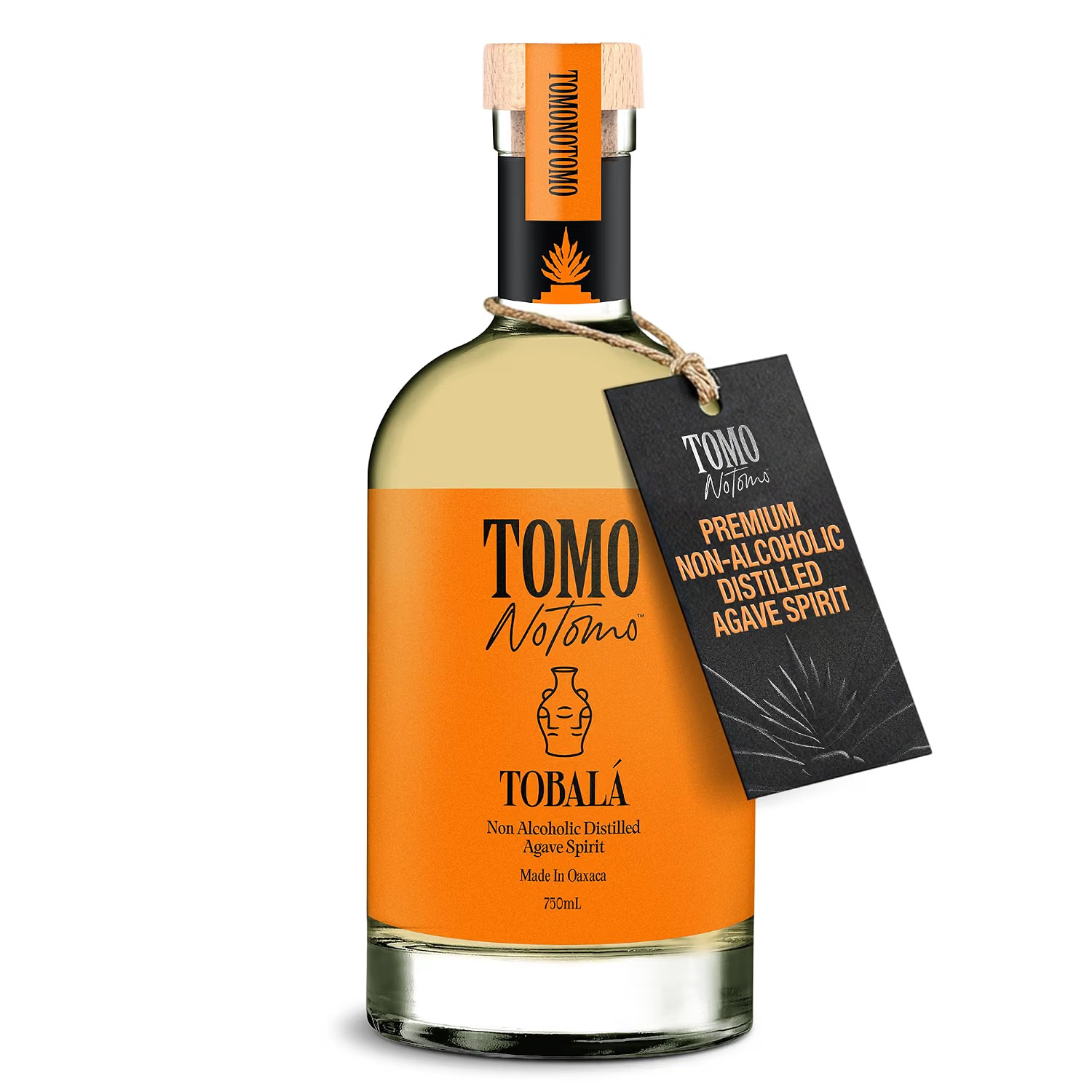
The label came from a designer Amanda found in the back of a book cataloging the traditional drinks of Oaxaca. The bottle is gorgeous, which you know if you have seen one, and you are about to.
The rainbow label
One of the parts of Amanda’s story I did not know before we hit record: she came out while sober, and she says she would not have had the strength to be truly herself without the clarity of sobriety.
She told us about the FYI call to her mom two weeks before a surprise visit (“my friend that’s staying with us is actually not just a friend, she’s my girlfriend”), about getting closer to her brother and his wife through it, and about the engagement party in Toronto this past summer where her mom received her fiancée with open arms.
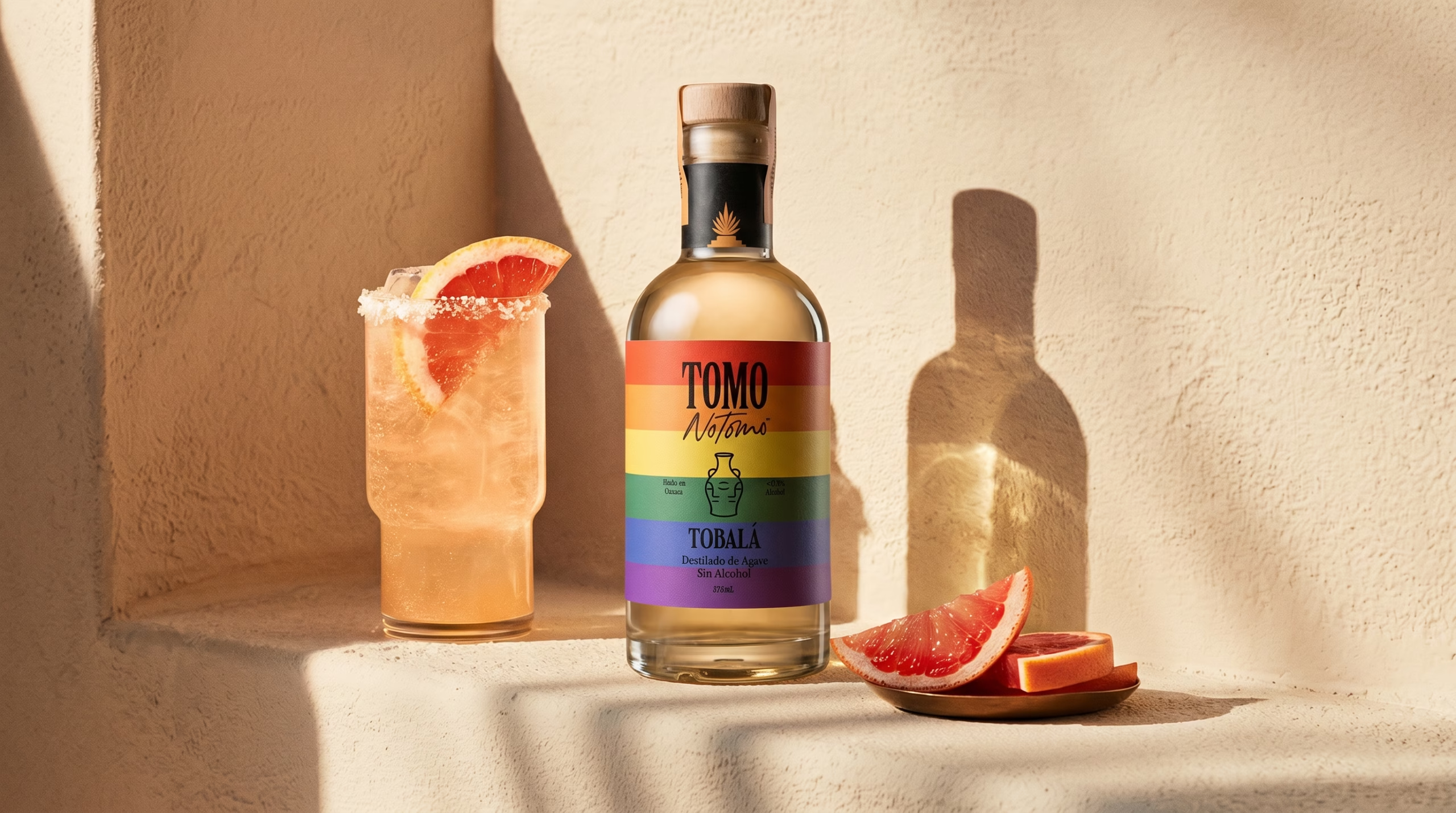
Out of that, TOMONOTOMO made a limited-edition rainbow label to celebrate the engagement and Pride.
There are about 10 bottles left. I am ordering one. You should hurry.
(Our LGBTQ+ Recovery Resource Guide is always open, and it is worth a read this week regardless.)
Carrie Bradshaw did this to both of us
Nobody in Amanda’s family drank. Nobody in her friend group drank. Her origin story is that she wanted to be Carrie Bradshaw: move to New York, be a journalist, go to all the fancy parties. So at 21 she sublet a random apartment, crashed guest lists, drank cosmos, puked them up, and drank another one until it stuck.
“The sickness of wanting to be something that you’re not, and the ultimate cure is accepting who you are.”
I have to say it. The original “Sex and the City” did not age well, you guys. The fashion holds. The bra straps hold. The rest is a little cringey. But I too moved to the big city to be Carrie and find a gay best friend. Those were my goals in my 20s. Goals achieved.
What’s next, and the night shift
Amanda and her fiancée distill every batch by hand. They have found the farmers who grow the agave; they bring them lunch and chop agave with them and smoke it at the palenques with the mezcaleros. She says they now offer that ritual as part of sober tours and sober bar crawls in Oaxaca, for people who want to experience the place without drinking loads of mezcal. (Booking details are on the way; I will update this post.)
The distillation runs overnight. Her fiancée takes 9 p.m. to midnight. Amanda takes midnight to 5 a.m., making sure nothing catches fire, and this is how “Ted Lasso” became hers: it is the one show her fiancée refuses to watch. The new season is women’s football and Amanda hoped that would do it. “There wasn’t enough action or dragons involved.”
She also loves Hannah Waddingham in “Ride or Die” on Prime Video, which is how she found “Ted Lasso” in the first place. I have not watched “Ted Lasso.” Don’t come for me. Looking for more TV series recs? We’ve got you.
What surprised her most about building this? The support. She assumed, as she had her whole life, that she would do it alone, and that drinking was the fuel that made doing it alone possible. Sober, choosing consciously, people kept showing up. Tamar said it better than I can: community is fuel for sober people.
The boring truth
I asked Amanda for a PSA about long-term sobriety, the part you don’t see on an Instagram feed. Her answer: you can’t do anything else but laugh. The car loses a tire, the water breaks, the Wi-Fi dies. She used to freak out over any one of those. Now she collects them, writes them down at the end of the day, lets them go (or sits in a room and screams, whichever works), and starts collecting again tomorrow.
“It’s a little boring, because you don’t have the crazy anxious fits because your milk was too cold.”
Amanda Chen
She is right. We’re not chasing the highs, we’re not chasing the lows, and we’re not recovering from the swings in between. It feels boring right up until you discover the hobbies, and then there is not enough time for everything you want to make and do and be.
Build your own room
Amanda made lemonade out of COVID lemons, which is also the story of The Sober Curator and a lot of you. She built her own room when the one she had didn’t fit anymore, in another country, in love, running a business that is hard and fulfilling in equal measure.
That is exactly the community we’re building at BACKSTAGE with The Sober Curator. If you’ve been looking for a place to build the sober life you want, not survive it, come hang out.
And yes, Amanda pitched a Sober Curator retreat in Oaxaca on mic. I heard it. Consider it on the list.
Shop TOMONOTOMO. Or #ADDTOCART ON AMAZON
[EMBED YOUTUBE VIDEO]
Remember: you’re allowed to stay in the world that almost took you out, as long as you’re the one setting the terms now.
So tell me. Someone hands you a drink. What comes out of your mouth?
The Sober Curator Podcast is available across all major platforms
👉Watch or listen to the show on Spotify
👉Listen to the show on Apple Podcasts
If you’re struggling with alcohol or substance use, our Alcohol + Substance Use Disorder Guide is always open, and SAMHSA’s National Helpline is 1-800-662-4357, free and confidential, 24/7.

Welcome to HAPPY EVERY HOUR, your go-to hub for all things NA (non-alcoholic). We review alcohol-free beers, ciders, wines, spirits, RTDs (ready-to-drink), and share NA cocktail recipes that taste just as good—if not better—than the boozy originals. Whether you’re sober, sober-curious, or just taking a break, this is where great taste meets zero proof.
TRIGGER WARNING: People in early sobriety may want to proceed with caution. Always read labels. Please hydrate responsibly … #becausedrunkneverlooksgood.
🛍️ Submit a Product for Review NA beverages, sober-friendly tools, alcohol-free brands, and products built for the way our audience actually lives. Submit your product →
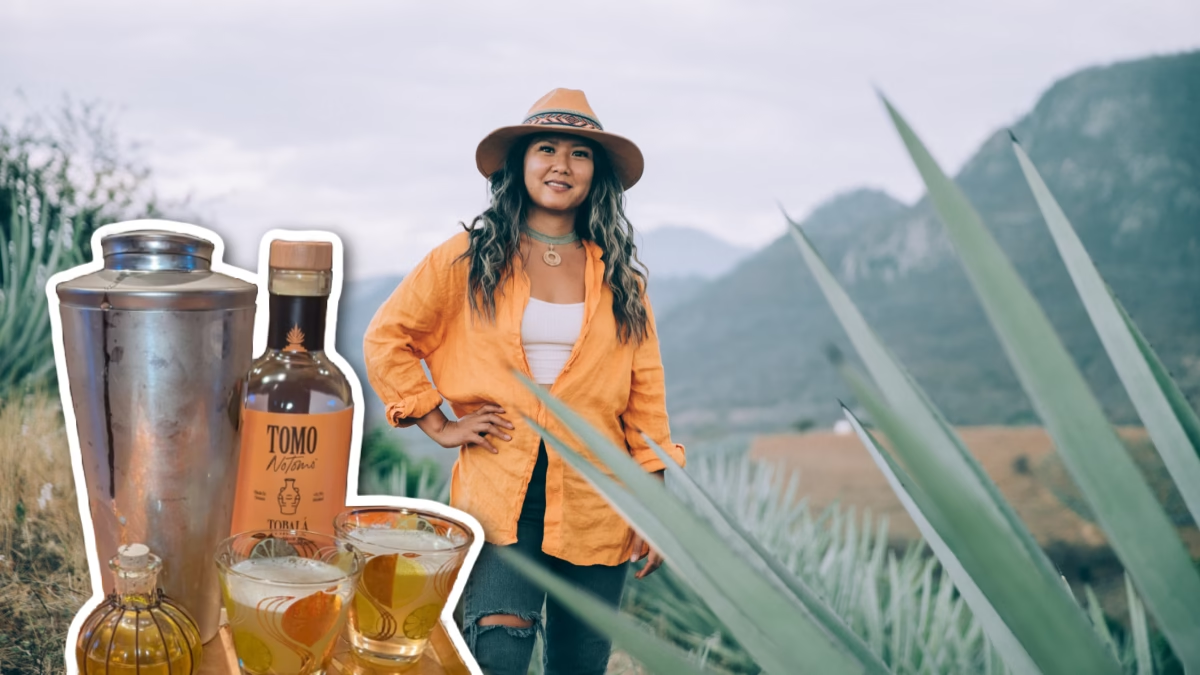
HAPPY EVERY HOUR: TOMONOTOMO Tobalá — Try Saying That Five Times Fast
SOBER RETREATS: with Senior Travel Sober Curator Contributor Teresa Bergen is your go-to space for alcohol-free travel tips, insider guides, and honest reviews from a sober perspective. Teresa blends her passions—animals, wildlife conservation, sustainability, geography, culture, outdoor adventure, and yoga—into enriching travel stories that inspire mindful exploration. From kayaking and hiking to visiting historic cemeteries and sacred spaces, she uncovers the beauty where history, art, and spirituality meet.
🏝️ Submit a Sober Retreat Recovery-focused, wellness, spiritual, creative, and adventure retreats. Listings start free. Featured and Sponsored placements available for retreats that want full editorial coverage. Submit your retreat →

God, grant us the serenity to #ADDTOCART! Sober retail therapy is our favorite kind of workout—mindful, fun, and community-focused. In this section, you’ll discover unique sobriety gifts, premium recovery swag, and must-have merch we can’t stop raving about. We love featuring small businesses founded by people in recovery, sober creators, and brands that champion mental health and the sober lifestyle. From #QUITLIT reads to stylish glassware and meaningful recovery keepsakes, our curated picks make every purchase a celebration of sober living.
Shop our classic Sober Curator merch on SHOPTHESOBERCURATOR.COM for and explore our TSC Amazon Storefront featuring curated lists packed with gifts, books, and sober essentials.
🛍️ Submit a Product for Review NA beverages, sober-friendly tools, alcohol-free brands, and products built for the way our audience actually lives. Submit your product →
Resources Are Available
If you or someone you know is experiencing difficulties surrounding alcoholism, addiction, or mental illness, please reach out and ask for help. People everywhere can and want to help; you just have to know where to look. And continue to look until you find what works for you. Click here for a list of regional and national resources.

Follow The Sober Curator on Pinterest
What is TOMONOTOMO?
TOMONOTOMO is a non-alcoholic distilled agave spirit made in Oaxaca City, Mexico, by founder Amanda Chen, a former Toronto mixologist. It is made from pit-roasted Tobalá agave, distilled on a custom copper still with local botanicals and smoked pineapple, with no added sugar and no artificial flavors. A 750 mL bottle sells for $46.99 at tomonotomo.com; a 375 mL size is also available.
What does “tomo no tomo” mean?
In Spanish, tomo means “I drink” and no tomo means “I don’t drink.” Founder Amanda Chen said “gracias, pero no tomo” every time she was offered mezcal in Oaxaca, used “No Tomo” as the working name during development, and landed on TOMONOTOMO to capture both: she drinks, and she doesn’t drink.
Is TOMONOTOMO a non-alcoholic mezcal?
Not by name. Mezcal is a protected designation, and Amanda Chen says on the episode that she stopped trying to make a “non-alcoholic mezcal” and instead built a true non-alcoholic agave spirit that reflects Oaxaca. It is made with real agave and traditional methods, which is what separates it from extract-based or flavored “spirit alternatives.”
Who is Amanda Chen?
Amanda Chen is the founder of TOMONOTOMO. She worked as a bartender and mixologist in Toronto, ran virtual mixology classes and cocktail kits during the pandemic, then moved to Mexico on a one-way ticket, got sober after a 10-day silent meditation retreat in Mazunte, Oaxaca, and now distills TOMONOTOMO by hand in Oaxaca City with her fiancée.
Can you visit Oaxaca without drinking mezcal?
Yes. On the episode, Amanda Chen describes sober tours and sober bar crawls TOMONOTOMO offers in Oaxaca, including visits to the agave fields, the palenques where agave is roasted, and the distillery itself. Oaxaca’s food, markets, coast (Mazunte), and traditional non-alcoholic drinks like tejate and atole are all reasons to go that have nothing to do with mezcal.
Where can I buy TOMONOTOMO?
At tomonotomo.com, through non-alcoholic bottle shops, and, per the founder on this episode, on Amazon. The limited-edition Pride rainbow label, made to celebrate Amanda Chen’s engagement, had about 10 bottles remaining at the time of recording.