



Belfast Playwright Explores AA, Mentorship, and Human Imperfection
David Ireland’s “The Fifth Step” is a play that understands sobriety not as redemption, but as exposure. Set largely within the framework of Alcoholics Anonymous, it resists easy judgment — neither endorsing nor condemning the programme — and instead turns its attention to something more uncomfortable: what happens when flawed people are given moral authority over one another.
Ireland, the Belfast-born playwright long fascinated by faith, guilt, and hypocrisy, brings his sharpest instincts to bear here. AA is not treated as a problem to be solved, but as a human structure — capable of support, distortion, kindness, and harm in equal measure. What unfolds is less a critique of recovery than a study of power, mentorship, and self-deception.
Sponsorship and the Illusion of Wisdom
The play centres on two men: Luka, newly sober, and James, his sponsor, who has been abstinent for 25 years. Their relationship follows a familiar recovery pattern — meetings, confessions, guidance — but Ireland is interested in what sits beneath the surface of that ritual.
Luka arrives raw and exposed: anxious, lonely, brimming with both self-loathing and a desperate hunger for connection. He throws himself into the structure of recovery with near-religious zeal, clinging to routine as a lifeline. James, by contrast, presents as composed and authoritative — a man with a stable marriage, an adult son, and a stock of well-worn AA phrases ready for any situation.
Yet as the play progresses, that authority begins to feel brittle. James’s reliance on slogans, his unresolved rage toward his father, and his reluctance to accept responsibility expose the gap between long-term sobriety and emotional growth. Ireland is careful here: experience does not automatically confer wisdom, and abstinence alone does not guarantee humility.
God, Faith, and Contradiction
One of the play’s most intriguing tensions lies in James’s insistence that Luka must “find God” — despite James himself being an avowed atheist. The contradiction is never resolved; it is only examined. When Luka describes a spontaneous spiritual experience at the gym, James reacts not with curiosity but with defensiveness, policing belief rather than nurturing it.
Ireland treats faith with scepticism but not cynicism. The Catholic Church’s failures are named plainly, and institutional religion is placed alongside recovery culture as another system capable of both guidance and harm. The question the play repeatedly asks is not whether belief is valid, but who gets to define it — and why.
Power, Desire, and Ethical Drift
As Luka gains physical and emotional confidence, he enters an intense sexual relationship with an older woman he meets through church. James demands that he end it, citing potential harm. The instruction may be well-intentioned, but it exposes the fragility of the sponsor–sponsee dynamic: guidance slides easily into control.
When rumours later emerge about James’ own inappropriate conduct within AA, the imbalance becomes stark. His response — minimising responsibility, reframing blame — contrasts sharply with Luka’s growing capacity for self-reflection. Ireland’s most unsettling suggestion is that the person with less time sober may, in fact, be doing the deeper work.

Performances of Precision and Restraint
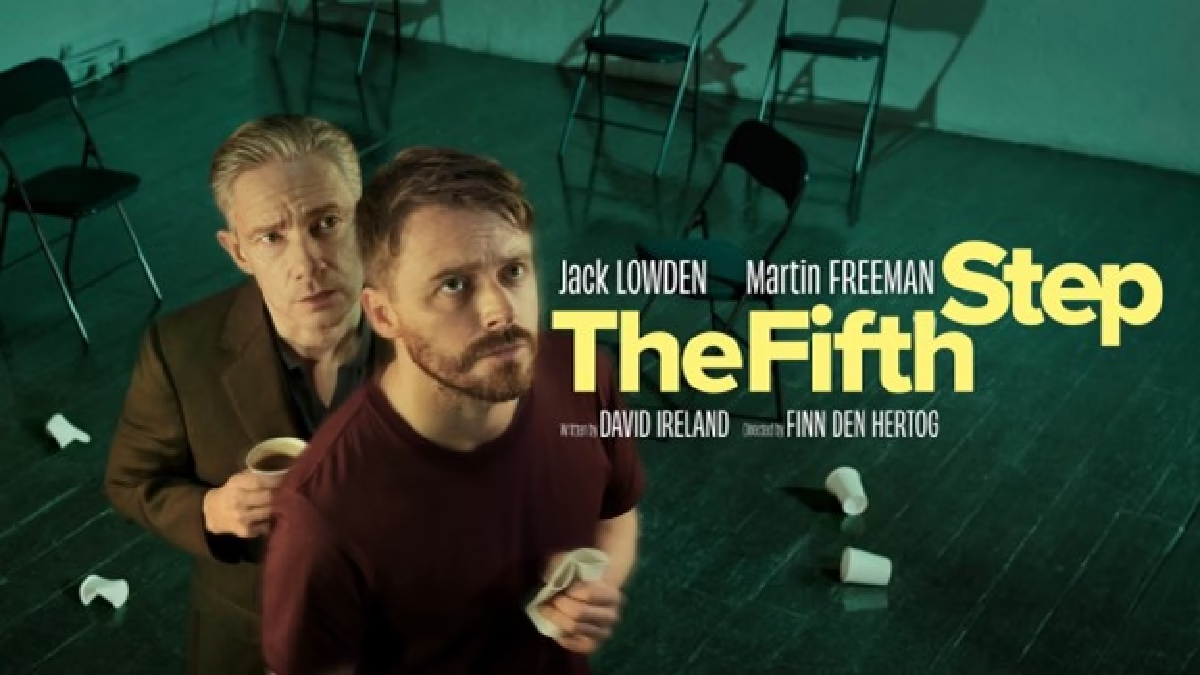
Much of the play’s impact rests on the extraordinary performances at its centre. Jack Lowden’s Luka is a study in exposed nerve endings: physically restless, emotionally transparent, and quietly intelligent. He captures the volatility of early sobriety without sentimentality, allowing Luka’s growth to register not as triumph but as hard-won clarity.
Martin Freeman’s James is equally compelling, precisely because of his restraint. Freeman leans into the character’s genial authority — the calm voice, the practiced ease — and lets the cracks appear gradually. His performance resists caricature; James is not a villain, but a man who has mistaken certainty for insight. Together, Lowden and Freeman create a relationship that feels lived-in, recognisable, and increasingly combustible.
The intimate in-the-round staging at Soho Place allows every expression to be seen up close, while the minimalist set and thoughtful lighting keep focus squarely on the tension between Luka and James.
“The Fifth Step” and the Cost of Truth
The play builds inexorably toward the eponymous fifth step — confession — where what has been hidden must finally be spoken aloud. The climax is shocking, even violent, but it feels emotionally earned. Ireland is not interested in a neat resolution. What remains instead is the possibility of honesty, and the fragile hope that truth — however disruptive — may still be a form of grace.
Dark Humour and Belfast Sharpness
Despite its heavy themes, “The Fifth Step” is often very funny. Ireland’s humour is dry, sharp, and rooted in discomfort.
Laughter arrives unexpectedly, then catches in the throat — never undercutting the material, but exposing the absurdities we use to shield ourselves from pain.
A Play That Understands Recovery
Anyone familiar with recovery will recognise how realistically the play captures the clichés, emotional offloading, blurred boundaries, and pressure to perform recovery ‘correctly’.
Ireland’s central insight is clear — recovery structures are only as healthy as the people within them.
Final Verdict
“The Fifth Step” is a sharp, unsettling, and often darkly funny exploration of sobriety, mentorship, and moral authority. It refuses easy answers, honours complexity, and trusts its audience to sit with discomfort. For sober theatre-goers in particular, it offers something rare: not affirmation, but recognition.
This is theatre that doesn’t flatter recovery — it respects it enough to tell the truth.
Venue & Run
- Playwright: David Ireland
- Director: Finn den Hertog
- Produced by: Neal Street Productions, Playful Productions, and National Theatre of Scotland
- @sohoplace, London West End — In-the-round staging
- Performance dates: 12 May – 26 July 2025
- Filmed live as part of National Theatre Live for cinema release
- Duration: ~90 minutes, no interval
- Age recommendation: 16+
SOBER ENTERTAINMENT: The Raw Reality of the Spiral: Portraying Addiction and Alcoholism in Modern Theatre
Welcome to The Sober Curator’s ultimate hub for SOBER ENTERTAINMENT & EVENTS —a vibrant space where living alcohol-free is anything but boring.
In the TSC Library, explore book reviews across three standout genres: #QUITLIT, Addiction Fiction, Self-Help, and even NA Recipe Book reviews.
On-screen? The Mindful Binge TV series reviews, Movie Night movie reviews, and Recovery Podcastland + Network podcast roundups all use our signature Sobees Scoring System, so you know exactly what’s worth your time.
More ways to get inspired:
- Music: Discover tunes to motivate your sober lifestyle
- Sober Sports: Stay in the loop on active, exciting events
- Sober Events: Find alcohol-free happenings in your community
- Sober Pop Culture & Celebrities: Get the latest buzz on sober stars and trends
From binge-worthy shows to can’t-miss events, this is your go-to destination for entertainment that fits your alcohol-free life.
SOBER POP CULTURE at The Sober Curator is where mainstream trends meet the vibrant world of sobriety. We serve up a mix of movie, podcast, fashion, and book recommendations alongside alcohol-free cocktails, celebrity features, and pop culture buzz—all with a sober twist.
We’re here to shatter the “sobriety is boring” myth with a mash-up of 80s neon, 90s hip-hop edge, early 2000s bling, and today’s hottest trends. From celebrity shoutouts to red-carpet style inspo, this is where sober is as chic as it is fun. To the celebs using their platform for good—our Sober Pop Trucker hats are off to you!
Resources Are Available
If you or someone you know is experiencing difficulties surrounding alcoholism, addiction, or mental illness, please reach out and ask for help. People everywhere can and want to help; you just have to know where to look. And continue to look until you find what works for you. Click here for a list of regional and national resources.
