


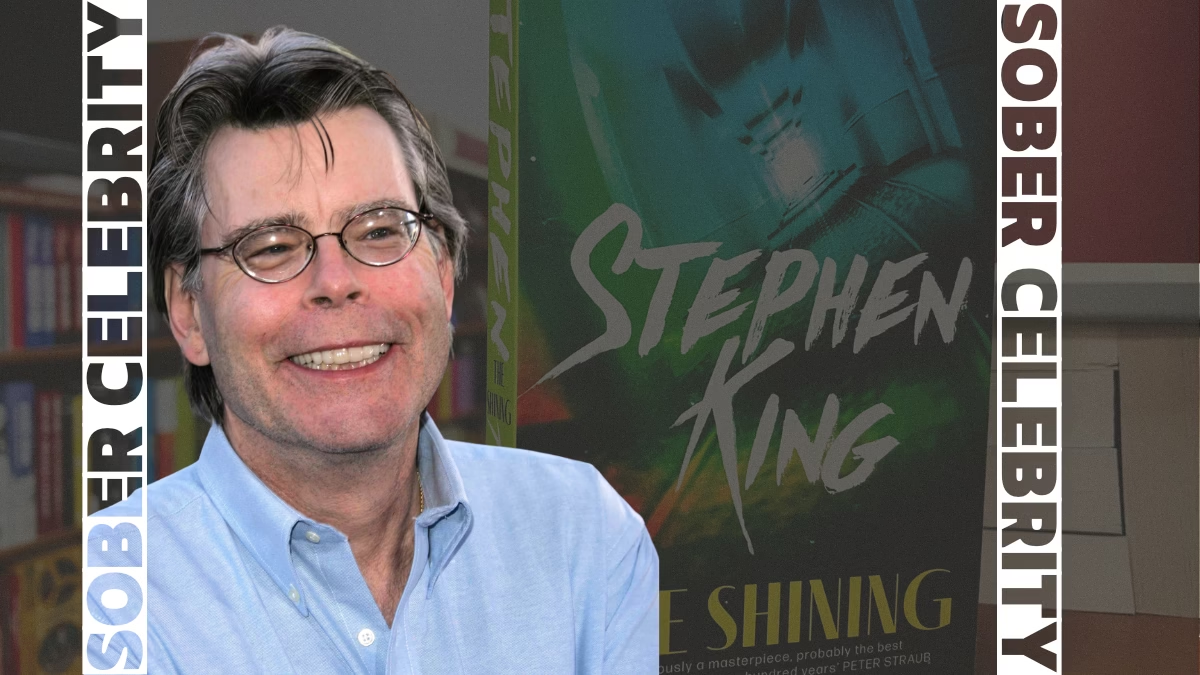

Stephen King does not remember writing Cujo.
Not “it’s a little fuzzy.” Not “the details are hazy.” He has said flat out that the writing of an entire novel, one that became a movie, one that sits on a shelf in probably every used bookstore in America, happened somewhere he can’t get back to. That is not a quirky author anecdote. That is what it looks like when a man is running on beer, cocaine, Xanax, Valium, and mouthwash he was drinking for the alcohol content.
King is the guy who put a killer clown in the sewer and a possessed car in your driveway. What he didn’t put on the page, at least not directly, was the trash bag his wife Tabitha dumped on the floor in 1987 that ended up saving his life.
Sobriety Snapshot
| Stats | Description |
|---|---|
| Sobriety since | 1987, following a family intervention (some King interviews place the shift in 1986) |
| Years sober | Approximately 39 years, as of 2026 |
| Substances | Alcohol, cocaine, Xanax, Valium, cough syrup, mouthwash |
| Turning point | His wife Tabitha staged an intervention, emptying a garbage bag of his drug and alcohol evidence in front of him and their kids |
| Quote | “She said that she and the kids loved me, and for that very reason none of them wanted to witness my suicide.” |
He Was Sober for Three Hours a Day
King started drinking at 18. By the time he was a bestselling author in the 1970s and 80s, the drinking had company: cocaine, whatever pills were nearby, and eventually mouthwash, straight, for the alcohol.
He’s talked about being sober for roughly three hours a day at his lowest point. Three hours. The rest of the day belonged to whatever he’d put in his body that morning.
He believed the myth a lot of high-functioning people believe, that the substances were the source of the talent, not a threat to it. He thought if he put the drink down, the ideas would go with it.
Tabitha Emptied the Garbage Can
The intervention did not happen in a therapist’s office with everyone using their calm voices. It happened in Stephen King’s own house, in front of his kids and a handful of friends, with his wife holding a garbage bag.
Inside it: empty beer cans, cigarette butts, cocaine spoons and vials, Xanax and Valium bottles, empty cough syrup and NyQuil bottles, and mouthwash bottles he’d been drinking dry.
Tabitha dumped it on the floor in front of him. She wasn’t gentle about it, and she wasn’t trying to be. She told him to get help or get out, and she told him why. He wrote in On Writing that she said she and the kids loved him, and for that very reason none of them wanted to watch him die.
That’s not an intervention line from a movie script. That’s a wife who was done pretending.
He Waited for the Muse to Leave
King has said he was terrified in early sobriety that his talent would disappear along with the alcohol. He thought the writing and the drinking were the same organ, and you couldn’t remove one without killing the other.
That fear doesn’t belong to famous novelists. Anyone who has built an identity around being “the fun one” or “the creative one” while drinking has had the same 3am thought: who am I without this?
King found out the only way anyone finds out. He put the drink down and waited to see what was left. There was no roadmap for what happened next. There was just the next morning, and the one after that, and eventually enough mornings stacked up that he started to believe they might keep coming.
Since he got sober, King has published more than 40 books. Let that number sit for a second. More than half of his entire bibliography came out of a brain he once assumed had already burned out.

The Books Kept Coming, and So Did the Proof
In On Writing, King goes after the idea that addiction fuels great work. He calls it one of the great pop-intellectual myths, and he means Hemingway and Fitzgerald specifically. His argument: those men weren’t legendary because they drank. They were legendary writers who also happened to drink, and the drinking eventually took them out early.
King is the counterargument walking around in a Red Sox cap. He didn’t get boring when he got sober. He got sharper, more disciplined, and considerably more prolific. The fog lifts and it turns out the work was always going to be there waiting.
Almost forty years later, Stephen King is still writing, still selling out, and still doing it without the mouthwash.
He’s Still Writing About the Dark Stuff, Just From a Different Room
King didn’t trade horror for wellness platitudes. He still writes about addiction and its wreckage, most directly in Doctor Sleep, which picked up Danny Torrance’s story decades after The Shining left him orphaned by his father’s drinking.
He’s talked about “the Promises” from AA meetings, the ones about a new freedom and a new happiness, and said most of them came true for him. Not all of them, probably. But enough.
He’s a grandfather now. He still writes most days. He still scares the hell out of readers on purpose, which is a different thing entirely from scaring the people who love you by accident.
Stephen King still doesn’t remember writing Cujo. What he does remember, in detail, is the trash bag on the floor and the almost forty years since that he actually got to be present for.

TSC LIBRARY: Welcome to The Sober Curator Library! This isn’t your average stack of books—we’re talking full-on story immersion, Audible binges, and reviews with personality. Browse our four go-to genres: #QUITLIT, Addiction Fiction, Self-Help, and NA Recipe Books. And if you’re collecting recovery reads like rare trading cards, check out our Amazon #QUITLIT list—Early Sobriety Survival: Books for Your First 90 Days. Grab your backpack, book nerd.
📘 Submit a Book for our #QuitLit Library: Welcome to the largest culturally-driven sober book collection on the internet. Memoir, fiction, criticism, quit lit, anything that fits a Gen X or Millennial sober reader past initiation. Submit your book →
#QUITLIT: Sober Celebrity Memoirs Worth Reading: Books Written by People Who’ve Actually Been There
All the cool kids go to rehab…
Resources Are Available
If you or someone you know is experiencing difficulties surrounding alcoholism, addiction, or mental illness, please reach out and ask for help. People everywhere can and want to help; you just have to know where to look. And continue to look until you find what works for you. Click here for a list of regional and national resources.

Follow The Sober Curator on TikTok
How long has Stephen King been sober?
King has been sober since 1987, following an intervention staged by his wife, Tabitha. As of 2026, that’s approximately 39 years.
What did Stephen King struggle with?
Alcohol was his primary addiction, alongside cocaine, Xanax, Valium, and cough medicine. At his lowest point, he has said he was sober for only about three hours a day.
What helped Stephen King get sober?
A family intervention led by his wife Tabitha, who confronted him with physical evidence of his addiction. He entered recovery afterward and has credited AA’s principles, along with his wife’s ongoing support, for helping him stay sober.
Has Stephen King ever relapsed?
There is no public record of King relapsing since his 1987 recovery. He has spoken about his sobriety consistently across interviews and his memoir for decades.
Does Stephen King talk publicly about his sobriety?
Yes. He’s addressed it directly in his memoir On Writing and in numerous interviews, and he’s written addiction and recovery themes into his fiction, most notably in Doctor Sleep.
Did getting sober affect Stephen King’s writing?
He thought sobriety would take his talent with it. That the drinking and the writing were the same thing, and you couldn’t kill one without losing the other. He was wrong. Since 1987, he’s published more than 40 books — more than half of everything he’s ever written. He didn’t get boring when he got sober. He got faster.
