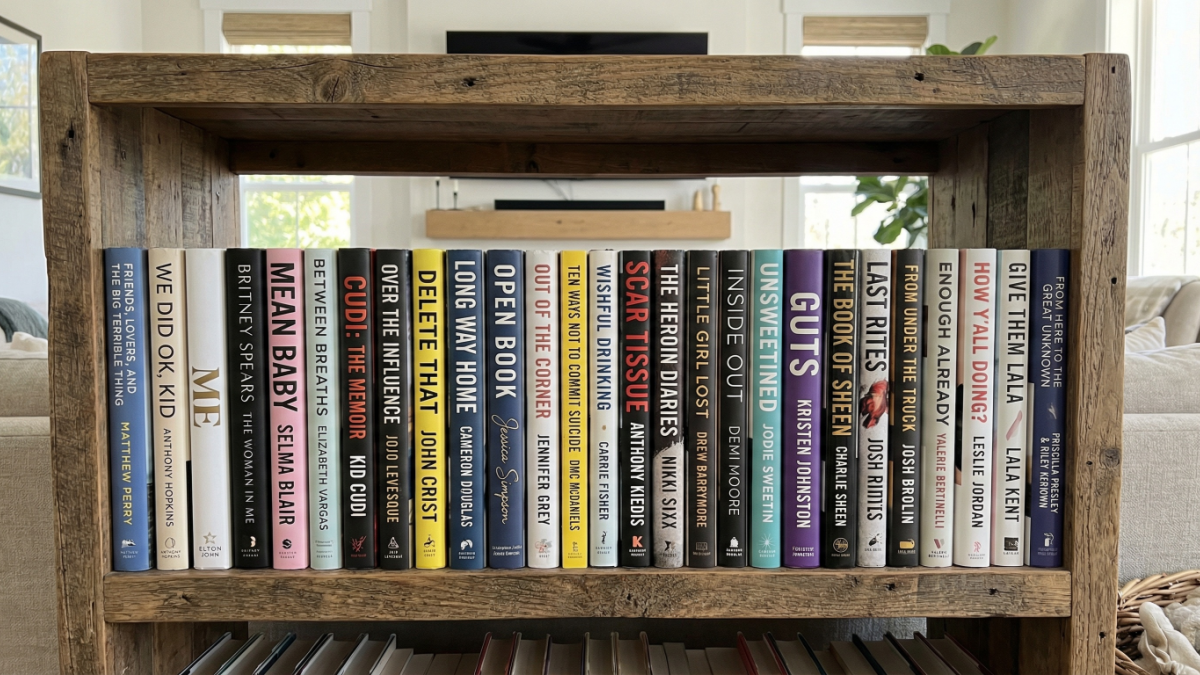
Before there were podcasts about sobriety, before there were NA cocktail menus at every trendy bar, before the word “sober-curious” existed — there were books.
Specifically, there were celebrities brave (or broken open) enough to write about their addictions on the page, for millions of strangers to read. Some of these memoirs came out before sobriety was remotely cool. Some of them probably saved lives. A few of them are so raw they’ll make you put the book down just to catch your breath.
We’ve been quietly building our #QUITLIT library for years over here at TSC, and this list is long overdue. These aren’t self-help books telling you how to get sober. These are first-person accounts from people who got famous, got messy, and got honest — in that order.
Pour yourself something good and settle in.
TL;DR: This is our curated list of memoirs written by sober and recovery-identified celebrities — from Matthew Perry’s gut-punch final book to Anthony Hopkins’s nearly 50 years of sobriety to Charlie Sheen’s long-awaited first-person account to Ozzy Osbourne’s posthumous final word. We’ve also included a Preorder section for two major spring 2026 releases (Hayden Panettiere and Lena Dunham), and a section for books where a celebrity writes about addiction from the outside — because sometimes the hardest perspective to read is the one from someone who loved an addict.
The Personal Recovery Memoirs
These are first-person accounts by people who experienced addiction and lived to write about it.
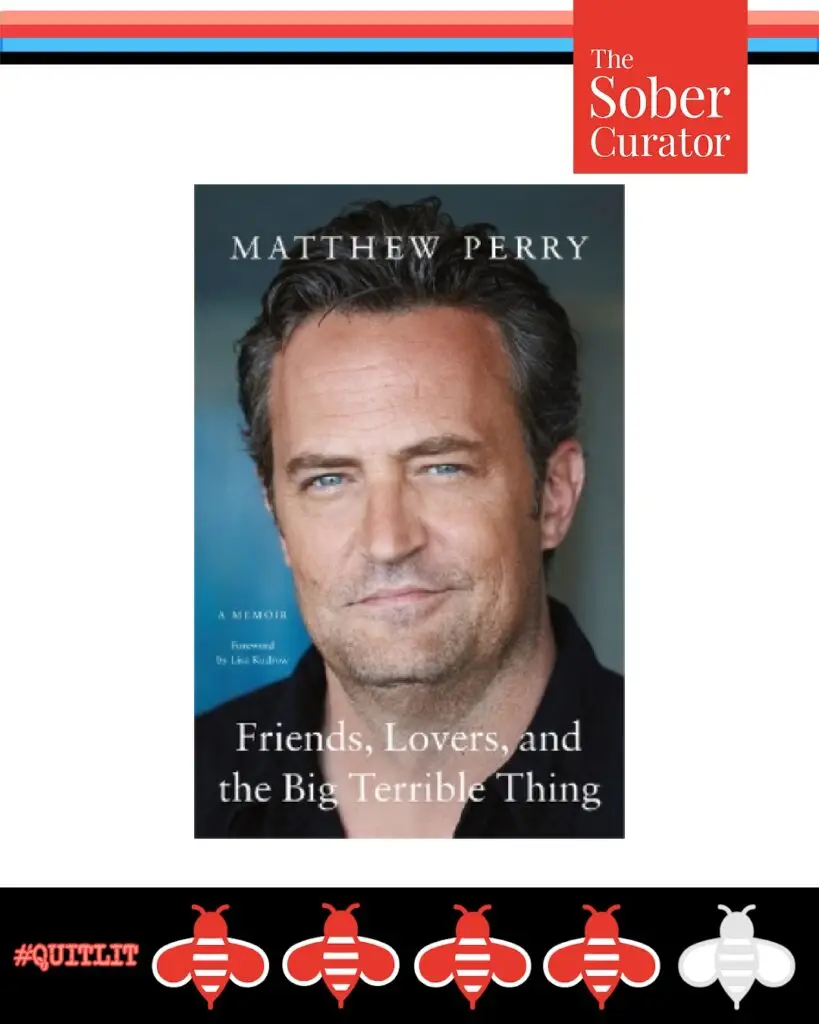
Matthew Perry — “Friends, Lovers, and the Big Terrible Thing” (2022)
If you read only one book on this list, make it this one.
Matthew Perry spent the better part of three decades hiding the severity of his addiction while filming one of the most-watched sitcoms in television history. By his own accounting, he was in and out of rehab 15 times, spent roughly $9 million trying to get sober, and nearly died from an opioid overdose in 2018 when his colon burst. He wrote this book from a place of hard-won recovery, and it shows on every page.
What Perry does that most celebrity memoirs don’t: he stays specific. He doesn’t let himself off the hook. He’s funny in the way that only deeply sad people can be funny — which, if you’ve been around recovery for any length of time, is a tone you’ll recognize immediately.
He died in October 2023. The book he left behind is worth every uncomfortable minute.
We already have a full review of this one in the TSC Library. “Friends, Lovers, and the Big Terrible Thing” TSC Library Review
Anthony Hopkins — “We Did OK, Kid” (2025)
Here’s a detail that quietly floors you: Anthony Hopkins has been sober for nearly 50 years.
The man who played Hannibal Lecter, who has won two Academy Awards, who is one of the most recognized actors alive — got sober in his late 30s and never went back. His memoir covers how drinking nearly killed his career and his relationships before a moment of clarity changed everything. He writes about driving blackout drunk in California, waking up not knowing where he’d been, and finally asking for help.
The title comes from a moment Hopkins had looking at old photographs of his younger self — a scrappy Welsh kid from a working-class family who was written off by everyone, including his own father. He looked at that photo and thought: we did OK, kid.
It’s an instant New York Times bestseller, and it earned that title.
Elton John — “Me” (2019)
Elton John got sober in 1990, which means he’s been in recovery for over three decades. This memoir covers his addiction to cocaine and alcohol during the 1970s and 80s with a specificity that makes it hard to look away.
What’s unexpected about Me is how funny it is. Elton John is genuinely hilarious in a very British, very unfiltered way — and the humor makes the hard parts hit harder. He also writes with unusual honesty about how the AIDS crisis and his friendship with Ryan White cracked something open in him that finally made getting sober possible.
Cross-reference: Elton John also launched his own NA sparkling wine, Elton John Zero. We covered that here.
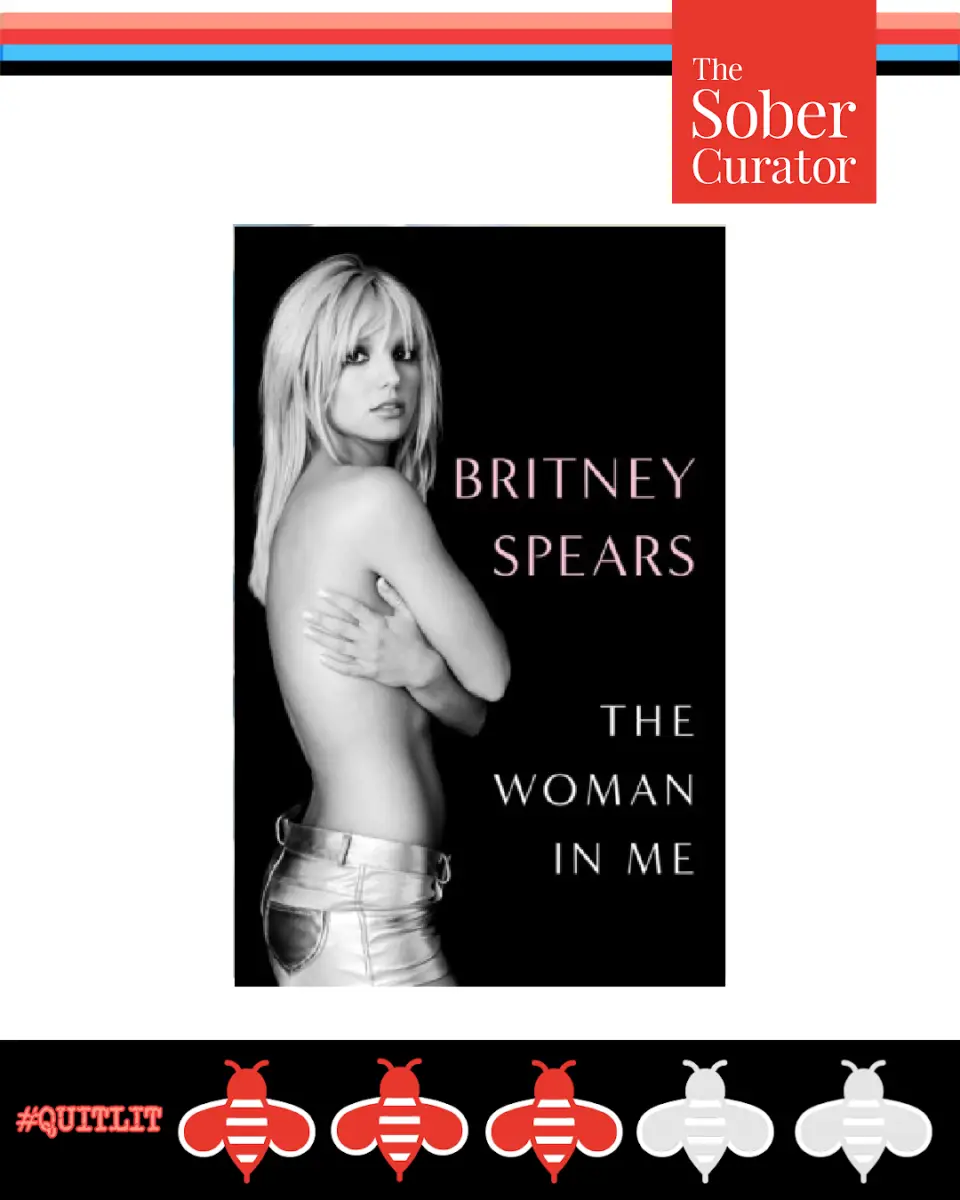
Britney Spears — The Woman in Me (2023)
Whatever you think of Britney Spears, this book is important.
Spears writes about alcohol, prescription drugs, and the complete loss of personal agency under a conservatorship that controlled her money, her body, and her choices for 13 years. This isn’t a clinical recovery memoir, but it is an honest account of what addiction and mental health look like when you’re the most watched woman in the world and no one is asking how you’re actually doing.
The opening section alone will wreck you. It’s the most honest account of what it feels like to be trapped in your own life that many readers will encounter.
We already have a full review of this one in the TSC Library. “The Woman in Me” TSC Library Review

Selma Blair — “Mean Baby” (2022)
Selma Blair has been open about getting sober from alcohol well before her MS diagnosis made headlines. This memoir covers both — and it covers them together in a way that feels true to how complicated a person’s inner life actually is.
She’s funny. She’s dark. She writes about her relationship with alcohol as something that started very young and stayed with her for decades before she let it go. The MS sections are devastating. But the through-line of this book is someone learning, slowly, that they are more than what they’ve been handed.
We already have a full review of this one in the TSC Library. “Mean Baby” SC Library Review

Elizabeth Vargas — “Between Breaths: A Memoir of Panic and Addiction” (2016)
Before the 20/20 anchor went public with her alcohol addiction and her time in rehab, most people assumed her life looked like what it did on television: polished, controlled, authoritative.
It wasn’t. Vargas writes about a decades-long relationship with alcohol that she used to manage anxiety so severe it interfered with her ability to function. This is one of the rare recovery memoirs that centers anxiety and mental health as the engine of addiction rather than treating them as separate issues. For readers whose drinking was about something other than partying, this one lands differently.
We already have a full review of this one in the TSC Library. “Between Breaths” TSC Library Review
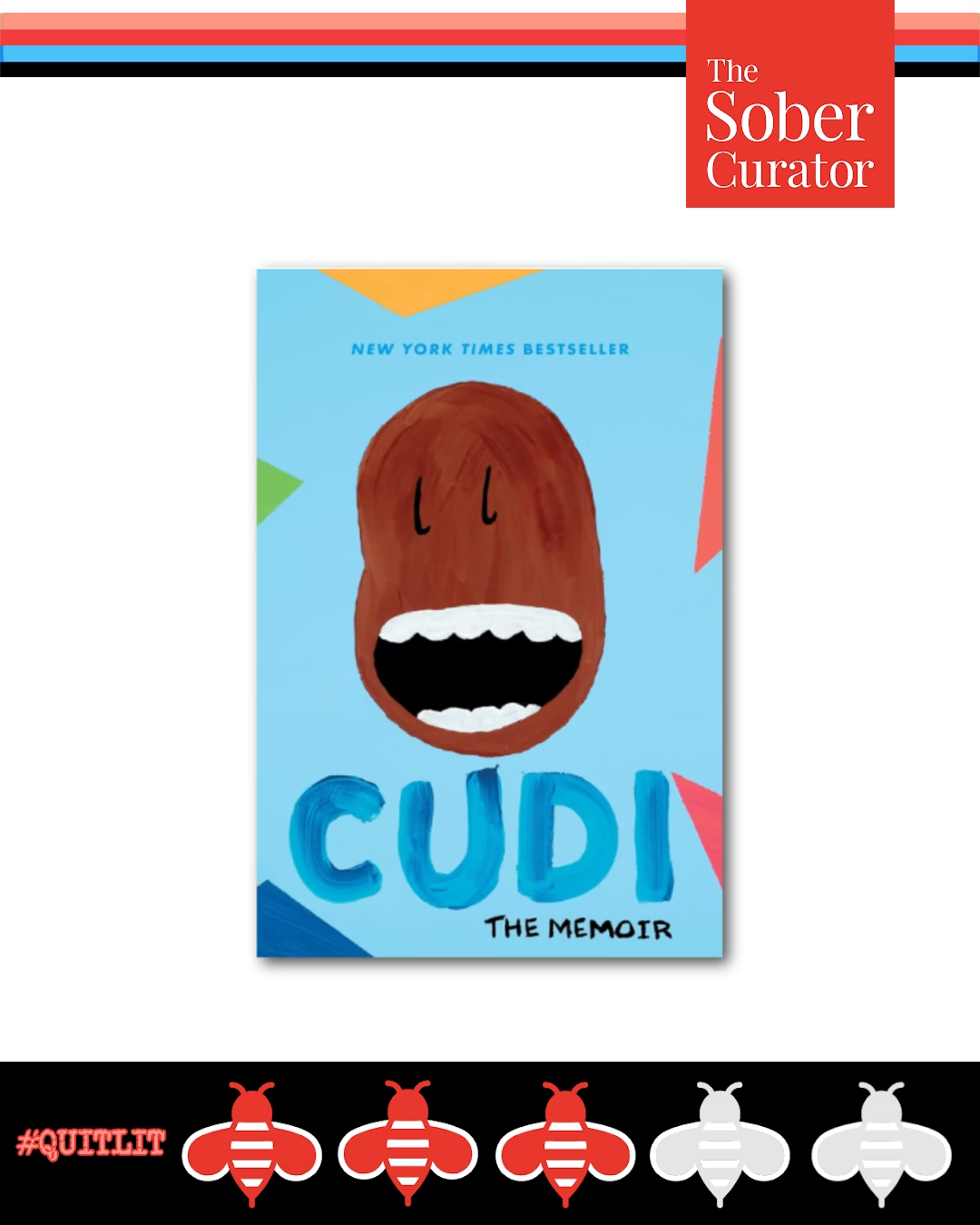
Kid Cudi — “Cudi: The Memoir” (2025)
A 2025 New York Times bestseller, this memoir from rapper Scott “Kid Cudi” Mescudi covers depression, addiction, isolation, a near-overdose, and the path back to himself that he had to find largely alone.
His music has served as a lifeline for a generation of fans who felt unseen — “Day N Nite,” “Pursuit of Happiness,” “Mr. Rager” — and the memoir explains why. He was writing from a place of real pain. The audiobook, narrated by Cudi himself, is the version we recommend. It feels like a conversation with someone finally telling you the truth.
Note: Cudi’s relationship with sobriety is ongoing and complex — he went to rehab for marijuana addiction in 2024 and has since found a different relationship with it. His story is not a tidy “sober and never looking back” narrative. But for readers who’ve had messy, non-linear recoveries, that honesty is the whole point.
We already have a full review of this one in the TSC Library. Read it here.
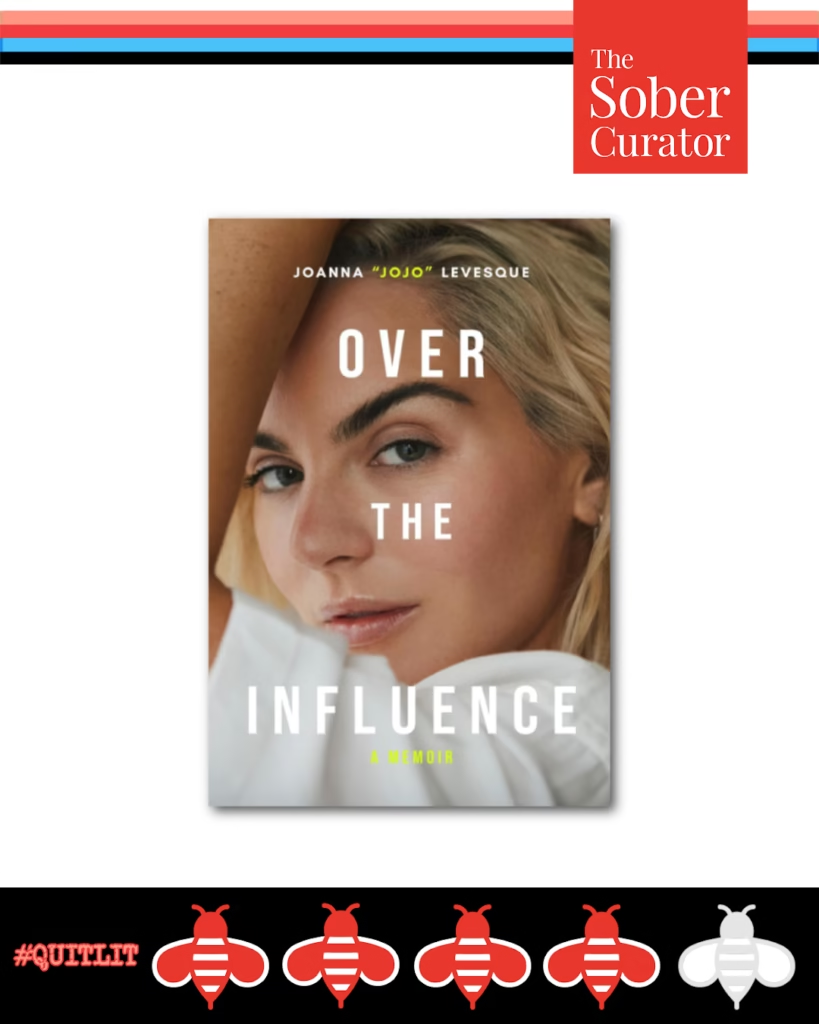
JoJo Levesque — “Over the Influence” (2024)
JoJo Levesque was the youngest artist to have a debut number-one single in the US. She was twelve. Her parents were both in active addiction. The music industry machine had her from the time she was a child, and what it did with her — and to her — is the subject of this New York Times bestseller.
She writes about alcohol, about being raised by addicts, about what it does to a kid’s sense of self when the adults around them can’t show up. She also writes about AA and what recovery has looked like for her. It’s messy and honest and the title is genuinely great.
We have a full TSC Library review. Read it here.

John Crist — “Delete That: And Other Failed Attempts to Look Good Online” (2022)
Christian comedian John Crist has celebrated five years of sobriety. This memoir covers the gap between the perfectly curated online persona he built and the actual life he was living — which included addiction, behaviors that eventually got him publicly canceled in 2019, and the rehab stint that followed.
He doesn’t give himself an easy out. He doesn’t wrap it in a neat testimony bow. He just tells the truth, which in the evangelical comedy world — where the pressure to perform holiness is immense — is its own kind of radical act.
We have a full TSC review of this one. Read it here.
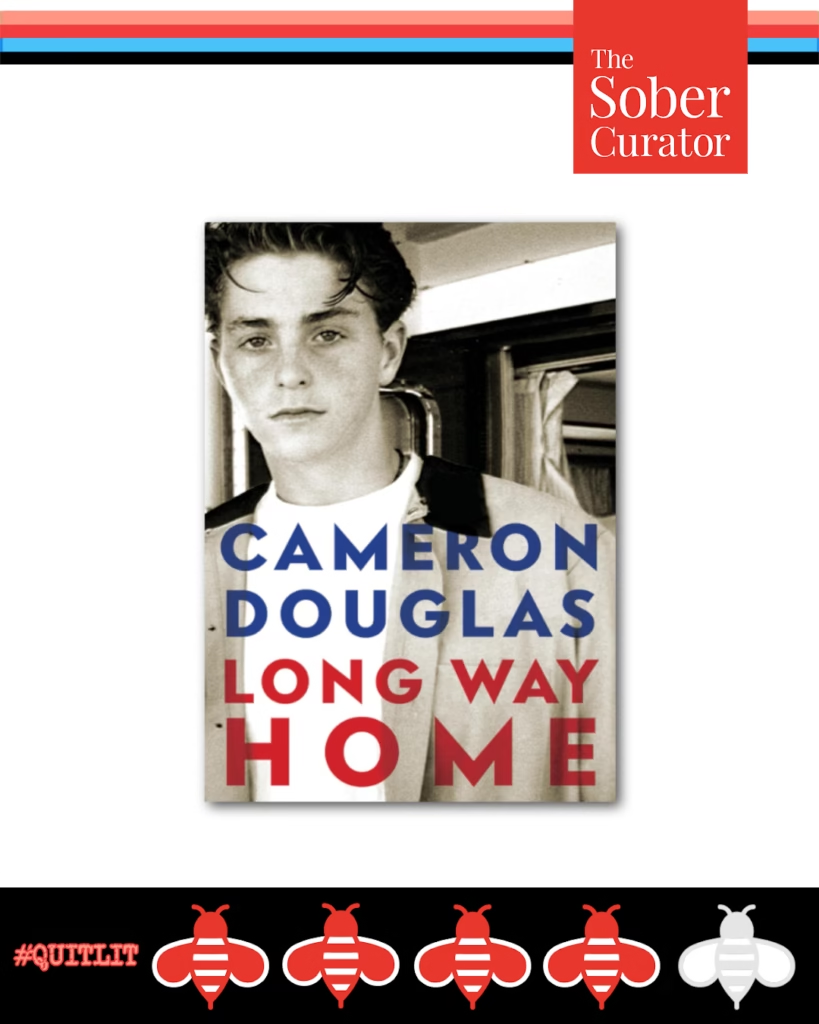
Cameron Douglas — “Long Way Home” (2019)
Cameron Douglas — Michael Douglas’s son, Kirk Douglas’s grandson — spent seven years in federal prison on drug trafficking charges. He wrote this memoir after getting out, documenting how a life with all the access and privilege in the world still led him straight into heroin addiction.
This one is uncomfortable in the best way. It doesn’t let him off the hook for being a rich kid who made terrible choices, but it also doesn’t pretend that access to money and famous last names is a recovery plan.
We have a full TSC review of this one. “Long Way Home” TSC Library Review

Jessica Simpson — “Open Book” (2020)
Jessica Simpson got sober from alcohol and diet pills in 2017. This memoir is candid about a drinking problem she writes about developing slowly, almost without her own awareness, during the years when she was one of the most scrutinized women in pop culture.
She also writes about childhood sexual abuse she experienced, which she connects directly to the coping mechanisms she developed. It’s a more serious book than the cover might suggest, and it hit the New York Times bestseller list at number one.
We have a full TSC review of this one. “Open Book” TSC Library Review
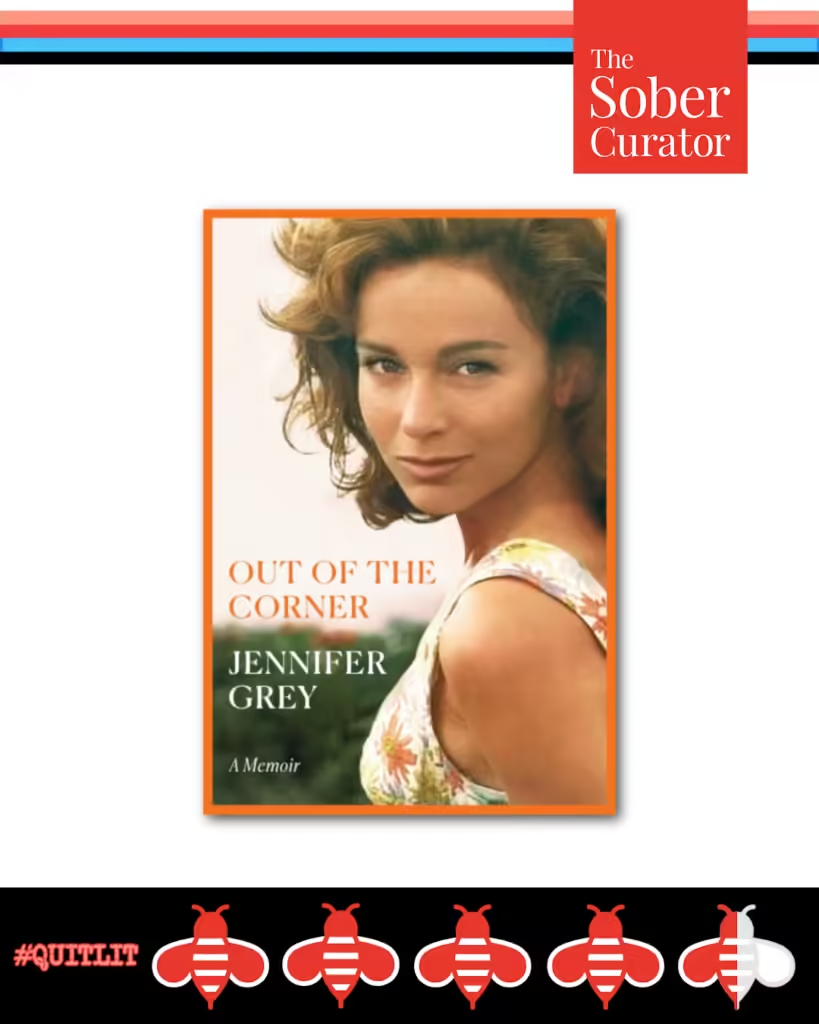
Jennifer Grey — “Out of the Corner” (2022)
You know her as Baby from “Dirty Dancing”. What you might not know is that Jennifer Grey has been open about her complicated relationship with alcohol and with the anxiety and disordered eating that shaped her for decades.
This memoir is as much about identity as it is about addiction — what happens when your entire sense of self is built on how you look, and then your face changes. She had rhinoplasty that made her unrecognizable to the public, and she writes about what that loss of identity did to her and everything she reached for to fill it.
We have a full TSC review of this one. “Out of the Corner” TSC Library Review
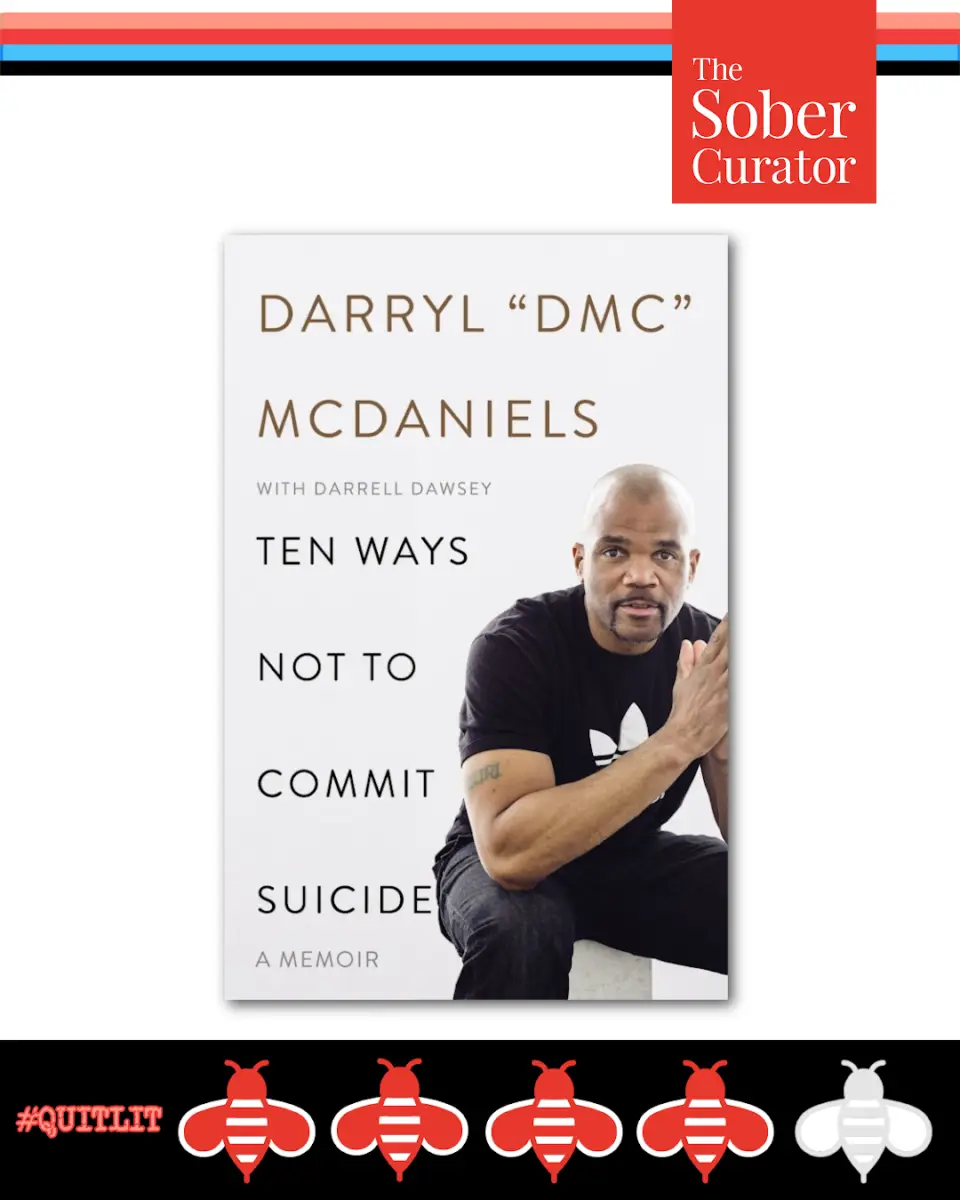
Darryl “DMC” McDaniels — “Ten Ways Not to Commit Suicide” (2016)
The Run-DMC co-founder writes about depression, alcohol, and coming to the edge of suicide — not from the gutter, but from the top of his career, when everything looked successful from the outside and he was falling apart inside.
This book is particularly important for two reasons: it centers a Black man’s experience of addiction and mental health in a genre that is still dominated by white voices, and it takes the “I lost everything” narrative and flips it. He hadn’t lost everything. He had everything. That’s what made it so hard to ask for help.
We have a full TSC review of this one. Read it here.
Carrie Fisher — “Wishful Drinking” (2008)
Carrie Fisher was talking about addiction and mental illness with brutal, comedic honesty long before it was something celebrities did for their personal brand. She adapted this book from her one-woman show, which means it reads fast, runs on wit, and hits you sideways when you least expect it.
“I am mentally ill. I can say that. I am not ashamed of that,” she wrote — which in 2008 was a genuinely radical thing for a famous person to say in print. She died in 2016. We miss her.
Anthony Kiedis — “Scar Tissue” (2004)
The Red Hot Chili Peppers frontman grew up around addiction — his father was a drug dealer in Hollywood — and was using heroin by his early teens. “Scar Tissue” covers decades of getting sober, relapsing, and getting sober again with a relentlessness that never feels repetitive.
[UNIQUE INSIGHT] What makes this memoir stand out is how long the story takes. This isn’t a quick descent-and-rescue narrative. It’s years. It’s cycles. It’s the kind of honest portrayal of relapse that recovery culture sometimes still struggles to make room for.
Nikki Sixx — “The Heroin Diaries: A Year in the Life of a Shattered Rock Star” (2007)
Mötley Crüe’s bassist published the actual diary entries he wrote in 1986 and 1987 — his most active period of addiction — and then annotated them 20 years later as a man in recovery.
It’s dark. It documents his clinical death from a heroin overdose on Christmas Day 1987 and getting brought back by narcan. But it’s one of the most structurally fascinating addiction memoirs ever written because you’re reading two timelines at once: the person in the storm, and the person who survived it.
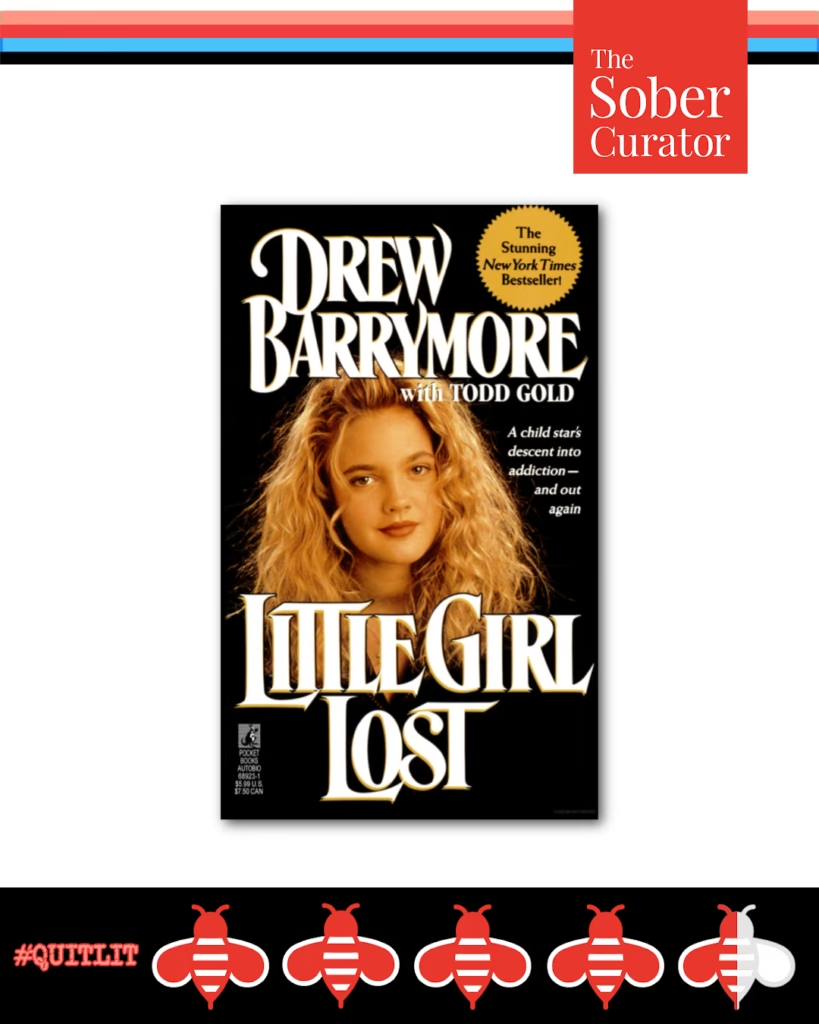
Drew Barrymore — “Little Girl Lost” (1990)
Drew Barrymore wrote this when she was fifteen. She had already been drinking since age nine, smoking weed by eleven, and snorting cocaine at twelve. She got herself into rehab at thirteen — largely of her own volition, because the adults around her weren’t going to do it.
It reads fast. It reads young. And it’s a document of a very specific kind of Hollywood damage that still exists today.
We have a full TSC review of this one. “Little Girl Lost” TSC Library Review
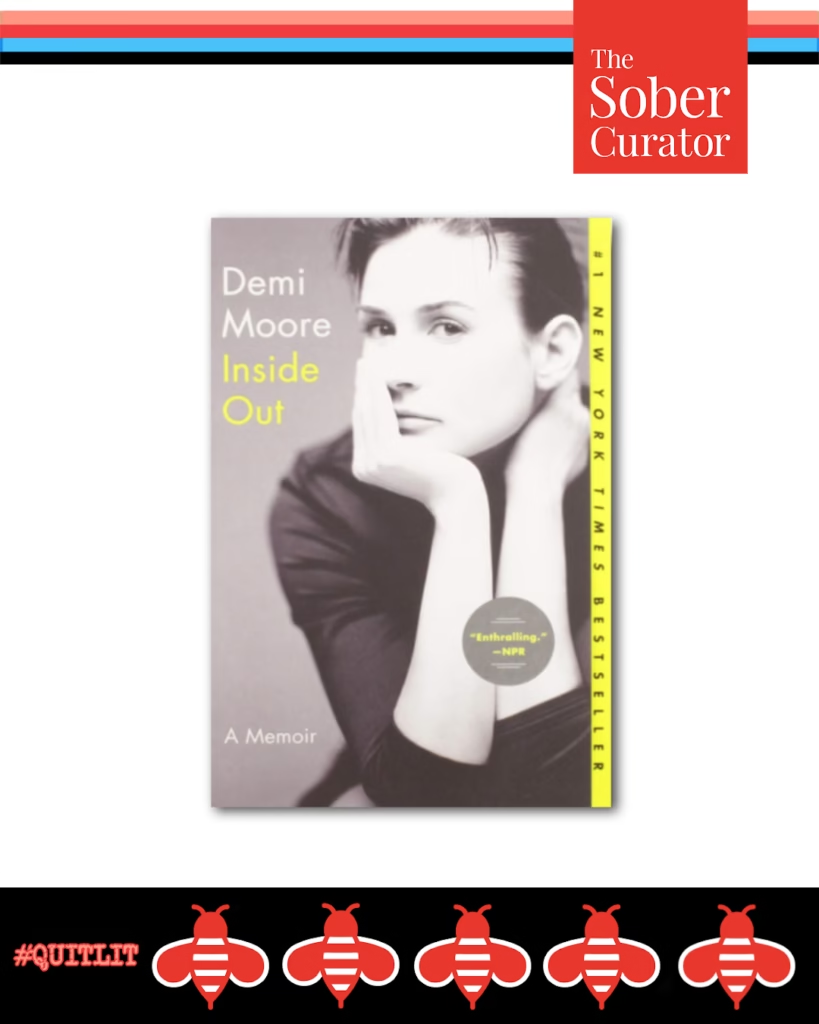
Demi Moore — “Inside Out” (2019)
Demi Moore spent years being written about by everyone except herself. This memoir covers her early struggles with alcohol and prescription pills, and a return to drinking in her 40s following her divorce from Ashton Kutcher.
What this book does well is the complicated relationship between fame, self-worth, and addiction. Moore isn’t writing from a tidy place of recovery with a bow on it. She’s writing from a place of hard ongoing self-examination, and that honesty shows.
We have a full TSC review of this one. Read it here.
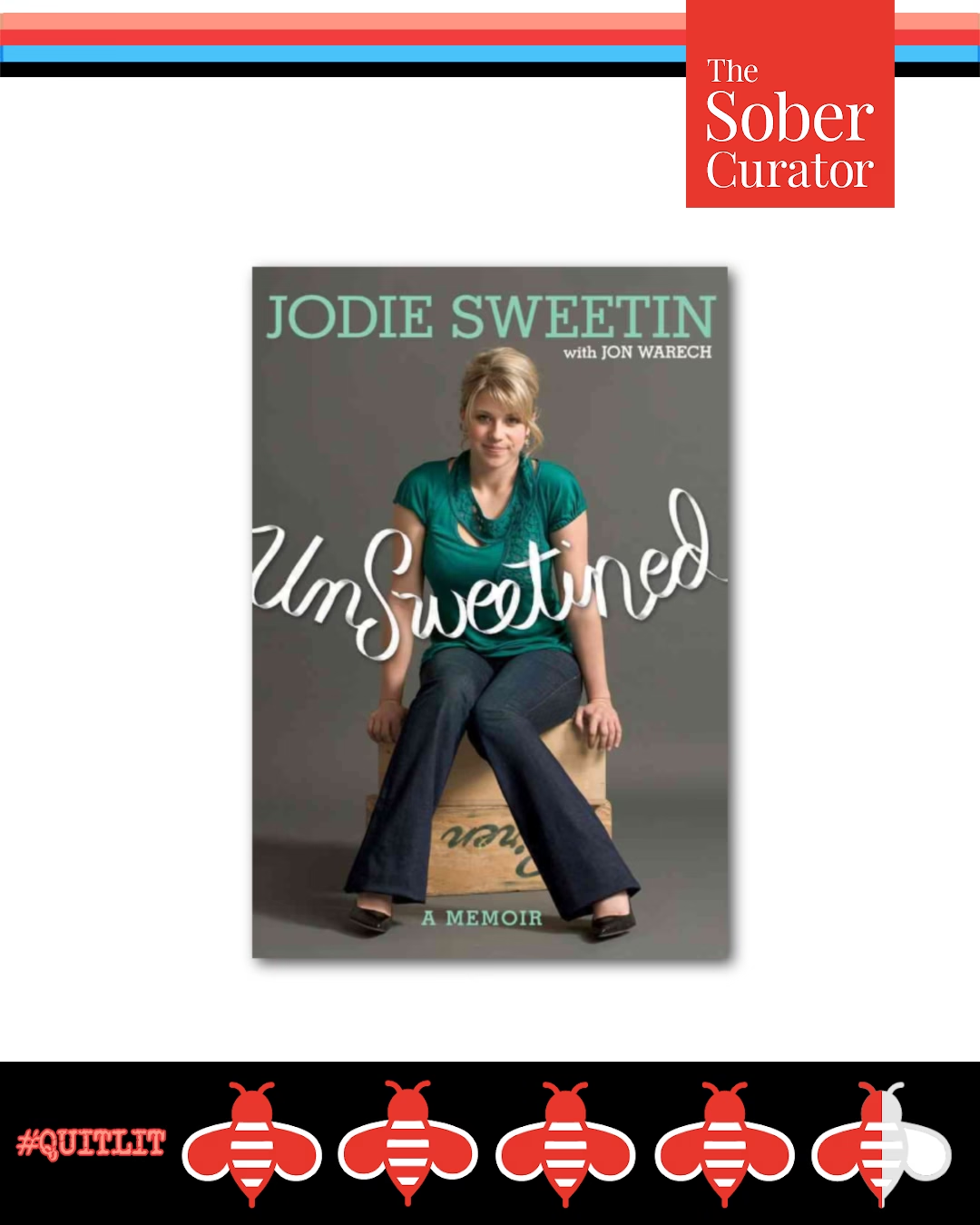
Jodie Sweetin — “unSweetined” (2009)
Jodie Sweetin played Stephanie Tanner on “Full House” starting when she was five years old. By her mid-20s, she was addicted to methamphetamine.
She writes about the exact moment she started performing “Stephanie” while everything was falling apart offscreen. She got sober, relapsed, got sober again — and has been public about her recovery ever since. This book is where that story begins.
We have a full TSC review of this one. Read it here.

Kristen Johnston — “Guts” (2012)
“Guts” opens with Kristen Johnston — the tall, hilarious “3rd Rock from the Sun” actress — nearly dying in London when her stomach perforated from years of drug and alcohol abuse. She describes herself as a “high-bottom drunk” who looked functional long after she had stopped being functional anywhere else.
That framing will resonate with a lot of TSC readers who spent years asking themselves if they were “bad enough” to need help. The answer Johnston gives is pretty satisfying.
We have a full TSC review of this one. Read it here.
Charlie Sheen — “The Book of Sheen” (2025)
Charlie Sheen should not be alive to write this book. He has said so himself.
The man who was once the highest-paid actor on television — $1.8 million an episode at the height of “Two and a Half Men” — spent decades inside a cycle of drugs, alcohol, legal disasters, and headlines that read like a cautionary tale written by someone who’d never actually been through it. He got sober for real in December 2017. This memoir is the first time he’s told the whole story himself.
The writing style is unusual and completely deliberate — Sheen purposefully misspells certain words the way he sees them in his mind (“dood” instead of “dude”), and describes wanting it to feel like “the reader was kind of in the room with me at a small dinner party.” That’s either going to work for you or it won’t. But the sobriety content is not incidental here. It’s the spine of the whole book.
His children getting him sober is the thread that holds everything together. And as anyone in recovery knows, sometimes that’s the only thing that does.
Note: A companion Netflix two-part documentary, “aka Charlie Sheen,” released the same week. And yes, we reviewed it AND talked about it on The Sober Curator podcast.
Ozzy Osbourne — “Last Rites” (2025, posthumous)
Ozzy Osbourne died in July 2025 at 76. This memoir came out three months later. He finished it before he died. That’s a fact you carry through every single page.
“Last Rites” is not a triumphant sobriety story. Ozzy himself would laugh at that framing. He got sober for stretches, relapsed, did 90 AA meetings in 90 days after a 2012 relapse, and continued to wrestle with substances on and off until the end. He also said — in the book — that if he’d been clean and sober his whole life, he wouldn’t have been Ozzy. He meant it.
What this book IS: one of the most honest accounts of living with addiction over decades that’s ever been published. Cycles, setbacks, the exhaustion of trying, and the strange grace of getting back up. Plus the story of his final Black Sabbath reunion concert at Villa Park in front of 40,000 people seven weeks before he died.
Instant #1 New York Times bestseller. Haunting, revelatory, and completely worth your time.
Josh Brolin — “From Under the Truck” (2024)
This is not your standard celebrity memoir. GQ called it “a mosaic of bright shards.” The Wall Street Journal called it “raw, honest and self-effacing.” It is both of those things and also genuinely hard to categorize.
Brolin grew up on a California ranch surrounded by wolves, cougars, and a mother who drank with the same intensity she did everything else. He was drinking and doing drugs by his early teens. The book moves non-linearly — short bursts of memory, some written as journal entries, some as prose, some as poetry. If you prefer a straight narrative arc, this one will frustrate you. If you’ve ever tried to explain the timeline of your own addiction to someone who didn’t live it, the format will make complete sense.
The turning point: after a blackout night that ended in a fast-food drive-through fight, he dragged himself to visit his 99-year-old grandmother on her deathbed while still drunk. That was 2013. He’s been sober ever since.
He narrates the audiobook himself, and it has an exclusive intro and outro score by Chris Stapleton.
Valerie Bertinelli — “Enough Already: Learning to Love the Way I Am Today” (2022)
Most people know Valerie Bertinelli from “One Day at a Time” or as the ex-wife of Eddie Van Halen. This book is about what happened after — after the marriage, after the grief, after decades of using food, wine, and people-pleasing to manage feelings she hadn’t yet learned to name.
Bertinelli writes about her complicated relationship with alcohol alongside disordered eating and the emotional weight of living in a body the public has always felt entitled to comment on. She’s not writing from a place of tidy resolution. She’s writing in real time, in the middle of figuring it out — and that honesty is what makes this one different from the usual celebrity wellness memoir.
For readers whose substance use was bound up with food, self-worth, and chronic emotional suppression, this one hits in a specific and useful way.
Leslie Jordan — “How Y’all Doing?: Misadventures and Mischief from a Life Well Lived” (2021)
Leslie Jordan was openly and proudly sober for decades. He was also one of the funniest people alive, and this book reads exactly like that.
Jordan — who died in October 2022 and became a strange beacon of joy during the early pandemic with his Instagram videos — writes about his Southern Baptist upbringing in Chattanooga, his early years in Hollywood, and a life that kept nearly going sideways before he found his footing. He writes about alcohol and addiction with the lightness of someone who has processed the hard stuff enough to be able to laugh at it without minimizing it.
This is not a heavy read. It is a joyful one. And sometimes that’s exactly what recovery looks like.
Lala Kent — “Give Them Lala” (2021)
Lala Kent puts it in the book herself: “Call me a drunk, because yes, hi, I’m Lala, and I’m an alcoholic.”
That’s not a casual admission buried somewhere in chapter eight. That’s the energy of this whole thing.
Kent — “Vanderpump Rules” cast member, beauty entrepreneur, Utah girl turned SUR regular — started drinking heavily after her father died in 2018. What happened next was both very public (she was filming a Bravo reality show) and deeply personal. She found AA, committed to the program, and has been outspoken about it ever since in a way that old-timers might cringe at and newcomers will find genuinely useful.
This isn’t a heavy memoir. It’s essay-style — sharp, funny, sometimes chaotic, deeply her. The sobriety content lives alongside chapters about sexuality, fame, and learning to stop apologizing for taking up space. For TSC readers who came to sobriety through the Bravo universe, through losing a parent, or through recognizing themselves in someone who looked like they had it all together while quietly not having it together at all — this one lands.
Liza Minnelli – “Kids, Wait Till You Hear This!” (2026)
Kids, Wait Till You Hear This! is the autobiography of EGOT icon Liza Minnelli. This fascinating, untold story reveals the intimate truth of the only child born to Hollywood legends Vincente Minnelli and Judy Garland. For the first time, here is Liza up close: Raw, strong, sexy, hilarious and heartbreaking.
Liza decided at the age of 16 that “sympathy is my mother’s business. I give people joy.” That veil of joy, however, masks a lifelong struggle with Substance Use Disorder (“SUD,” which Liza inherited from her mother’s branch of her family), boundless love to give and an equal need to receive it, broken marriages, multiple miscarriages, and hospitalizations—the highs and lows of unparalleled artistic success and lifelong friendships, as well as chronic anxiety and the threat of financial ruin.
Despite every challenge, Liza’s is a life wrapped in laughter and her tremendous capacity to give and receive love. Today at nearly 80, she opens her heart, mind and memories, sharing secrets we never knew. Liza’s book celebrates supreme artistry and, more importantly, her human rights activism.
“It’s time to tell the truth,” Liza says, “and help people heal, as I have, one day at a time.”
Written by Family Members: When Someone You Love Has the Disease
These books are written by people whose loved ones struggled with addiction. They belong on the same shelf.
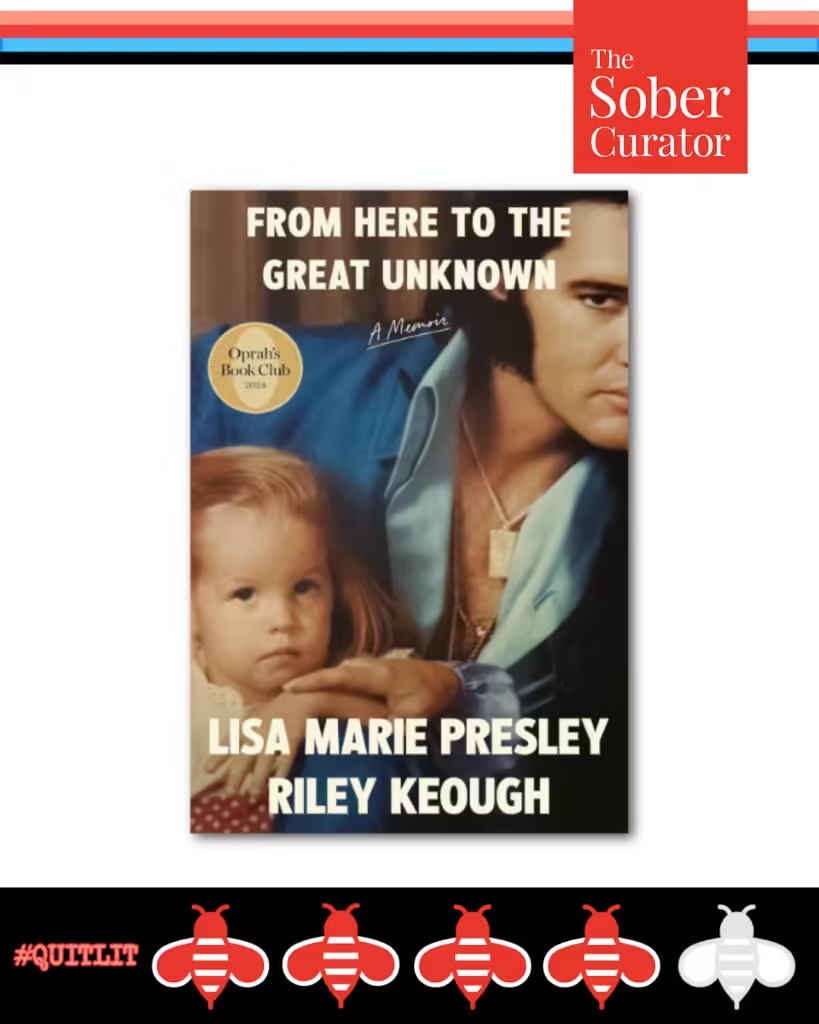
Priscilla Presley & Riley Keough — “From Here to the Great Unknown” (2024)
Lisa Marie Presley died in January 2023 from complications related to chronic pain and prescription drug addiction. This memoir was her project, completed after her death by her mother, Priscilla Presley, and her daughter, Riley Keough.
It’s heartbreaking in a way that’s hard to prepare for. Lisa Marie writes about the death of her son Benjamin, about Elvis, about addiction and loss and what it means to carry the weight of a name that isn’t fully yours. The people who loved her finished it for her. That’s the whole story in one sentence.
We have a full TSC review of this one. Read it here.
Coming Soon — Preorder Now
Two major recovery memoirs are dropping this spring. Both have live affiliate links and both are worth putting on your radar before they sell out.
Hayden Panettiere — “This Is Me: A Reckoning” (May 12, 2026)
Hayden Panettiere was first introduced to “happy pills” at age 15 by someone on her team — before red carpets, to make her “peppy during interviews.” She had no idea what door that would open.
The actress known for “Heroes” and “Nashville” has been public about her battles with alcoholism, opioid addiction (following a neck injury and postpartum depression), and the 2015 rehab stay that started her toward recovery. This memoir covers all of it, plus the tabloid machine that dissected her body while she was quietly drowning, and the death of her younger brother Jansen in 2023.
She’s been working toward telling this story on her own terms for years. May can’t come fast enough.
Lena Dunham — “Famesick: A Memoir” (April 14, 2026)
Lena Dunham entered rehab in 2018 for an addiction to benzodiazepines. Thirty days after she got out, she sat down and started writing this book. It took her seven more years to finish it.
“Famesick” covers the decade between 2010 and 2020 — the “Girls” years, the fame machine, the prescription drugs that started as anxiety management and became something else entirely, the chronic illness, the heartbreak. Three acts. Seven years of perspective.
She describes being in Hollywood during those years as “a goth girl at the cheerleader’s slumber party, wondering if she can call her mom from the landline without being overheard.” If that sentence resonates with you in any way, this book is yours.
A Few More Worth Your Time
We’d be here all week if we listed everything, but these deserve a spot on your shelf too:
- “Steven Tyler” — Does the Noise in My Head Bother You? — chaotic, like you’d expect #ADDTOCART on Amazon
- “Eric Clapton” — Clapton: The Autobiography — sober since 1987, underrated read #ADDTOCART on Amazon
- “Alec Baldwin” — Nevertheless — covers decades of sobriety with more self-awareness than you might expect #ADDTOCART on Amazon
- “Cyndi Lauper” — Cyndi Lauper: A Memoir (2012) — her sobriety story runs deeper than what’s on the page here, but it’s a great career memoir; TSC readers who want the sobriety angle specifically should seek out her interviews on psoriasis and alcohol #ADDTOCART on Amazon
- “Rob Lowe” — Stories I Only Tell My Friends (2011) — sober since 1990, Hollywood career memoir with addiction woven throughout; more dish than depth, but an entertaining read #ADDTOCART on Amazon
- “Michael J. Fox” — No Time Like the Future (2020) — primarily a book about aging, illness, and optimism; his relationship with alcohol is present but the Parkinson’s journey is the spine here #ADDTOCART on Amazon We also reviewed his documentary called “Still”
- “Billy Bob Thornton” — The Billy Bob Tapes (2012) — conversational and irreverent; addiction threads run through it, though recovery isn’t the stated focus #ADDTOCART on Amazon
Which One Should You Start With?
- New to recovery or sober-curious: “Carrie Fisher” or “JoJo Levesque.” Both are fast reads with an accessible, honest voice.
- In long-term recovery and want something with weight:“Anthony Hopkins.”
- Music-focused: “Kid Cudi”, “Nikki Sixx”, “DMC McDaniels”, or “Ozzy Osbourne” (especially if your recovery has included relapse — Ozzy’s honest about the cycles).
- Reality TV fan or came to sobriety through Bravo world: “Lala Kent.”
- Hollywood drama and high-bottom sobriety: “Matthew Perry” or “Charlie Sheen” or “Demi Moore” or “Rob Lowe.”
- Non-linear, literary, genuinely weird in the best way: “Josh Brolin.”
- Faith-adjacent: “John Crist.”
- Family member or child of an addict: “Priscilla Presley / Riley Keough.”
- Emotional eating and self-worth tied up with substance use: “Valerie Bertinelli.”
- You want a good laugh that also sneaks up on you: “Leslie Jordan.”
- Waiting for what’s next: “Hayden Panettiere”” (May 2026) or “”Lena Dunham” (April 2026) — both available for preorder now.
The Sober Curator uses affiliate links. When you shop through our links, we may earn a small commission at no cost to you. We only recommend books we’d actually put in your hands.
TSC LIBRARY: Welcome to The Sober Curator Library! This isn’t your average stack of books—we’re talking full-on story immersion, Audible binges, and reviews with personality. Browse our four go-to genres: #QUITLIT, Addiction Fiction, Self-Help, and NA Recipe Books. And if you’re collecting recovery reads like rare trading cards, check out our Amazon #QUITLIT list—Early Sobriety Survival: Books for Your First 90 Days.

SOBER POP CULTURE at The Sober Curator is where mainstream trends meet the vibrant world of sobriety. We serve up a mix of movie, podcast, fashion, and book recommendations alongside alcohol-free cocktails, celebrity features, and pop culture buzz—all with a sober twist.
We’re here to shatter the “sobriety is boring” myth with a mash-up of 80s neon, 90s hip-hop edge, early 2000s bling, and today’s hottest trends. From celebrity shoutouts to red-carpet style inspo, this is where sober is as chic as it is fun. To the celebs using their platform for good—our Sober Pop Trucker hats are off to you!
Resources Are Available
If you or someone you know is experiencing difficulties surrounding alcoholism, addiction, or mental illness, please reach out and ask for help. People everywhere can and want to help; you just have to know where to look. And continue to look until you find what works for you. Click here for a list of regional and national resources.

Follow The Sober Curator on Pinterest
“What is the best celebrity memoir about sobriety?” If you’re only reading one, make it “Friends, Lovers, and the Big Terrible Thing” by Matthew Perry. It is specific, honest, funny in the way that only deeply sad people can be funny, and it was finished by a man who knew he was running out of time to tell it. For something more recent, Anthony Hopkins’ “We Did OK, Kid” (2025) is the other essential — nearly 50 years of sobriety from one of the most recognized actors alive, written with the kind of quiet weight that takes decades to earn.
“Did Matthew Perry write a book about his addiction?” Yes. “Friends, Lovers, and the Big Terrible Thing” was published in October 2022. Perry wrote about 15 trips to rehab, $9 million spent trying to get sober, and a 2018 opioid overdose that nearly killed him. He died in October 2023, just under a year after the book came out. It is the last thing he wrote, and it shows on every page.
“Did Charlie Sheen write a memoir about getting sober?” Yes. “The Book of Sheen” was published September 9, 2025 and debuted as a New York Times bestseller. Sheen has been sober since December 2017. The memoir covers his full life — from growing up as the son of Martin Sheen, to “Platoon” and “Wall Street”, to “Two and a Half Men”, to the public unraveling most people remember — and how his children ultimately became the reason he got clean. A companion Netflix two-part documentary, “aka Charlie Sheen”, dropped the same week.
“Is there a book by Lala Kent about her sobriety?” Yes. “Give Them Lala” (2021) is a USA Today bestseller collection of essays in which Kent, the “Vanderpump Rules” star, writes openly about alcoholism and her AA recovery following the death of her father in 2018. She names herself as an alcoholic in the text and discusses the program explicitly — making it one of the more candid reality TV sobriety memoirs out there.
“Did Ozzy Osbourne write a memoir before he died?” Yes. “Last Rites” was published October 7, 2025 — Ozzy died in July 2025 at age 76, and finished the book before his death. It debuted at #1 on the New York Times bestseller list. The book covers his health collapse in 2018, decades of drug and alcohol addiction, multiple attempts at sobriety, his final Black Sabbath reunion concert, and his relationship with Sharon. It is not a triumphant recovery story — Ozzy was always honest about the cycles — but it is one of the most candid accounts of living with addiction over a lifetime that’s ever been published.
“What is the best recovery memoir for someone new to sobriety?“ Start with “Over the Influence” by JoJo Levesque or “Wishful Drinking” by Carrie Fisher. Both are fast reads with an accessible, honest voice that doesn’t lecture. For someone newer to recovery who wants something more structured, “We Did OK, Kid” by Anthony Hopkins covers what long-term sobriety actually looks like from the inside — without any of the preachy self-help energy.
“Are there any celebrity memoirs about addiction coming out in 2026?” Two major ones are available for preorder right now. Hayden Panettiere’s “This Is Me: A Reckoning” (May 12, 2026) covers her alcoholism and opioid addiction that began at age 15, her time in rehab, and the death of her brother Jansen in 2023. Lena Dunham’s “Famesick” (April 14, 2026) covers the decade she spent in Hollywood while quietly addicted to prescription benzodiazepines — she started writing it 30 days after leaving rehab in 2018. Both are available to preorder on Amazon with our affiliate links above.
“Is Josh Brolin’s memoir about sobriety?” Yes, though sobriety is one thread in a book that covers a lot of ground. “From Under the Truck” (2024) is a non-linear, literary memoir about growing up on a California ranch with an alcoholic mother, a decade-plus of his own drinking and substance use, and getting sober in 2013 after visiting his 99-year-old grandmother on her deathbed while drunk. It reads more like fragmented memory than a standard narrative — GQ called it “a mosaic of bright shards” — so if you want a straight story arc, know what you’re getting into. If you want something genuinely unlike any celebrity memoir you’ve read before, it’s worth every page.