
Recovery in later life looks different. The community is harder to find, the falls happen more often, the medications interact in more complicated ways, and the housing is often quieter than the housing the person came from in their thirties or forties. The cumulative effect, for an older adult who has put in years of careful sober living, is a thicker stack of medical and safety considerations than a younger person in recovery typically carries. Hidden inside that stack is a question that does not get asked often enough. What if the next event in this person’s life is not about substance use at all, but about a fall in the bathroom on a quiet Tuesday morning that nobody notices until Thursday?
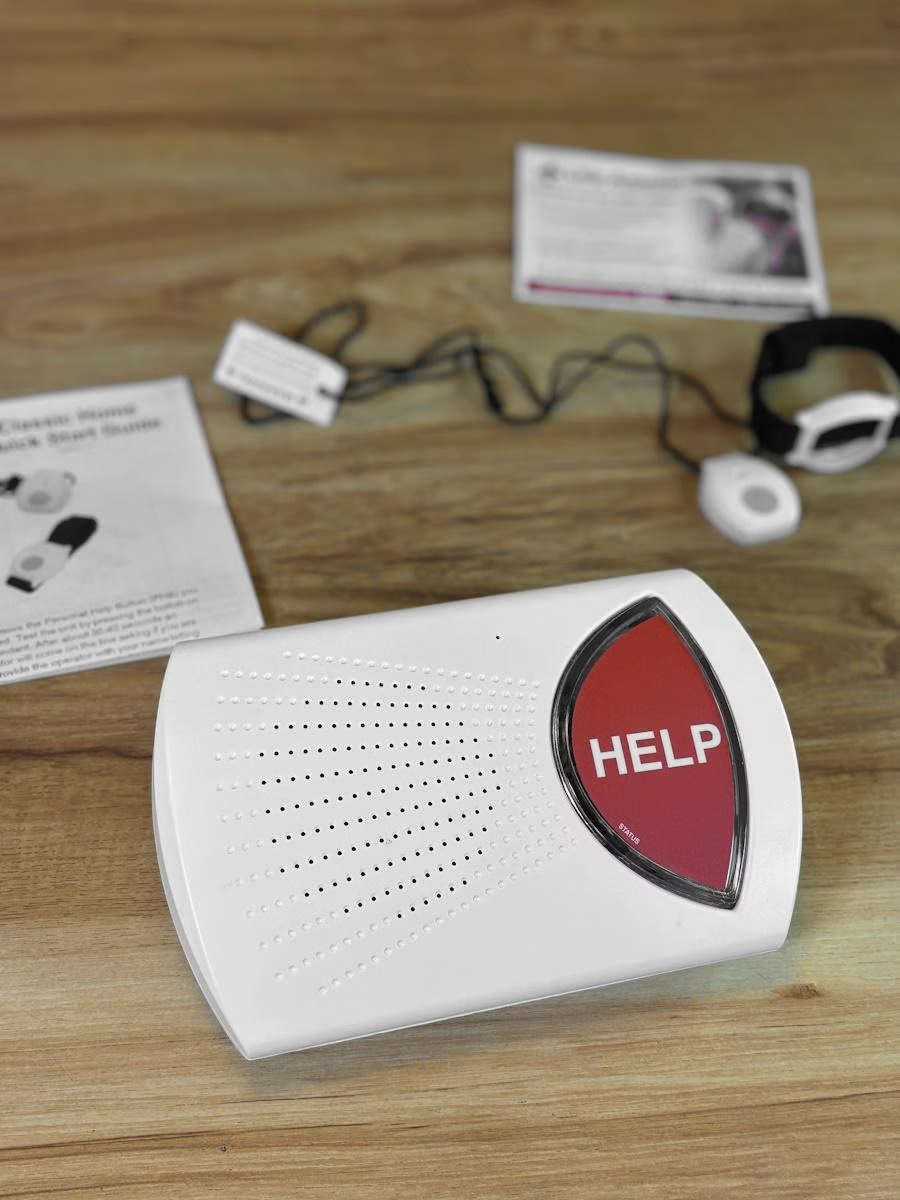
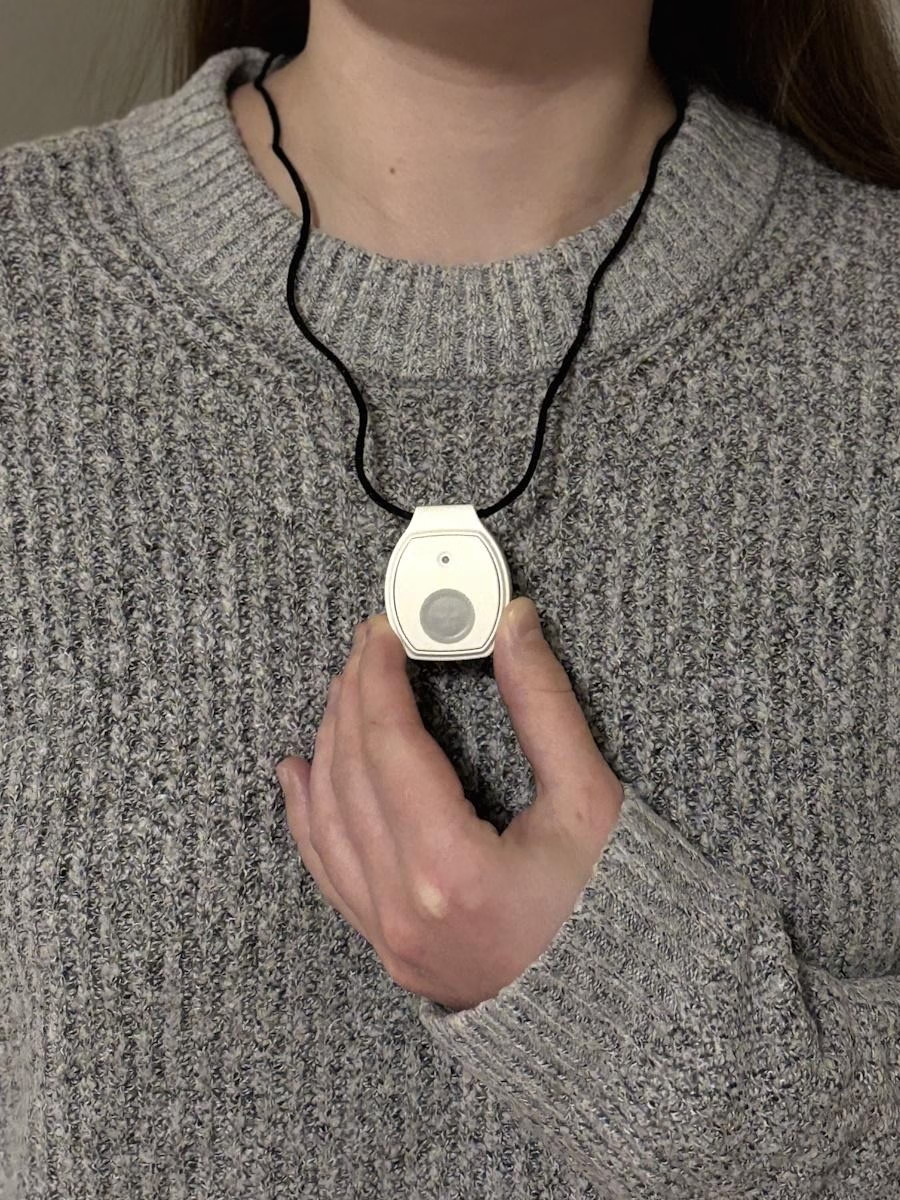
The answer, increasingly, is a small and unromantic piece of technology. A current-generation Seniors emergency monitoring system is not a heavy-handed intervention. It is a discreet, wearable, two-way audio device with automatic fall detection, GPS coverage, and a real human at the other end of the line. For older adults in stable long-term recovery, it is also a useful piece of accountability infrastructure that supports independence rather than threatening it. This piece is for the family member, sponsor, or recovery community ally weighing whether the person they care about would benefit from one.
Why Older Adults in Recovery Carry a Specific Risk Profile?
The intersection of older age and a substance-use history produces a few specific patterns that show up consistently in clinical settings.
Bone density is often lower than the age-norm. Years of harmful use, in many cases involving smoking, alcohol, or both, leaves a smaller margin against fractures from minor falls.
Medication regimens are more complex. Recovery often runs alongside cardiac medication, diabetes management, antidepressants, and pain management for old injuries. The interaction surface is larger than it was at thirty.
Housing is more isolated. Many older adults in recovery live alone, either because of lifelong patterns or because relationships did not survive the years of active use. The number of people who would notice a problem within hours, rather than days, is smaller.
Sleep is more fragile. Both age and recovery affect sleep architecture. A poorly rested older adult has worse balance, slower reaction time, and a higher fall risk in the early morning hours.
The cognitive load of maintaining recovery itself takes energy. The same person who would have caught their balance at fifty may not catch it at seventy-eight, especially on a day when the recovery work has been particularly demanding.
A useful general primer on the broader health intersection of aging and recovery is maintained by the National Institutes of Health, and the same foundational research informs why the safety-net technologies that emerged for senior care apply unusually well to this group.
What an Emergency Monitoring System Actually Does?
A current device is more capable than the press-button alarm of a decade ago.
Automatic fall detection. A multi-axis sensor recognises the impact pattern of a real fall and triggers an alert without requiring the wearer to press anything. For events the wearer cannot signal themselves, this is the most important feature.
Two-way audio. A speaker and microphone built into the pendant let the monitoring centre talk to the wearer the moment something triggers. Most events are not falls. Many are dizziness, breathlessness, or a sudden cardiac symptom. The conversation alone is often the deciding factor in what kind of help gets dispatched.
GPS tracking. The device works outside the home, on walks, in the car, at meetings and appointments. For a wearer who attends in-person recovery support several times a week, the GPS coverage provides a consistent safety net throughout the routine.
Cellular connectivity. The pendant runs on its own SIM and does not depend on the wearer’s home Wi-Fi or a phone they may not always remember to charge. Reliability under power outages and patchy broadband is significantly higher.
Daily charging routine. The device sits in a cradle on the kitchen counter or beside the bed each evening, the same way a CPAP machine or a hearing aid does. The habit becomes part of the daily rhythm without becoming intrusive.
Caregiver app oversight. A trusted family member, sponsor, or designated friend can manage the account from a phone. They are notified when the device alerts, when the battery runs low, or when something needs attention. The wearer does not need to manage the technology themselves.
Why the Device Supports Recovery Rather Than Threatening It?
A well-meaning concern shows up in recovery circles when monitoring technology comes up. Does this kind of device imply surveillance, or paternalism, or a step backward from the independence the wearer has worked so hard to rebuild? The honest answer is that the wearer chooses how the device gets used and who gets the notifications. The technology is not a check-in app for the family. It is a single-purpose safety device that activates only when something has actually happened.
The recovery-supportive framing matters. Independence, autonomy, and self-determination are core to most recovery frameworks, and the device respects all three. The wearer continues to live alone, drive, attend meetings, travel, and run their own life. The device sits quietly in the background and does its single job when needed. The family or sponsor receives a notification only when the device triggers, not when the wearer goes to a coffee shop.
For a sense of how the broader recovery and self-care community thinks about this kind of practical infrastructure, the resources curated at The Sober Curator’s nonprofit recovery resources guide include several frameworks for thinking about long-term safety planning that pair naturally with the device. The category of conversation is not new. The technology that supports it has simply become better.
For older adults whose recovery has carried them through earlier eras of telephone-only support, the digital layer is itself a meaningful shift. The way screens have quietly reshaped recovery culture is a real thread in the modern conversation, helpful and unhelpful in roughly equal measure. A medical alert device sits squarely in the helpful column. It does not push notifications, does not ask for the wearer’s attention, and does not insert itself into the recovery conversation. It is a single-purpose tool that activates only when a real event has happened.
How to Talk to an Older Person in Recovery About Adopting One
The conversation has a few common pitfalls. The framing matters more than the device choice.
Lead with the family’s peace of mind, not with the wearer’s deficits. The truth is both, but the first framing lands better.
Bring the conversation up away from a recent event. A few weeks after a fall is better than the same evening. The wearer should not feel that the device is a punishment for an unlucky moment.
Make the wearer the decision-maker. Show options, let them pick the colour, the device style, the cradle location. The agency matters.
Don’t oversell. The device does one thing reliably. Promising more sets up disappointment that erodes trust.
Acknowledge the recovery framework explicitly. Some wearers will hear “monitoring” and feel an old reflex of being watched. Be plain. The device only signals when something has happened. The day-to-day life is unchanged.
Make the family or sponsor roles clear in advance. One person manages the account. One or two others receive notifications. Other relationships continue normally without device-related conversations getting in the middle.
Health Considerations That Matter Specifically for This Group
A few medical considerations that change which device makes sense for an older adult in recovery.
Cardiac history. Devices with strong two-way audio and proven dispatch protocols matter most here.
Polypharmacy. The medication list common in this group means dispatch teams need accurate medical-record handoffs. A device tied to a monitoring service that captures the medication summary at signup beats a device that does not.
Hearing impairment. Two-way audio at a clear volume, plus optional vibration alerts, matter more than the wearer’s family realises until the device arrives.
Reduced grip strength. Devices with a large central button and reliable auto-fall detection are friendlier than devices that require holding the button down.
Cognitive change. Devices that simplify to a single button, with consistent shape and consistent charging-cradle design, work better than feature-rich devices.
Tobacco history. Many older adults in long recovery still carry pulmonary effects from earlier years. The two-way audio matters here too because breathing-related events benefit enormously from immediate spoken contact.
The American Geriatrics Society maintains a public guide to healthy aging that covers the specific considerations intersecting with the kind of device we are discussing.
Common Mistakes Families Make on Behalf of Recovery-Adjacent Loved Ones
A short list of recurring missteps.
Buying the cheapest base device with no GPS. The wearer is rarely housebound, and the home-only base unit creates a real coverage gap during the meetings, walks, and errands that anchor the recovery routine.
Skipping fall-detection calibration. Out of the box, sensitivity is set for an average frame. A wearer with a history of past injuries may benefit from adjustment.
Forgetting to set up the family-app side properly. The device exists to reduce worry. Without notifications routed to one or two named contacts, the family ends up calling the monitoring centre to confirm everything is fine, which defeats half the purpose.
Routing notifications to the wrong people. The wearer should choose. Sometimes a sponsor, an adult child, a longtime friend, or a sibling is the right primary contact. The wrong contact makes the device feel intrusive.
Treating the device as one-and-done. Charging cradle visits, account updates, address updates if the wearer travels, and quarterly contact-list refresh all matter.
Quick-Reference Checklist for Recovery-Adjacent Households
Habits That Reinforce Recovery on the Same Wrist
- Pair the device’s daily charge with the morning meeting check-in
- Use the medication reminder for prescribed support medications
- Schedule weekly battery and contact-list reviews with a sponsor
- Keep the SOS contact list aligned with the recovery support network
Conversation Templates for Family Members
- Frame the device as harm-reduction, not surveillance
- Lead with the wearer’s own preference for two-way audio
- Acknowledge that older recovery means slower physical recovery from any fall
- Avoid involving the device in disciplinary or boundary conversations
Quick Sanity Checks Before a Trip
- Confirm cellular coverage on the destination’s local carrier
- Update the address profile with the trip’s main accommodation
- Pack the charger and a backup cable in the wearer’s day bag
- Test the SOS button with the operator before leaving home
Frequently Asked Questions From Family Members and Sponsors
Does wearing the device imply something about my loved one’s recovery?
No. The device is unrelated to recovery framing. It is a senior-safety wearable that addresses fall risk, cardiac events, and the general isolation of older adults living alone. Many wearers in long recovery wear them precisely because they value the independence the device protects.
Who should manage the account?
One named person as primary, ideally the closest trusted family member or designated friend. One or two others on the notification list. Avoid splitting the active management across multiple people, which produces ambiguous responsibility and missed maintenance.
What happens if the wearer presses the button by accident?
Modern devices include a brief cancellation window. The operator opens the two-way audio, confirms with the wearer, and stands down without dispatch if the press was accidental. Real events get faster response. False positives become a calm thirty-second conversation.
Will the device track location all the time?
The GPS reports location only when the device triggers an alert, on a scheduled check-in, or when the wearer or designated contact requests it. The device is not a continuous tracker, and most providers publish their data-handling policies clearly.
A Final Note for the Recovery Community
The unromantic truth about recovery in later life is that the work continues alongside an aging body, and the practical safety considerations that come with that body need to be taken seriously. A small, calm, dependable piece of technology that activates only when something has actually happened is not a step backward from the independence the wearer has built. It is the quiet hardware that lets that independence keep going for another decade. The community’s strength has always been in the small acts of care that make the long path sustainable, and a properly chosen monitoring device sits comfortably alongside the meetings, the phone calls, and the cup of coffee with a sponsor that hold the recovery together.
You’ve got mail from The Sober Curator

Resources Are Available
If you or someone you know is experiencing difficulties surrounding alcoholism, addiction, or mental illness, please reach out and ask for help. People everywhere can and want to help; you just have to know where to look. And continue to look until you find what works for you. Click here for a list of regional and national resources.