
One Peep at a Time. (Yes, I Went There.)

It started, as most of my best ideas do, with a Google search that had absolutely no business leading anywhere useful.
I was looking for a Peeps diorama set inside an addiction treatment center. Specific? Yes. Unhinged? Maybe. But if you have spent any time on this site, you already know that is basically my brand.
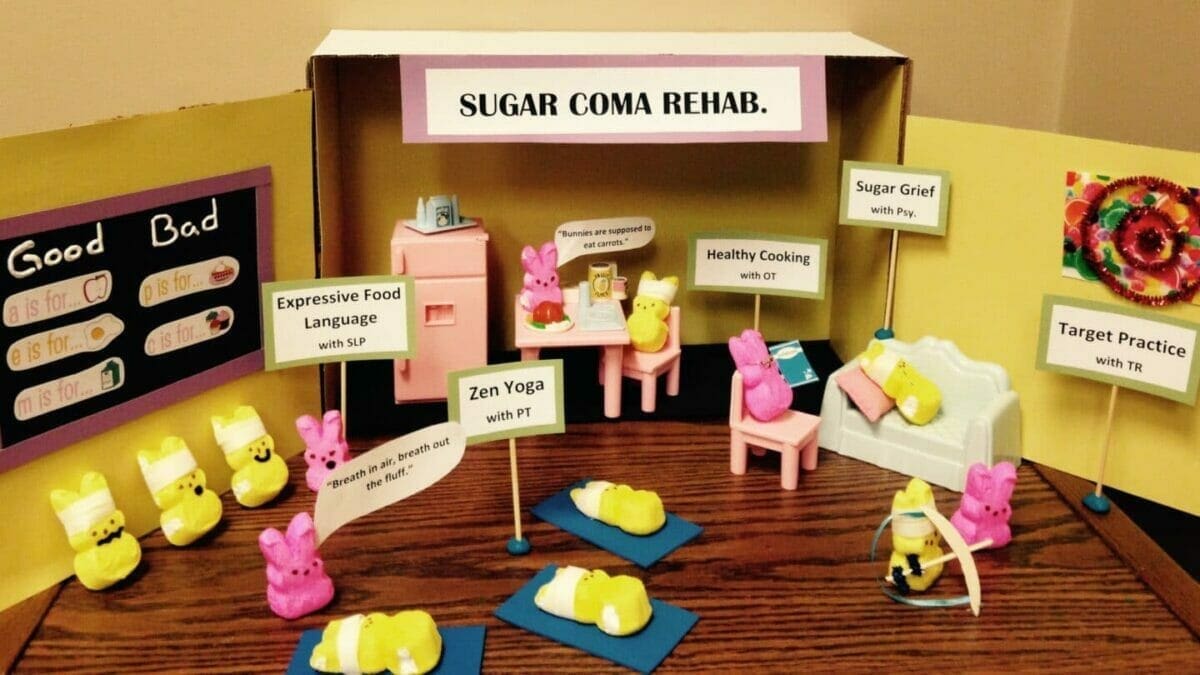
What I found instead was a “Sugar Coma Rehab” diorama created by the staff and clients of Courage Kenny Rehabilitation Institute at United Hospital. Adorable. Impressive. Not quite what I had in mind.
And then I Googled “tiny chairs.”
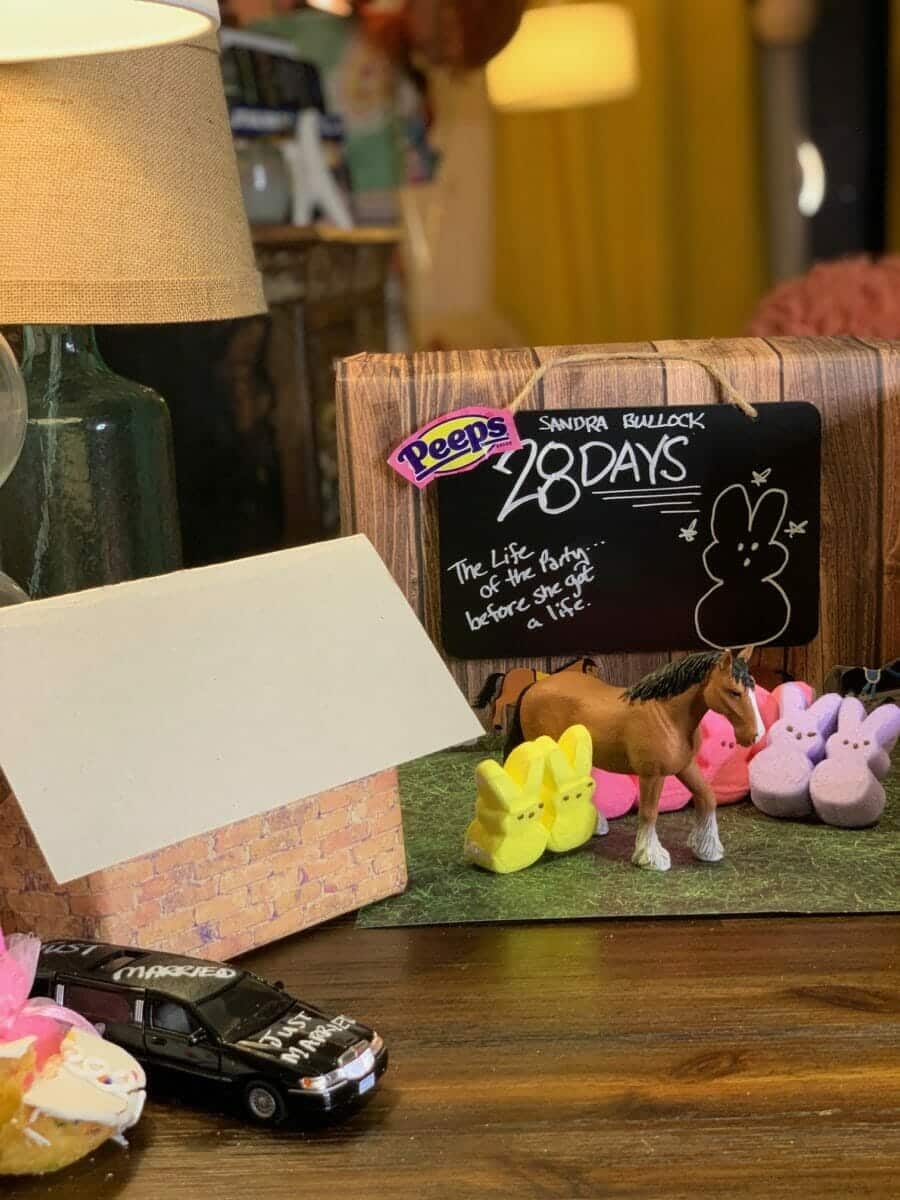
That was it. That was the moment. The whole scene materialized in my head instantly: a Peeps diorama based on 28 Days, the 2000 Sandra Bullock film about a newspaper columnist who crashes her sister’s wedding, steals a limo, wrecks it into a house, and gets sentenced to 28 days in rehab. Which — and I say this with full self-awareness — draws some uncanny parallels to my own life. Minus the wedding. Mostly.
Editor’s Note: This Curated Crafts project was originally published in April 2021 — the tail end of the pandemic years, when we were all doing deeply weird and wonderful things with our hands. It has since been updated. I regret nothing.
Why 28 Days? Let Me Count the Ways.
If you have not seen 28 Days, fix that immediately. It is funny and messy and honest and genuinely good. Sandra Bullock plays Gwen Cummings — charming disaster, functional enough to hold a job, not functional enough to hold it together at her sister’s rehearsal dinner.
The movie does something a lot of recovery films do not: it does not make rehab look like either a punishment or a spa. It looks like a place full of complicated, hilarious, real people who are all trying to figure out how to be human without a chemical buffer. There is group therapy. There is a soap opera obsession subplot. There is a horse named Sonador who becomes a metaphor for everything. There is a very specific energy that I recognized immediately.
I wanted to recreate that world in marshmallow form. Naturally.
My original ambition was to build the full musical finale — the moment Gwen walks out of rehab a changed woman, set to something dramatic and triumphant — but honestly, my crafting energy ran out somewhere around the group therapy circle. So I went with my core recovery principle:
One Peep at a Time.
(I see what I did there too. You are welcome.)
Why Crafting Is a Legitimate Sober Activity (and Not Just a Pandemic Cliché)
Here is something nobody talks about enough in early recovery: your hands do not know what to do with themselves.
You used to pour a drink. You used to open a bottle. You used to have a whole ritual that kept your hands occupied while your brain figured out where to be. And then you stop, and suddenly your hands are just… there. Hovering. Waiting. Getting into trouble.
Art therapy is a legitimate clinical tool for exactly this reason. Creative expression gives your nervous system somewhere to put the excess energy. It gets you out of your head and into your hands. It also produces something at the end, which is more than you can say for most of the things you used to do with your evenings.
And sometimes — sometimes — it produces a Peeps diorama of a fictional rehab center staffed entirely by marshmallow bunnies and chicks. Which is its own kind of healing.
What You Need to Build Your Own 28 Days Peeps Diorama
This is not a precious craft. There is no right way to do it. The point is to gather the supplies, put on the movie, and see what happens. My version took a few hours, several wrong turns, and exactly zero regrets.
Here is the full supply list:
- Peeps — lots and lots of Peeps. Yellow chicks, pink bunnies, purple bunnies. The group therapy circle alone requires at least a dozen.
- Tiny folding chairs (the key discovery — search “miniature folding chairs” or “dollhouse chairs” online or at your local craft store)
- Tiny living room furniture set (Hobby Lobby is your friend here — look in the dollhouse or miniature crafts section)
- Scrapbooking paper in various patterns for floors, walls, outdoor grass, and general scene-setting
- Tiny limo (for the opening scene recreation — yes, this exists, yes, you need it)
- Tiny dog (Gwen’s dog in the movie is practically a main character)
- Tiny horse (for Sonador — non-negotiable if you have seen the film)
- Baseball stickers (a nod to the softball team subplot, which is genuinely one of the movie’s best running jokes)
- Small cardboard boxes of various sizes to build out the rehab facility structure
- White chalkboard pen for labeling rooms, writing signs, adding details
- Hot glue gun — because nothing stays put without commitment
- Scissors, patience, snacks that are not Peeps (so you do not eat your cast)
Optional but highly recommended: play the 28 Days soundtrack while you build. The vibe is essential.

A Few Notes from the Construction Process
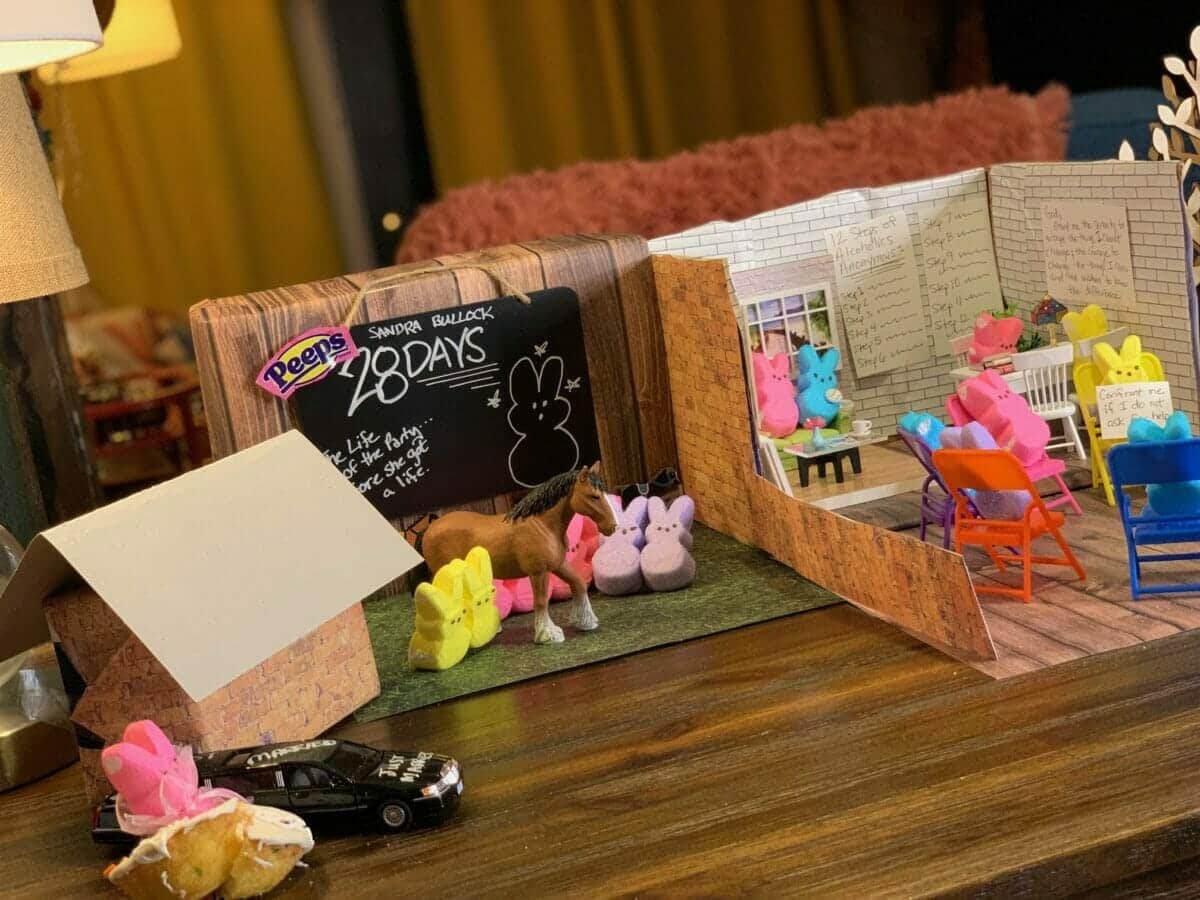
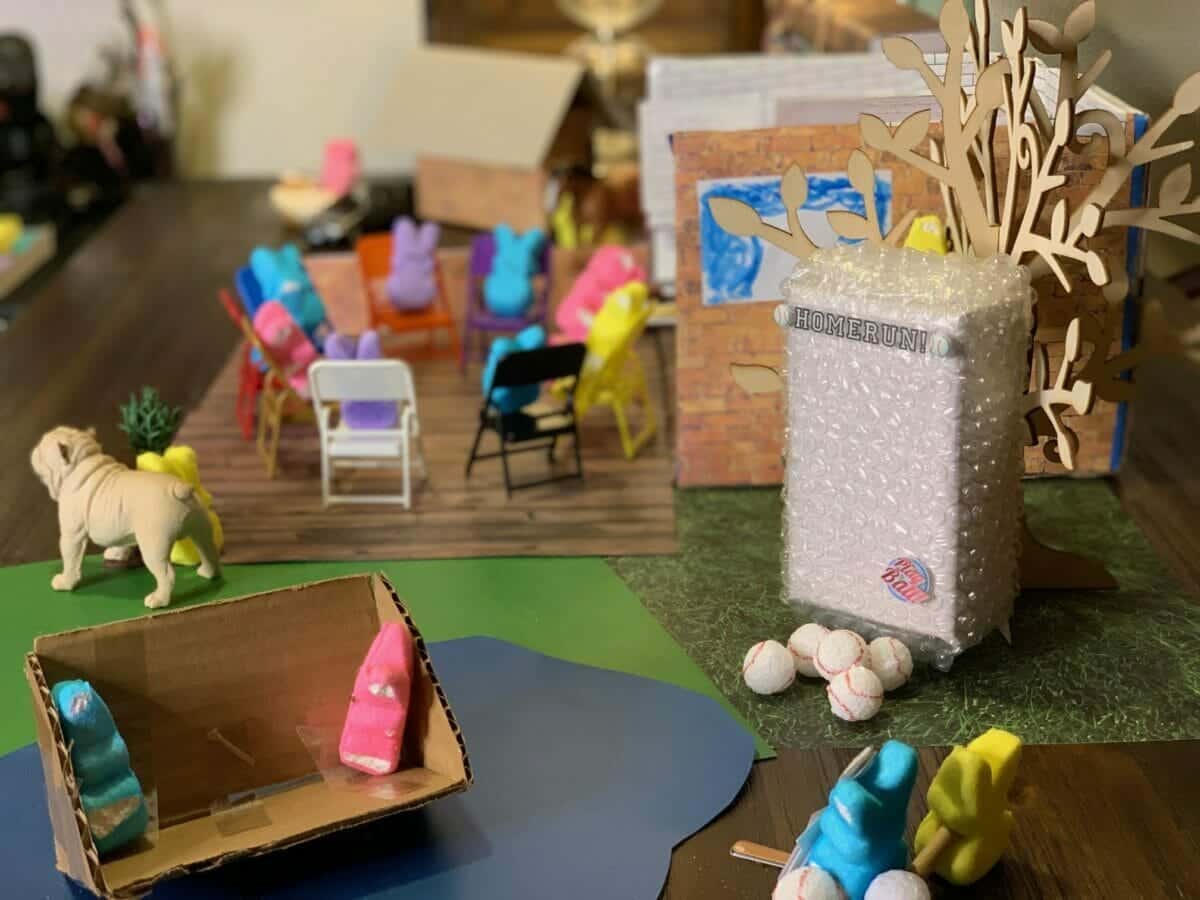
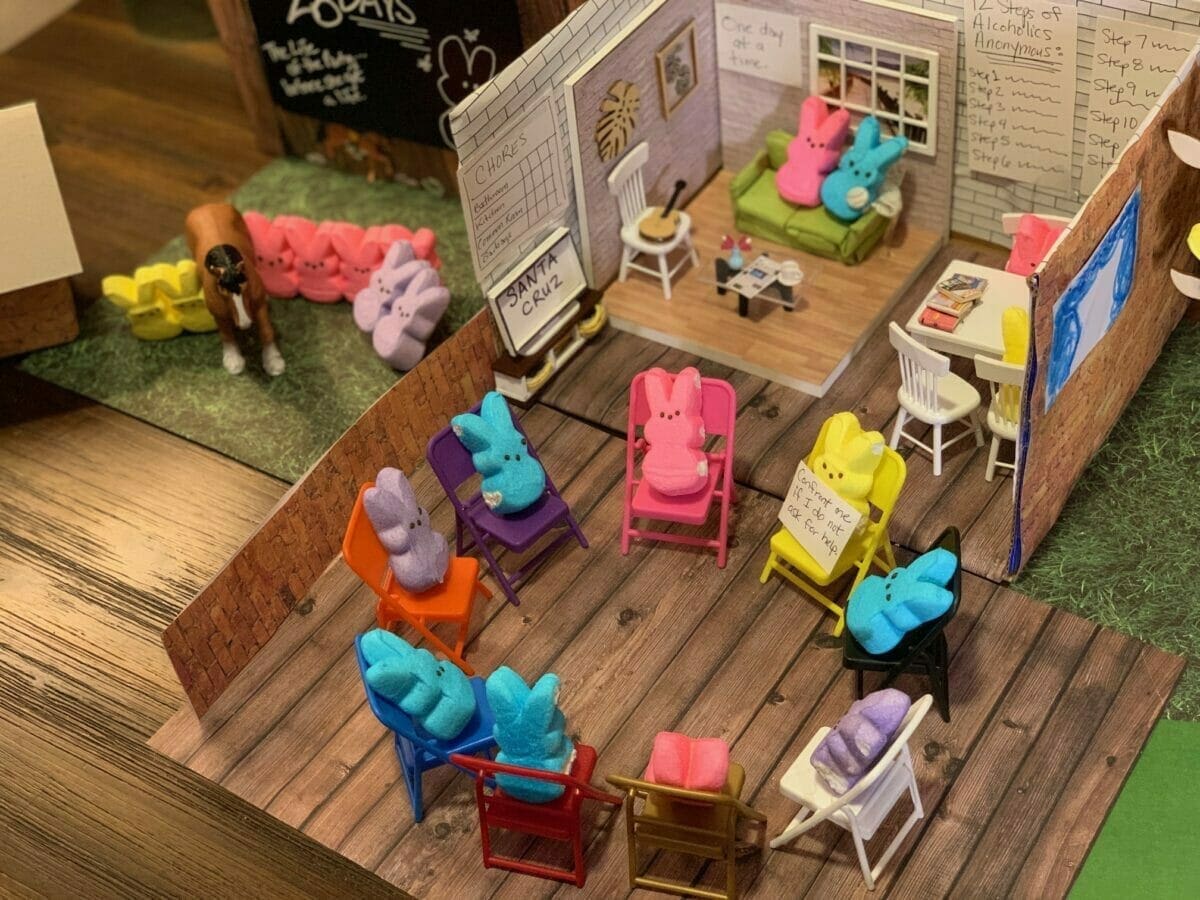
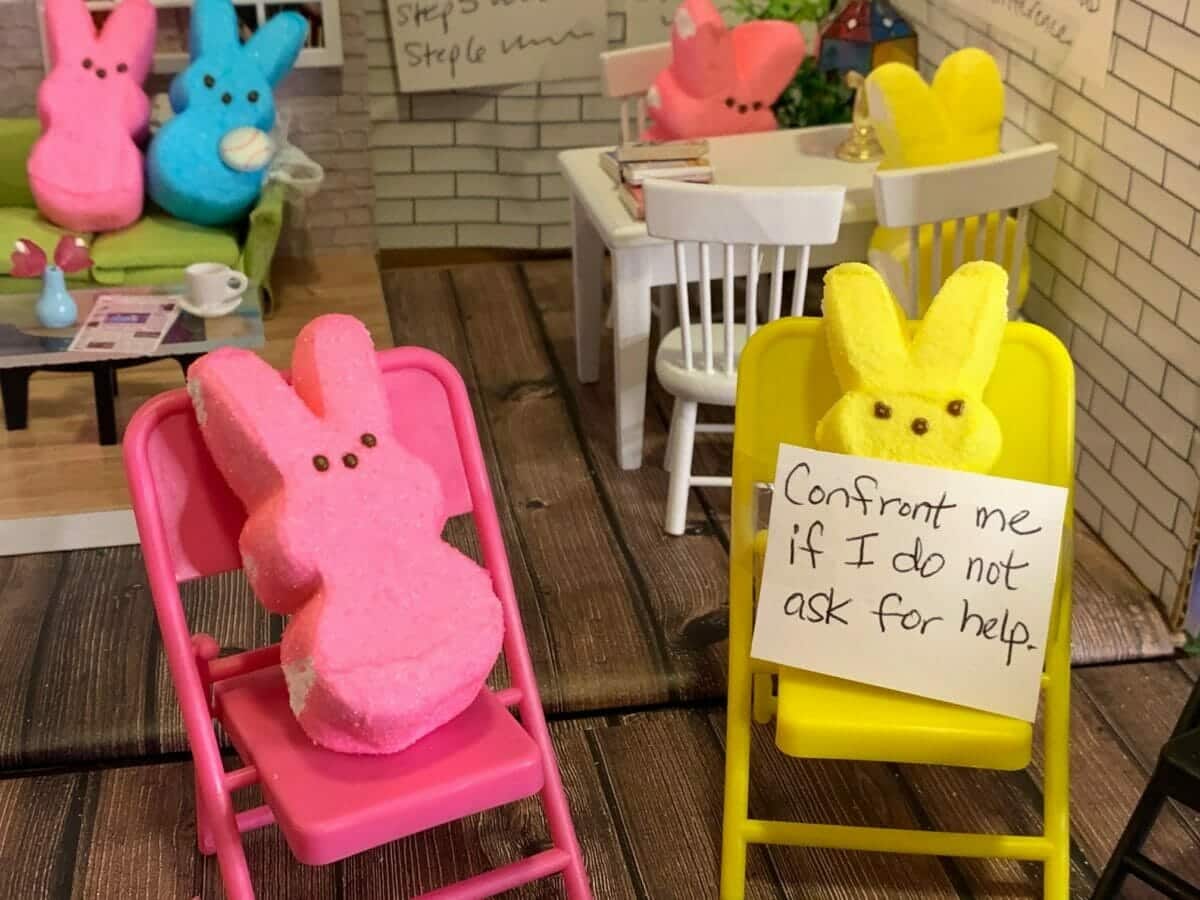
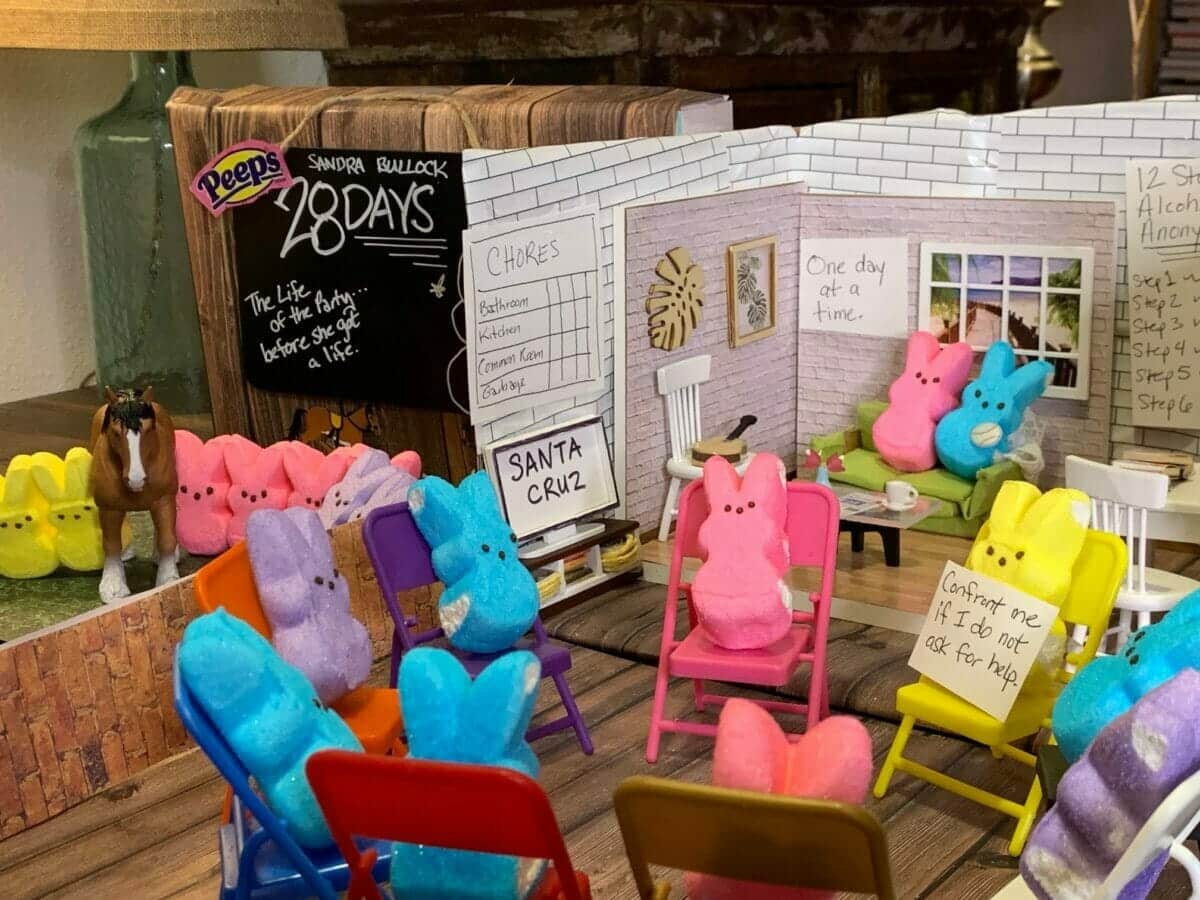
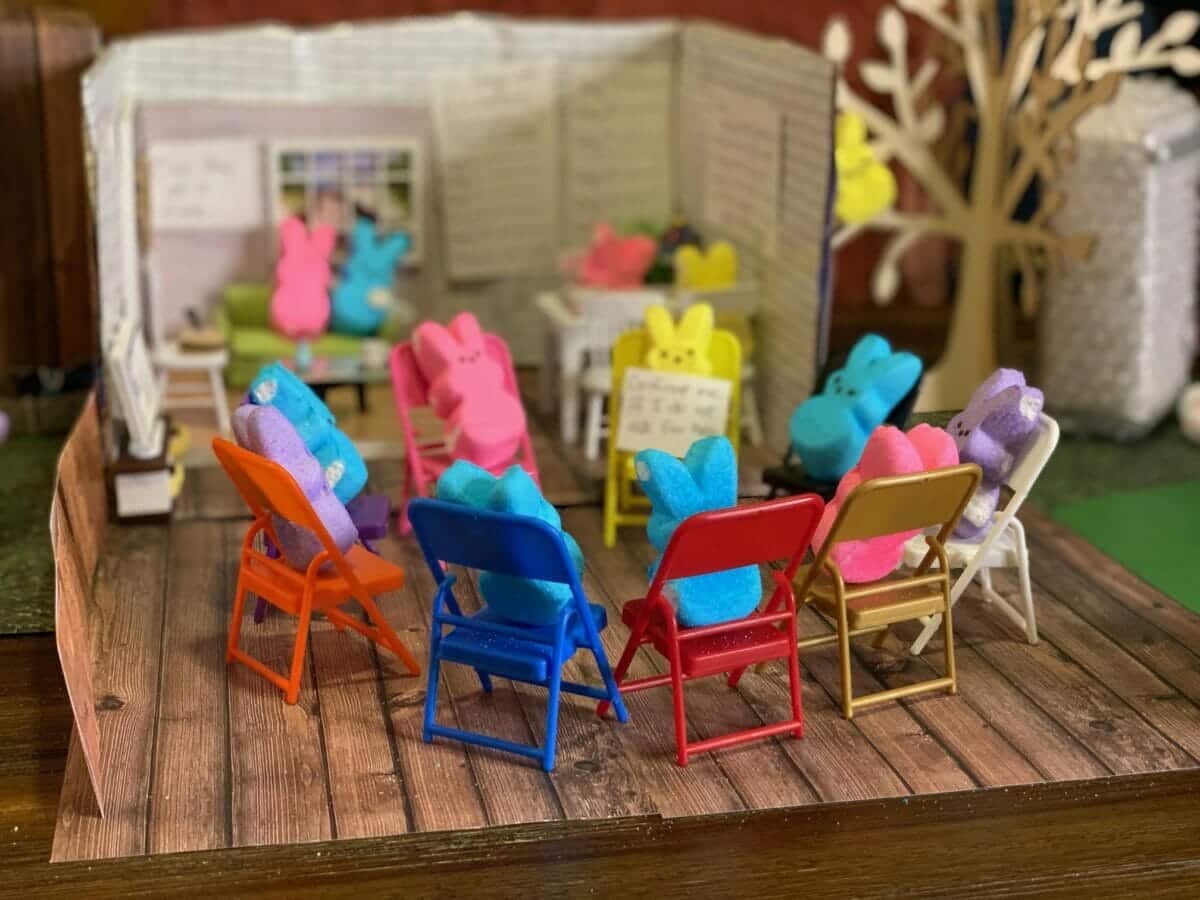
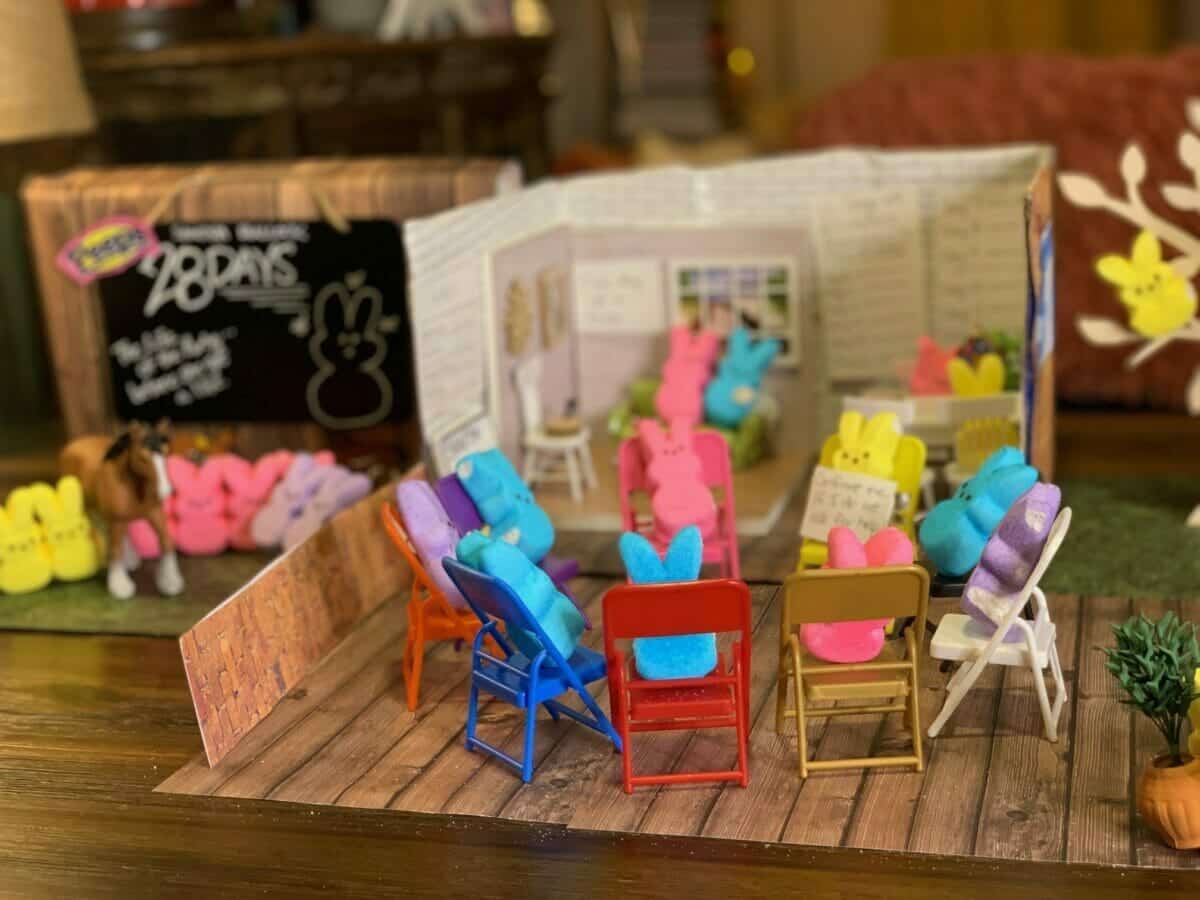
The group therapy circle is the emotional core of the diorama. Get the chairs right. Arrange your Peeps in a rough oval, give them a little space like they are actually doing the work, and consider adding one empty chair because there is always one in a real meeting.
The limo crash scene is optional but earns significant points for anyone who recognizes it. A tiny limo at a slight angle against a scrapbook-paper “house” does the job with minimal materials and maximum impact.
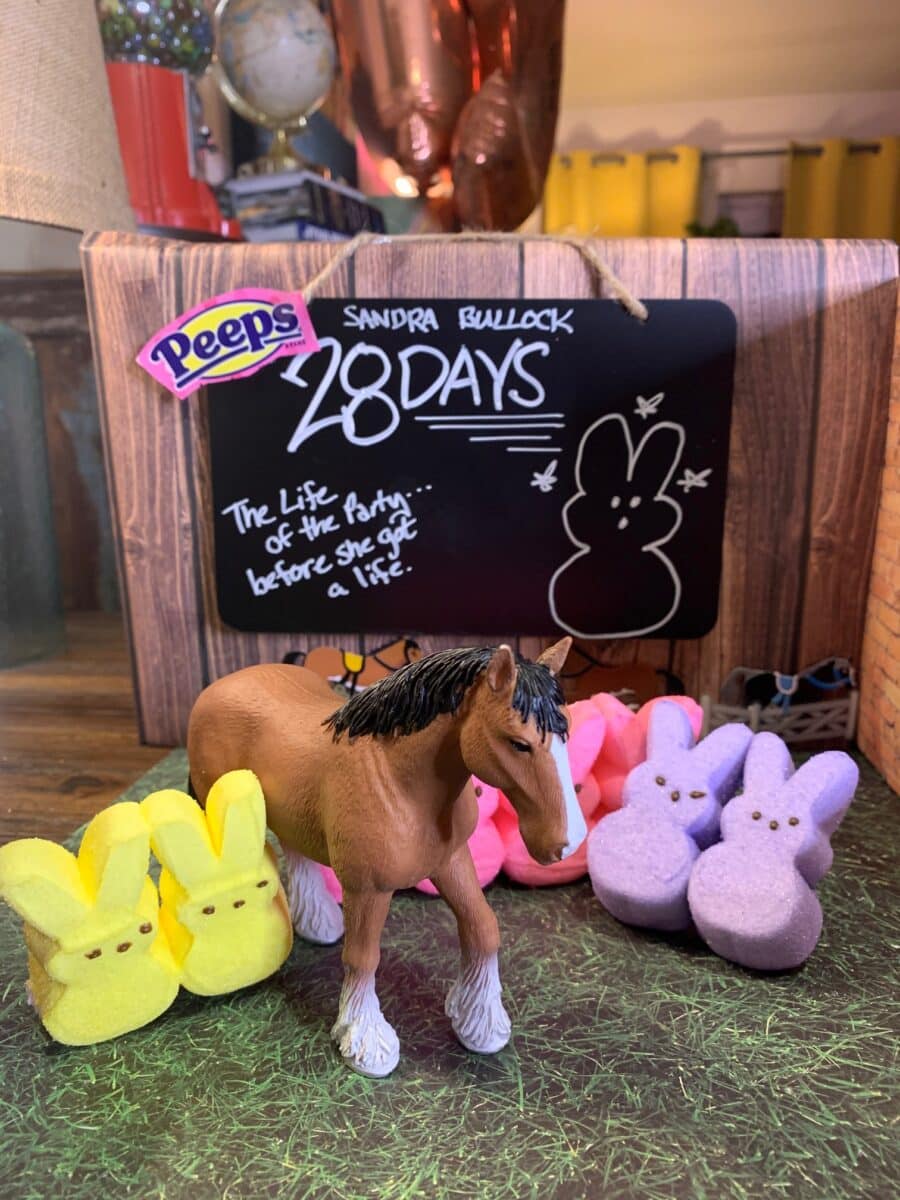
The horse situation is whatever you want it to be. I found a tiny plastic horse at a craft store and positioned it in what I can only describe as a meaningful way. If you know, you know.
I will be honest: I did not finish everything I planned to build. The soap opera filming set never made it. The outdoor grounds are more impressionistic than architectural. But the group therapy circle is solid, the limo is crashed, and the tiny chairs are arranged with genuine intention.
That counts. In crafting and in life, done and imperfect is better than perfect and never started.
The Craft is the Point
I built this diorama during the pandemic, alone at my kitchen table, with a movie I love playing in the background and a pile of supplies that had no real business becoming anything coherent. And somehow it became something I was genuinely proud of.
That is the thing about creative work in recovery. It does not have to be great. It does not have to be finished. It does not have to make sense to anyone but you. It just has to keep your hands busy and your brain present and the afternoon moving forward.
One Peep at a time. One tiny chair at a time. One cardboard rehab room at a time.
That is how most things worth building actually get built.
If Sandra Bullock’s character can walk out of a fictional rehab center at the end of 28 days and face her whole life differently, surely you can finish a marshmallow diorama. What are you waiting for?

CURATED CRAFTS: You got sober, now what are you going to do to keep your hands busy? And no, you don’t have to take up knitting. Although, if you enjoy it, then get your knit on homie! Art therapy is a technique rooted in the idea that creative expression can foster healing and mental well-being. Maybe you’re the next Sober Picasso or maybe you’re the next big Pinterest Fail. Either way, you’re creating something with your hands and hopefully getting out of your head. That’s a great way to relieve stress and express your feelings.

MOVIE NIGHT WITH THE SOBER CURATOR: Welcome to movie night with The Sober Curator! No need for booze or drugs, we’ve got your entertainment cravings covered. This corner of our site is dedicated to recommending movies and documentaries that are sure to captivate, inspire, and entertain. So, grab some popcorn, whip up your favorite mocktail, and indulge in your go-to sweet treats as you cozy up for a cinematic treat.
Need NA drink ideas? Our HAPPY EVERY HOUR section is brimming with non-alcoholic beverages to quench your thirst.
If a Netflix marathon is more your speed, check out THE MINDFUL BINGE for a list of TV series that get our sober seal of approval!

A Disco Ball is Hundreds of Pieces of Broken Glass, Put Together to Make a Magical Ball of Light. You are NOT Broken, Friend. You are a DISCO BALL!

Resources Are Available
If you or someone you know is experiencing difficulties surrounding alcoholism, addiction, or mental illness, please reach out and ask for help. People everywhere can and want to help; you just have to know where to look. And continue to look until you find what works for you. Click here for a list of regional and national resources.

Subscribe to The Sober Curator on YouTube
What is a Peeps diorama?
A Peeps diorama is exactly what it sounds like: a miniature scene built using Peeps marshmallow candies as the characters. Think tiny chairs, scrapbook paper backdrops, and an alarming number of pastel bunnies and chicks arranged into a scene with actual narrative intent. It is a legitimate Easter craft tradition with a surprisingly dedicated following — there are Peeps diorama contests run by newspapers across the country every spring. The Washington Post has hosted one for years. The results range from charming to genuinely unhinged, and both are correct outcomes.
How do you make a Peeps diorama?
Start with a concept — the more specific, the better. Generic Easter scenes are fine, but a diorama with a storyline is what separates the memorable ones from the ones that just have bunnies standing in grass. Once you have your scene in mind, gather your supplies: Peeps in multiple colors, miniature furniture or accessories (craft stores and dollhouse sections are your best friends), scrapbook paper for floors and walls and outdoor settings, small cardboard boxes to build out structure, and a hot glue gun to hold everything together. Arrange your Peeps with actual intention — give them context, positioning, and ideally something to react to. The details are what make it. An empty chair in a group therapy circle hits differently than a row of bunnies standing in a field.
What supplies do you need to make a Peeps diorama?
The core list: Peeps in your preferred colors and quantities (buy more than you think you need — you will eat some and the rest will be your cast), miniature folding chairs or furniture, scrapbook paper in various patterns for backgrounds and floors, small cardboard boxes in different sizes to build out rooms or structures, a white chalkboard pen for labeling and detail work, a hot glue gun, and scissors. Beyond the basics, your supplies depend entirely on your scene. A movie-inspired diorama might need a tiny car, a tiny animal, or specific props that match the film. A group therapy scene needs a circle of chairs and a coffee urn if you can find one. A nature scene needs grass paper and maybe a tiny tent. The concept drives the shopping list.
What are good Peeps diorama ideas for adults?
Skip the standard Easter meadow. Adults do better work with a pop culture angle or a personal reference that means something. Movie and TV recreations are consistently strong — the more specific the source material, the better the final product. Recovery-themed scenes work well for the sober community: a group therapy circle, a sober milestone celebration, a first meeting. A miniature version of a meaningful place — a favorite coffee shop, a city skyline, a living room you loved — gives the project emotional weight without requiring artistic skill. The real rule is: the more you care about the concept, the more interesting the result. A diorama built around something genuinely funny or personally meaningful will always land better than a technically perfect but emotionally neutral scene.
Is 28 Days a good movie about addiction and recovery?
It holds up better than most people expect. Released in 2000, 28 Days stars Sandra Bullock as Gwen Cummings, a newspaper columnist who crashes her sister’s wedding, steals a limo, wrecks it into a house, and gets sentenced to 28 days in residential rehab. What the movie does well is resist making rehab look like either a punishment or a luxury spa. It looks like a place full of complicated, genuinely funny, real people who are all trying to figure out how to live without a chemical buffer. The group dynamics are honest. The supporting cast — including Viggo Mortensen, Dominic West, and Steve Buscemi — gives it real depth. There is also a horse named Sonador who carries more metaphorical weight than most characters in prestige dramas. It is not a perfect film, but it is a warm and specific one, and that counts for a lot in the recovery genre.
Are Peeps diorama contests still a thing?
Yes, and they are thriving. The Washington Post has run a Peeps diorama contest for years and receives thousands of entries annually across categories including film and TV, news and politics, and general pop culture. Regional newspapers and local organizations run their own versions. The competitive Peeps diorama world is more serious than it sounds — entries are judged on creativity, execution, and faithfulness to the source material, and the winning pieces are genuinely impressive. If you are looking for a sober Easter activity with stakes, entering a contest is a solid option. The Sober Curator strongly endorses channeling competitive energy into marshmallow crafts.
Why is making a Peeps diorama a good activity for people in recovery?
Because your hands do not know what to do with themselves, and that is a real problem in early sobriety that nobody talks about enough. You used to have a ritual — opening a bottle, pouring a drink, having something to do with your hands while your brain figured out where to be. When that ritual disappears, the restlessness is real. Creative projects fill that gap in a way that is clinically supported and practically effective. Art therapy is a legitimate tool in recovery because making something with your hands pulls you out of your head and into the present moment. Peeps dioramas specifically have the added benefit of being inherently funny, which lowers the bar for participation and makes the whole thing feel less like homework. You do not have to be crafty. You do not have to be good at it. You just have to show up, arrange some marshmallows, and see what happens. That is a skill set that transfers.
Where can I find miniature supplies for a Peeps diorama?
Hobby Lobby and Michaels are the most reliable in-person sources for miniature furniture, dollhouse accessories, and small props. Both carry living room sets, chairs, and various miniature objects in their dollhouse or seasonal crafts sections. For more specific items — tiny vehicles, tiny animals, tiny everything — search Amazon or Etsy using terms like ‘dollhouse miniatures,’ ‘miniature folding chairs,’ or ‘tiny [specific object].’ Scrapbook paper for backgrounds and floors is available at any craft store and comes in a wide range of patterns that work well for floors, walls, grass, and outdoor settings. The white chalkboard pen for labeling and signage is a Hobby Lobby staple. Budget tip: the Easter seasonal sections at Target and Michaels stock small decorative items every spring that work perfectly as diorama props without the miniatures markup.