


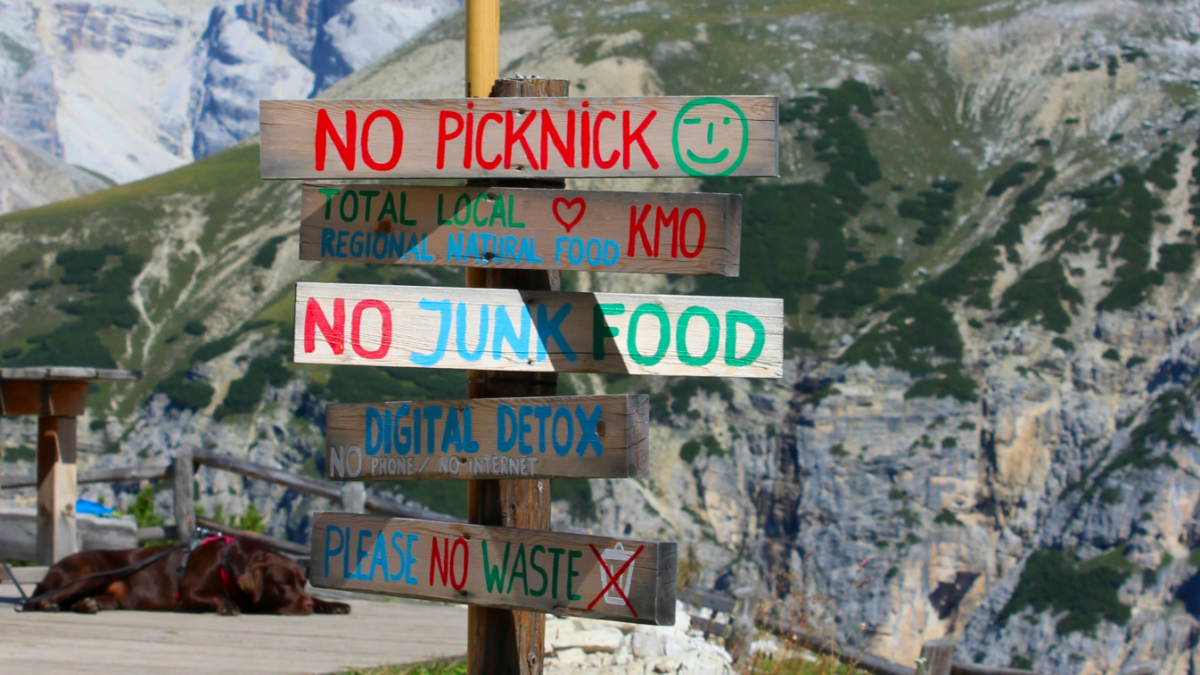

By the afternoon, I sit in a planning meeting for our retreat offerings, half-listening while scrolling through my phone under the table. Someone mentions “digital detox,” and I look up, suddenly paying full attention. The irony isn’t lost on me: here I am, building wellness experiences for others, while if I’m being honest, I’m often unable to be completely present in my own life.
This moment becomes a turning point. Not just for me personally, but for how we think about (sober-friendly) retreats and what they need to offer in 2026. Because here’s what I know: you can remove alcohol from your life and still be numb, checked out, unavailable to yourself and others if you’re living through a screen.
True presence requires more than sobriety. It requires a deliberate return to analog living, to the tactile and immediate world that exists when we put down our devices and pick up our senses.
Top Analog Practices for Sobriety and Presence in this Article
Jump to:
The Tech Fatigue Epidemic
Let’s name what we’re all feeling. It’s not just tiredness, t’s a bone-deep exhaustion that comes from being constantly available, perpetually stimulated, and never truly alone with our thoughts. The term “tech burnout” has become ubiquitous because the experience is nearly universal.
Research shows we check our phones an average of 144 times per day. That’s every six and a half minutes during waking hours. We spend over seven hours daily on screens, fragmenting our attention into smaller and smaller pieces. The result is what neuroscientists call “continuous partial attention” where we’re always monitoring, never fully immersed.
For people in recovery, this presents a particular challenge. Most of us used alcohol or drugs to escape, to numb, to create distance from difficult feelings. When we remove that coping mechanism, we often unconsciously replace it with another form of numbing: endless scrolling, binge-watching, compulsive checking. We’re sober, yes. But are we present? Are we actually feeling our lives?
The promise of analog living in sober retreats is radical: complete digital disconnection paired with practices that root you firmly in the physical world. No notifications. No scrolling. No virtual anything. Just you, nature, others, and the revolutionary act of being fully here.

The Practices: Simple, Powerful, Transformative
Pen-and-Paper Journaling: The Lost Art of Handwriting
There’s something almost subversive about handwriting in 2026. In a world of voice memos, text messages, and typed notes, putting pen to paper feels deliciously analog, almost defiant.
But it’s more than just nostalgia. Neuroscience research shows that handwriting activates different parts of the brain than typing. It engages motor cortex, sensory processing, and memory formation in ways that digital note-taking simply doesn’t. When you write by hand, you process information more deeply, remember it better, and think more creatively. It integrates across both hemispheres.
For journaling in sobriety, this matters enormously. The physical act of writing creates a different relationship with your thoughts. There’s no delete button, no edit history. What you write stays written. This permanence encourages honesty in a unique way, you can’t backspace your feelings or revise your truth as you’re discovering it.
In our retreat settings, we provide participants with beautiful, tactile journals, the kind you want to write in. Not cheap spiral notebooks, but journals that feel special, that honor the importance of your thoughts.

Top Journals for Sobriety Retreats:
Leuchtturm1917 A5 Hardcover ($25-30): The gold standard for serious journalers. Numbered pages, table of contents, thick 80gsm paper that handles fountain pens beautifully, and an elastic closure. Available in dotted, lined, or blank. The Sage Green is particularly soothing for retreat environments.
Midori MD Notebook ($18-25): Japanese minimalism at its finest. Clean design, fountain-pen-friendly paper, and a lay-flat binding that makes writing effortless. The cream-colored paper is easier on the eyes during long journaling sessions.
Archer & Olive 160gsm Bullet Journal ($30-35): Ultra-thick paper for those who use markers or watercolors in their journaling practice. The substantial weight of the paper makes writing feel significant, intentional.
Tsuki ‘Woodland Adventure’ Travel Notebook ($28): Beautiful forest-green velvet cover perfect for nature-based retreats. The 160gsm dotted pages invite both writing and creative expression.
Hobonichi Techo Cousin ($45): A Japanese planner-journal hybrid that includes daily pages alongside scheduling sections. Ideal for participants who want structure in their practice.
Moleskine Classic Hardcover ($18-25): The dependable standard. Available everywhere, classic design, and the rounded corners fit perfectly in bags for travel. Plus this store has so much more!
Apica CD Notebook ($8-12): Budget-friendly but high-quality. Silky-smooth paper and excellent value for retreats providing journals to all participants.
TRAVELER’S Company Notebook ($18-40): Modular leather cover system with refillable inserts. Beautiful patina develops over time, making it a journal that grows with your sobriety journey.
Rhodiarama Hardcover ($22-28): French quality, vibrant colors, and thick paper. The lay-flat binding and end pocket make it practical for retreat environments.
We encourage you to choose their journal intentionally. Hold it. Feel the cover. Test the pages. This isn’t just a notebook, it’s the container for your thoughts and reflections during a transformative experience. Don’t forget to draw + doodle too.

Star Bathing: Night Sky as Teacher
If forest bathing is immersing yourself in green, star bathing is surrendering to darkness and light. In off-grid retreat settings, far from urban light pollution, the night sky reveals itself in stunning detail with thousands of stars visible to the naked eye, the Milky Way stretching across the horizon like a river of light.
Star bathing is exactly what it sounds like: lying beneath the stars, allowing your eyes to adjust to darkness, and experiencing the profound smallness and significance of being human on this spinning planet.
The practice can emerge naturally during retreats. Imagine on the first night, someone brings a blanket outside after dinner. Then another person joins. Then another. Soon you have a dozen people lying silently in the grass, gazing upward. No one speaks for nearly an hour. When we finally return inside, the shift in energy is palpable: quieter, softer, more contemplative.
In sobriety, star bathing offers something particular: perspective. When you’re looking at light that traveled millions of years to reach your eyes, your immediate concerns don’t disappear, but they find their rightful size. You’re part of something vast and ancient. Your struggles are real and valid, and they’re also temporary moments in an incomprehensibly large universe.
We build nature bathing into the rhythm of our retreats. Sometimes I offer brief context and invite intention setting. But mostly, less is more, and nature speaks for itself. Just breathing in the waterfall we visit, inhaling, watching, being.
There’s no app for this. No screen can replicate the experience of warm water on your face, the smell of earth beneath you, the actual photons from a spontaneous rainbow entering your eyes. It’s irreducibly real, irreplacibly present.

NA Activation Bars: Ritualized Nourishment
One of the surprising challenges in sobriety is replacing the ritual of drinking. It’s not just the alcohol people miss, it’s the social ceremony of it. The pause in the day. The thing that marks transition from work mode to evening mode. The social lubricant at gatherings.
We needed something to fill that space. Something special, intentional, and nourishing literally and symbolically. That’s how our NA (non-alcoholic) activation bars became a centerpiece of retreat life.
These aren’t your typical retreat snack stations. We’ve created ceremonial moments around nutrient-dense, carefully crafted foods and drinks that genuinely make you feel good, what we call “activation” because they wake up your senses and support your body’s natural energy and recovery processes. Have you ever tried Cacao Juice?
The Evening Cacao Tasting Experience: The first evening at dusk, we prepare ritual-grade cacao. Not hot chocolate—real cacao, grown locally, minimally processed, rich in magnesium and flavonoids. We serve it in beautiful handmade cups, and everyone receives their portion mindfully, while hearing about the family that lovingly produced it. The ritual of holding something warm, sipping slowly, being together without conversation—it recreates the pause that the evening drink once provided, but with nourishment instead of numbing.
Adaptogen Elixirs: Throughout the day, an activation bar can offer rotating elixirs featuring adaptogens like ashwagandha, reishi, and rhodiola. These herbs support stress response and nervous system regulation which is exactly what people in recovery need. But beyond the functional benefits, the act of choosing an elixir, watching it being prepared fresh, holding a beautiful glass, it’s all part of returning to presence.
Fermented Foods Station: Kombucha, water kefir, naturally fermented vegetables. These gut-supporting foods are presented as a buffet of choices, which can encourage participants to tune into what their bodies want rather than defaulting to autopilot eating.
Fresh-Pressed Juices: Made to order while you wait post yoga class. The sound of the juicer, the smell of fresh citrus, the vivid colors—it’s a sensory experience that pulls you into the moment.
The key is that everything at the activation bar is made by hand, prepared with attention, and served with intention. No grab-and-go, no mindless consumption. Each interaction with food becomes a small practice in presence.

Group Storytelling Circles: The Original Social Media
Before we had Facebook status updates and Instagram stories, we had actual stories. Told out loud. To each other. In person. Without filters or editing.
Our storytelling circles happen during dinner, on the road and while waiting for medical testing during each retreat, and they’ve become some of the most powerful experiences participants report. We gather around and people share, sometimes about their sobriety journey, sometimes about a moment from their past, sometimes about what they noticed during the day.
There are loose guidelines: speak from your own experience, listen without interrupting, no cross-talk or advice-giving. But within those boundaries, anything goes. Stories are long or short, funny or heartbreaking, polished or stumbling.
What makes this radically different from digital “sharing” is the presence. You’re in the room with the person’s voice, their body language, their tears or laughter. You can’t skim their story or half-listen while scrolling something else. Their humanity is undeniable and immediate.
For people who’ve been living behind screens, this level of presence can be uncomfortable at first. Making eye contact. Sitting with silence. Holding space for someone’s emotion without immediately trying to fix it or move past it. But that discomfort is where growth happens.
One participant described it perfectly: “I realized I’d been performing online, posting, curating, but not really connecting. Let’s face it, social media is no longer social, it is mostly entertainment. But in the storytelling that happens naturally on retreats, you don’t perform. You truly connect with people.
The Dumb Phone Revolution
For participants who want to extend their analog practice beyond the retreat, we’ve started recommending what’s being called “dumb phones”—minimalist devices that handle calls and texts but lack the infinite scroll and app ecosystem that make smartphones so addictive.
The dumb phone market exploded in 2025 and it is fit to expand in 2026, the younger generations in particular and simply choosing to opt out of carrying a computer everywhere they go. We are now moving beyond basic flip phones to thoughtfully designed minimalist devices that balance functionality with freedom from distraction.
Top Analog Phone Recommendations:
- Light Phone III ($299, launching late 2025): The most anticipated minimalist phone. Features a matte black OLED display, aluminum frame, and deliberately limited functionality: calls, texts, calendar, calculator, GPS, and music player. No social media, no web browser, no app store. The device actively supports your intention to be less connected digitally and more present physically.
- Punkt. MP02 ($329): Swiss-designed elegance. Superior audio quality for calls, Signal-encrypted messaging, and a strikingly minimalist interface. This isn’t about going backward, it’s about sophisticated simplicity. Perfect for privacy-conscious individuals who want a premium, distraction-free device.
- Nokia 2780 Flip ($89-110): Modern flip phone with 4G capabilities, large buttons, and a secondary external screen. Runs KaiOS which allows basic apps like Google Maps while maintaining the “dumb phone” aesthetic. Great for people transitioning who aren’t quite ready to give up all smartphone functions. Why not get the Barbie version?
- Nokia 3210 (2024) ($70-80): A beautiful remake of the 1999 classic. Dual SIM, Bluetooth, and that satisfying T9 keyboard. Pure nostalgia with modern network compatibility.
- Sunbeam F1 ($249-349): Choose your feature set—they offer multiple models with increasing functionality. All prioritize distraction-free design with no social apps or web browser. Solid build quality and an intentional simplification philosophy.
- Cat B40 ($80-100): Rugged phone designed for extreme environments. Perfect for retreat settings or outdoor enthusiasts. Drop-proof, water-resistant, and refreshingly simple. CAT B40 Review // We Need More Dumbphones like this one!
Several retreat participants have made the switch to dumb phones permanently, reporting that the change transformed their sobriety. As one put it: “I didn’t realize how much of my mental energy was going to managing my phone until I stopped having to. It’s like I quit a second addiction I didn’t know I had.”

Forest Bathing: Shinrin-Yoku for Recovery
No discussion of analog retreat practices would be complete without forest bathing—the Japanese practice of shinrin-yoku, or “taking in the forest atmosphere.”
Developed in Japan in the 1980s as a response to tech-boom burnout (sound familiar?), forest bathing is now backed by substantial scientific research. Studies show that time in forest environments lowers cortisol, reduces blood pressure, boosts immune function, and improves mood and cognitive function.
But the practice itself is beautifully simple: you go to a forest. You slow down. You breathe. You notice. That’s it. No hiking required. No fitness goals. Just presence with trees.
For people in sobriety, forest bathing offers something precious: it teaches you to be comfortable in your own body, in the present moment, without distraction or escape. You can’t drink away the discomfort of just being. You can’t scroll past the thoughts that arise. You have to be with what is.
How We Practice Forest Bathing in Retreats:
Guided Sensory Walks: Rather than covering distance, we move slowly through jungle areas with specific invitations: “Notice five different textures.” “Listen for the quietest sound you can hear.” “Find a tree and place your hand on its bark. Feel its temperature.”
Sit Spots: Participants choose a place in the forest to return to multiple times during the retreat. Same spot, different times of day. You begin to notice change—how light shifts, how bird activity varies, how your own state of mind fluctuates.
Barefoot Walking: When conditions allow, we remove shoes and walk on forest paths, feeling earth, moss, and leaves beneath our feet. The sensory input grounds you literally and figuratively.
Silent Time: Extended periods in the forest without talking. Many participants report this as transformative—when you’re not making conversation, your attention opens to everything else.
The forests/jungle surrounding our retreat spaces in regions like Chiapas offer ideal conditions for this practice: high biodiversity, limited human traffic, and the kind of old-growth presence that invites awe and quieting.

Books to Support Your Analog Journey
For participants wanting to deepen their understanding and practice of analog living, we recommend these titles:
- “Digital Minimalism” by Cal Newport: The foundational text on intentional technology use. Newport makes a compelling case for radical reductions in digital consumption and offers practical frameworks for implementation.
- “How to Do Nothing” by Jenny Odell: A profound meditation on resisting the attention economy and reclaiming your time and mind. Less how-to, more philosophical exploration.
- “The Revenge of Analog” by David Sax: Documents the analog comeback across multiple domains—vinyl records, film photography, paper notebooks. Shows you’re part of a broader cultural shift.
- “Forest Bathing” by Dr. Qing Li: The science and practice of shinrin-yoku from the doctor who pioneered forest medicine research. Practical guides plus fascinating research.
- “The Analog Life” by Elias Thorne: A 2025 release focusing specifically on low-tech living as a path to reduced screen time and improved wellbeing. Practical strategies for modern implementation.
- “An Analog Month” by Z. Schara: A personal account of going completely analog for thirty days. Honest, humorous, and inspiring without being preachy.
- “How to Break Up with Your Phone” by Catherine Price: If you’re not ready for full analog living, this offers a 30-day plan for healthier smartphone use. Excellent starting point.
- “The Joy of Missing Out” by Christina Crook: Explores the freedom that comes from disconnecting. Particularly relevant for people in recovery who are redefining their relationship with escape and presence.
Creating Analog Spaces: Beyond the Retreats
The question we hear most often: “This is transformative here, but how do I maintain it at home?”
The honest answer is that you can’t fully replicate a retreat environment in regular life. But you can create analog pockets to protect spaces and times where you commit to presence without digital mediation.
Morning Pages: Before checking your phone (or instead of checking your phone), write three longhand pages. Stream of consciousness, no editing, no rereading. This practice, from Julia Cameron’s “The Artist’s Way,” has been adopted by countless people in recovery as a way to process thoughts and emotions without digital distraction.
Tech-Free Zones: Designate certain spaces in your home as screen-free. Many people choose the bedroom or dining table. These become islands of presence in a digital sea.
Digital Sunset: Set a time each evening when all screens go off. Use that time for reading physical books, playing board games, having actual conversations, or simply sitting with your thoughts.
Monthly Nature Immersion: Schedule regular time in natural settings without your phone (or with it turned completely off). Let this become non-negotiable in your calendar.
Analog Socializing: Initiate phone-free gatherings with friends. Cook together. Play music. Talk. Sit around a fire. Rediscover what humans did for thousands of years before screens.
Puzzle Retreats: Keep a jigsaw puzzle going on a table. Puzzles are meditative, screen-free, and create natural gathering points for conversation or quiet parallel presence. Liberty Puzzles makes stunning wooden puzzles, and Ravensburger offers high-quality cardboard options in every size and difficulty.
The Deeper Medicine
Here’s what I’ve come to understand: analog living in sobriety isn’t really about technology at all. It’s about presence. It’s about feeling your life as you’re living it. It’s about being available to beauty, to connection, to your own thoughts and feelings.
Alcohol numbed us. Screens numb us differently but just as effectively. Both prevent us from being fully here, fully alive, fully in our actual lives.
The antidote is deceptively simple: put down the numbing devices, whatever form they take. Pick up a pen. Walk into the forest. Lie beneath the stars. Sit in a circle with other humans and share your story out loud. Drink cacao with intention. Feel the paper beneath your hands as you journal. Notice the temperature of the air on your skin.
These practices aren’t nostalgic retreats into the past. They’re radical acts of presence in a world designed to fragment your attention and monetize your distraction. They’re revolutionary in their insistence that you deserve to feel your life, to be here, to experience the full spectrum of human existence—boredom included, discomfort included, beauty included.
In our off-grid retreat settings, we watch people rediscover something they didn’t even know they’d lost: the simple, profound capacity to be present. Not performing presence for social media. Not thinking about presence as a concept. Actually being here, in this moment, in this body, in this world.
That’s the real medicine. Sobriety removes the substance. Analog living removes the distraction. What’s left is you fully here, fully alive, ready to experience your life as it actually is.
And that, it turns out, is enough. More than enough. It’s everything.
What analog practices support your sobriety? Have you experimented with digital detoxes or dumb phones? I’m curious about what helps you stay present and connected to your actual life.

WELLNESS AS A WAY OF LIFE is a coaching practice and podcast by Senior Sober Curator Contributor Megan Swan dedicated to helping powerhouse women create sustainable, joyful health habits. Embracing a “less is more” philosophy, each episode blends modern science with timeless wellness wisdom—offering insights that energize, boost confidence, and keep you focused on your goals without burnout. Through authentic conversations, expert guidance, and inspiring stories, we help you design personalized practices that seamlessly fit into your lifestyle. Think of it as a wellness mocktail—fresh, uplifting, and naturally sweet—crafted to bring clarity, calm, and lasting vitality.
Megan will guide you in finding personalized wellness practices that fit seamlessly into your lifestyle, making wellness a joyful habit rather than a task. Imagine a sparkling blend of vitality, like a mocktail of fresh berries and mint—refreshing and naturally sweet. Tune in and transform your wellness journey with clarity and calm, inspired by authentic stories and expert guidance.
SOBER RETREATS: with Senior Travel Sober Curator Contributor Teresa Bergen is your go-to space for alcohol-free travel tips, insider guides, and honest reviews from a sober perspective. Teresa blends her passions—animals, wildlife conservation, sustainability, geography, culture, outdoor adventure, and yoga—into enriching travel stories that inspire mindful exploration. From kayaking and hiking to visiting historic cemeteries and sacred spaces, she uncovers the beauty where history, art, and spirituality meet.
Planning a sober retreat? Fill out our Sober Retreats Form or email Teresa at Teresa.Bergen@gmail.com with your retreat name, dates, cost, URL, and a horizontal, high-res image for our calendar listing. Sober Events more your style? Click HERE.
You’ve got mail from The Sober Curator
Resources Are Available
If you or someone you know is experiencing difficulties surrounding alcoholism, addiction, or mental illness, please reach out and ask for help. People everywhere can and want to help; you just have to know where to look. And continue to look until you find what works for you. Click here for a list of regional and national resources.

Follow The Sober Curator on Instagram
What is analog living and why is it trending in 2026?
Analog living is the intentional shift away from constant screen use toward real-world, tactile experiences like journaling, nature immersion, and in-person connection. In 2026, it’s trending as people push back against tech burnout and seek more presence in their daily lives.
What is a sober retreat and what can you expect?
A sober retreat is a wellness experience designed for people who are alcohol-free or sober-curious. These retreats often include activities like journaling, meditation, nature immersion, and group connection—without alcohol—creating space for healing, clarity, and personal growth.
How does digital detox support sobriety?
Digital detox helps reduce overstimulation and emotional numbing, which can mirror addictive patterns. By limiting screen time, people in recovery can reconnect with their thoughts, emotions, and physical surroundings—supporting deeper presence and long-term sobriety.
Can you replace alcohol with screen addiction?
Yes—and it happens more than people realize. Many individuals in recovery replace substance use with behaviors like scrolling, binge-watching, or constant phone checking. While different, these habits can still create disconnection and avoidance.
What are the benefits of analog practices like journaling and forest bathing?
Analog practices help regulate the nervous system, improve focus, and increase emotional awareness. Activities like handwriting, forest bathing, and storytelling create deeper connection—to yourself, others, and your environment.
What is a “dumb phone” and why are people switching to them?
A dumb phone is a minimalist mobile device that allows calls and texts but limits apps, social media, and internet access. Many people are switching to reduce distraction, improve mental clarity, and regain control over their attention.
How do sober retreats create deeper connection than everyday life?
Sober retreats remove common distractions—like alcohol and technology—allowing participants to be fully present. This creates space for authentic conversations, emotional vulnerability, and meaningful human connection.
What is forest bathing and how does it support recovery?
Forest bathing, or shinrin-yoku, is the practice of immersing yourself in nature through slow, mindful presence. It reduces stress, improves mood, and helps people in recovery feel grounded and connected without relying on substances.
Are sober retreats only for people in recovery?
No. While many attendees are in recovery, sober retreats are also popular with sober-curious individuals or anyone seeking a reset from alcohol, stress, and digital overwhelm.
How can you practice analog living at home?
You can start small by:
- Creating tech-free zones
- Journaling by hand
- Setting a digital sunset time
- Spending time in nature without your phone
- Hosting phone-free social gatherings
