
Sometimes Dry January quietly turns into sobriety beyond thirty days…and somewhere along the way, you realize you’re wearing the metaphorical Members Only jacket of the No Matter What Club. No refunds. No returns. Lifetime membership.
Those of us who don’t drink no matter what usually arrive here through an ever-evolving assortment of recovery tools: meetings, therapy, spiritual practices, routines, community, and a whole lot of lived experience. Sobriety isn’t one thing—it’s a layered system you build over time.
And now that artificial intelligence has officially entered the group chat, the question becomes: why not let it contribute something useful to sober life in 2026?
AI isn’t here to replace meetings, sponsors, therapy, or spiritual work. It won’t do your Step work, drag you to a meeting, or hand you a chip. But it can help you organize your life, regulate your emotions, build sustainable routines, and deepen long-term sobriety in ways that feel shockingly intuitive.
Also—if AI can help me process the loss of MySpace, maybe it really is here to help.
1. AI Mood Mapping (a.k.a. “Why Do I Cry Every February?”)
AI can scan your journal entries and gently point out that your emotional meltdowns align perfectly with seasonal darkness, family birthdays, or the week after you forget to eat protein. It’s like having an emotional recording of your Ring doorbell camera footage when drinking, but far less cringey.
Sample prompt:
“Analyze these journal entries and identify emotional patterns in my recovery. Please note seasonal trends, family-related stress, and any weeks where I was clearly under-caffeinated. Add suggestions to help get me through those periods in the upcoming year.”
2. Virtual 24-Hour-a-Day Check-Ins (Your Sponsor Will Thank You for It)
AI can generate daily encouragement that sounds supportive, not preachy. Paste them into reminders so Future You gets backup when Present You is lying. Your sponsor will appreciate this at 3:45 a.m. You can always call them tomorrow.
Sample prompt:
“Write 365 short daily check-in messages for long-term sobriety. Supportive, grounded, no clichés, no toxic positivity.”
3. Personalized Relapse-Prevention Planning
AI helps you identify upcoming triggers—travel, family gatherings, anniversaries—and prepares recovery-specific content for those moments. Useful in long-term sobriety and when supporting sponsees.
Example prompt:
“Scan my calendar and identify potential sobriety challenges, including my upcoming high school reunion when I have to wear that nametag with my bowl-cut picture on it. Create an event-specific set of recovery reminders I can paste into my digital calendar.”
4. Breathwork for When Your Nervous System Is Breakdancing
AI can design breathwork for very specific moments—like after you send a risky text or right before you open an email titled ‘Quick Question.’ You can even specify duration because sometimes Aunt Sally has just informed you she’ll be arriving in 27 minutes according to GPS.
Sample prompt:
“Create a 90-second breathing exercise for moments of sudden anxiety, dread, or inbox-related panic.”
5. Craving Support That Knows It’s Not About Alcohol
In long-term sobriety, cravings often show up as boredom, loneliness, or the urge to blow up your life. AI can ground you back into reality without judging your dramatic inner monologue.
Sample prompt:
“Talk me through this urge in a grounding way. Assume it’s emotional, not about alcohol, because let’s face it…drinking is a symptom, not the root cause, and I really have no business thinking it’s a good idea to open a lizard daycare.”
6. Emotional Processing Without the Doom Spiral
AI can ask calm, clarifying questions that stop you from turning one bad moment into a full character indictment. Think therapist energy over the weekend…just get through till Monday without leaving a cryptic social media post, tearing off your clothes, and running down the street screaming.
Sample prompt:
“Ask me five gentle questions to help me process what I’m feeling without spiraling.”
7. Recovery Resources That Match Your Actual Personality
Not everyone thrives in folding-chair rooms with burnt coffee and fluorescent lighting. AI can help you find recovery spaces that match you—quiet, online, meditation-based, queer-affirming, or socially low-effort. You can feed AI your Enneagram number, your Myers-Briggs test results, your religious beliefs, the Celtic calendar. You can tell it that you’re furry-friendly, or geared toward riverdancing, and your zodiac sign. Maybe you’re someone who likes virgin piña coladas and getting caught in the rain? Tell it that, too.
Sample prompt:
“Suggest recovery meeting formats for an introverted Gen X person who prefers calm environments and has a tendency to eat nachos in bed instead of dealing with life.”
8. Sleep Support for People Whose Brains Won’t Shut Up
AI can help design bedtime routines that acknowledge reality—screens exist, thoughts linger, and lavender only does so much. It builds plans that don’t feel like a Victorian moral lesson.
Sample prompt:
“Create a realistic bedtime routine for a sober adult whose brain replays conversations from 2009.”
9. Soberversary Planning Without Balloons or Forced Joy
AI can help you celebrate milestones in ways that feel meaningful—not corny. Solo hotel nights, ocean walks, new tattoos, or just not doing anything at all count.
Sample prompt:
“Suggest meaningful soberversary ideas that feel grounded, not performative. Include solo and low-key options. Stay away from carnivals and basically anything corny or cult-adjacent.”
10. Pattern Recognition (a.k.a. ‘Oh, This Again.’)
AI can look at months of writing and gently point out recurring themes—like how every time you say ‘I’m fine,’ you are absolutely not. Growth sometimes starts with noticing patterns you’ve been ghosting.
Sample prompt:
“Identify recurring emotional patterns and stressors in these journal entries so that I can take them to my therapist and have him tell me this is just BS and I’m actually fine, and I’ve now officially graduated from therapy and should save my money. OK, just kidding—only the first part, please.”
11. Affirmations That Don’t Make You Cringe
AI can write affirmations that sound like something you’d actually say to yourself—not a throw pillow from the Dollar Store. You can request blunt, gentle, sarcastic, or ‘talk to me like my best friend’ energy.
Sample prompt:
“Write five affirmations for long-term sobriety. Grounded, honest, slightly confronting. No cat-on-a-branch-saying-hang-in-there vibes.”
12. Sober Meal Planning for People Who Forget to Eat
AI can help you plan meals that stabilize blood sugar and moods—because half your ‘emotional breakdowns’ are hunger with opinions. Recovery includes snacks. Remember HALT? (Hungry, Angry, Lonely, Tired?) There’s a reason the H is first.
Sample prompt:
“Create a weekly sober meal plan focused on steady energy, protein, and low-effort meals, and don’t forget to add ice cream, because I’m sober, not dead.”
13. Burnout Detection Before You Fantasize About Disappearing
Before you turn all ‘Gone Girl,’ AI can notice when your language shifts toward resentment, exhaustion, or quiet rage. It helps you reset before you start Googling ‘how to move to a cabin and never speak again.’
Sample prompt:
“Analyze my recent writing for signs of burnout and suggest a specific weekly reset plan Bonus points if it can include chocolate.”
14. Financial Sobriety (Because Healing Has Receipts)
AI can calculate how much sobriety has saved you and help you redirect it toward debt, amends, or finally replacing the appliance that screams when you use it.
Sample prompt:
“Estimate my sobriety-related savings and create a financial wellness plan aligned with recovery. OH! And don’t forget to budget for that financial amends I need to make to Target.”
15. CBT & DBT Tools for Real-Life Chaos
AI can walk you through reframing exercises when someone says something wildly triggering and you’re trying not to respond like it’s 1997. Therapy skills, but on demand.
Sample prompt:
“My therapist will be upset if I call her at 2:30 a.m., so guide me through a CBT-style reframing exercise for this situation so I can brag to my counselor about how I handled this in a healthy way.”
16. Social Scripts for Sober Situations
AI helps you pre-write responses to drink offers, awkward questions, or ‘but you weren’t THAT bad.’ No more verbal jazz hands.
Sample prompt:
“Write a calm, confident response to someone offering me alcohol that isn’t open-ended or up for debate.”
17. Generationally Fluent Encouragement
AI is great for filling in generational gaps, even in sobriety. Slang and trends may not pass generational barriers, but AI can.
Sample prompt:
“Give me some wording for a greeting card to congratulate a Baby Boomer on their first year of sobriety. And whatever you do, do not use the numbers 6 or 7.”
18. Movement Plans That Match Your Actual Energy
AI can design workouts based on how you feel, not how fitness influencers half your age perform. Walking counts. Stretching counts. Richard Simmons Sweatin’ to the Oldies VHS tapes count. Lying on the floor thinking counts…emotionally.
Sample prompt:
“Create a gentle movement plan for today based on low energy but high stress, and whatever it is should not require tights and a French-cut leotard.”
19. Sober Travel Planning for Airports That Test You
AI can help plan travel routines that keep you grounded—meditation spaces, meeting options, mocktail spots, and strategic exits from airport bars. Recovery does not stop at TSA.
Sample prompt:
“Help me plan a sober-friendly travel routine, including airport strategies and local meetings.”
20. Boundary Scripts for People Who Ignore ‘No’
AI can help you write boundaries that are clear, calm, and firm—without essays or apologies. Especially useful for family members who treat boundaries like suggestions.
Sample prompt:
“Help me write a respectful but firm boundary message for my Uncle Harry, who refuses to wear pants to our Thanksgiving dinners.”
21. Themes and Encouragement for Medical Procedures in Sobriety
AI can give each day, week, or month a specific area of self-loving focus—rest, honesty, boundaries, play—especially when you’re sick or your body goes through physical setbacks. We don’t want recovery to always feel like a never-ending self-improvement project.
Sample prompt:
“Create a sober theme for each week of this month and help me focus on giving myself permission to rest and heal after my medical procedure. OH! And suggested dinners for my spouse to bring me would be helpful, too. Don’t forget: sour cream gives me gas.”
22. Meditation for Specific Emotional States
AI can curate meditations for moods like functional grief, quiet rage, or existential Tuesday. Because ‘just relax’ is not helpful.
Sample prompt:
“I heard Barry Manilow’s ‘Copacabana’ on the car radio, and I thought about my ex. (Which is partially why he’s my ex, but I digress.) Create a meditation playlist for letting go of things that no longer serve me.”
23. Amends Prep Without Emotional Over-Explaining
AI can help you draft amends that focus on ownership—not justification—before you run them by your sponsor. Think spellcheck for accountability.
Sample prompt:
“Help me outline an amends conversation to the manager of the bank I robbed in 1963. Remove all defensiveness and excuses.”
24. Sober Event Planning That Doesn’t Feel Like Punishment
AI can help plan alcohol-free gatherings that are actually enjoyable. No potlucks. No group projects. No haikus. No forced vulnerability.
Sample prompt:
“Suggest sober-friendly gathering ideas that feel fun, relaxed, and not awkward.”
25. Gratitude Tools That Aren’t Cheesy
AI can build gratitude trackers that focus on patterns and progress—not platitudes. Less ‘live, laugh, love,’ more ‘wow, I kind of kicked ass in that situation, and I didn’t drink over it.’
Sample prompt:
“Create a daily gratitude tracker focused on resilience and growth. Just avoid calling it ‘Attitude of Gratitude,’ please.”
26. A Judgment-Free Companion for the Weird In-Between Hours
AI won’t replace humans—but it will be there at 11:47 p.m. when your brain decides it’s time to review (and subsequently ruminate over) your entire life from the cradle to the present day. Sometimes that’s enough to stay sober another day.
Sample prompt:
“I’m overthinking the conversation about grilled cheese, and I’m afraid my friend thinks I’m high maintenance. Please talk me through this calmly and rationally.”
AI won’t do your Step work, deliver spiritual awakenings, or magically fix your life—but it can walk beside you. It can help regulate your nervous system, organize your thoughts, and make sobriety feel less lonely and more resourced.
Sobriety isn’t just freedom from something—it’s freedom into something.
And if AI can help make that life steadier, more peaceful, more organized, and slightly more amusing?
I’m in.
P.S. So I guess I’ll get on with my MySpace grieving process…wish me luck!
#ADDTOCART: Claude Addicts Anonymous – A Very Caffeinated Love Letter to the Robot That Organized My Brain
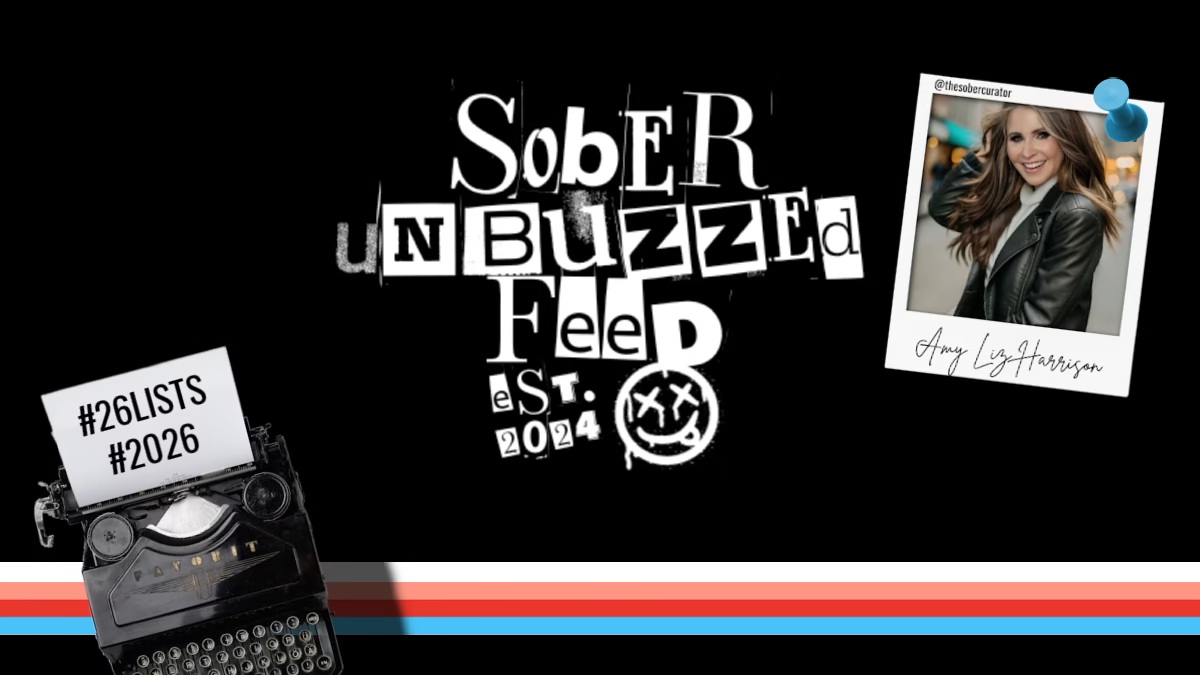
26 Lists for Your Best Sober Self in 2026 – Hey list lovers! The SOBER UNBUZZED FEED at The Sober Curator is a powerhouse collection of 26 lists, each packed with 26 inspiring ideas, actions, and motivations to help you be your best sober self in 2026. Curated by Sober Curator Senior Contributor Amy Liz Harrison—accomplished author, engaging podcast host, devoted wife, and supermom of eight thriving in long-term recovery—this series blends wisdom, humor, and practical tips you can use right now.
From mindset shifts to daily habits, these lists are designed to motivate, empower, and guide you through sobriety and beyond. Follow Amy on Instagram @amylizharrison or visit amylizharrison.com to connect and learn more.
All the cool kids go to rehab…

Resources Are Available
If you or someone you know is experiencing difficulties surrounding alcoholism, addiction, or mental illness, please reach out and ask for help. People everywhere can and want to help; you just have to know where to look. And continue to look until you find what works for you. Click here for a list of regional and national resources.

Follow The Sober Curator on Facebook
Can AI support sobriety and recovery?
Yes, AI can support sobriety by helping with planning, reflection, emotional regulation, routines, journaling, relapse-prevention reminders, boundary scripts, and daily accountability. It should be used as a supplemental tool, not a replacement for therapy, meetings, sponsors, medical care, or real human support.
Can AI replace a sponsor, therapist, or recovery community?
No. AI cannot replace a sponsor, therapist, recovery meeting, peer community, or professional care. As Amy explains, AI will not do your Step work, hand you a chip, or create a real human relationship. It can help organize your thoughts and support your routines, but it should not be treated as your whole recovery plan.
What are some ways AI can help with long-term sobriety?
AI can help with mood mapping, relapse-prevention planning, breathwork, sleep routines, meal planning, financial sobriety, travel planning, burnout detection, social scripts, boundary messages, gratitude tracking, and emotional processing. It can also help identify patterns in journal entries or prepare questions to take to therapy.
How can AI help with relapse prevention?
AI can help identify possible triggers, such as travel, family gatherings, anniversaries, stressful events, or schedule disruptions. It can also help create reminders, grounding prompts, coping plans, and calendar notes for moments when extra recovery support may be needed.
Can AI help with cravings?
AI can offer grounding questions, reminders, and coping strategies when cravings or emotional urges show up. In long-term recovery, cravings may not always be about alcohol itself; they may be connected to boredom, loneliness, stress, resentment, or the urge to escape discomfort.
How can AI help with emotional regulation?
AI can guide breathwork, journaling prompts, CBT-style reframing, DBT-inspired skills, meditation suggestions, and calming check-ins. It can help slow down a spiral by asking clear, gentle questions and encouraging the user to name what is happening.
Is it safe to use AI for recovery?
AI can be a helpful support tool, but it has limits. It should not be used as emergency care, medical advice, or a substitute for a qualified professional. Anyone in crisis or at risk of relapse should reach out to a trusted person, sponsor, therapist, doctor, local emergency service, or crisis support resource.
How can AI help with sober social situations?
AI can help draft simple responses to drink offers, awkward questions, family pressure, or uncomfortable social moments. It can also help plan sober gatherings, create exit strategies, and prepare scripts that are calm, confident, and not open for debate.
Can AI help make sobriety feel less lonely?
AI can offer support during the weird in-between hours when someone is overthinking, spiraling, or needs a place to sort their thoughts. It is not a replacement for people, but it can be a useful companion between meetings, therapy sessions, texts, or conversations with trusted support.
What is the main takeaway from Amy Liz Harrison’s article?
The main takeaway is that AI is not recovery itself, but it can become a surprisingly useful recovery sidekick. Used thoughtfully, AI can help sober people organize their lives, regulate their emotions, prepare for challenges, and make recovery feel steadier, more resourced, and a little more amusing.