

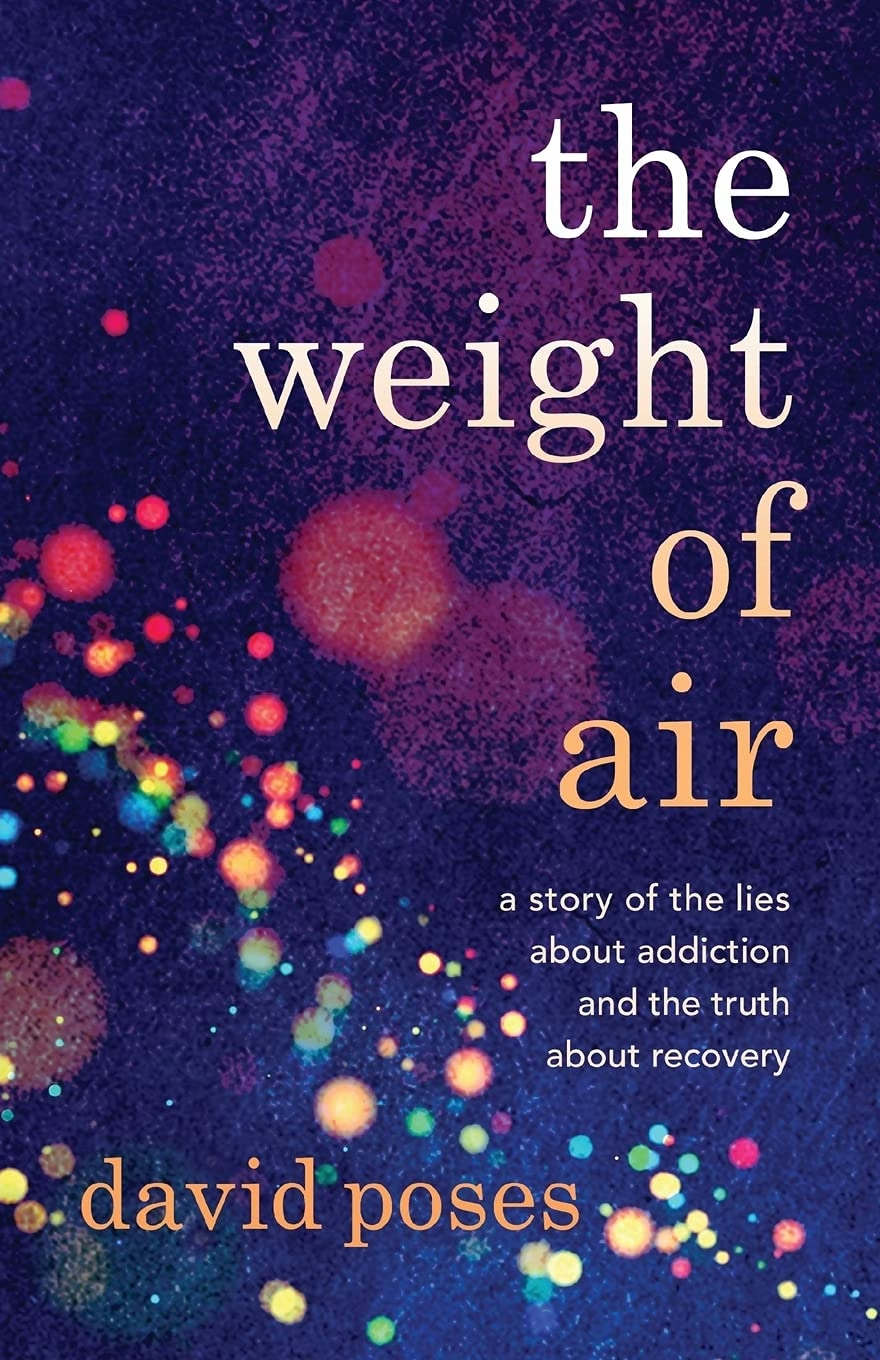
“The Weight of Air” tracks Poses through multiple relapses, treatment centers, and the grinding dailiness of trying to stay clean. At the same time, everyone around him—family, friends, the entire recovery industrial complex—keeps insisting there’s a right way to do this. Spoiler: there isn’t.
The book braids together three timelines: his active addiction, his time in various treatment programs, and his attempts at building something resembling normalcy afterward. Poses moves between these without warning, the way memory actually works when you’re trying to make sense of your own wreckage. On one page, you’re in a detox facility in Florida. The next time you’re at a Phish concert in ’97, try to remember what it felt like before everything went sideways.
What makes it work—what kept me reading when I wanted to throw the book across the room because it hit too close—is that Poses refuses to perform recovery. He doesn’t write like someone who’s figured it out. He writes like someone still in the middle of figuring it out, even years into sobriety.
The Honesty Problem
Here’s what recovery literature usually does: it starts dark, gets darker, hits bottom, then pivots to hope and transformation. Clean ending. Lessons learned. Grateful recovering addict ready to help others.
Poses doesn’t do that.
He stays in the mess. He admits to lying to his therapist. He hates the people trying to help him. To the specific kind of rage that comes from being told you’re not working your program hard enough by someone who’s never shot dope in a gas station bathroom. The book doesn’t resolve into wisdom. It resolves into “I’m still here, and I still don’t know what that means half the time.”
This is wildly uncomfortable if you’re looking for a map. If you’re looking for the truth, it’s a relief.That’s the book. Over and over. Moments that refuse to be anything other than what they were.
Why It Matters (Even If You’ve Never Used)
You don’t have to be in recovery to get something from this book, but it helps if you’ve ever felt like your life was being narrated by someone else’s script. Poses writes about the gap between who treatment centers needed him to be and who he actually was. Between the language of twelve-step programs and the language of his experience. Between the person his family wanted back and the person he’d become.
That gap—that’s where the book lives.
It’s also where many people in early recovery live, trying to fit into recovery narratives that don’t quite match the shape of their actual days. Poses doesn’t offer an alternative narrative. He shows what happens when you stop trying to force the fit and start writing your own story, even if it doesn’t follow the approved outline.
What He Gets Right That Others Miss
Most addiction memoirs treat relapse as failure or plot point. Poses treats it as data.
Each relapse in the book teaches him something specific about how his addiction works, what his triggers actually are (versus what he’s been told they should be), what kind of recovery structure might actually support him instead of the one-size-fits-all approach most programs insist on.
This is dangerous thinking in traditional recovery circles. You’re not supposed to experiment. You’re supposed to follow the program exactly as written and trust the process. But Poses shows what happens when the program doesn’t work for you—when following the exact letter of recovery doctrine leads directly back to using.
He also captures something about the isolation of early recovery that most books gloss over. Not the dramatic isolation of active addiction. The weird liminal isolation of being clean but not quite part of civilian life. Too new to be trusted. Too broken to be normal. Caught between the wreckage of your old life and a new life that doesn’t quite exist yet.
The Writing Itself
Poses is a journalist by training, and it shows. The prose is clean, specific, unsentimental. He doesn’t reach for metaphor unless it earns its keep. Doesn’t explain things that should remain unexplained.
But there are moments—often in the middle of a clinical description of withdrawing or sitting in group therapy—where the language suddenly shifts. Gets strange and beautiful. Then snaps back to plain documentation.
It feels like watching someone dissociate and come back. Like the writing itself is performing the fractured attention of early recovery.
Some readers will find this frustrating. The timeline jumps without warning. Scenes end abruptly. Some threads never resolve. But that’s the point. Recovery isn’t linear. Memory isn’t linear. Trauma sure as hell isn’t linear. The structure mirrors the experience.
What Might Bother You
If you’re looking for hope, this book rations it carefully. There’s no triumph at the end. Just survival and the possibility of more survival. Some people need that triumphant ending to believe recovery is possible. This book won’t give it to you.
If you’re family trying to understand your person, some of Poses’ honesty about manipulating loved ones might be hard to read. He doesn’t justify it or apologize for it in the ways you might need him to.
If you’re in traditional twelve-step recovery and it’s working for you, Poses’s skepticism about certain aspects of program culture might feel threatening. He’s not anti-AA—he uses meetings throughout the book—but he’s not uncritical either.
The Takeaway
“The Weight of Air” doesn’t teach you how to recover. It shows you what recovery actually looks like for one person, in all its unglamorous daily detail.
That’s more valuable than you’d think.
Because most people in early recovery are drowning in advice, strategies, program literature, and clinical language—all of it trying to describe an experience that defies description. What they’re short on is someone saying: yes, it feels like this. The confusion is normal. The doubt is normal. The sense that everyone else got a manual you didn’t get—that’s normal too.
Poses doesn’t offer solutions. Just witness. And sometimes witness is enough.
Read this if you’re in recovery and tired of memoirs that tie everything up neatly. Read this if you’re trying to understand addiction and willing to sit with discomfort. Read this if you want to see someone write their way toward their own truth instead of accepting the truth they’ve been handed.
Just don’t expect it to make you feel better. Expect it to make you feel seen, which is different. And maybe harder. And probably more helpful in the long run.
The book ends with Poses still in recovery, still uncertain, still carrying the weight. Still here. That’s the whole point.
#QUITLIT Sobees Score: 3.5 out of 5


TSC LIBRARY: Welcome to The Sober Curator Library! This isn’t your average stack of books—we’re talking full-on story immersion, Audible binges, and reviews with personality. Browse our four go-to genres: #QUITLIT, Addiction Fiction, Self-Help, and NA Recipe Books. And if you’re collecting recovery reads like rare trading cards, check out our Amazon #QUITLIT list—Early Sobriety Survival: Books for Your First 90 Days. Grab your backpack, book nerd.
A STOIC SOBRIETY: Welcome to A Stoic Sobriety. I am Tony Harte, and I believe that Empowering Recovery with Stoic Wisdom is the game-changer you’ve been looking for. With over 36 years of continuous sobriety (since 1989) and professional experience in addiction treatment, I know that recovery isn’t just about quitting—it’s about evolving.
Here, we combine the tried-and-true approaches of the AA 12-Step Program with the ancient, logical wisdom of Stoicism. Whether you are an agnostic, a believer, or simply seeking strength, let’s embark on this path of enlightenment together.
You’ve got mail from The Sober Curator

Resources Are Available
If you or someone you know is experiencing difficulties surrounding alcoholism, addiction, or mental illness, please reach out and ask for help. People everywhere can and want to help; you just have to know where to look. And continue to look until you find what works for you. Click here for a list of regional and national resources.

Follow The Sober Curator on X, the artist formerly known as Twitter
What is The Weight of Air by David Poses about?
The Weight of Air is a memoir that chronicles David Poses’ decades-long struggle with depression, opioid addiction, and recovery. The book explores how mental health challenges and substance use intersect, while also questioning traditional ideas about addiction treatment and recovery.
Who is David Poses?
David Poses is a writer, speaker, and addiction recovery advocate who has written about mental health and substance use for publications such as The Washington Post and Los Angeles Times. His memoir The Weight of Air shares his personal recovery journey and his views on evidence-based addiction treatment.
Is The Weight of Air considered quit lit?
Yes. The Weight of Air is part of the “quit lit” genre, which includes memoirs and nonfiction books that explore addiction, sobriety, and the process of recovery through personal storytelling and lived experience.
What addiction does David Poses discuss in the book?
Poses writes openly about his struggle with opioid addiction and the role depression played in his substance use. The memoir describes his experiences with detox programs, rehabilitation centers, and multiple attempts to get sober.
What themes does The Weight of Air explore?
The book explores addiction, mental health, stigma, recovery, evidence-based treatment, and the challenges of navigating traditional recovery systems while searching for sustainable sobriety.
How does the book challenge traditional recovery narratives?
Poses questions some conventional approaches to addiction treatment, arguing that stigma and rigid recovery models can sometimes make recovery more difficult. The memoir encourages a broader conversation about evidence-based addiction care.
Is The Weight of Air suitable for readers in recovery?
Many readers in recovery connect with the book because of its candid portrayal of relapse, mental health struggles, and the complex path toward recovery.
Who should read The Weight of Air?
Readers interested in addiction memoirs, mental health advocacy, and honest discussions about the opioid crisis and recovery systems will likely find the book compelling.
What makes The Weight of Air different from other addiction memoirs?
Unlike many recovery memoirs that focus solely on personal transformation, The Weight of Air also critiques the broader systems and cultural attitudes surrounding addiction treatment and recovery.
When was The Weight of Air published?
The Weight of Air was published in 2021 and has been widely discussed for its honest exploration of addiction, depression, and recovery.