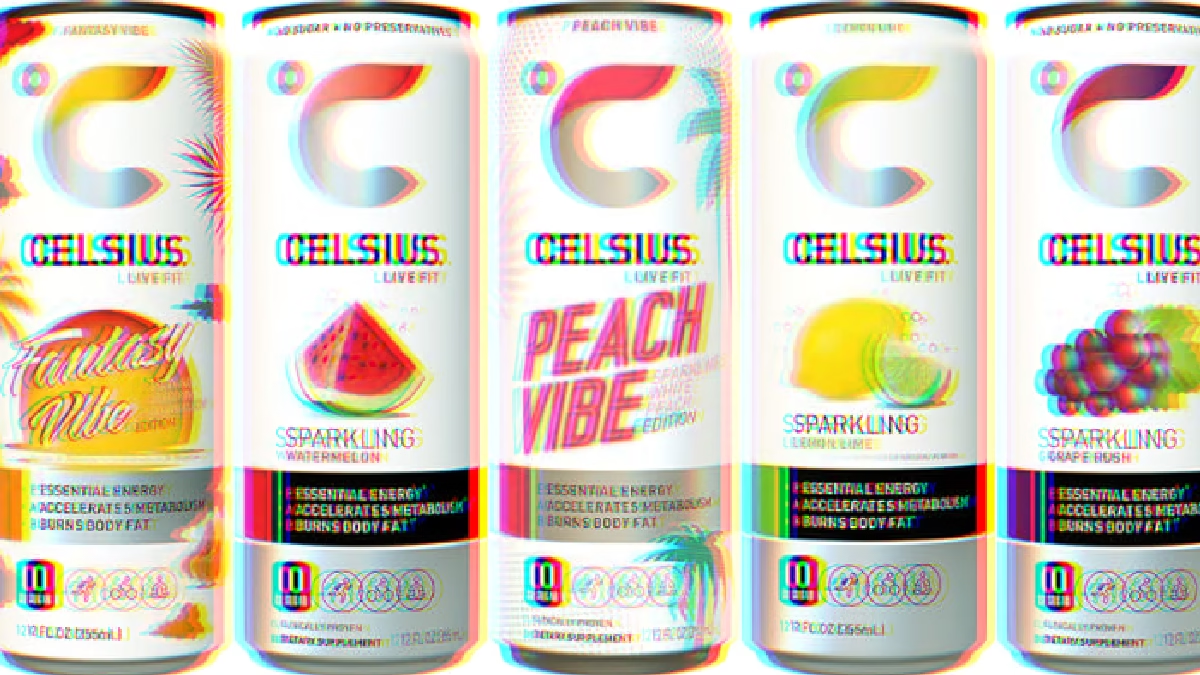
Walk into any gym, campus, or co-working space right now and you’ll see the same thing: a slim aluminum can, held like a badge of belonging. Celsius is everywhere — in the hands of college students, wellness enthusiasts, sober people, anxious people, and exhausted people. It markets itself as the solution to modern depletion: clean energy, no sugar, it’s even said to be “clinically proven” thermogenesis.
It looks harmless. It feels helpful. And for many people, it works — until it doesn’t.
I know, because until recently, I was one of those people. One can per day. Sometimes two during big lifting weeks, or heavy cardio. It gave me the sense of being sharp, capable, a little superhuman — right up until my nervous system collapsed and I learned, the very hard way, what happens when a dysregulated system meets a daily stimulant it was never designed to handle.
Being a DNA Functional Nutritionist. Regulation of the nervous system is my entire wheelhouse. I understand SNPS, COMT, CYP1A2, DRD2, MTHFR — the alphabet soup behind how each of us responds to stressors and stimulants. I teach clients how to prevent exactly the kind of collapse I went through. And still, I underestimated this drink.
If I misjudged Celsius, the odds that the average consumer understands what they’re ingesting are close to… zero.
This is not a moral panic. It’s not even an anti-caffeine scare. It’s simply a necessary correction to a wildly popular product that’s skating by on the assumption that everyone is built the same, when we absolutely, genetically are not.
And this is the part of the Celsius story nobody is talking about.
The Drink That Promises Clean Energy — Without Explaining the Cost
Let’s strip away the branding for a moment. Celsius is, at its core, a multi-stimulant formula: 200 mg caffeine (the equivalent of two strong coffees), plus guarana (more caffeine), green tea extract (which extends adrenaline’s half-life), taurine, ginger, and water-soluble vitamins marketed as if they offer protection, yet they don’t.
This is not hydration. It is not nutrition. It is not “wellness energy.”
It is a sympathetic nervous system accelerator, disguised as a functional beverage.
Within minutes, your heart rate climbs, blood vessels constrict, catecholamines surge, and your brain shifts into a state the body interprets as danger — even if you’re just sitting at your desk scrolling emails!
For someone with a resilient autonomic system, this might feel like a pleasant boost, but for most, it’s not.
But what about those of us who have dysautonomia, POTS, anxiety, a trauma history, burnout, depression, mold illness, Lyme disease, adrenal dysregulation, or even those of us in long-term recovery?
It’s gasoline on dry land.
But the real story — and the one Celsius never mentions on the can — is that your genes determine whether you experience a “nice lift” or a destabilizing blow to the system.

The Genetic Roulette at the Bottom of the Can
Here is the truth: not everyone metabolizes stimulants the same way. Not even close. And the fact that Celsius does not disclose — or even acknowledge — the genetic variability in caffeine and catecholamine handling is a glaring omission and a danger.
I can drink a Celsius and feel like a hummingbird trapped inside my own rib cage.
Someone else can drink two and wonder why I’m being dramatic.
The difference isn’t personality. It’s biology.
CYP1A2 — The Metabolizer
If you have the slow variant of this gene, caffeine lingers in your bloodstream far longer. Your “boost” becomes prolonged overstimulation. Your cardiovascular system works overtime. In research, slow metabolizers who consume high amounts of caffeine have a significantly increased risk of heart complications.
Fast metabolizers? They clear it quickly. They often feel fine.
Celsius labels don’t explain any of this.
COMT — The Regulator
COMT determines how quickly you clear dopamine, epinephrine, and norepinephrine. If your COMT runs slow — and many anxious, sensitive, high-achiever, trauma-survivor types fit this profile — stimulants hit harder and stay longer. Your adrenaline doesn’t switch off. Your brain doesn’t come down.
If your COMT runs fast? You process the surge and move on.
Again: Celsius says nothing about this.
DRD2 — The Reward System
A variant of this gene is strongly associated with addictive tendencies. It lowers dopamine receptor density — meaning your brain registers less reward from everyday life and seeks bigger hits. Caffeine becomes a training wheel to keep motivation afloat. Energy drinks can feel “necessary.”
Does Celsius screen or warn for this? Of course not.
ADORA2A — The Anxiety Trigger
One common variant of this adenosine receptor gene is associated with panic attacks triggered by caffeine. These people are exquisitely sensitive. For them, Celsius isn’t a pick-me-up — it’s a panic attack masquerading as productivity.
This isn’t speculative. This is well-established physiology and genomics.
If someone doesn’t know their genetic profile — and almost nobody does — they’re flying blind with a drink designed for a body that may not be theirs.
This is the blind spot in the Celsius phenomenon.
This is where the marketing stops and real biology begins.
And this is exactly where I wish someone had stopped me months before my collapse.
The Research Celsius Loves to Cite — and the Parts It Leaves Out
Celsius repeatedly points to “university studies” demonstrating metabolic increases and enhanced exercise performance. Sounds solid. But the details matter.
Several of these studies were funded directly by Celsius Inc. Others used beverages produced by Celsius-affiliated companies. Many were published in niche sports nutrition journals whose editorial boards and peer reviewers have historical ties to supplement manufacturers.
This doesn’t mean the studies are fraudulent. But calling them independent is a stretch.
And when you read the fine print, the effects are modest:
• One can increase metabolic rate by roughly 50–60 calories over three hours.
• Benefits occurred primarily in conjunction with exercise.
• In sedentary subjects, Celsius did almost nothing.
• Over 28 days, the metabolic effects diminished as tolerance developed.
• No study lasted long enough to identify long-term cardiovascular or autonomic risks.
This is a far cry from “accelerates metabolism” in the sweeping, life-changing way marketing implies.
Even more concerning: none of the studies analyze the impact on people with genetic slow metabolism, anxiety disorders, autonomic dysfunction, or post-viral syndromes — the exact populations increasingly drinking Celsius.
Put simply: the research Celsius uses to validate its claims does not reflect the real-world bodies consuming the product.
The Nervous System: Where Celsius Hits Hardest
Most Americans already live in chronic sympathetic overdrive. Long hours. Poor sleep. Unrelenting stress. Under-eating. Overtraining. Poor diets. Trauma histories. Ongoing viral burdens. Cultural events. (The list is long.)
A drink that amplifies the stress response — without supporting the parasympathetic (rest, repair, regulate) system — is not benign in this context. It’s a hit to the very system most people are barely holding together.
When I look back to April, the day my life changed, my heart rate shifted erratically, and my autonomic system simply stopped cooperating, I can see the pattern clearly now. My body had been signaling for months that the stimulant load was too high. I dismissed it because Celsius didn’t feel like a stimulant. It felt like wellness. I freaking loved it.
I was wrong.
and I were on a Zoom recently, and midway she tilted back a Cherry Cola Celsius, ACK! “Um, you really might want to change drinks…,” she replied, genuinely confused, “But it’s good for me.” It crystallized how powerful the Celsius wellness narrative has become.
We’ve mistaken stimulation for health.
We’ve mistaken adrenaline for energy.
We’ve mistaken clever marketing for biological truth.
The Bigger Question: What Happens When We Outsource Our Energy?
Energy drinks thrive because people are tired. Not tired for one day — chronically depleted. Burnout-level exhausted. Nervous systems stretched thin, mitochondria underperforming, blood sugar dysregulated, sleep fractured.
Celsius offers an easy out: don’t change anything. Don’t rest. Don’t nourish. Don’t regulate.
Just drink this and keep going.
But energy without regulation is a threat, not a solution.
Real energy is a mitochondrial conversation.
Real stamina is a nervous system phenomenon.
Real vitality comes from actually restoring the systems that keep you alive.
Celsius does none of that.
It gives you the feeling of capacity without the foundation of capacity. And for some people — especially those genetically wired to be sensitive or vulnerable — that disconnect becomes dangerous.
Where Does That Leave Us?
Celsius is not evil. It’s also not the “healthy energy” it positions itself to be.
It is a stimulant tool — powerful for some, destabilizing for others, and wildly misunderstood by almost everyone.
If you choose to drink it, you should do so the same way you would approach any potent substance: consciously, critically, with genuine curiosity about your own biology’s response.
Pay attention to your heart rate.
Pay attention to your sleep.
Pay attention to your irritability, your anxiety, your crashes.
Pay attention to whether you “need” it more over time.
Pay attention to the voice that says, “I can’t function without it.”
That voice is worth investigating — not judging.
Because the real story here isn’t about Celsius.
It’s about our collective misunderstanding of energy, stress, genetics, and self-regulation.
Your body is telling you the truth every single day.
Celsius isn’t telling you the whole story at all.
And as someone whose nervous system paid the price for that gap, I’m here to say: listen to your biology before you listen to any can.

SPIRITUAL SUBSTANCE at The Sober Curator is a monthly column by Lane Kennedy that explores the rich intersections of mindfulness, science, and spirituality. Each piece blends evidence-based practices with soulful reflection, offering tools to cultivate inner peace, self-awareness, and deeper connection. From meditation techniques to thought-provoking insights, Lane invites readers to expand their understanding and enrich their personal practice.

The Sober Curator’s MENTAL HEALTH + WELLNESS section is your go-to guide for nurturing emotional well-being—especially for those in recovery. Explore resources, expert insights, and personal stories that connect the dots between mental health, sobriety, and self-care. From managing anxiety and depression to building mindfulness and emotional resilience, we provide practical tools and inspiration to help you thrive alcohol-free. By fostering open, stigma-free conversations, we empower our community to make emotional wellness a cornerstone of long-term recovery.
Dedicated columns on this TSC channel:
- Break Free Foundation – Scholarships & Support for Recovery with Sober Curator Contributor Alexandra Nyman
- Codependency – Insights & Recovery with Sober Curator Contributor Dr. Sarah Michaud
- Mastering Mental Fitness with Sober Curator Contributor James Gwinnett
- Mental Health – Emotional Wellness in Recovery
- Relationships – Love, Connection & Boundaries in Sobriety
- Sober Not Subtle with Sober Curator Contributor Jason Mayo
- Sober Poetry – Recovery in Verse
- Speak Out! Speak Loud! – Stories & Creative Expression in Recovery
- Spiritual Substance – Mindfulness, Science & Soul with Senior Sober Curator Contributor Lane Kennedy
- Wellness As A Way of Life – Sustainable Health for Powerful Women with Senior Sober Curator Contributor Megan Swan

Recovery is hard 24/7, 365 – Please know that resources are available
If you or someone you know is experiencing difficulties surrounding alcoholism, addiction, or mental illness, please reach out and ask for help. People everywhere can and want to help; you just have to know where to look. And continue to look until you find what works for you. Click here for a list of regional and national resources. If your life or someone else’s is in imminent danger, please call 911. If you are in crisis and need immediate help, please call: 988.