Close Menu
The Sober CuratorThe Sober Curator
  • HOME
  • ABOUT
    • DEAR READERS✏️
    • AFFILIATES (AKA SUPPORT US)
    • ❤️ CONTENT
    • CONTRIBUTOR DIRECTORY
    • MEET THE SOBER CURATOR
    • SOBER BUSINESS ROLODEX 📇
    • TSC x PODCAST IMPACT STUDIO🎙️
    • THE SOBER SIP 📧NEWSLETTER
    • 📰 PRESS 📺
    • THE SOBEES 🐝
    • CONTACT 📧
  • HAPPY EVERY HOUR
    • NA BEERS AND CIDERS 🍺
    • NON-ALCOHOLIC WINES 🍾
    • NON-ALCOHOLIC SPIRITS 🍸
    • READY TO DRINK 🥤
    • BEHIND THE BAR 🍋‍🟩
    • NA TASTING EVENTS CALENDAR 🗓️
  • HEALTH & WELLNESS
    • BREAK FREE
    • CODEPENDENCY
    • MASTERING MENTAL FITNESS 🧠💪🏼
    • MENTAL HEALTH 🧠
    • RELATIONSHIPS 🤟🏽
    • SOBER NOT SUBTLE
    • SOBER POETRY 🖋️
    • SPEAK OUT! SPEAK LOUD! 🗣️
    • SPIRITUAL SUBSTANCE 🧬
    • WELLNESS AS A WAY OF LIFE
  • LIFESTYLE
    • #ADDTOCART 🛍️
    • ASK MRS. (W)RIGHT ⁉️
    • COMING OUT SOBER 🏳️‍🌈
    • 🏆 CONTENT
    • ✂️CURATED CRAFTS🎨
    • FASHION 👠
    • SHOP 🛒
    • SOBER SPOTLIGHT 🔦
    • SOBER CONTENT CREATION 💻
    • SOBER UNBUZZED FEED
  • ENTERTAINMENT
    • #QUITLIT 📚
    • MOVIE REVIEWS 🍿
    • MUSIC 🎶
    • POPCULTURE
    • RECOVERY PODCASTLAND 🎙️
    • SOBER CURATOR PODCAST 🎧
    • TSC x PODCAST IMPACT STUDIO🎙️
    • SOBER EVENTS CALENDAR 🗓️
    • SOBER SPORTS
    • TV SHOW REVIEWS 📺
  • TRAVEL & EVENTS
    • SOBER EVENTS CALENDAR 🗓️
    • SOBER RETREATS CALENDAR 🗓️
    • SOBRIETY IN THE CITY
      • SOBER IN MINNEAPOLIS
      • SOBER IN NYC
      • SOBER IN SEATTLE
    • WHAT A TRIP! 🧳
  • SPIRITUAL GANGSTER
    • THE CARD DIVO 🔮
    • CLASSY PROBLEMS
    • SOBERCAST
    • SOBERSCOPES
    • SOBRIETY IN FLOW 🧘🏻‍♀️
    • THIRSTY FOR WONDER
    • SPIRITUAL SUBSTANCE 🧬
    • STOICISM
  • RECOVERY RESOURCES
    • ALCOHOL & SUBSTANCE USE DISORDER RESOURCE GUIDE
    • BREAK FREE FOUNDATION
    • FAMILY RESOURCES
    • GLOSSARY OF ADDICTION AND RECOVERY TERMS
    • LGBTQ+ RECOVERY RESOURCES
    • RECOVERY STORIES
    • SOBER BUSINESS ROLODEX 📇
    • TSC x PODCAST IMPACT STUDIO🎙️
Facebook X (Twitter) Instagram Pinterest YouTube LinkedIn TikTok
The Sober CuratorThe Sober Curator
  • HOME
  • ABOUT
    • DEAR READERS✏️
    • AFFILIATES (AKA SUPPORT US)
    • ❤️ CONTENT
    • CONTRIBUTOR DIRECTORY
    • MEET THE SOBER CURATOR
    • SOBER BUSINESS ROLODEX 📇
    • TSC x PODCAST IMPACT STUDIO🎙️
    • THE SOBER SIP 📧NEWSLETTER
    • 📰 PRESS 📺
    • THE SOBEES 🐝
    • CONTACT 📧
  • HAPPY EVERY HOUR
    • NA BEERS AND CIDERS 🍺
    • NON-ALCOHOLIC WINES 🍾
    • NON-ALCOHOLIC SPIRITS 🍸
    • READY TO DRINK 🥤
    • BEHIND THE BAR 🍋‍🟩
    • NA TASTING EVENTS CALENDAR 🗓️
  • HEALTH & WELLNESS
    • BREAK FREE
    • CODEPENDENCY
    • MASTERING MENTAL FITNESS 🧠💪🏼
    • MENTAL HEALTH 🧠
    • RELATIONSHIPS 🤟🏽
    • SOBER NOT SUBTLE
    • SOBER POETRY 🖋️
    • SPEAK OUT! SPEAK LOUD! 🗣️
    • SPIRITUAL SUBSTANCE 🧬
    • WELLNESS AS A WAY OF LIFE
  • LIFESTYLE
    • #ADDTOCART 🛍️
    • ASK MRS. (W)RIGHT ⁉️
    • COMING OUT SOBER 🏳️‍🌈
    • 🏆 CONTENT
    • ✂️CURATED CRAFTS🎨
    • FASHION 👠
    • SHOP 🛒
    • SOBER SPOTLIGHT 🔦
    • SOBER CONTENT CREATION 💻
    • SOBER UNBUZZED FEED
  • ENTERTAINMENT
    • #QUITLIT 📚
    • MOVIE REVIEWS 🍿
    • MUSIC 🎶
    • POPCULTURE
    • RECOVERY PODCASTLAND 🎙️
    • SOBER CURATOR PODCAST 🎧
    • TSC x PODCAST IMPACT STUDIO🎙️
    • SOBER EVENTS CALENDAR 🗓️
    • SOBER SPORTS
    • TV SHOW REVIEWS 📺
  • TRAVEL & EVENTS
    • SOBER EVENTS CALENDAR 🗓️
    • SOBER RETREATS CALENDAR 🗓️
    • SOBRIETY IN THE CITY
      • SOBER IN MINNEAPOLIS
      • SOBER IN NYC
      • SOBER IN SEATTLE
    • WHAT A TRIP! 🧳
  • SPIRITUAL GANGSTER
    • THE CARD DIVO 🔮
    • CLASSY PROBLEMS
    • SOBERCAST
    • SOBERSCOPES
    • SOBRIETY IN FLOW 🧘🏻‍♀️
    • THIRSTY FOR WONDER
    • SPIRITUAL SUBSTANCE 🧬
    • STOICISM
  • RECOVERY RESOURCES
    • ALCOHOL & SUBSTANCE USE DISORDER RESOURCE GUIDE
    • BREAK FREE FOUNDATION
    • FAMILY RESOURCES
    • GLOSSARY OF ADDICTION AND RECOVERY TERMS
    • LGBTQ+ RECOVERY RESOURCES
    • RECOVERY STORIES
    • SOBER BUSINESS ROLODEX 📇
    • TSC x PODCAST IMPACT STUDIO🎙️
The Sober CuratorThe Sober Curator
Home - The Legacy of the Anti-Drug Abuse Act of 1988: How a Law Intended to Curb Drug Use Fueled Racial Disparities
BREAK FREE FOUNDATION

The Legacy of the Anti-Drug Abuse Act of 1988: How a Law Intended to Curb Drug Use Fueled Racial Disparities

Alexandra NymanBy Alexandra NymanNovember 22, 20247 Mins Read
anti drug act of 1988
Share
Facebook Twitter LinkedIn Pinterest Email

During my early days of advocacy, there was one law that was on the tip of everyone’s tongue: H.R. 5210. Otherwise known as the infamous Anti-Drug Act of 1986. Based on the name, you would think, “Wow, that sounds great! how could a law that is anti-drugs be a bad thing?” And while that train of thought has the right spirit to it, it requires a deeper look. I will break down this law for you and the associated laws and bills aimed at correcting the deeply flawed piece of legislation. As well as the road blocks this law has put in place for decades.

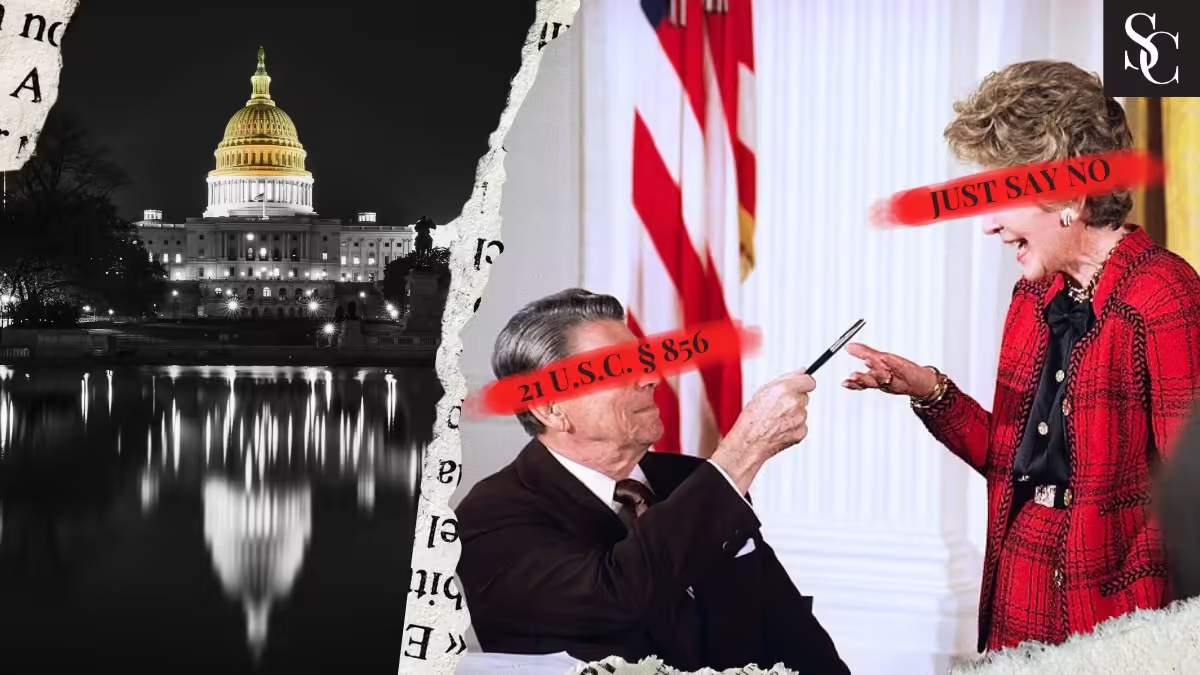
Let’s kick it back. In the mid-1980s, with the rise of the crack cocaine epidemic sweeping through American cities, policymakers were under immense pressure to act. Fueled by sensationalist media coverage and growing public concern about crime, Congress passed the Anti-Drug Abuse Acts of 1986 and 1988, which former President Ronald Reagan signed. These laws aimed to stem the tide of drug-related violence by imposing draconian sentencing measures that disproportionately targeted low-income communities of color. While the Acts were hailed at the time as essential tools in the “War on Drugs,” they left behind a legacy of racial disparities, mass incarceration, and deep-seated social inequalities that still haunt the American criminal justice system today.

The Anti-Drug Abuse Act of 1986 introduced harsh penalties for drug offenses, particularly targeting crack cocaine, which was widely perceived as more dangerous than powder cocaine. The law implemented a 100:1 sentencing disparity between crack and powder cocaine offenses, meaning that possession of just 5 grams of crack triggered a five-year mandatory minimum sentence. In comparison, it took 500 grams of powder cocaine to trigger the same sentence. This disparity was not based on any substantive scientific evidence about the drugs’ relative harms but on panic and political pressure.

In 1988, the Anti-Drug Abuse Act was expanded, creating more severe penalties, including the infamous “three-strikes” provision that mandated life sentences for repeat offenders. These laws deepened racial inequities, as crack cocaine was predominantly used in Black and Latino communities, while powder cocaine was more common among wealthier, white individuals. The result was the mass incarceration of African Americans, who were disproportionately sentenced under the harsh laws.

Racism and the War on Drugs

The effects of the Anti-Drug Abuse Act weren’t evenly distributed after it was codified into law. As the U.S. Sentencing Commission would later reveal, nearly 80% of those convicted of offenses under the law were African American, despite evidence showing that most users of these illicit substances were of white or Hispanic descent. The laws thus became a tool for racialized mass incarceration, devastating Black communities by tearing families apart, criminalizing poverty, and fueling distrust in the criminal justice system.

The heavy policing of crack cocaine not only perpetuated racial stereotypes but also intensified the stigmatization of Black and Latino individuals as inherently criminal. By focusing on policing the issue rather than addressing the broader public health crisis of substance use, these policies exacerbated systemic inequalities and left marginalized communities more vulnerable to cycles of poverty and imprisonment.

Attempts to Rectify the Damage: The Fair Sentencing Act and the First Step Act

In 2010, after decades of advocacy, Congress passed the Fair Sentencing Act, signed by former President Barack Obama. This act reduced the sentencing disparity between crack and powder cocaine from 100:1 to 18:1. While a significant step forward, the law did not eliminate the disparity entirely, leaving unresolved the underlying racial inequities baked into the system. The Act also applied prospectively, meaning that those already sentenced under the old laws did not immediately benefit from its reforms.

The First Step Act of 2018, signed into law by former President Donald Trump, sought to build on the Fair Sentencing Act by making its provisions retroactive, allowing thousands of incarcerated individuals to petition for sentence reductions. The First Step Act also expanded early release programs, increased “good time” credits for well-behaved prisoners, and provided more opportunities for inmates to participate in rehabilitation programs. It was hailed as a significant victory for criminal justice reform, but like the Fair Sentencing Act, it did not fully address the root causes of racial disparities in sentencing.

The Smarter Sentencing Act: A New Hope

The Smarter Sentencing Act of 2023, currently making its way through Congress, aims further to reduce mandatory minimum sentences for nonviolent drug offenses. It proposes lowering the mandatory minimum for certain drug offenses and broadening the scope of those eligible for reduced sentences. While this bill represents another step toward dismantling the punitive structures of the War on Drugs, it still falls short of addressing the racial bias that underpins drug enforcement policies. The sentencing disparity between crack and powder cocaine, though reduced, persists, signaling that the path to true equity remains long and fraught with resistance.

The Crack House Statute and Harm Reduction

One of the most enduring and controversial legacies of the Anti-Drug Abuse Act of 1986 is the “crack house statute” (21 U.S.C. § 856). Originally intended to prevent the operation of buildings where illicit substances were manufactured or used, the statute has become a major barrier to modern harm reduction strategies like Overdose Prevention Centers, otherwise known as OPCs. These centers, designed to save lives by providing safe spaces for people to use substances under medical supervision, have been shown to reduce overdose deaths and connect individuals to community-based recovery services.

Yet, despite overwhelming evidence of their effectiveness, the crack house statute renders OPCs legally vulnerable. The law’s broad language criminalizes any space that facilitates the use of illicit substances, even when such use is supervised by trained health professionals and with the intention of preventing fatalities. As a result, many cities and states looking to adopt harm reduction strategies find themselves trapped in a legal gray area.

In New York City, which operates the country’s first legal OPCs, the federal government’s mixed messaging on harm reduction has created uncertainty. While public health experts and the National Institutes of Health support the expansion of OPCs, federal prosecutors continue to threaten enforcement of 21 U.S.C. § 856, undermining efforts to save lives.

NYC’s Call for Federal Action

In response to the ongoing legal barriers, the New York City Council recently introduced a resolution, Res 0313-2024, calling on Congress to amend the Anti-Drug Abuse Act of 1986 to allow for the operation of legitimate supervised consumption sites across the country. Sponsored by Councilmembers Linda Lee and Gale A. Brewer, this resolution underscores the growing recognition that the War on Drugs has failed to address substance use disorders and that harm reduction, not criminalization, is the path forward.

The resolution follows efforts like the Crack is Whack Act, H.R. 6741, introduced in 2022 by Representative Nicole Malliotakis, which sought to block federal funding for OPCs. Malliotakis’ bill reflects the persistent tension between old punitive drug policies and the evolving public health approach to substance use disorders.

The Future of Drug Policy Reform

While the Fair Sentencing Act, the First Step Act, and the Smarter Sentencing Act represent progress, they have not fully dismantled the racialized legacy of the Anti-Drug Abuse Acts of the 1980s. Nor have they created space for the implementation of lifesaving harm reduction services like overdose prevention centers. The crack house statute continues to stand in the way of innovation, ensuring that efforts to combat the overdose crisis remain stymied by outdated laws.

To move forward, Congress must address the legal contradictions that hinder harm reduction. The repeal or amendment of the crack house statute would represent a crucial step toward embracing a public health approach to substance use, one that recognizes substance use disorders as a medical issue rather than a criminal one. Only then can we begin to rectify the damage caused by the War on Drugs and build a justice system that prioritizes rehabilitation and racial equity over punishment and profit.


Speak Out Speak Loud

SPEAK OUT! SPEAK LOUD! at The Sober Curator is a celebration of authentic voices in recovery—echoing Madonna’s call to “Express yourself!” Here, readers and contributors take the spotlight, sharing transformative sobriety journeys, creative talents, and new avenues of self-expression discovered along the way. Through videos, poems, art, essays, opinion pieces, and music, we break the silence that often surrounds addiction, replacing it with connection, hope, and inspiration.

Your story matters—and we want to hear it. Submit your work to thesobercurator@gmail.com or DM us on social media.

Disclaimer: All opinions expressed in the Speak Out! Speak Loud! Section are solely the opinions of the contributing author of each individual published article and do not reflect the views of The Sober Curator, their respective affiliates, or the companies with which The Sober Curator is affiliated.

The Speak Out! Speak Loud! posts are based upon information the contributing author considers reliable. Still, neither The Sober Curator nor its affiliates, nor the companies with which such participants are affiliated, warrant its completeness or accuracy, and it should not be relied upon as such.


Call 988 to reach the National Suicide Prevention Lifeline. It provides free and confidential support 24 hours a day, seven days a week for people in suicidal crisis or distress. You can learn more about its services here, including its guide on what to do if you see suicidal language on social media. You can also call that number to talk to someone about how you can help a person in crisis. For crisis support in Spanish, call 1-888-628-9454.

For support outside of the US, a worldwide directory of resources and international hotlines is provided by the International Association for Suicide Prevention. You can also turn to Befrienders Worldwide.​


recovery resources sober curator

Help is Available

If you or someone you love is living with substance use, alcohol misuse, a co-occurring, or a behavioral health disorder, there is hope. The Break Free Foundation aids individuals seeking recovery through the Break Free Scholarship Fund. It sends anyone who lacks the financial resources to attend a recovery center to do so at low to no cost.

Review our Treatment Locator Tool to find the right program near you, as well as our list of Hotlines and Helplines. Click here for a list of regional and national resources. On this road to recovery, no one is alone. We are all in this together.

follow the sober curator on linkedin

Follow The Sober Curator on LinkedIn

advocacy advocate just say no opc overdose prevention center
Share. Facebook Twitter Pinterest LinkedIn WhatsApp Reddit Tumblr Email
Alexandra Nyman
  • Website
  • Facebook
  • X (Twitter)
  • Instagram

Alexandra Nyman is a fashion designer, marketing professional, and the founder of the Break Free Foundation. When she is not screaming at the top of her lungs, advocating for change, she can be found taking a million pictures of her cat and playing way too much Animal Crossing.

Related Posts

Gay and Sober

The Opposite of Addiction Isn’t Sobriety — It’s Belonging

January 21, 2026
I Think Love is Glory

I Think Love is Glory

January 1, 2026
What Most People Get Wrong About “Moderate Drinking” in 2025

What Most People Get Wrong About “Moderate Drinking”

December 26, 2025

Comments are closed.

Audible
Top AF Sober Travel Companies USA Today
SOBERSCRIBE AND GET ON THE LIST!
7 events found.
  • Week of February 2
  • Previous week
  • Next week
All Day
SOBER GROUND HOGS DAY
February 2

SOBER GROUND HOGS DAY

4:00 am
SAMHSA’s 22nd Prevention Day
February 2 @ 4:00 am - 2:00 pm PST

SAMHSA’s 22nd Prevention Day

free
2:00 pm
Buzz-Free Bar! | Teetotal Initiative
February 2 @ 2:00 pm - 6:00 pm PST

Buzz-Free Bar! | Teetotal Initiative

Two Frays Brewery 5113 Penn Avenue, Pittsburgh
Free
+ 1 More
8:00 am
Self-Injury Awareness Day
February 3 @ 8:00 am - 5:00 pm PST

Self-Injury Awareness Day

World Teen Mental Wellness Day
February 3 @ 8:00 am - 5:00 pm PST

World Teen Mental Wellness Day

Dissociative Identity Disorder Awareness Day
February 3 @ 8:00 am - 5:00 pm PST

Dissociative Identity Disorder Awareness Day

5:00 pm
Sober Night Live! 105.5 The Colorado Sound Presents
February 3 @ 5:00 pm - 7:30 pm PST

Sober Night Live! 105.5 The Colorado Sound Presents

Roots Music Project 4747 Pearl Suite V3A, Boulder
See website
Sober Night Live! 105.5 The Colorado Sound Presents
February 3 @ 5:00 pm - 7:00 pm PST

Sober Night Live! 105.5 The Colorado Sound Presents

Roots Music Project 4747 Pearl Suite V3A, Boulder
See website
+ 2 More
Notice
No events scheduled for February 4, 2026.
8:00 am
Washington Recovery Alliance – Recovery Advocacy Day 2026
February 5 @ 8:00 am - 5:00 pm PST

Washington Recovery Alliance – Recovery Advocacy Day 2026

Washington State Capital
Free
All Day
National Frozen Yogurt Day – Treat YO(gurt) Self!
February 6

National Frozen Yogurt Day – Treat YO(gurt) Self!

2:00 pm
Off the Rocks  | San Francisco
February 6 @ 2:00 pm - 5:00 pm PST

Off the Rocks | San Francisco

See website
6:00 pm
Sober AF Bottle Shop Karaoke & Kava Night | Tacoma, WA
February 6 @ 6:00 pm - 9:00 pm PST

Sober AF Bottle Shop Karaoke & Kava Night | Tacoma, WA

SOBER AF Bottle Shop Tacoma 5222 S Tacoma Way, Tacoma
Free
9:00 am
The Sober Singles Party
February 7 @ 9:00 am - 11:00 am PST

The Sober Singles Party

Vivid Minds Cafe 1545 South Broadway, Denver
See website
Notice
No events scheduled for February 8, 2026.
February 2

SOBER GROUND HOGS DAY

SOBER GROUND HOGS DAY

February 2

SOBER GROUND HOGS DAY

SOBER GROUND HOGS DAY When you live one day at a time, every day can be sober!

February 6

National Frozen Yogurt Day – Treat YO(gurt) Self!

National Frozen Yogurt Day – Treat YO(gurt) Self!

February 6

National Frozen Yogurt Day – Treat YO(gurt) Self!

National Frozen Yogurt Day - Treat YO(gurt) Self!

Monday, February 2, 2026

  • February 2, 2026 4:00 am - 2:00 pm
    SAMHSA’s 22nd Prevention Day
  • February 2 @ 4:00 am - 2:00 pm PST

    SAMHSA’s 22nd Prevention Day

    SAMHSA’s 22nd Prevention Day SAMHSA’s Prevention Day brings together the prevention field (public and private sectors) — at the largest federally-hosted gathering dedicated to advancing the prevention of substance use

    free
  • February 2, 2026 2:00 pm - 6:00 pm
    Buzz-Free Bar! | Teetotal Initiative
  • February 2 @ 2:00 pm - 6:00 pm PST

    Buzz-Free Bar! | Teetotal Initiative

    Buzz-Free Bar! | Teetotal Initiative Feb. 2nd, 2026 @ Two Frays Brewery 5PM - 9PM (Trivia starts at 6PM) Hey friends,   It’s finally here — our very first Buzz-Free Bar,

    Free
  • February 2, 2026 5:00 pm - 7:00 pm
    Carl Radke Cake Eater
  • February 2 @ 5:00 pm - 7:00 pm PST

    Carl Radke Cake Eater

    Carl Radke Cake Eater Join The King's English for a photo op event with Carl Radke, to celebrate the release of Cake Eater. Join The King's English for a photo

    $35.22
+ 1 More

Tuesday, February 3, 2026

  • February 3, 2026 8:00 am - 5:00 pm
    Self-Injury Awareness Day
  • February 3 @ 8:00 am - 5:00 pm PST

    Self-Injury Awareness Day

    Self-Injury Awareness Day Self-injury awareness day or self-harm awareness day is an international event observed annually on the 1st of March to raise awareness on the topic. Certain factors and

  • February 3, 2026 8:00 am - 5:00 pm
    World Teen Mental Wellness Day
  • February 3 @ 8:00 am - 5:00 pm PST

    World Teen Mental Wellness Day

    World Teen Mental Wellness Day World Teen Mental Wellness Day, celebrated annually on March 2, focuses on destigmatizing mental health struggles in teenagers (ages 10-19) and promoting open conversations. Founded in

  • February 3, 2026 8:00 am - 5:00 pm
    Dissociative Identity Disorder Awareness Day
  • February 3 @ 8:00 am - 5:00 pm PST

    Dissociative Identity Disorder Awareness Day

    Dissociative Identity Disorder Awareness Day Dissociative Identity Disorder (DID) Awareness Day is observed annually on March 5th to educate the public, combat stigma, and promote compassionate care for those with the condition. Formerly

+ 2 More

Wednesday, February 4, 2026

No events on this day.

Thursday, February 5, 2026

  • February 5, 2026 8:00 am - 5:00 pm
    Washington Recovery Alliance – Recovery Advocacy Day 2026
  • February 5 @ 8:00 am - 5:00 pm PST

    Washington Recovery Alliance – Recovery Advocacy Day 2026

    Washington Recovery Alliance - Recovery Advocacy Day 2026 On Thursday, February 5, 2026, hundreds of people in recovery, allies, and supporters will come together in Olympia to share their stories,

    Free

Friday, February 6, 2026

  • February 6, 2026 2:00 pm - 5:00 pm
    Off the Rocks | San Francisco
  • February 6 @ 2:00 pm - 5:00 pm PST

    Off the Rocks | San Francisco

    Off the Rocks | San Francisco Off the Rocks is a one-of-a-kind celebration taking place during one of the biggest weeks in sports! Designed as a high-energy, zero-proof celebration built around

    See website
  • February 6, 2026 6:00 pm - 9:00 pm
    Sober AF Bottle Shop Karaoke & Kava Night | Tacoma, WA
  • February 6 @ 6:00 pm - 9:00 pm PST

    Sober AF Bottle Shop Karaoke & Kava Night | Tacoma, WA

    Sober AF Bottle Shop Karaoke & Kava Night | Tacoma, WA Fri, Feb 06 | Tacoma Early bird Karaoke with Kava drink specials and discounted Kava shots. Every first Friday

    Free

Saturday, February 7, 2026

  • February 7, 2026 9:00 am - 11:00 am
    The Sober Singles Party
  • February 7 @ 9:00 am - 11:00 am PST

    The Sober Singles Party

    The Sober Singles Party Designed for the 30+ community, this isn't your average dating event. A space for intentional, authentic, and queer-inclusive connections Designed specifically for the 30+ community, this isn't

    See website

Sunday, February 8, 2026

No events on this day.

View Calendar
The Sober Curator
Facebook Instagram X (Twitter) TikTok YouTube Pinterest
  • PRIVACY POLICY
  • LINKS DISCLAIMER
  • EDITORIAL GUIDELINES
  • TERMS OF SERVICE
  • REFUND POLICY
  • DON’T SELL MY INFO
  • DATA SUBJECT REQUEST FORM
  • CONTACT US
© 2026 The Sober Curator - Benefits of a Alcohol Free Lifestyle

Type above and press Enter to search. Press Esc to cancel.