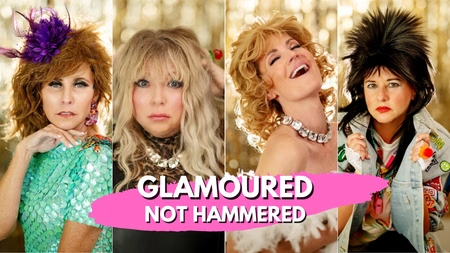
There is a particular face people make when a grown woman tells them she is excited about something.
You know the one. The half-smile. The little exhale through the nose. The tilt of the head that says oh, that’s cute, which is never actually about cuteness. It is about scale. You have exceeded the acceptable amount of caring. Someone has decided to let you know.
I have gotten that face for friendship bracelets. I have gotten it for crying in a stadium parking lot.
And I have gotten the exact same face for saying I am in recovery and I am happy.
This was never really about the music
In February 1964, more than 3,000 girls packed Kennedy Airport to wait for four men from Liverpool. Days later, 73 million people watched those men on Ed Sullivan. Forty percent of the country, in front of the same television at the same time.
Fun fact: That night, the national crime rate dropped to its lowest point in 50 years.
Every teenager in America was home on a living room floor, feeling something enormous, in the safest hours the country had seen in half a century.
And the adults called it a sickness.
The word they reached for was hysteria, which was a real diagnosis, handed for most of its life to women who were feeling too much for someone else’s comfort. The editor of the New Statesman wrote that year that the girls flocking to the Beatles were the least fortunate of their generation. He called them the dull, the idle, the failures. A serious man in a serious magazine, describing 15-year-olds who liked a band.
The other complaint was that the girls screamed so loud the band could not be heard. Critics took that as proof they were not real fans. But they were not there to consume a product. They were there to be in a room with each other, at full volume, unsupervised, for the first time in their lives. The screaming was not interference with the event. The screaming was the event.
Barbara Ehrenreich and her co-authors later argued that this was the first mass outburst of the ’60s led by girls, arriving years ahead of the women’s liberation movement those same girls would grow up to build. The screaming came first. The organizing came after.
The Deadheads got their own version. So did boy band fans, the Beyhive, and now the Swifties. Every generation, the same eye roll, aimed with remarkable consistency at whoever is loving something loudly at the time. Mostly women. Mostly young. Mostly people without much institutional power, finding each other through the one thing nobody could take away.
The mockery was never a review of the music. It was a comment on who is allowed to feel that much in public.
The mockery was never a review of the music. It was a comment on who is allowed to feel that much in public.
Julianne Griffin
Recovery has its own version of the face
There is a strain running through a lot of recovery culture that treats joy as suspicious. Not stated outright. Just present.
Joy has to be earned. You get it after the inventory, after the amends, after the days stack up high enough to justify it. Joy has to be productive. It counts more if it produced growth or service or a testimony you can share. Joy has to be appropriate. Solemn gratitude is welcome. Screaming in a parking lot is a little concerning.
And underneath all of it sits the oldest one. If you are having this good a time, are you sure you are taking this seriously?
We even have a word for it.
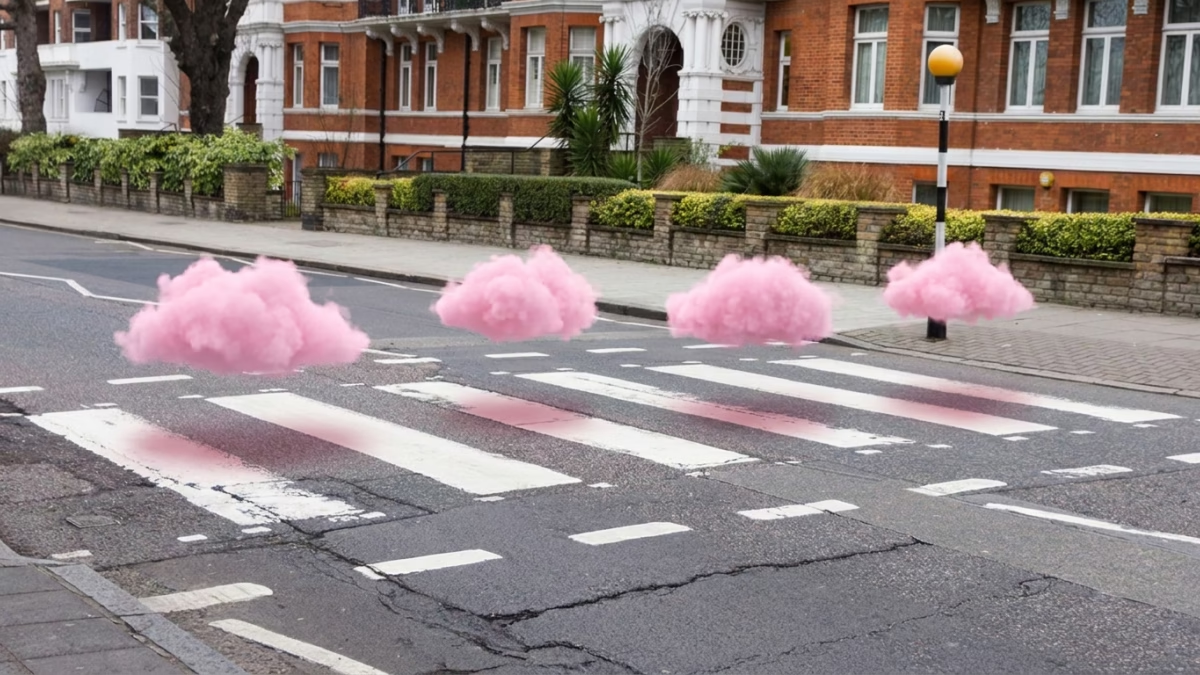
Recovery has a term for a person in early sobriety who seems too happy. We call it the pink cloud.
Say it out loud and it sounds affectionate. It is not, entirely. It is a warning. It means enjoy it while it lasts because it will not last. When it breaks you had better have a program underneath you. It is said kindly, usually by someone with real time, usually to someone who has just discovered they can wake up without dread.
There is a genuine clinical observation buried in it. Early euphoria can flatten hard once the novelty burns off. People do get blindsided by that drop. As a peer specialist, I would never pretend otherwise.
But look at what the word does in a room.
Someone walks in happier than they have been in a decade. The first response is to name that happiness as a phase. Not to celebrate it. To categorize it. The joy becomes a symptom to be monitored rather than a thing that is simply happening to a person who needed it badly.
That is the same move made in 1964. Take a person feeling something enormous. Find a clinical-sounding word. Hand the word back to them so they learn to distrust the feeling themselves.
Hysteria for the girls at the airport. Pink cloud for the woman with 30 days.
Neither word describes joy. Both words manage it.
So people learn to justify their happiness. They preface it. They soften it. They tack a but I know I have work to do onto the end of a sentence that was doing fine on its own. I have watched people apologize for a good week.
What a fandom hands you
Fandom is a permission slip. It grants two things recovery is often starving for. It grants them instantly, to strangers, for free.
The first is joy without justification. Nobody in that lot asked me why I was happy. Being delighted was the entire cover charge, and I did not have to explain what I had come through to be allowed in.
The second is connection without explanation. Someone handed me a bracelet. That was the whole conversation. No assessment, no intake question, no moment where I had to summarize the worst years of my life in order to be treated warmly.
If you have spent time in recovery spaces, you know how rare that second one is. So much of our connection runs through disclosure. We bond by telling each other the hard part. That is real and it matters. It is also a specific kind of exhausting.
In that lot, I was not the sober one. I was one of thousands of people who loved the same thing. That is not small when you have spent years being the cautionary tale in most rooms you walk into.
The lot, not the show
Swift Steps® exists because of that parking lot. Not because of the concert.
The belonging I had been trying to build in recovery spaces already existed a hundred feet from the entrance, running on nothing but shared delight. I kept thinking about what it would look like to bring both into the same room. The honesty of recovery and the ease of a fandom. A place where you can say the true hard thing and also lose your mind over a bridge, in the same hour, to the same people.
That is not a lighter version of recovery. If anything, it asks more of you because it will not let you hide behind the lyrics. It asks you to reflect on them.
Joy is not a reward for having done recovery correctly. It is one of the things recovery is actually for.
The women in the parking lot with beads up to their elbows are not embarrassing themselves. Neither is the person in early sobriety having a genuinely good time before they think they have earned one.
That has always been available. We were just told it was silly.
SPEAK OUT! SPEAK LOUD! at The Sober Curator is a celebration of authentic voices in recovery—echoing Madonna’s call to “Express yourself!” Here, readers and contributors take the spotlight, sharing transformative sobriety journeys, creative talents, and new avenues of self-expression discovered along the way. Through videos, poems, art, essays, opinion pieces, and music, we break the silence that often surrounds addiction, replacing it with connection, hope, and inspiration.
Your story matters—and we want to hear it. ✏️ Submit Your Story to Speak Out! Speak Loud! Reader-written essays and opinion pieces. We publish sharp, specific, witty writing about modern sobriety. Submit your story →
Disclaimer: All opinions expressed in the Speak Out! Speak Loud! Section are solely the opinions of the contributing author of each individual published article and do not reflect the views of The Sober Curator, their respective affiliates, or the companies with which The Sober Curator is affiliated.
The Speak Out! Speak Loud! posts are based upon information the contributing author considers reliable. Still, neither The Sober Curator nor its affiliates, nor the companies with which such participants are affiliated, warrant its completeness or accuracy, and it should not be relied upon as such.

Sober Say What?
GLOSSARY OF ADDICTION + RECOVERY TERMS: Welcome to The Sober Curator’s ultimate guide to the language of sobriety, recovery, and alcohol-free living—where words hold power, knowledge, and the keys to a vibrant, substance-free life. This comprehensive glossary shines a light on essential terms that offer wisdom, clarity, and connection for anyone navigating recovery.
From the first spark of curiosity to the joyful celebration of milestones, our glossary helps demystify the terminology of sobriety and recovery. Each definition is designed to empower, educate, and support you on your journey toward wellness, self-discovery, and lasting freedom.
If you or someone you know is experiencing difficulties surrounding alcoholism, addiction, or mental illness, please reach out and ask for help. People everywhere can and want to help; you just have to know where to look. And continue to look until you find what works for you. Click here for a list of regional and national resources. If you or someone you love is in immediate danger, call 911. If you are in crisis and need immediate help, call 988.
Follow The Sober Curator on TikTok
Why do people react negatively to women expressing excitement?
Society often views women’s excitement as excessive or trivial, reflecting biases against women expressing strong emotions publicly.
How did the Beatles’ arrival in America change perceptions of fan enthusiasm?
The Beatles’ arrival highlighted how fan enthusiasm, particularly among young women, was often dismissed as hysteria, despite being a significant cultural moment.
What is the ‘pink cloud’ in recovery, and why is it viewed skeptically?
The ‘pink cloud’ describes a period of euphoria in early sobriety. It is viewed skeptically as it often precedes a challenging emotional drop.
How does society’s view on joy in recovery differ from genuine happiness?
Society often sees joy in recovery as suspicious unless it is earned through hard work, contrasting with genuine happiness that is spontaneous and unrestrained.
What role did women play in shaping cultural movements like the Beatles’ fan base?
Women, especially young women, played a crucial role in cultural movements by expressing their passions loudly and authentically, often laying groundwork for future societal changes.