Skip to content
Close Menu
The Sober CuratorThe Sober Curator
    Facebook X (Twitter) Instagram Pinterest YouTube LinkedIn TikTok
    The Sober CuratorThe Sober Curator
    • HOME
    • ABOUT
      • DEAR READERS
      • MEET THE SOBER CURATOR
      • CONTRIBUTOR DIRECTORY
      • BUSINESS DIRECTORY
      • CONTACT
      • CONTENT PILLARS
      • PRESS
      • SOBEES
      • WRITE A BOOK
    • BACKSTAGE
    • NA DRINKS
      • NA BEERS & CIDERS
      • NA SPIRITS
      • NA WINES
      • READY TO DRINK
      • NA EVENTS
    • HEALTH & WELLNESS
      • CODEPENDENCY
      • MENTAL HEALTH
      • OPINION
      • SPIRITUAL SUBSTANCE
      • WELLNESS
      • YOGA & PILATES
    • LIFESTYLE
      • #ADDTOCART
      • COMING OUT SOBER
      • CONTENT CREATION
      • CURATED CRAFTS
      • FASHION
      • POETRY
      • SOBER SPOTLIGHT
      • UNBUZZED FEED
    • ENTERTAINMENT
      • #QUITLIT
      • EVENTS
      • GAME ROOM
      • MOVIES
      • MUSIC
      • PODCASTS
      • POP CULTURE
      • SOBER CURATOR PODCAST
      • SPORTS
      • TV SHOWS
    • TRAVEL
      • EVENTS
      • RETREATS
      • CRUISING GUIDE
      • WHAT A TRIP
      • SOBRIETY IN THE CITY
        • MINNEAPOLIS
        • NYC
        • SEATTLE
    • SPIRITUALITY
      • THE CARD DIVO
      • SPIRITUAL SUBSTANCE
      • STOICISM
      • THIRSTY FOR WONDER
      • YOGA + PILATES
    • RESOURCES
      • FAMILY RESOURCES
      • GLOSSARY
      • LGBTQ RESOURCES
      • NONPROFIT GUIDE
      • WE DO RECOVER
    The Sober CuratorThe Sober Curator
    Home - SPEAK OUT! SPEAK LOUD! - Medical Trauma and Recovery: Asking for Help Without Leaving Yourself Behind
    SPEAK OUT! SPEAK LOUD!

    Medical Trauma and Recovery: Asking for Help Without Leaving Yourself Behind

    Anne Marie CribbinBy Anne Marie CribbinSeptember 13, 20268 Mins Read
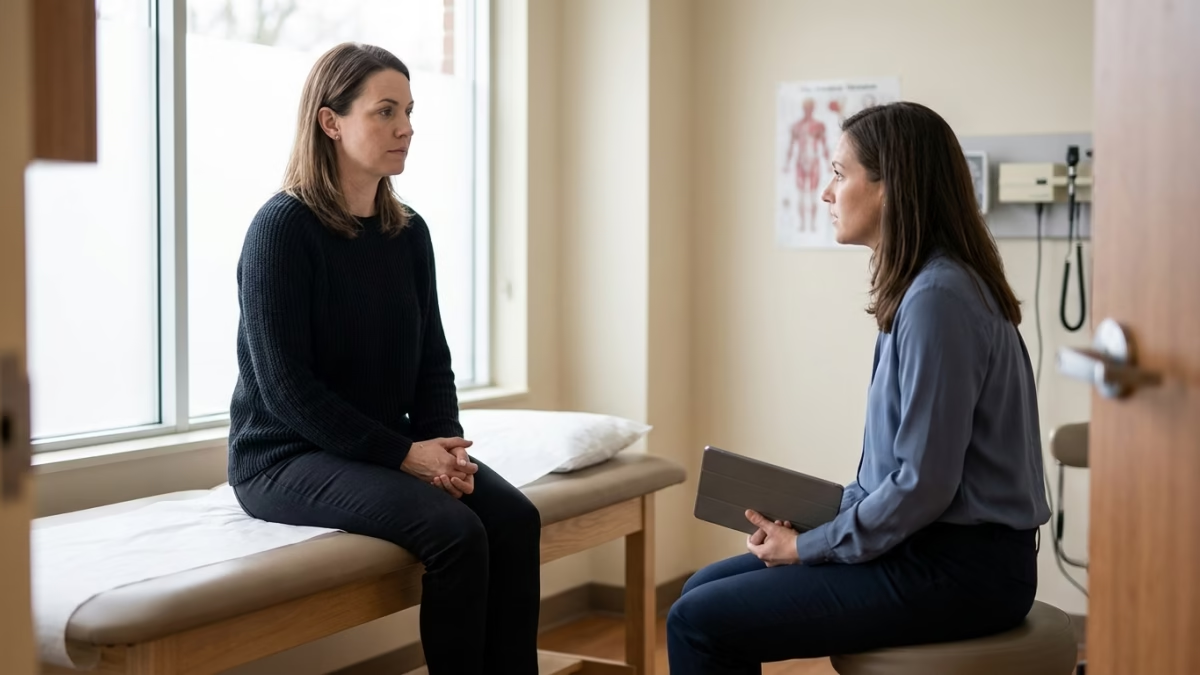
    A fully dressed patient speaks with a medical practitioner seated at eye level in an examination room.
    Share
    Facebook Twitter LinkedIn Pinterest Email

    Content warning: This essay discusses medical trauma and medical assault. Please take care of yourself as you read, or decide not to read at all.

    When Help Hurts

    Recovery taught me to ask for help.

    This was no small thing.

    Asking for help is practically recovery 101. Don’t isolate. Tell someone what’s happening. Reach out before things get worse. Let people show up for you. You don’t have to do this alone.

    I believe all of that.

    I also know now that asking for help does not guarantee that the help will be safe.

    Several years ago, I was medically assaulted.

    I went into a medical setting because I needed care. I was vulnerable because needing care makes us vulnerable. I trusted the people in the room because we are taught that this is what we are supposed to do. They were the professionals. They knew more than I did. They had the credentials and the equipment and the language I didn’t understand.

    And something happened to my body without my consent.

    I am deliberately not going to tell you the details.

    Partly because they belong to me. Partly because I don’t believe I need to offer up the most painful pieces of my story in order for you to believe me. And partly because if you have your own history of medical trauma, sexual trauma, or having your bodily autonomy violated, you don’t need my images living alongside yours.

    What matters here is this: I said no.

    It happened anyway.

    Being harmed by someone you went to for help changes the shape of asking.

    The thing recovery had taught me to do, reach toward other people when I couldn’t do something alone, suddenly came with another question attached to it: What if the person I reach toward isn’t safe?

    I have been thinking about that question a lot lately because I have needed medical care again. More care than I would like. More help than I would like. And my body remembers what my brain would sometimes prefer to file away neatly under THAT WAS THEN.

    Bodies are terribly inconvenient that way.

    They don’t particularly care about our filing systems.

    Sometimes my body becomes afraid in medical settings before I have consciously decided there is anything to be afraid of. I can know where I am. I can know who is with me. I can know that this person has given me no reason to believe I am unsafe. And still, something in me is paying very close attention.

    This is one of the places where my recovery and my experience of medical trauma have collided.

    Recovery taught me that I don’t have to do this alone.

    In the aftermath of medical trauma, I have had to learn that receiving help does not mean handing myself over.

    I can need someone’s expertise and still be the expert on what I am experiencing. I can ask what is going to happen before it happens. I can need more information or more time. I can say no. I can change my mind after I have said yes. I can leave.

    None of this makes me bad at receiving help. It makes me a participant in my own care.

    I also don’t want to turn any of this into a story about what trauma taught me.

    No.

    We have a strange cultural compulsion to make suffering useful. Everything happens for a reason. Look for the lesson. Find the silver lining. Think of how strong you are now. Recovery spaces can be particularly fond of the clean arc from broken to healed, darkness to light, pain to purpose. We want to know what terrible thing happened and then hear how it became the best thing that ever happened to you.

    My medical assault was not a gift.

    It did not happen for a reason. I did not need to be violated in order to become wiser, stronger, more compassionate, more discerning, or more fully myself. I wish it had never happened, and nothing I have learned since makes what happened acceptable.

    I refuse to give trauma credit for work that I have done.

    The boundaries I have learned to name are mine. The voice I have strengthened is mine. The courage it takes to walk into another medical room belongs to me. So does the work of noticing fear without immediately assuming it means I am incapable of receiving care.

    And some credit belongs to the people who have shown me that care can be different.

    The practitioners who ask instead of assume. The ones who explain. The ones who believe me when I tell them what I am experiencing. The ones who slow down when they notice I need them to. The ones who understand that I can be scared and still capable of making decisions about my own body.

    None of them can undo what happened. I don’t need them to.

    What they can do is help create new experiences of receiving care.

    I think this is where recovery enters the story again.

    Sobriety has never been, for me, about becoming better at enduring what hurts. It has been about becoming more present to my own life. About noticing what I once numbed. Telling the truth about what is happening. Learning the difference between discomfort I can move through and something inside me saying, No. This isn’t okay.

    That discernment matters when you’ve spent years using alcohol to override yourself. It matters when you’ve experienced trauma. And it really matters when you find yourself needing help from people who hold knowledge or power that you don’t have.

    I don’t think healing from medical trauma means becoming a perfectly trusting patient. I’m not sure perfect trust should be the goal.

    I want something more complicated than that.

    I want to be able to receive care while remaining in relationship with myself.

    That means there may be appointments when I am afraid. There may be questions I ask twice. There may be things I decline. There may also be moments when I notice that I am okay. When someone listens. When I say what I need and it is respected. When my body braces for something that doesn’t come.

    Those moments count too.

    They don’t erase the old experience. They give my body another experience to know.

    Maybe this is the part of recovery I understand differently now. Asking for help and trusting myself are not competing acts. I don’t have to choose between fierce independence and handing myself over to someone else’s care. There is another way to be with each other.

    I can need you and still have boundaries.

    I can trust what you know without distrusting what I know.

    I can let you help me without leaving myself behind.

    Recovery taught me that I don’t have to do this alone. I still believe that, maybe more than ever.

    I simply understand now that I get to come with me.


    A note for readers: If this essay brought up something difficult for you, consider reaching out to someone you trust or a trauma-informed mental health professional. You do not have to disclose every detail of an experience in order to ask for support.

    FAMILY RESOURCE GUIDE: Families play a pivotal role in both the path to and through recovery. Research shows that individuals with strong family support have significantly better outcomes, including higher rates of sustained sobriety and improved mental well-being.

    According to SAMHSA, people in recovery who receive active support from family members are twice as likely to remain sober and successfully engage with treatment plans. In fact:

    • Recovery programs with family involvement see over 60% higher adherence to treatment protocols.
    • Nearly 90% of people in recovery credit family or caretaker emotional support as a significant factor in their continued sobriety.
    • Active family engagement reduces relapse risk, helps establish healthy routines, and strengthens motivation and accountability.

    Why Family Support Matters:

    • Reduces stigma & isolation – Acceptance and understanding foster belonging.
    • Boosts mental well-being – Emotional support can help prevent or manage co-occurring mental health issues.
    • Promotes healthy lifestyles – Families encourage adherence to recovery plans and positive daily habits.
    • Builds accountability – Ongoing connection provides motivation and stability.

    When families commit to learning about addiction, joining support groups, and actively participating in recovery, their involvement becomes transformative—not just supportive. Recovery is a collective journey, and compassionate, informed family engagement can be the foundation for lasting change.

    Additional Resources:

    • Alcohol & Substance Use Disorder Guide
    • Nonprofit Recovery Resource Guide
    • Family Resource Guide
    • LGBTQ+ Recovery Resource Guide
    • Glossary of Addiction & Recovery Terms
    • Recovery Stories
    • Break Free Foundation – Scholarships for those unable to afford inpatient treatment

    If you or someone you love is in immediate danger, call 911. If you are in crisis and need immediate help, call 988.

    Photo Credit:  «Depositphotos.com»

    SPEAK OUT! SPEAK LOUD! at The Sober Curator is a celebration of authentic voices in recovery—echoing Madonna’s call to “Express yourself!” Here, readers and contributors take the spotlight, sharing transformative sobriety journeys, creative talents, and new avenues of self-expression discovered along the way. Through videos, poems, art, essays, opinion pieces, and music, we break the silence that often surrounds addiction, replacing it with connection, hope, and inspiration.

    Your story matters—and we want to hear it. ✏️ Submit Your Story to Speak Out! Speak Loud! Reader-written essays and opinion pieces. We publish sharp, specific, witty writing about modern sobriety. Submit your story →

    Disclaimer: All opinions expressed in the Speak Out! Speak Loud! Section are solely the opinions of the contributing author of each individual published article and do not reflect the views of The Sober Curator, their respective affiliates, or the companies with which The Sober Curator is affiliated.

    The Speak Out! Speak Loud! posts are based upon information the contributing author considers reliable. Still, neither The Sober Curator nor its affiliates, nor the companies with which such participants are affiliated, warrant its completeness or accuracy, and it should not be relied upon as such.


    You don’t need a sobriety date to be here.
    Sober, sober-curious, “just taking a break,” California sober and questioning it… The Sober Sip doesn’t check IDs at the door.

    If you want the culture without the lecture, get on the list. Free, three times a week.

    Resources Are Available

    If you or someone you know is experiencing difficulties surrounding alcoholism, addiction, or mental illness, please reach out and ask for help. People everywhere can and want to help; you just have to know where to look. And continue to look until you find what works for you. Click here for a list of regional and national resources.
    Follow The Sober Curator on TikTok

    Frequently Asked Questions

    What is medical trauma?

    Medical trauma can refer to emotional or psychological distress resulting from a medical experience, including frightening treatment, loss of control, serious illness, invasive procedures or care received without meaningful consent. People may respond differently, and an experience does not have to look dramatic from the outside to have a lasting impact.

    Can I ask a medical provider to explain a procedure before it begins?

    Yes. Patients can ask what a procedure involves, why it is being recommended, what they may experience and what alternatives are available. Informed consent is intended to be an ongoing conversation—not simply a form someone signs.

    Can I change my mind after consenting to medical care?

    In many nonemergency situations, a patient with decision-making capacity may withdraw consent or decline a procedure, even after previously agreeing to it. Specific rights and exceptions can vary depending on the circumstances and applicable law.

    How can I make a medical appointment feel safer after trauma?

    You may be able to tell the provider that medical care is difficult for you, bring a trusted support person, request explanations before being touched, ask for pauses or agree on a signal that means stop. You do not have to disclose the details of your trauma to request trauma-informed care.

    Where can someone seek help after a harmful medical experience?

    Options may include speaking with a trauma-informed therapist, contacting the medical organization’s patient advocate or patient-relations department, requesting medical records, or consulting an appropriate licensing or legal resource. The right next step depends on what happened and what the individual wants.

    This article reflects one person’s experience and is not medical or legal advice. In an emergency, some consent rules may operate differently.

    Love what you read? #sharesobriety

    • Share on Facebook (Opens in new window) Facebook
    • Share on LinkedIn (Opens in new window) LinkedIn
    • Share on Pinterest (Opens in new window) Pinterest
    • Share on X (Opens in new window) X
    • Share on Tumblr (Opens in new window) Tumblr
    • Share on Reddit (Opens in new window) Reddit

    Related

    ask for help medical issues medical trauma medical trauma and recovery recover out loud recovery Trusting yourself in recovery
    Share. Facebook Twitter Pinterest LinkedIn WhatsApp Reddit Tumblr Email
    Anne Marie Cribbin
    • Website
    • Facebook
    • Instagram
    • LinkedIn

    Anne Marie, founder of Thirsty For Wonder, is a recovery coach and spiritual companion. She inspires joyful, authentic living through compassionate support and Celtic wisdom.

    Related Posts

    From New Zealand to Bali: Nev Doidge’s Story of Recovery and Community

    From New Zealand to Bali: Nev Doidge’s Story of Recovery and Community

    November 14, 2026
    Should You Share Your Sobriety Online or Keep It Sacred?

    Should You Share Your Sobriety Online or Keep It Sacred?

    November 6, 2026
    There’s No Place Like Home

    There’s No Place Like Home: Finding Yourself in Sobriety

    October 31, 2026
    Leave A Reply Cancel Reply

    SOBERSCRIBE AND GET ON THE LIST!
    7 events found.
    • Week of November 9
    • Previous week
    • Next week
    All Day
    National Gratitude Month
    November 1 - November 30

    National Gratitude Month

    12:00 pm
    Claude Anonymous | Weekly Monday AI Meeting for Sober Humans Who Are Sick of Feeling Behind
    November 9 @ 12:00 pm - 1:00 pm PDT

    Claude Anonymous | Weekly Monday AI Meeting for Sober Humans Who Are Sick of Feeling Behind

    Virtual
    All Day
    National Gratitude Month
    November 1 - November 30

    National Gratitude Month

    11:00 am
    TASTE LAB at Sans Bar Institute
    November 10 @ 11:00 am - 12:00 pm PDT

    TASTE LAB at Sans Bar Institute

    Virtual
    All Day
    National Gratitude Month
    November 1 - November 30

    National Gratitude Month

    Veterans Day
    November 11

    Veterans Day

    All Day
    National Gratitude Month
    November 1 - November 30

    National Gratitude Month

    3:00 pm
    BACKSTAGE With Megan A. Schikora, Author of A Woman in Pink
    November 12 @ 3:00 pm - 4:00 pm PST

    BACKSTAGE With Megan A. Schikora, Author of A Woman in Pink

    Virtual
    6:00 pm
    BigVision Annual Benefit 2026
    November 12 @ 6:00 pm - 9:00 pm EST

    BigVision Annual Benefit 2026

    Metropolitan Pavilion New York City
    + 1 More
    All Day
    National Gratitude Month
    November 1 - November 30

    National Gratitude Month

    World Kindness Day
    November 13

    World Kindness Day

    International Conference of Secular AA 2026 Phoenix
    November 13 - November 15

    International Conference of Secular AA 2026 Phoenix

    Hilton Phoenix Resort at the Peak Phoenix
    10th Annual Nar-Anon Rocky Mountain Region Convention
    November 13 - November 15

    10th Annual Nar-Anon Rocky Mountain Region Convention

    + 1 More
    All Day
    National Gratitude Month
    November 1 - November 30

    National Gratitude Month

    International Conference of Secular AA 2026 Phoenix
    November 13 - November 15

    International Conference of Secular AA 2026 Phoenix

    Hilton Phoenix Resort at the Peak Phoenix
    10th Annual Nar-Anon Rocky Mountain Region Convention
    November 13 - November 15

    10th Annual Nar-Anon Rocky Mountain Region Convention

    1:00 pm
    SOBER SWAP BACKSTAGE! Bring one thing. Leave with everybody else’s good taste.
    November 15 @ 1:00 pm - 2:00 pm PDT

    SOBER SWAP BACKSTAGE! Bring one thing. Leave with everybody else’s good taste.

    Virtual
    3:00 pm
    Sober Watch Party: Dallas Cowboys v. San Francisco 49ers
    November 15 @ 3:30 pm - 7:00 pm CST

    Sober Watch Party: Dallas Cowboys v. San Francisco 49ers

    Altered States Wellness Glade Parks TX
    + 2 More
    November 1 - November 30

    National Gratitude Month

    National Gratitude Month

    November 1 - November 30

    National Gratitude Month

    National Gratitude Month National Gratitude Month is observed every November in the United States, encouraging people to practise thankfulness, appreciate the people and experiences in their lives, and build habits

    November 1 - November 30

    National Gratitude Month

    November 1 - November 30

    National Gratitude Month

    November 11

    Veterans Day

    Veterans Day

    November 11

    Veterans Day

    Veterans Day

    November 1 - November 30

    National Gratitude Month

    November 1 - November 30

    National Gratitude Month

    November 13

    World Kindness Day

    World Kindness Day

    November 13

    World Kindness Day

    World Kindness Day World Kindness Day was established in 1998 by the World Kindness Movement with the purpose of promoting kindness around the world. World Kindness Day is celebrated annually on

    November 13 - November 15

    International Conference of Secular AA 2026 Phoenix

    International Conference of Secular AA 2026 Phoenix

    November 13 - November 15

    International Conference of Secular AA 2026 Phoenix

    International Conference of Secular AA 2026 Phoenix Overview Join us in Phoenix, AZ, from November 13–15, 2026, for the in‑person International Conference of Secular AA! Why Attend ICSAA 2026? ICSAA

    November 13 - November 15

    10th Annual Nar-Anon Rocky Mountain Region Convention

    10th Annual Nar-Anon Rocky Mountain Region Convention

    November 13 - November 15

    10th Annual Nar-Anon Rocky Mountain Region Convention

    10th Annual Nar-Anon Rocky Mountain Region Convention The Rocky Mountain Region Nar-Anon Family Group warmly invites you to join us for our 10th Annual in-person convention! Come together with us

    November 1 - November 30

    National Gratitude Month

    November 13 - November 15

    International Conference of Secular AA 2026 Phoenix

    November 13 - November 15

    10th Annual Nar-Anon Rocky Mountain Region Convention

    November 1 - November 30

    National Gratitude Month

    November 13 - November 15

    International Conference of Secular AA 2026 Phoenix

    November 13 - November 15

    10th Annual Nar-Anon Rocky Mountain Region Convention

    Monday, November 9, 2026

    • November 9, 2026 12:00 pm - 1:00 pm
      Claude Anonymous | Weekly Monday AI Meeting for Sober Humans Who Are Sick of Feeling Behind
    • November 9 @ 12:00 pm - 1:00 pm PDT

      Claude Anonymous | Weekly Monday AI Meeting for Sober Humans Who Are Sick of Feeling Behind

      Claude Anonymous | Weekly Monday AI Meeting for Sober Humans Who Are Sick of Feeling Behind Bring your questions, your half-finished projects, and your low-grade panic about AI. One hour,

    Tuesday, November 10, 2026

    • November 10, 2026 11:00 am - 12:00 pm
      TASTE LAB at Sans Bar Institute
    • November 10 @ 11:00 am - 12:00 pm PDT

      TASTE LAB at Sans Bar Institute

      TASTE LAB at Sans Bar Institute TASTE LAB at SBI is a 4-week series of four hour-long virtual sessions designed for hospitality professionals, bottle shop owners, and non-alcoholic beverage enthusiasts

    Wednesday, November 11, 2026

    No events on this day.

    Thursday, November 12, 2026

    • November 12, 2026 3:00 pm - 4:00 pm
      BACKSTAGE With Megan A. Schikora, Author of A Woman in Pink
    • November 12 @ 3:00 pm - 4:00 pm PST

      BACKSTAGE With Megan A. Schikora, Author of A Woman in Pink

      BACKSTAGE With Megan A. Schikora, Author of A Woman in Pink Some love stories deserve a standing ovation. Others deserve a serious conversation about boundaries. On Nov. 12, author Megan

    • November 12, 2026 6:00 pm - 9:00 pm
      BigVision Annual Benefit 2026
    • November 12 @ 6:00 pm - 9:00 pm EST

      BigVision Annual Benefit 2026

      BigVision Annual Benefit 2026 - SAVE THE DATE More details coming soon!

    • November 12, 2026 8:00 pm - 11:00 pm
      OPEN MIC (MUSIC) Free Spirit Social House
    • November 12 @ 8:00 pm - 11:00 pm EST

      OPEN MIC (MUSIC) Free Spirit Social House

      OPEN MIC (MUSIC) Free Spirit Social House Join us for an evening of live music where everyone gets a turn in the spotlight. Singers, songwriters, and musicians of every style

    + 1 More

    Friday, November 13, 2026

    No events on this day.

    + 1 More

    Saturday, November 14, 2026

    No events on this day.

    Sunday, November 15, 2026

    • November 15, 2026 1:00 pm - 2:00 pm
      SOBER SWAP BACKSTAGE! Bring one thing. Leave with everybody else’s good taste.
    • November 15 @ 1:00 pm - 2:00 pm PDT

      SOBER SWAP BACKSTAGE! Bring one thing. Leave with everybody else’s good taste.

      SOBER SWAP BACKSTAGE! Bring one thing. Leave with everybody else's good taste. Think flea market energy, but we're swapping the stuff currently making life better, weirder, tastier, louder, or more

    • November 15, 2026 3:30 pm - 7:00 pm
      Sober Watch Party: Dallas Cowboys v. San Francisco 49ers
    • November 15 @ 3:30 pm - 7:00 pm CST

      Sober Watch Party: Dallas Cowboys v. San Francisco 49ers

      Sober Watch Party: Dallas Cowboys v. San Francisco 49ers Join us at Altered States Wellness Glade Parks for a zero-proof Cowboys watch party. Sober Watch Party: Dallas Cowboys vs. San

    + 2 More
    View Calendar
    The Sober Curator
    Facebook Instagram X (Twitter) TikTok YouTube Pinterest
    • PRIVACY POLICY
    • LINKS DISCLAIMER
    • EDITORIAL GUIDELINES
    • TERMS OF SERVICE
    • REFUND POLICY
    • DON’T SELL MY INFO
    • DATA SUBJECT REQUEST FORM
    • CONTACT US
    © 2026 The Sober Curator - Benefits of a Alcohol Free Lifestyle

    Type above and press Enter to search. Press Esc to cancel.