



In the 1980s, Aerosmith went on tour with a former convict and ex-gang member named Bob Timmins. His job was not security. His job was keeping the band clean, and he is widely credited with inventing what we now call recovery coaching.
Four decades later, recovery coaching is a workforce of more than 100,000 certified peers, bigger than the entire field of psychologists, and somehow nobody had written the mainstream book about it.
Stephanie Hazard just did.
She wrote the book because a stranger on a beach asked her to
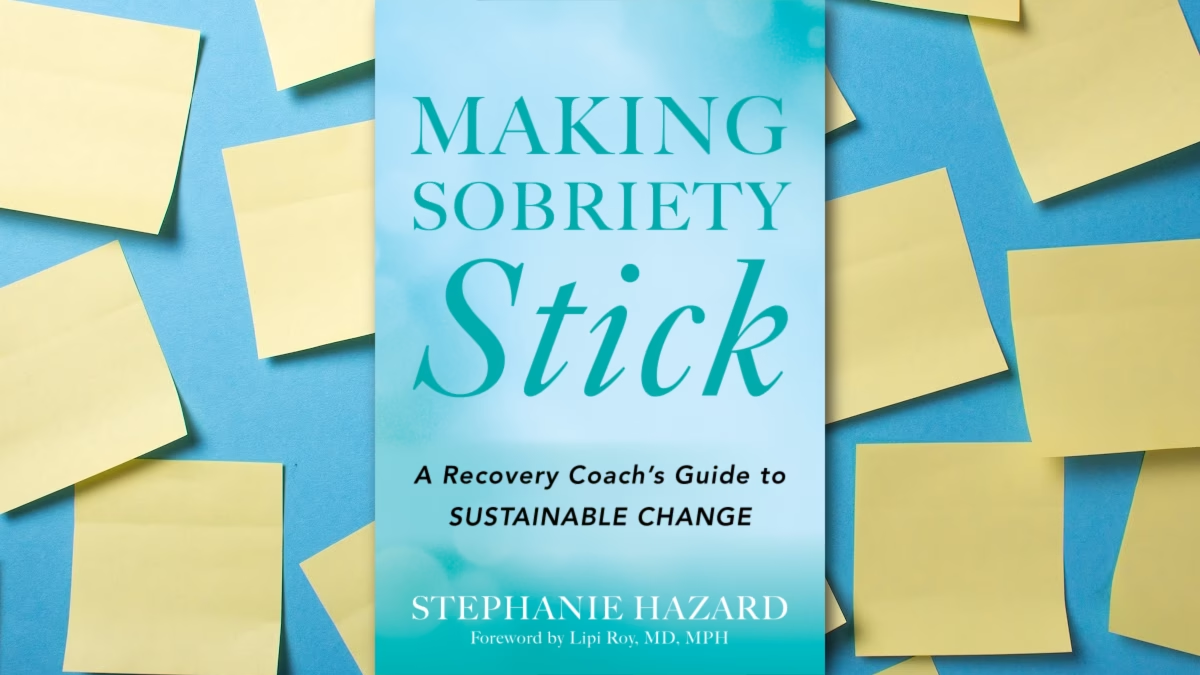
Hazard is a certified recovery coach with 26 years of sobriety, and Making Sobriety Stick: A Recovery Coach’s Guide to Sustainable Change (Diversion Books, out September 22, 2026) opens with the origin story to beat all origin stories. August 2020, Madaket Beach, Nantucket. She is workshopping book ideas with her son when a man named Paul walks over, apologizes for eavesdropping, and tells her his son Zachary died of a heroin overdose the summer before. Maybe a recovery coach would have saved him. Please write the book.
The book is dedicated to Zachary.
That is not a marketing anecdote. That is a mission statement.
Rehab costs $80,000. Then what?
Here is the argument that makes this book matter. Treatment is acute care. A 28-day inpatient stay can run eighty grand, and by the numbers Hazard cites, roughly 80 percent of people who leave treatment return to use within the first year, most of them within 90 days. The real work starts the day you come home to your kitchen, your marriage, and your group chat.
Hazard quotes Phil Valentine of the Connecticut Community for Addiction Recovery: if treatment is the surgery, recovery coaching is the physical therapy. A coach is not a therapist and not a sponsor. A coach is the person checking in daily, monitoring the Soberlink breathalyzer, sitting with you while you fill out the intake paperwork, and pointing you at resources like a human compass.
The client stories are where the book earns its cover price. There is Lux S., a professional ballerina who fractured her ankle in a blackout stairwell fall, worked with Hazard through virtual sessions and daily check-ins, and four years later is a principal dancer at one of the top companies in the country. And there is Christina C., a young mother whose story does not end well. Hazard includes it anyway. A book about making sobriety stick that pretended everyone makes it would be a brochure. This is not a brochure.

Full disclosure: this book was not written for you
You, Sober Curator reader, with your decade or two of sobriety and your strong opinions about NA hop water, are not the target audience. This book is aimed at the sober curious, the newly alcohol-free, and the people who love someone in the deep end. It has worksheets. It has SMART goals. It uses the phrase “wellness journey” without irony, and if you have a twitch reaction to compass metaphors, know that Hazard commits to hers like Beyoncé commits to a residency.
And yet. Three chapters in the back half are written for exactly where you live: the chapter on recurrence, which treats relapse as data instead of moral failure, the chapter on emotional sobriety, and an epilogue about her father that contains the best writing in the book. She sat at his deathbed, held his hand, and forgave a man who had done real damage. Not because it was okay. Because, as she quotes Nadia Bolz-Weber, forgiveness is refusing to stay connected to it. #IYKYK
Twenty-six years in, the assignments do not stop. Anyone with long-term sobriety knows that already. Hazard just wrote it down.
The other reason to read it: this might be your next career
Here is the angle nobody else reviewing this book will give you. If you have five, ten, twenty years of sobriety, you are sitting on the exact qualification this profession runs on: lived experience plus training. Coaching is now covered by insurance in many states, and some states are directing opioid settlement money into peer support programs. Chapter 13 is essentially a field guide to the job. If you have ever wondered what to do with your story, this is a legitimate answer.

QUITLIT Sobees Score: 4 out of 5
Making Sobriety Stick gets four Sobees. It is the first mainstream book on recovery coaching, it is endorsed by William White, the field’s preeminent historian, and it does the thing quit lit almost never does: it hands you the actual tools instead of just the memoir. It loses the fifth Sobee because it is a guide, not a page-turner, and the prose occasionally reaches for the wellness thesaurus when plain English would hit harder. If Reese picks it, it will be for the epilogue.
Buy it for yourself if you are curious about coaching. Buy it for the person you keep almost texting.
Making Sobriety Stick: A Recovery Coach’s Guide to Sustainable Change by Stephanie Hazard is out September 22, 2026 from Diversion Books. $19.99.
The Ultimate Quit Lit Library: 178 Sobriety & Recovery Books Reviewed (and counting)

TSC LIBRARY: Step into The Sober Curator Library! Here, books are more than pages—they’re portals. We read them, listen to them, obsess over them, and then spill our thoughts in curated reviews.
Explore our four signature genres: #QUITLIT, Addiction Fiction, Self-Help, and NA Recipe Books.
Want even more inspo? Our Amazon #QUITLIT list of books written by Sober Curator Contributors.
📘 Submit a Book for our #QuitLit Library: Welcome to the largest culturally-driven sober book collection on the internet. Memoir, fiction, criticism, quit lit, anything that fits a Gen X or Millennial sober reader past initiation. Submit your book →
Resources Are Available
If you or someone you know is experiencing difficulties surrounding alcoholism, addiction, or mental illness, please reach out and ask for help. People everywhere can and want to help; you just have to know where to look. And continue to look until you find what works for you. Click here for a list of regional and national resources.

Follow The Sober Curator on LinkedIn
What is Making Sobriety Stick about? Making Sobriety Stick by Stephanie Hazard is the first mainstream guide to recovery coaching, a nonclinical support role for people navigating substance use. It walks readers through Hazard’s coaching process, including the Recovery Capital Scale, a Recovery/Wellness Plan built on the 8 Dimensions of Wellness, and real client case studies.
Who is Stephanie Hazard? Stephanie Hazard is a certified recovery coach (CPRS, CCIEDC, RCP) with 26 years of sobriety who works with individuals and families across the US and internationally. She lives in New Canaan, Connecticut.
When does Making Sobriety Stick come out? September 22, 2026, from Diversion Books, timed to National Recovery Month, with distribution by Simon & Schuster.
What is a recovery coach? A recovery coach is a trained, nonclinical peer who uses lived experience to provide daily accountability and connect clients to recovery resources. Coaching complements, rather than replaces, therapy, medication, and treatment programs.
