


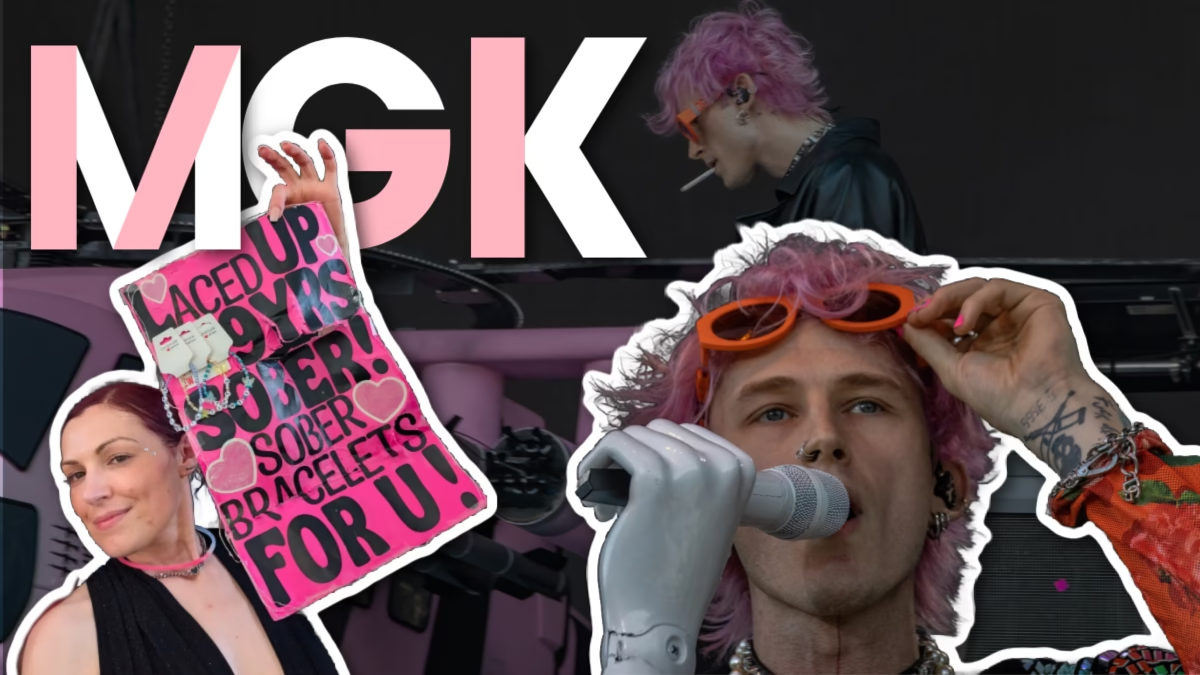

We went to see Machine Gun Kelly in Scranton last weekend. And the crowd was a wall.
Let me be fair right out of the gate. The man puts on an incredible show. The lights, the sound, the energy coming off that stage. He is absolutely a force, and he pours his whole heart into it.
And so do I. Every room I walk into, I walk in with my whole heart out and my hands full, ready to give. He does it from the stage. I do it from the floor.
So we showed up the way we always do. Glow sticks, lollipops, water, mints, QR codes offering recovery support. All of it free, all of it to give away.
Here is the part that makes the wall hurt a little more. I had been to one of his shows before, and it was the opposite of this.
Back in December, I stood in a crowd at one of his shows, and it was everything a night out is supposed to be. Fun. Supportive. Kind. People looked out for each other instead of through each other. I got pulled up on stage, and even though I never got to hand him the sober bracelets I made for him, I walked away with an experience as a concert girlie I will never forget.
And here is why that night worked. The show was organized. Nobody was confused. The people running it knew what they were doing, and just as importantly, they knew what they did not know. That is the whole game. A crew that does its job well and stays honest about its blind spots changes the entire vibe of what a show is supposed to be.
It mattered to me for another reason too. MGK is one of the most visible sober musicians out there, somebody who has put his own recovery into his art instead of hiding it. Bringing him bracelets was my small way of saying I see you, this matters, the sober movement is bigger than any one of us. December gave me a room where that gesture made sense.
Then came Scranton. Same artist. Same heart on that stage. Completely different machine running the floor. And the floor is where the rest of us live.
It started before the music even did. We bought fast pass, and nobody could tell us where fast pass actually was. Line to line to line. Four times. Every turnaround shoved the people who had been up front to the back, and you can guess what that does to a room. Anger. Confusion. Fights breaking out around us before a single song.
I kept trying to do the thing I always do. Catch an eye. Smile. Offer a glow stick. Start the little spark that turns a crowd of strangers into a crowd of new friends.
And I got nothing back. Not cruel exactly. More like a closed door. Like we had wandered into a party we were not invited to, and everyone could feel it.
The show again, great! I got pulled from the barricade to go up for “Bloody Valentine.” Again. I could not believe my luck. Pulled up a second time, bracelets in hand, one more shot at the moment I missed in December. They ran us backstage, then told us they ran us to the wrong side, and it was too late and literally pushed us off stage. Fighting my way back through hundreds of people, a girl accosted me. I stood in a crowd of hundreds, hands full of things to give, and never felt more shut out.
Two shows. Same performer. One venue that knew what it was doing and one that did not. That difference was the whole night.
And here is the thing. Like I said, I am a concert girlie through and through. I have felt the opposite of a wall, too. I have stood in a crowd of thousands and felt like I was home.
The Eras Tour was the night that inspired this whole idea. Strangers traded bracelets like currency. People I had never met hugged me like we had known each other for years. Someone shared their water. Someone held my spot. Someone started crying, and three of us who did not know each other reached for her at the same time. The door was always open. You did not have to earn your way in. You just had to show up.
Shaken and shoved and on the outside of something I could not get into, I remembered exactly why I built Swift Steps®.
Belonging is not automatic. It does not just happen because a bunch of people love the same thing. You have to build it on purpose. You have to decide out loud and over and over that the door stays open. You have to run the room like that December crew did. Know your job, know your limits, and never make a single person feel confused about whether they belong.
That is the difference between a wall and a home, and it is the entire reason a sober community has to be built with intention. The benefits of sober living do not arrive on their own. Connection is the work, not the byproduct.
So I built a room where the Eras Tour feeling is the rule, not the accident. A sober space where a stranger gets a bracelet, not a wall. Where if you are getting pushed around, three people you have never met reach for you at the same time. Where compassion is the method, and nobody has to prove they belong. You do not have to be sober. You do not have to be far along. You do not have to be sure of anything. Sober, sober curious, alcohol-free, just starting, just curious. You just have to come.
That crowd in Scranton did me a favor. It reminded me what it feels like to be on the outside looking in. And it reminded me that I never want a single person walking into Swift Steps® to feel the way I felt that night.
So if you have ever stood in a crowd and felt invisible. If you have ever wanted a room and could not find the door. The door is open. It has been open. It will stay open. On purpose. We don’t gatekeep or require you to show up as anything but you.
Just come curious.
The door’s at swiftsteps.org.
SOBER ENTERTAINMENT: “The Pete Davidson Show” Netflix Review: A Sober Take on Pete and MGK’s Garage Hang
PLAY IT AGAIN – MUSIC: Sober Playlist Picks: Songs and Sober Artists That Make Recovery Feel Loud, Honest, and Alive
PLAY IT AGAIN is The Sober Curator’s curated playlist of sobriety anthems—songs that capture the essence of recovery journeys and lift the spirit. From timeless classics to modern hits, these tracks inspire, heal, and motivate, no matter what genre of choice. Each song is handpicked for its power to transport you to another state of mind and remind you why living alcohol-free rocks.
Got a favorite sobriety theme song? We want to hear it! Send your picks to thesobercurator@gmail.com and help us keep the playlist growing.
Resources Are Available
If you or someone you know is experiencing difficulties surrounding alcoholism, addiction, or mental illness, please reach out and ask for help. People everywhere can and want to help; you just have to know where to look. And continue to look until you find what works for you. Click here for a list of regional and national resources.

Follow The Sober Curator on Instagram
What was the primary difference between the two Machine Gun Kelly concerts?
The primary difference was the organization and management of the event. The first concert was well-organized, creating a supportive atmosphere, while the second lacked coordination, leading to confusion and frustration among attendees.
How does the author relate their experience at the concert to the sober movement?
The author sees Machine Gun Kelly as a visible sober musician and wanted to acknowledge his influence by giving him sober bracelets. This gesture was meant to show solidarity and emphasize the importance of the sober movement.
What challenges did the author face during the Scranton concert?
The author faced issues with poorly managed fast pass lines, resulting in confusion and frustration. Additionally, they felt isolated and unable to connect with the crowd, contrasting with their previous positive experiences.
Why did the author find the Eras Tour inspiring?
The Eras Tour inspired the author because it fostered an open and welcoming atmosphere. Strangers connected, shared, and supported each other, embodying the sense of belonging the author values.
What role does venue organization play in the concert experience?
Venue organization is crucial as it sets the tone for the entire event. A well-organized venue can create a positive and inclusive environment, while poor management can lead to confusion and diminish the overall experience.
