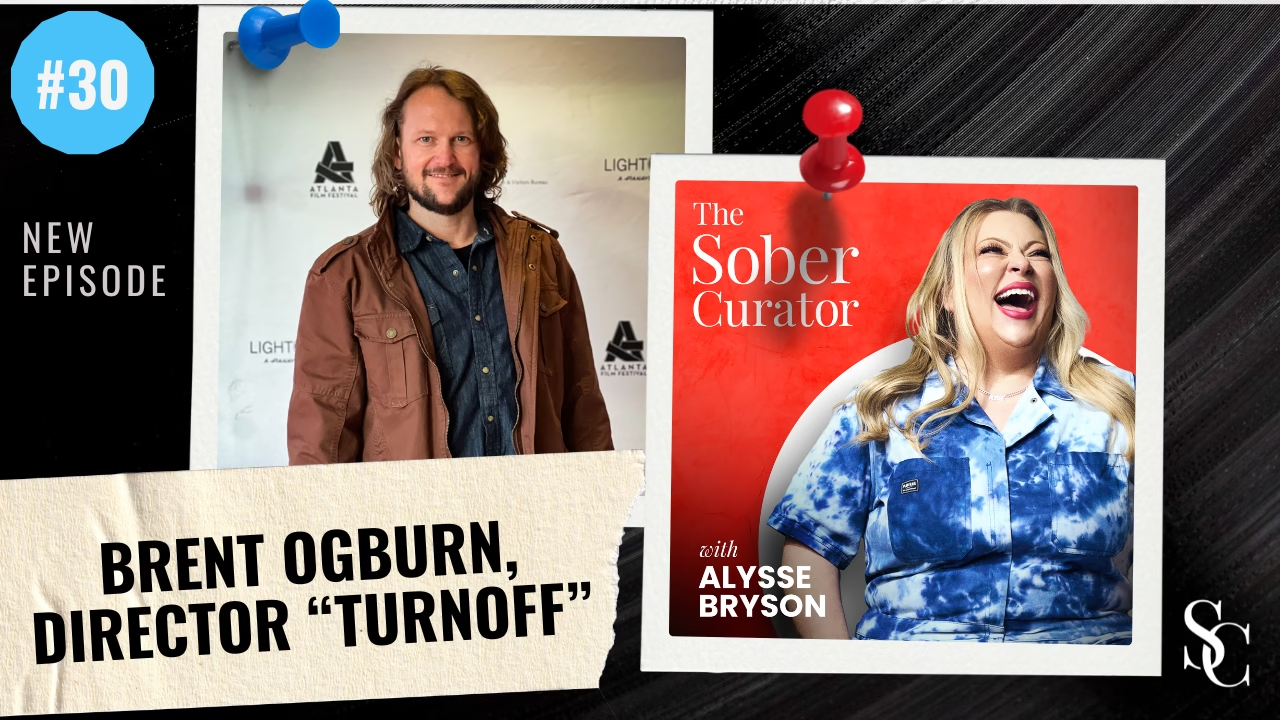
“Once you can laugh at yourself, that’s when true healing can begin.” Brent Ogburn doesn’t present it as a mantra so much as a memory — an insight shaped by a day in rehab, then hammered into a film script that wouldn’t let him go. His short, “Turnoff,” unfolds across a single day: a father named Ryan, the fluorescent hush of detox, the unsteady shuffle into a communal space where strangers become mirrors. The cast? Archetypes you’ll recognize if you’ve ever tried to restart your life in public. The tone? Surprisingly funny. Because humor, properly aimed, isn’t a dodge; it’s a door.
Ogburn’s story begins further back — years coaching high-school football, teaching audio/video, fathering two boys and keeping pace with a schedule that looked noble on paper and unsustainable in practice. In February, a therapist asked the kind of question that tilts a life: Are you ready to accept that the dream might have changed? He was. The whistle got hung up. Space opened. Purpose had room to breathe.
He’d gotten sober in 2018. Meetings helped, until the pandemic unspooled routines. What re-anchored him was a daily gratitude practice — sparked by a friend handing him Rhonda Byrne’s “The Magic” — that felt like an extension of the rooms, a practical ritual that warmed cold mornings and quieted old noise. Gratitude didn’t replace recovery; it resupplied it.
“Turnoff” took shape quickly. Ogburn describes the script as something that “poured out,” a collage of real people he encountered in detox and rehab, with one exception: Cal, a veteran of the process who knows every catchphrase in the book and every trap in the mind. Cal is comedic relief with a purpose. In early sobriety, we need to laugh — at ourselves, with each other — so we can finally step back, pause and “play the tape.” Cal is that nudge.
If he could dream-cast it? Robert Downey Jr. as Cal, for that precise comedic timing that can turn a half-smile into a life raft. And for Ryan — the father pulled between shame and hope — Ryan Gosling. The choices are playful, sure, but they also signal the world Ogburn is building: recovery stories that are cinematic, commercial and emotionally literate.
What gives the project its charge is Ogburn’s clarity about stakes. Addiction’s physics are unforgiving: no off-button, only a gas pedal that sinks deeper the longer you press. Family days in treatment translate the mechanics for loved ones who don’t “get it,” turning confusion into empathy and, often, into allyship. That shift — from secrecy to story — is the heartbeat of recovery culture today.
Culture itself is catching up. We’re seeing more films and shows that widen the frame beyond the first 90 days to the long-arc questions: midlife pivots, sponsors with 15 years navigating “classy problems,” the way community and purpose sustain us after the crisis passes. Ogburn’s work lives there, in the after — where laughter is medicine, vulnerability is muscle and art gives people language for the part they could never say out loud.
There’s also the choice to go public. Ogburn began sharing the project while crowdfunding and was stunned by the number of friends — some known for decades — who quietly disclosed their own struggles. When one person recovers out loud, ten more whisper back. That echo is why projects like “Turnoff” matter: they turn private shame into shared meaning.
Asked about his “sober superpower,” Ogburn picks listening — not to respond, but to hear. The film takes the same posture. It listens to a single day in rehab and shows us the quiet transactions of hope — how a joke lands like a life preserver, how a group becomes a net, how a person remembers they’re a person. That’s not just a plot; it’s a practice. And it’s one worth watching.

Getting sober is one thing—but staying sober? That’s where the real adventure begins.
This show is for you if you’ve ever wondered:
– Where can I find inspiring sober podcasts, apps, and creators?
– How do I give back or stay plugged into the sober community
– What are the best sober-friendly drinks and travel tips?
– Where do I find the good NA drinks that don’t taste like regret?
The Sober Curator is your go-to for sober pop culture, booze-free travel, apps, creators, and community.
We’re not here to help you get sober.
We’re here to help you live sober—and love it.
That’s a Wrap: The Season One Finale
It started because people kept pitching to be on a podcast that didn’t exist — so Alysse and Tamar built one. Now, 50+ episodes later, they’re closing out Season One with a look back at the wildest moments, the biggest lessons, and a tease of what’s coming in Season Two that’s going to change the game.
Alysse Bryson and Tamar Routly (aka T Booj) celebrate turning 50, recap their favorite Season One moments — from the Tchotchke Showdown to dressing up as aliens — and get real about the behind-the-scenes hustle of running a podcast with a global team of 38 contributors. Plus: the Sober Curator Rolodex, the Amplify Sober Voices event, a secret Spring launch, and why sobriety means you actually DO the things you dream about.
Episode Highlights
Alysse and Tamar both hit 50 and have officially run out of shits to give
The origin story: launching a podcast because people kept pitching to one that didn’t exist
Favorite Season One moments: Tchotchke Showdown, alien costumes, Adam Nemoy interview
The Sober Curator Rolodex — a free directory for sober business owners
Amplify Sober Voices recap and collaborating with sober content creators
Season Two teasers: YouTube Lives, listener participation, and a mystery Spring launch
Sober Shot
“That’s what happens when you live a sober lifestyle. You don’t just talk about doing shit. You actually end up going and doing the things you’ve dreamed about.” — Alysse Bryson
SC Resources & Links:
Connect with Us:
-Website: www.thesobercurator.com
-Facebook: @The Sober Curator
-Instagram: @thesobercurator
-X: @thesobercurator
-YouTube: @thesobercurator
- Pinterest: @thesobercurator
Follow & Subscribe:
If you enjoyed this episode, please consider leaving a review on Apple Podcasts or Spotify. Your feedback helps us improve and reach more listeners.
Send Feedback:
If you have a story, feedback, or just want to connect, email us at thesobercurator@gmail.com. We’d love to hear from you!
About:
Sobriety isn’t the end of the party—it’s just the start of a better one. Hosted by Alysse Bryson, media powerhouse and sobriety’s ultimate hype woman, and joined by Sober Curator contributors, The Sober Curator Podcast* delivers bold convos, pop culture deep dives, and zero-proof living that doesn’t suck. Whether you’re sober, sober-curious, or just looking for good vibes without the hangover, we’ve got you covered. Subscribe now—because getting sober matters, staying sober matters more.
*The Sober Curator Podcast is a space for open and honest conversations about sobriety, recovery, and alcohol-free living. While we celebrate all paths to a sober lifestyle, some topics discussed may be sensitive or triggering for certain listeners. This podcast is for informational and entertainment purposes only and is not a substitute for professional advice. If you’re in recovery or exploring sobriety, please take care while listening and seek support from trusted professionals as needed.
SOBER ENTERTAINMENT: Lights, Camera, Sobriety: Why We’re Rooting for the SEED + SPARK Campaign of “Turn Off”
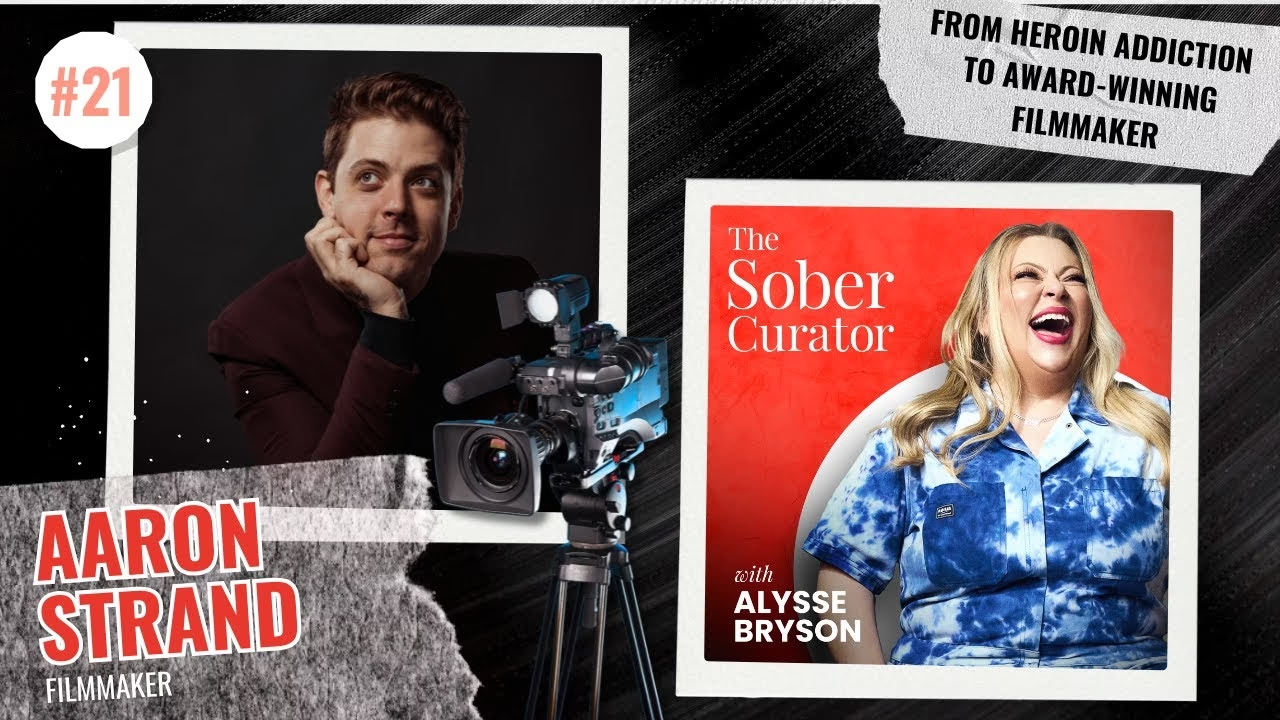
SOBER ENTERTAINMENT: From Rock Bottom to the Director’s Chair: Aaron Strand on Making Movies That Matter

MOVIE NIGHT WITH THE SOBER CURATOR: is your go-to guide for films and documentaries that intricately weave addiction, recovery, and mental health into powerful storytelling. Think of us as your bee-zy movie critics, curating a hive of must-watch titles that inspire, educate, and spark conversation.
Our review archives are neatly organized into Drama, Dramedy, and Documentary categories, making it easy to find your next captivating watch. Whether you’re in the mood for a heartfelt indie, a laugh-through-the-tears comedy, or a thought-provoking doc, we’ve got you covered.
All the cool kids go to rehab…

Resources Are Available
If you or someone you know is experiencing difficulties surrounding alcoholism, addiction, or mental illness, please reach out and ask for help. People everywhere can and want to help; you just have to know where to look. And continue to look until you find what works for you. Click here for a list of regional and national resources.