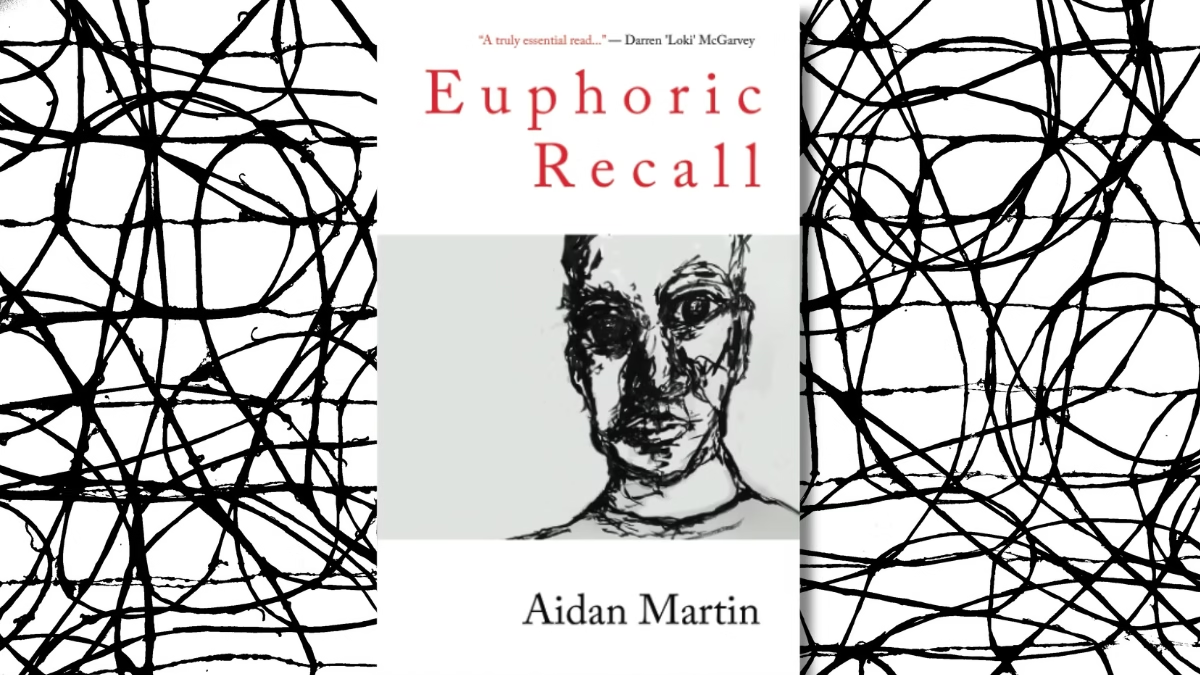
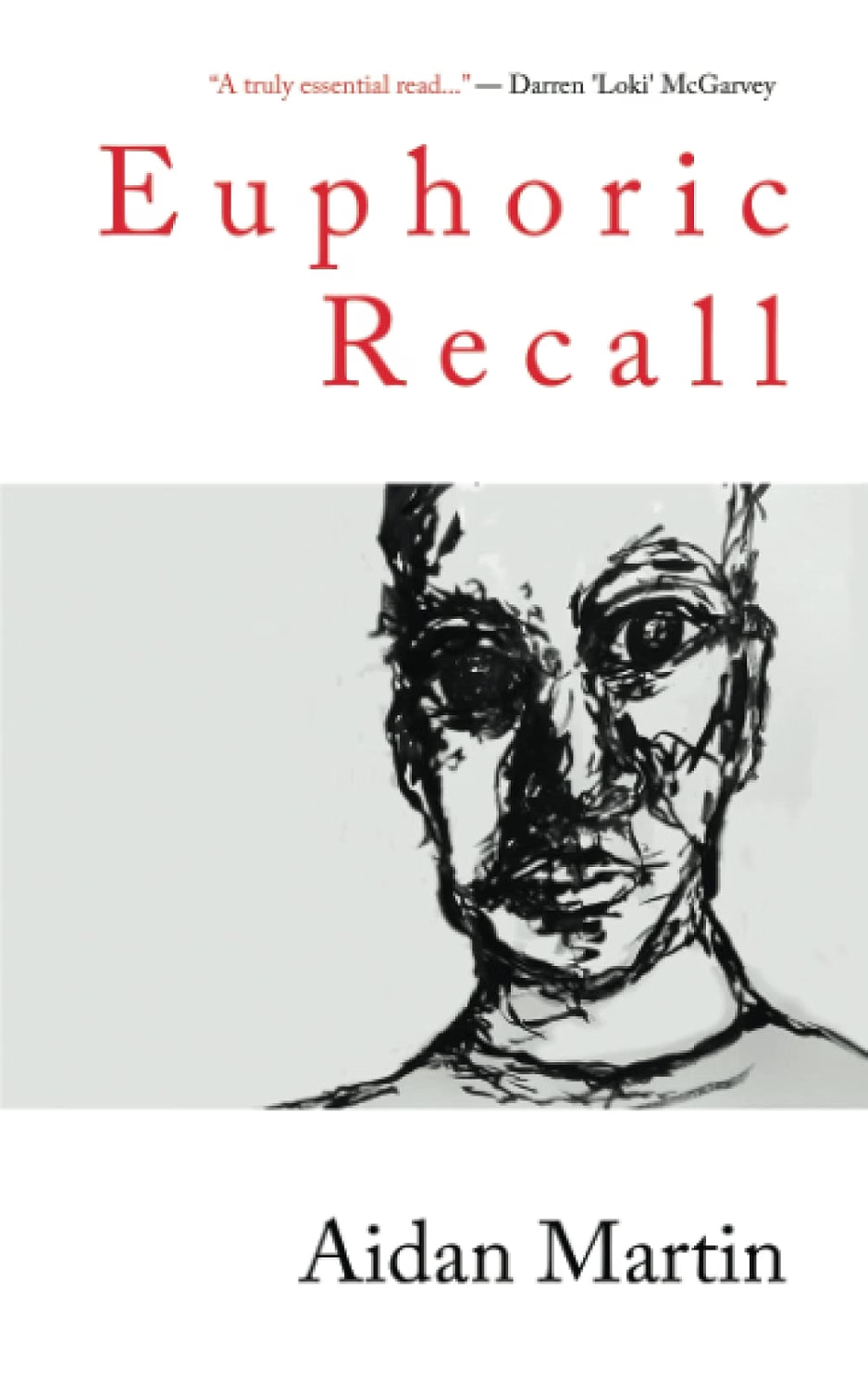
Before you get one page into this book, sit with the title for a second. Euphoric recall isn’t a poetic phrase Aidan Martin invented. It’s a clinical term, the name for a specific and well-documented way addiction rewires memory — and it’s a strange, almost defiant thing to name your own recovery memoir after. You’re about to find out why.
Euphoric Recall is Aidan Martin’s 2020 memoir, a slim book at 170 pages that somehow holds a working-class childhood in Livingston, Scotland, a spiral into drug addiction that started disturbingly young, sexual trauma, a brother’s death from cancer, his own son’s leukemia diagnosis, and a hard, unglamorous climb into recovery — all of it. Scotland’s Parliament passed a motion acknowledging the book’s contribution to the country’s conversation around its drug-deaths crisis, which tells you something about how seriously this one was taken outside the usual recovery-lit circuit. Martin now works with people seeking help for addiction himself. The book earned him that second life. It’s also, structurally, an argument against the very mental habit its title names.
What Euphoric Recall Actually Is
Here’s the plain-language version, because the term deserves an actual definition before anything else: euphoric recall is what happens when your brain remembers the drinking or using and quietly edits out everything that made it a problem. You remember the laughter, the warmth, the night that felt like it solved something. You don’t remember, or don’t remember with the same weight, the blackout, the argument, the money that vanished, the version of yourself you had to apologize to a room full of people for being.
It’s not weakness and it’s not lying to yourself on purpose. Addiction changes how the hippocampus — the part of the brain doing the filing and retrieving of memory — handles this specific category of experience. The high gets stored in technicolor. The damage gets stored in a drawer nobody opens. Treatment literature calls this a memory bias, and it’s one of the more dangerous ones out there, because it doesn’t feel like distortion from the inside. It feels like a fact. It feels like remembering.
Why a Book About Recovery Would Name Itself After a Relapse Trigger
This is the sharp choice sitting at the center of the whole project, and it’s worth pausing on. Martin didn’t call this book Getting Clean or Second Chances or any of the dozen safer titles a memoir like this could have worn. He called it after the exact cognitive trap that pulls people back under. And then he wrote the book that refuses to do what the trap does.
There’s no soft-focus nostalgia in these pages for the drug years. Martin, by his own account, holds nothing back — the McDonald’s parking lot where a man he’d met online first exploited him as a kid already caught up in addiction, the housing scheme he grew up in, the ways he found money to keep using. He doesn’t perform regret for the reader, exactly, but he doesn’t perform the highlight reel either. The title isn’t ironic so much as it’s a warning label the author stuck on his own story, on purpose, so that nobody — including him — could mistake what follows for a rosy version of events.
And there’s a structural honesty here too, beyond the drug content specifically. The book doesn’t isolate addiction as its own contained subplot, the way a lot of recovery writing does — trauma over here, disease over there, tidy chapters with tidy borders. Martin’s brother dies of cancer somewhere in these pages. His own son is later diagnosed with leukemia. A difficult relationship with a strict stepfather runs underneath much of it. None of that gets bracketed off as backstory. It’s woven through the same fabric as the addiction itself, which is closer to how actual lives work than the genre usually allows — nothing arrives on its own, everything shows up tangled together with everything else.
What Actually Interrupts It
Treatment researchers root euphoric recall in something called expectancy theory — the idea that your beliefs about what a drink or a drug will do for you shape your cravings just as much as the substance itself does. The memory isn’t just passive storage. It’s actively teaching your brain what to expect next time, and a memory that’s been quietly edited down to the good parts teaches the wrong lesson every single time it gets replayed.
AA has a blunt, practical answer to this, and it happens to be one of the better slogans the program has produced: play the tape through. Don’t stop the memory at the good part. Let it run all the way to the end — the hangover, the fight, the shame the next morning — before deciding whether that night was actually something to miss. It’s not a metaphor so much as a literal instruction: finish the story before you let it convince you of anything.
Martin’s memoir functions like an extended version of exactly that exercise. It’s 170 pages of refusing to cut the tape early.
What You Actually Do With This
Picture a woman two years sober, scrolling old photos on a slow Tuesday night, landing on one from a house party she barely remembers attending. Everyone’s laughing. The lighting’s soft. For a second, sitting alone on her couch, she genuinely misses it — not the specific night, which is mostly a blur, but the feeling the photo is selling her. What the photo doesn’t show is that she woke up the next afternoon in someone else’s clothes, missed a shift, and spent three days in a shame spiral she never told anyone about. The photo isn’t lying, exactly. It’s just telling half the story, and half a story is precisely what euphoric recall specializes in.
The Pushback Worth Taking Seriously
Two objections tend to come up with a book this unflinching, and both deserve a real answer instead of a dismissal.
First: isn’t it fine to remember some good times fondly? Yes. Nobody’s asking anyone to hate their entire past or pretend every moment was misery. The distinction Martin’s book draws, without ever lecturing about it, is between remembering that you laughed with people you loved and remembering the substance itself as the hero of that memory. Those are different acts of recall, and only one of them tends to end in a relapse.
Second, and this one’s fair: a memoir stacking addiction on top of sexual trauma on top of a brother’s death on top of a child’s cancer diagnosis risks tipping into something that reads as trauma for trauma’s sake — misery lit, dressed up as recovery writing. It’s a real risk, and not every book in this genre avoids it. What keeps this one from tipping over, mostly, is that Martin isn’t building toward a moment of triumphant transformation. He’s building an honest record, one that includes actual dark humor threaded through it, because that’s closer to how difficult lives actually get survived than any tidier version would be.
There’s also a question worth asking honestly rather than assuming the answer: does a memoir this raw risk becoming its own kind of euphoric recall in reverse — a story so focused on the wreckage that it forgets to make room for what was also, genuinely, survivable? It’s a fair worry, and the book mostly earns its way past it by refusing to resolve too neatly on either side. The dark parts don’t get softened for the reader’s comfort, but they don’t get glamorized for shock value either. That’s a narrower needle to thread than it sounds, and a fair number of trauma memoirs miss it in one direction or the other.
No Resolution, Just a Life Being Lived Forward
Martin doesn’t end this book having transcended anything. He ends it doing the work — counseling other people through their own addictions, still standing in a life that took a long time and a lot of unglamorous effort to build. There’s no scene where everything clicks into place. There’s a person who kept choosing, on ordinary days, to remember things the way they actually happened instead of the way that would’ve been easier.
That’s not a small thing to build a book around. It’s arguably the harder, less cinematic discipline — showing up for the accurate version of your own story instead of the one that flatters you or lets you off the hook.
Closing
Play the tape through. Four words, and they’re doing more work than most of what gets said in a treatment intake session. The next time a memory shows up asking to be believed without question, that’s the moment. Run it all the way to the end before you decide what it’s telling you.
#QUITLIT Sobees Score: 4 out of 5

A STOIC SOBRIETY: Senior Contributor Tony Harte, Founder of A Stoic Sobriety, with 35 years sober, discovered Stoicism after a lifetime of recovery work and spiritual exploration. A self-proclaimed “spiritual gangster,” he blends ancient philosophy with his lived experience, offering practical and grounded wisdom.

TSC LIBRARY: Step into The Sober Curator Library! Here, books are more than pages—they’re portals. We read them, listen to them, obsess over them, and then spill our thoughts in curated reviews.
Explore our four signature genres: #QUITLIT, Addiction Fiction, Self-Help, and NA Recipe Books.
Want even more inspo? Our Amazon #QUITLIT list of books written by Sober Curator Contributors.
📘 Submit a Book for our #QuitLit Library: Welcome to the largest culturally-driven sober book collection on the internet. Memoir, fiction, criticism, quit lit, anything that fits a Gen X or Millennial sober reader past initiation. Submit your book →
Resources Are Available
If you or someone you know is experiencing difficulties surrounding alcoholism, addiction, or mental illness, please reach out and ask for help. People everywhere can and want to help; you just have to know where to look. And continue to look until you find what works for you. Click here for a list of regional and national resources.
Follow The Sober Curator on X, the artist formerly known as Twitter
What is Euphoric Recall about?
Aidan Martin’s memoir recounts his working-class childhood in Livingston, Scotland, early experiences with addiction, sexual trauma, family loss and eventual recovery. Martin presents these experiences without romanticizing his substance use or forcing his life into a tidy redemption story.
What does “euphoric recall” mean?
Euphoric recall describes selectively remembering the pleasurable aspects of substance use while minimizing or forgetting its harmful consequences. Treatment literature identifies this pattern as a potential risk factor for returning to substance use.
Is euphoric recall a medical diagnosis?
No. Euphoric recall is a descriptive term used in addiction treatment and recovery settings, not a standalone diagnosis in major medical diagnostic manuals.
Why did Aidan Martin call his memoir Euphoric Recall?
The title reflects one of the book’s central ideas: remembering addiction honestly requires including its consequences rather than replaying only its pleasurable or comforting moments. Martin’s memoir refuses to turn his substance use into a nostalgic highlight reel.
Did the Scottish Parliament recognize Euphoric Recall?
In September 2020, MSP Neil Findlay lodged a Scottish Parliament motion congratulating Aidan Martin on publishing the memoir and recognizing its potential contribution to Scotland’s conversation about drugs and drug-related deaths.