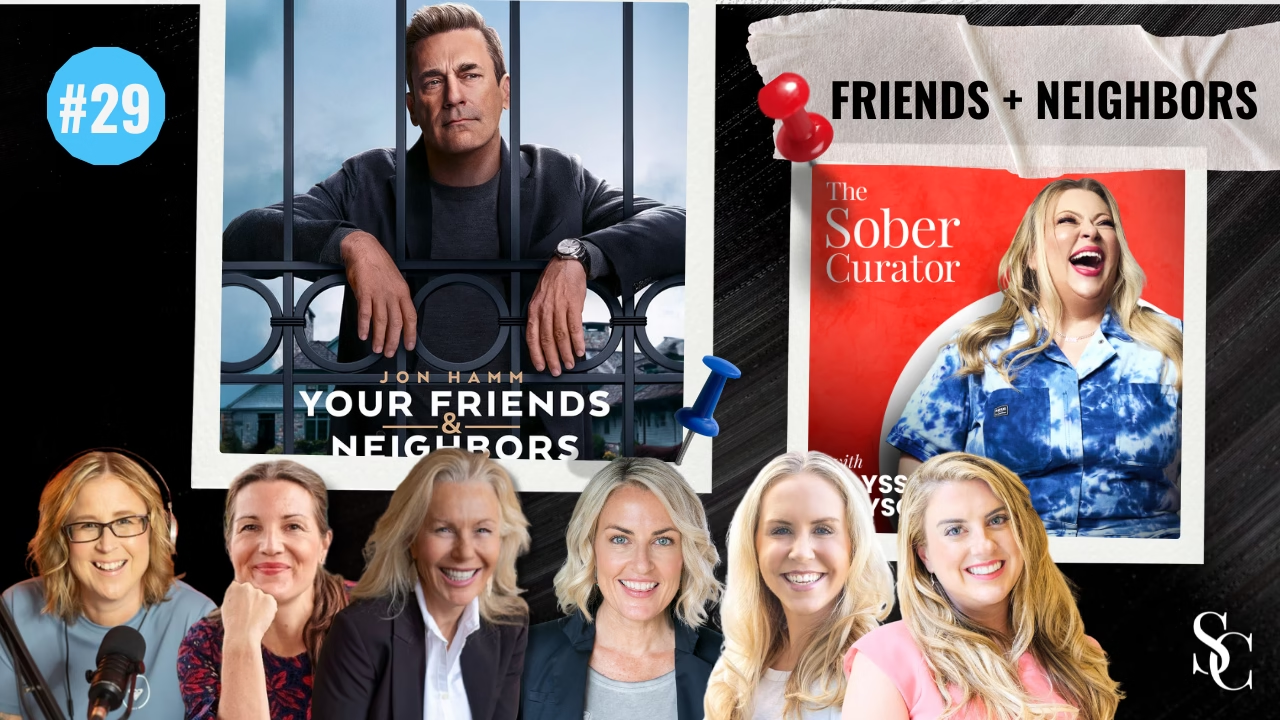
“Hangovers are canceled; fun is mandatory.” It’s a cheeky promise, but in episode 29 of The Sober Curator Podcast, that line becomes a thesis about what we really chase when we chase more — more money, more status, more thrill. The panel — hosts Alysse Bryson and Tamar Routly, and contributors Sarah Alaimo, Carolyn Bunn Lane Kennedy, Dr. Sarah Michaud and Megan Swan — gathered to unpack Apple TV+’s “Your Friends & Neighbors,” a sleek neighborhood drama where the crimes sparkle as much as the kitchens, and where the pursuit of “enough” looks suspiciously like addiction with better shoes.
From the jump, Alysse frames the discussion with a wink: sobriety here isn’t a limitation; it’s an upgraded operating system. The show choice is perfect because “Your Friends & Neighbors” puts dopamine on display — sometimes via martinis and party nights, but more often via attention, applause and adrenaline. The panel calls it out plainly: “They’re following that next dopamine hit,” Tamar says, connecting the dots between substance use and socially sanctioned compulsions like shopping, sex or endless home upgrades.
Identity Quakes
The series’ central spiral begins where many real-life spirals do: a sudden identity quake. Lose the job, and you might lose the story you’ve told yourself about who you are. Megan articulates the whiplash: “High, high, high, and then the spiral down.” The character’s solution — steal back power in five-figure increments — feels less like villainy and more like compulsion. The fact that no one notices luxury items vanishing becomes its own indictment of excess; a neighborhood so padded by wealth that it can’t feel what’s missing is already half-numb.
Psychologically, Dr. Sarah points to repressed anger and detachment. The show’s couples carry crates of unspoken resentment — rage keyed into car doors and boss’s faces, frustration poured into workaholism, grief translated into risk. It’s textbook self-medication, except the drugs are prestige and power. Meanwhile, Carolyn observes a simpler pattern: every catastrophic turn seems to begin with “drinking or the drugs,” like accelerant flicked onto an already-dry field. In recovery language, we might call it stacking triggers.
Through the DNA Lens
Lane widens the lens to biology through her DNA-centric frame: some of us are wired to need bigger edges and faster relief. In the show, those needs get channeled into audacity — glass cases opened, art lifted, social gambits played like high-stakes hands. In real life, we can redirect that wiring toward rock walls and marathons, or toward creative pursuits that offer flow without court dates. The pattern matters more than the object. Change the object, keep the pattern, and the spiral continues — just dressed differently.
Tamar’s cultural reference — “somewhere between ‘Big Little Lies’ and ‘Succession’” — does more than triangulate tone; it captures how the series turns privilege into pressure. The more the characters acquire, the lonelier they become. Even the show’s sweetest moment — a paper bag of Fireballs (the candy) that means more to an ex-wife than an entire curated party — quietly argues for intimacy over spectacle. A $5 gesture beats a $50,000 soirée because it says, “I know you,” not just, “I can afford you.”
Underneath the gossipable plot points sits a conversation about conversation itself. Dr. Sarah cites the modern erosion of basic dialogue; we’ve grown fluent in posting, rusty in talking. That tracks with the series’ emotional weather: glamorous rooms filled with people who can’t tell the truth about what hurts. Recovery, at its best, is a curriculum in telling that truth — first to ourselves, then to someone safe, and eventually to our communities.
Why Watch?
What does a sober read of “Your Friends & Neighbors” offer to listeners who may never steal a Rolex or key a Tesla? A mirror. Maybe you don’t lift art, but you do reach for something when discomfort spikes — a cart, a screen, a calendar stuffed with “busy.” Maybe your rush is attention. Maybe it’s safety. The show exaggerates to entertain, but the psychology is ordinary: when we feel powerless, we grab for control; when we feel empty, we grab for “more.” The catch is that “more” won’t love you back. People will.
By the end, the panel’s ratings hover in the 4–4.75 range — strong marks justified by tight writing, sleek production and characters who are both infuriating and familiar. More importantly, the episode models what sober pop culture can do: use the fun stuff to talk about the real stuff. Addiction’s modern disguises look respectable until you look closer. And when you do, you find the same old bargain: sacrifice connection, get short-term relief.
The Sober Curator’s closing encouragement is simple: trade consumption for conversation. Call a friend. Invite someone over for popcorn and Hot Tamales (apparently the panel’s official “emotional support snack”). Try a Wild Folk in your glass. Make a night of it, but make it yours. Then ask the question the episode keeps asking: What are you chasing… and what could you choose instead? Listen to the full conversation for laughs, nuance and a reminder that hangovers may be canceled, but honest joy is very much on the menu.

Getting sober matters. Staying sober matters more. That’s the whole premise.
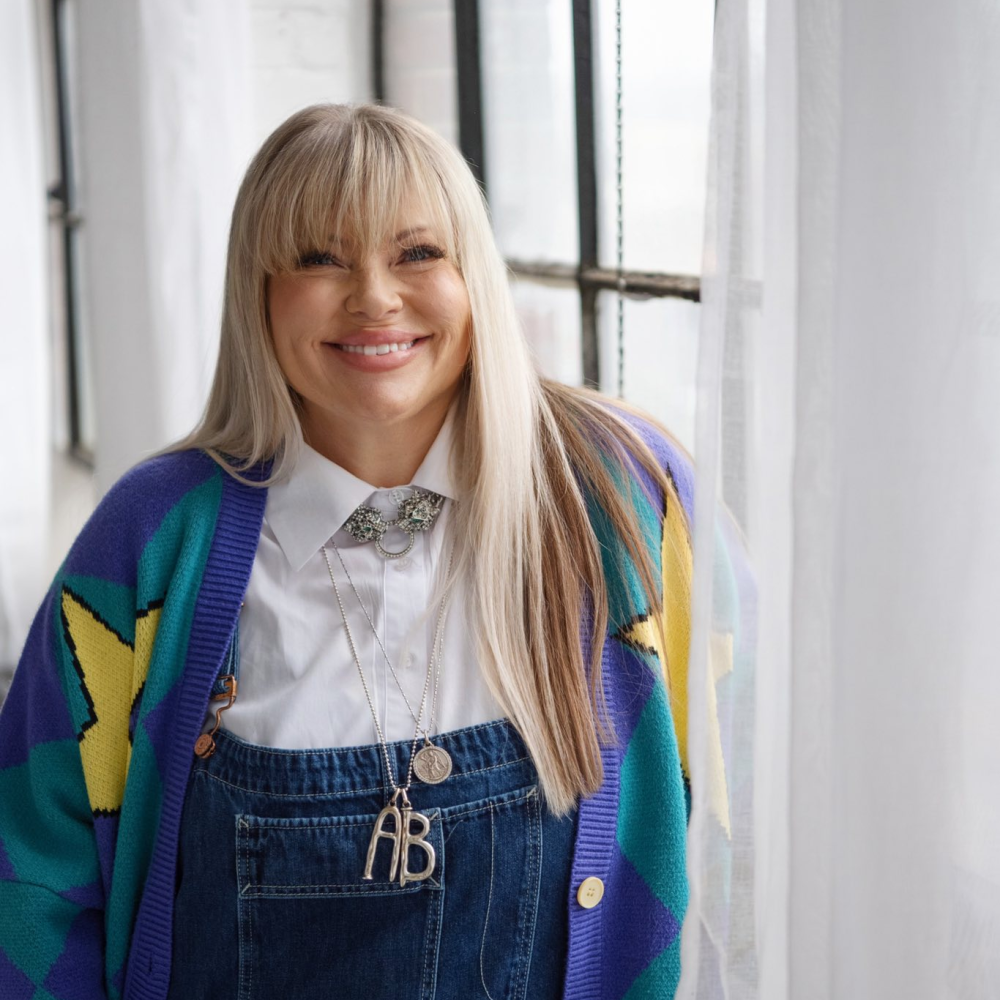
The Sober Curator Podcast brings sober lifestyle, pop culture and recovery to the mic with personality, perspective and a glitter bomb of honesty. Founder and host Alysse Bryson (sober since May 1, 2006, and self-described Kevin Bacon of Recovery) is joined by co-host and show producer Tamar Routly of Podcast Impact Studio, plus a rotating bench of global Sober Curator contributors who pull up a chair as co-hosts.
What we cover, episode to episode:
Happy Every Hour: zero-proof drinks, NA beer, spirits and cocktails, reviewed by people who actually drink them.
Health and Wellness: mental health, physical health and what recovery looks like on a Tuesday.
Lifestyle: dating, parenting, shopping, style and the everyday logistics of alcohol-free living.
Entertainment: quit lit, movies, TV, music, sports and celebrity sobriety, rated with our proprietary Sobees.
Spiritual Gangster: Jesus to astrology, stoicism to the Celtic calendar.
Travel: sober events, sober retreats, Sobriety in the City and global travel without a drink in hand.
We also review other sober podcasts on Recovery Podcastland, dig into sponsored product spotlights, and go deep with contributors on how they got sober and what keeps them there. New episodes drop as video on YouTube and audio everywhere you listen.
Want more? BACKSTAGE with The Sober Curator is our membership community with Media Nights, Studio Nights, Edutainment Nights and The Sober Curator Mixtape, a monthly mini-zine delivered in a cassette case. Details at https://thesobercurator.com/backstage-with-the-sober-curator/
Whether you’re sober curious or decades in, we’ve got you. We’re not here to help you get sober. We’re here to help you live sober and love it.
Rate, review and subscribe. It takes 60 seconds and we will love you forever.
Contact: thesobercurator@gmail.com
Everybody’s seen Intervention. Darren Hobbs is one of the guys who knocks on that door. Back in 2010, he was the guy behind it, eating jail bologna sandwiches and waiting on a sentence.
Now a board-certified interventionist on A&E’s Intervention and founder of The Firm Addiction Consulting in Nashville, Darren joins Alysse and Tamar to talk about what sober life hands you once you’re on the other side of the door. Honey buns at a prison picnic table. The stranger in khakis he hated, then trained with every morning for 11 years. And the knock that made him want to do this for a living.
In this episode:
- A fifth step at a prison picnic table (honey buns cut with an ID card)
- The halfway house that kept his last $1,000
- The stranger in khakis who became his best friend
- His first knock: “Daddy, what took you so long?”
- Why his job is helping families make it hard for their kid to die
- What an interventionist does when he needs a break
CHAPTERS
00:00 One of the guys who knocks on the door
01:57 What changed after getting sober?
03:11 A fifth step at a prison picnic table
07:19 The halfway house that kept his last $1,000
11:12 Are we less tough now?
14:05 The stranger in khakis
16:31 Onsite and his first “piece of work”
23:34 The first knock
26:36 Burn the boats
30:27 Matador of chaos
33:13 Intervention, with cameras
36:26 Mob TV and Uncle Jackie
39:35 When the helper needs a break
45:38 “Are you AI, Tamar?”
46:28 Knock gently
Sober Shots:
“You don’t have to have the perfect story or one ounce of talent to be useful.” (Alysse Bryson)
“Your family’s given me full permission to make it hard for you to die.” (Darren Hobbs)
Find Darren: – The Firm Addiction Consulting – Instagram + TikTok: @thedarrenhobbs – Die Sober podcast
Mentioned in this episode: – BACKSTAGE with The Sober Curator: https://thesobercurator.com/backstage-with-the-sober-curator/- S2E16 with Ben Coombes of Soberski: https://www.youtube.com/watch?v=NWV0Tt6YXpg&t=82s – Our Matthew Perry bonus episode: https://www.youtube.com/watch?v=uyo1cjpfLNs&t=500s
Getting sober matters. Staying sober matters more.
SEASON 2 MERCH: https://shopthesobercurator.com/
This episode is brought to you by Aura House. Save 10% with code TSC10: https://go.shopmy.us/p-64140200
SC RESOURCES: – Meet the Contributors – Alcohol + Substance Use Disorder Guide – Recovery Nonprofit Resource Guide – LGBTQ+ Recovery Resource Guide – Family Resource Guide
CONNECT: www.thesobercurator.com | The Sober Sip newsletter: https://www.thesobercuratornewsletter.com/ | @thesobercurator on Instagram, X, TikTok, YouTube + Pinterest
Love the show? Rate, review + follow. It takes 60 seconds and helps more people find us. Feedback + guest ideas: thesobercurator@gmail.com
Hosted by Alysse Bryson with co-host + producer Tamar Routly. For informational and entertainment purposes only; not a substitute for professional advice.
Music: TSC S2 theme “Sober Shots” created by Alysse Bryson using Suno AI, under Suno’s commercial license.


SOBER ENTERTAINMENT X SPIRITUAL SUBSTANCE: Jon Hamm in “Your Friends & Neighbors” Explains Everything About Your Self-Destructive Patterns
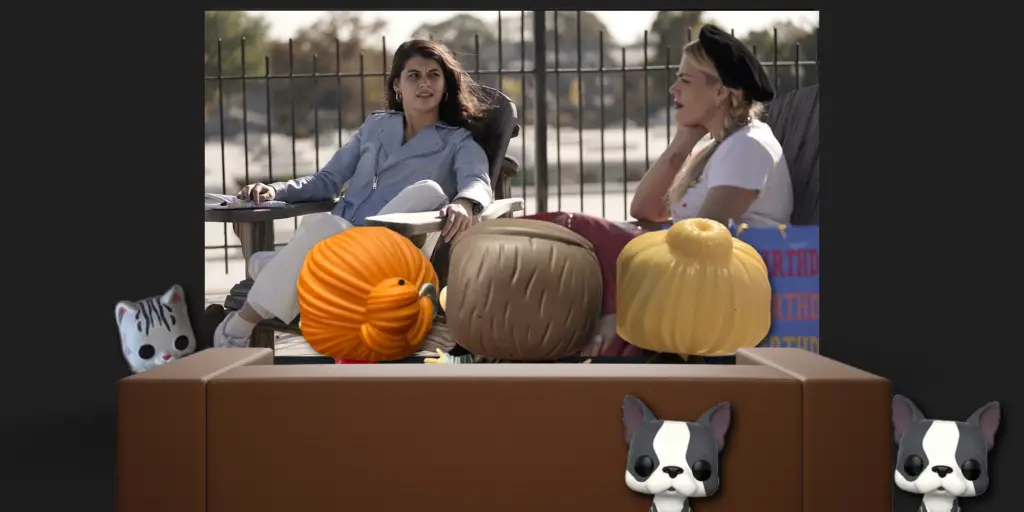
THE MINDFUL BINGE at The Sober Curator is where we binge-watch and chill—mindfully. In this TV series review section, we don’t just consume shows; we explore their stories, themes, and cultural impact through a sober lens. Using our signature Sobees Scoring System, we rate each pick to help you choose your next watch with intention.
Our digital shelves are neatly organized into Drama, Dramedy, and Reality, making it easy to find your perfect series for a night in.
RECOVERY PODCASTLAND & NETWORK at The Sober Curator is your audio haven for all things sobriety and recovery. We’re your bee-zy sober podcast enthusiasts, curating the best shows that educate, inspire, and entertain in the alcohol-free space.
Our archives are neatly organized so you can easily explore Recovery Podcastland—featuring our favorite recovery-based podcasts from across the globe—and the TSC Podcast Network, where we share our own original shows on sober lifestyle, pop culture, travel, entertainment, and more.
Whether you’re seeking practical recovery tips, personal stories, or uplifting inspiration, this is your go-to listening guide. 🎧 Submit a Podcast for Review: Recovery Podcastland coverage and reviews. Shows that earn their place in our audience’s queue. Submit your podcast →

SOBER POP CULTURE at The Sober Curator is where mainstream trends meet the vibrant world of sobriety. We serve up a mix of movie, podcast, fashion, and book recommendations alongside alcohol-free cocktails, celebrity features, and pop culture buzz—all with a sober twist.
We’re here to shatter the “sobriety is boring” myth with a mash-up of 80s neon, 90s hip-hop edge, early 2000s bling, and today’s hottest trends. From celebrity shoutouts to red-carpet style inspo, this is where sober is as chic as it is fun. To the celebs using their platform for good—our Sober Pop Trucker hats are off to you!
Resources Are Available
If you or someone you know is experiencing difficulties surrounding alcoholism, addiction, or mental illness, please reach out and ask for help. People everywhere can and want to help; you just have to know where to look. And continue to look until you find what works for you. Click here for a list of regional and national resources.