


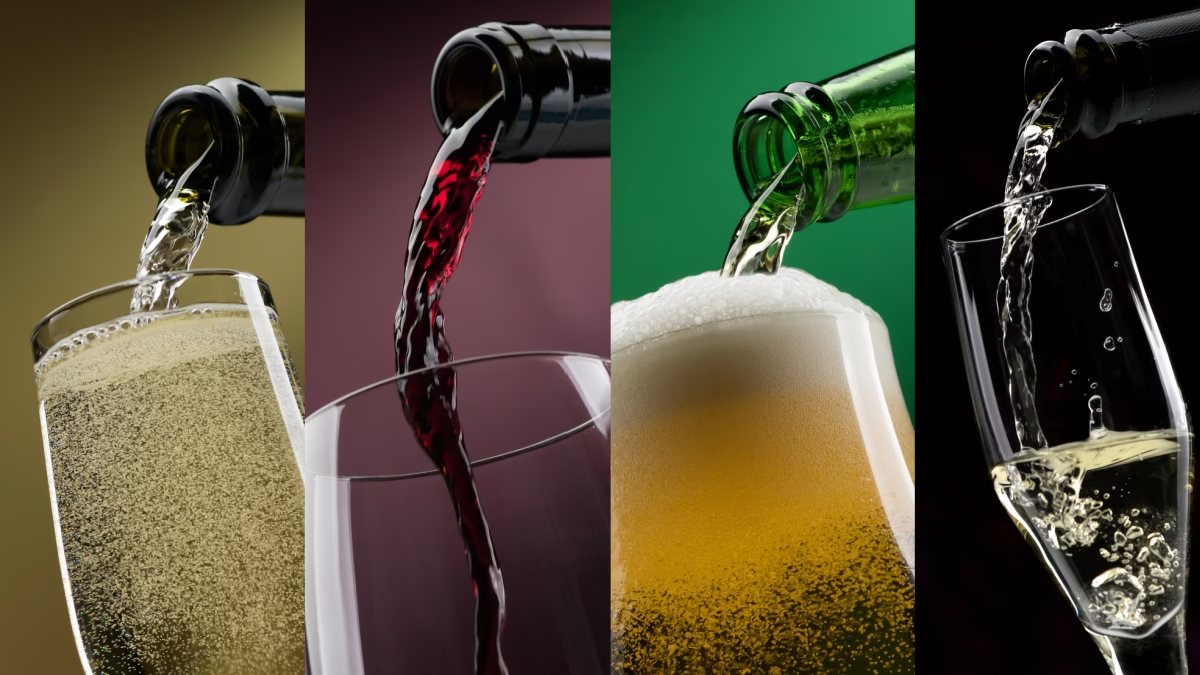

For a long time, non-alcoholic drinks had a pretty low bar.
If there was one NA beer in the cooler, people acted like that was enough. If a restaurant had a mocktail, it was usually juice, soda, and a garnish. Alcohol-free wine was even tougher. A lot of it tasted more like grape juice than something you would actually pour with dinner.
That is not really the case anymore.
There are still plenty of bad non-alcoholic drinks. Some are too sweet. Some are too expensive. Some still have better marketing than drinks. But the good ones are much better than people expect, especially if the last NA drink they tried was years ago.
The biggest change is simple: these drinks are being made for adults who actually care what they taste like.
NA Beer Has Come a Long Way
Non-alcoholic beer is probably where the change is most obvious.
Years ago, NA beer usually felt like something you bought because you had no other option. It was there for the designated driver, the person taking a break, or the one guest who was not drinking. Nobody expected it to be especially good.
Now you can find NA beers that people keep in the fridge on purpose.
Part of that is better brewing. Brewers are doing a better job keeping the parts of beer people actually like: the grain, the hops, the bubbles, the smell when you first open it, and the dry finish that makes it feel like beer instead of soda.
A good lager, wheat beer, or pilsner does not need to be loud to work. It just needs to be cold, balanced, and easy to drink.
Weihenstephaner is a good example. Its non-alcoholic wheat beer still has the soft wheat-beer feel, a little banana and clove, and enough body that it does not feel like flavored seltzer pretending to be beer. It is the kind of NA beer that makes sense after mowing the lawn, with pizza, during a game, or at a cookout when you want something beer-like but do not want the alcohol.
That is one reason German NA beer is worth paying attention to. Germany has been taking alcohol-free beer seriously for a long time, and a lot of those beers feel more settled than the random NA six-packs people may remember from years ago. AFSips has a full guide to German non-alcoholic beers for anyone who wants a better place to start.
NA beer is not perfect. Some IPAs still lose something without alcohol. Some cheaper lagers still taste dull. But the good ones are now good enough that you do not have to make a big speech about them. You can just hand one to someone cold.
NA Wine Is Better, But It Is Still the Hardest One
Alcohol-free wine has a tougher job.
Beer has bubbles, grain, hops, bitterness, and carbonation to help it along. Cocktails can use citrus, ginger, herbs, tea, bitters, spice, and other flavors. Wine does not have as many places to hide.
Take the alcohol out of wine, and you can quickly notice what is missing. The drink can feel lighter, sweeter, or flatter than expected. That is why so many people tried one alcohol-free wine years ago and decided the whole category was not for them.
That reaction is understandable.
But the category has improved.
Sparkling wine usually works best because the bubbles help. They make the drink feel more complete and less like plain grape juice. White wine has also gotten better, especially brighter styles where acidity does a lot of the work.
Sauvignon Blanc is a good fit for that reason. It already has citrus, acidity, and freshness, so it can still make sense after the alcohol is removed. Giesen 0% Sauvignon Blanc is a good example. It has grapefruit and tropical fruit notes, and it does not lean into that syrupy sweetness that turns a lot of people off alcohol-free wine.
It is not the same as opening a regular bottle of Sauvignon Blanc. That is the wrong expectation. But it is delicious, drinkable, and recognizable enough that it has a real place, especially with food, on a weeknight, or for someone who wants a wine-style pour without alcohol.
Red wine is still the tough one. Some bottles are improving, but reds are where people most often notice the gap. Without alcohol, it is harder to get that fuller feel people expect from red wine. So if someone says they tried an alcohol-free red and hated it, I do not think they are being unfair.
The better news is that NA wine no longer feels like one big yes-or-no category. Sparkling, white, rosé, and red all perform differently. Some are worth buying. Some are not. That is a more honest way to look at it.
Zero-Proof Cocktails Are Finally Less Sugary
Mocktails used to have a sweetness problem.
A lot of them were built like this: fruit juice, soda, syrup, garnish. They looked nice, but they often tasted like something you would drink at brunch and regret halfway through the glass.
That is changing too.
The better zero-proof cocktails now use more adult flavors: citrus, ginger, herbs, tea, smoke, spice, bitterness, botanicals, cucumber, pepper, coffee, vinegar, and good tonic or soda. Those ingredients matter because they keep the drink from becoming a sugar bomb.
This is also where zero-proof spirits can help.
They are not all great. Some taste strange on their own. Some are better as mixers than as the main event. But the better ones give you something to build around. A bitter aperitif-style bottle can help with a spritz. A botanical gin alternative can work with tonic. A smoky tequila-style substitute can make a drink feel more grown-up than limeade in a rocks glass.
AFSips has covered several of these in its guide to zero-proof spirits, and the main lesson is pretty simple: the best ones are not always perfect copies of gin, whiskey, or tequila. They are the ones that help you make a better non-alcoholic drink.
That is a big difference.
A zero-proof cocktail does not always need to fool anyone. It just needs to taste balanced, look good in the glass, and feel like something an adult would actually order.
Better Packaging Helps More Than People Admit
Taste matters most, but packaging matters too.
Older non-alcoholic drinks often looked like they were apologizing for themselves. Some looked medical. Some looked childish. Some looked like they were made only for people in one very specific life situation.
Newer brands understand that adults want these drinks to fit into normal settings.
A can of NA beer should look fine in the cooler next to everything else. An alcohol-free sparkling wine should feel normal to bring to brunch or a dinner party. A zero-proof cocktail should not look like a wellness drink unless that is actually what it is trying to be.
This matters because a lot of people do not want a conversation every time they choose not to drink.
Sometimes they just want to hold a drink that looks normal, tastes good, and does not turn into a whole explanation.
Good packaging cannot fix a bad drink. But it can make a good drink easier to bring into real life.
People Are Using These Drinks Differently
The drinks are better, but people are different now too.
More adults are drinking less without making it their whole identity. Some are sober. Some are sober-curious. Some are taking a break. Some still drink, but not every night. Some want better sleep. Some have an early morning. Some are parents. Some are driving. Some just do not feel like drinking at that particular dinner, party, or work event.
That is a much bigger audience than the category used to serve.
It also means the drinks have to be better. People are not buying them only because they have no other choice. They are buying them because they want something that fits a specific moment.
An NA beer after work. A sparkling alcohol-free wine at brunch. A zero-proof cocktail at a restaurant. A few good options in the fridge for guests. A drink that feels normal at a party without making the night about why someone is not drinking.
That is regular adult life. The category is finally catching up to it.
The Best Ones Do Not Try Too Hard
One thing I like about the better non-alcoholic drinks now is that they are not all trying to pass as alcohol.
That is usually where disappointment starts.
If a bottle promises to taste exactly like whiskey, people are going to judge it against whiskey. If an alcohol-free red wine acts like it can replace a big Cabernet, people are going to notice what is missing. If a mocktail tries too hard to feel fancy, it can end up tasting like expensive juice.
The better drinks are more realistic.
A good NA beer can just be a good NA beer. A good alcohol-free Sauvignon Blanc can be bright, dry enough, and useful with food. A good zero-proof cocktail can have citrus, bitterness, spice, or herbs and still feel like a real drink, even if nobody mistakes it for a Negroni.
That is a healthier place for the category to be.
The question does not always have to be, “Does this taste exactly like alcohol?”
A better question is, “Would I actually want another one?”
More often now, the answer is yes.
There Is Still Plenty of Bad Stuff Out There
None of this means every non-alcoholic drink is good.
Some NA beers are still boring. Some alcohol-free wines are still too sweet. Some canned mocktails cost too much for what they are. Some zero-proof spirits make more sense in a mixed drink than on their own.
That is worth saying because people can tell when a category is being oversold.
But it is also fair to say the odds are better than they used to be. If someone tried one bad NA beer years ago and gave up, it is worth trying again. If someone thinks all alcohol-free wine tastes like grape juice, there are better bottles now. If someone thinks mocktails are just juice with mint on top, there are better ways to build them.
The category has improved because people are asking more from it.
They do not want a lecture. They do not want a sad substitute. They do not want something that feels like a kids’ drink. They want adult drinks that work in normal life.
That is why NA beer, NA wine, and zero-proof cocktails are getting better.
They are finally being made for the way people actually use them.
Contributor: John Lisbonn is the editor of AFSips, a practical guide to non-alcoholic drinks for adults. AFSips covers NA beer, alcohol-free wine, zero-proof cocktails, hosting, restaurant ordering, and drinking less without making it weird. Visit afsips.com.
HAPPY EVERY HOUR: How to Bring Non-Alcoholic Drinks to a Party Without Making It Weird
HAPPY EVERY HOUR – NA BEERS & CIDERS: Best Non-Alcoholic Beers of 2026 – The Sober Curator’s Definitive Guide
Welcome to HAPPY EVERY HOUR, your go-to hub for all things NA (non-alcoholic). We review alcohol-free beers, ciders, wines, spirits, RTDs (ready-to-drink), and share NA cocktail recipes that taste just as good—if not better—than the boozy originals. Whether you’re sober, sober-curious, or just taking a break, this is where great taste meets zero proof.
TRIGGER WARNING: People in early sobriety may want to proceed with caution. Always read labels. Please hydrate responsibly … #becausedrunkneverlooksgood.
🛍️ Submit a Product for Review NA beverages, sober-friendly tools, alcohol-free brands, and products built for the way our audience actually lives. Submit your product →

Follow The Sober Curator on Facebook
Why are non-alcoholic drinks getting better?
Non-alcoholic drinks are getting better because brands are making them for adults who actually care about taste. Better brewing methods, more thoughtful wine production, improved zero-proof ingredients, and more balanced flavors have helped NA beer, alcohol-free wine, and mocktails move beyond sad substitutes.
Is non-alcoholic beer better than it used to be?
Yes. Non-alcoholic beer has improved significantly, especially in styles like lagers, wheat beers, and pilsners. Better NA beers now preserve more of what people like about beer, including grain, hops, carbonation, aroma, and a dry finish that feels more adult than soda.
Why is alcohol-free wine harder to make than NA beer?
Alcohol-free wine is harder to make because wine relies heavily on alcohol for body, texture, and structure. When the alcohol is removed, the wine can taste lighter, sweeter, or flatter than expected. Sparkling wine and white wines, especially brighter styles like Sauvignon Blanc, often perform better than alcohol-free reds.
What makes a good zero-proof cocktail?
A good zero-proof cocktail is balanced, not overly sweet, and built with adult flavors. Citrus, ginger, herbs, tea, spice, bitterness, botanicals, cucumber, coffee, vinegar, and quality tonic or soda can all help create a drink that feels grown-up without relying on alcohol.
Are zero-proof spirits worth buying?
Some zero-proof spirits are worth buying, especially when they are used as mixers instead of being judged as exact copies of gin, whiskey, tequila, or other spirits. The best zero-proof spirits help build better non-alcoholic cocktails rather than trying too hard to imitate alcohol perfectly.
Who is buying NA beer, NA wine, and zero-proof cocktails?
The audience is much broader than it used to be. Some people are sober, some are sober-curious, some are taking a break, and some still drink but want options for weeknights, parenting, driving, early mornings, better sleep, or social events where they do not want alcohol.
Do non-alcoholic drinks taste exactly like alcohol?
Usually, no—and that is not always the point. The best non-alcoholic drinks do not need to fool anyone. A good NA beer, alcohol-free wine, or zero-proof cocktail should taste balanced, feel appropriate for the occasion, and make you want another one.
